
The Withdrawal of Consent: Breaking the Karmic Contract of Compliance
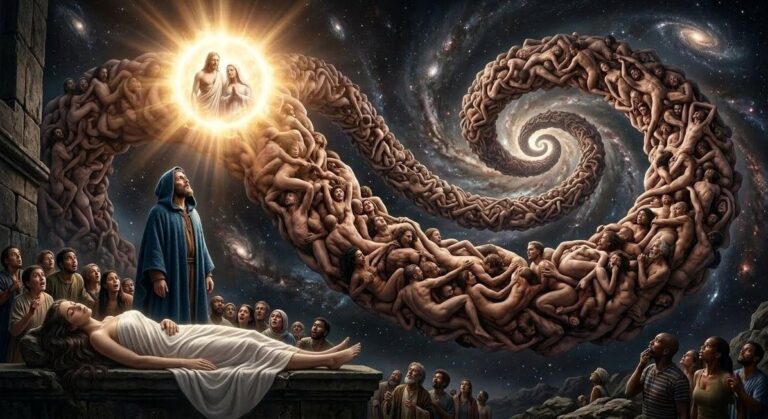
You were born into a web of agreements you never signed. The social contract, the karmic debt, the ancestral inheritance of unprocessed trauma–these are the bonds that claim your sovereignty before you have drawn your first breath. By the time you reach adulthood, you are so entangled in obligations, expectations, and invisible debts that the notion of “free will” seems a cruel joke. You are not living; you are honouring contracts drafted in a language you do not speak.
The Gnostic recognises this as the fundamental architecture of the kenoma–the prison constructed not of bars but of binding agreements. The law, the family system, the cultural norms, the spiritual hierarchies–all operate on the presumption of consent that was never given, only inherited. To become sovereign is to perform the radical act of revocation: the withdrawal of consent from the entire edifice. The kenoma does not issue invoices for the energy it extracts; it simply assumes you have agreed to the terms.
Table of Contents
- The Invisible Fine Print
- The Phenomenology of Binding
- The Architecture of Unconscious Consent
- The Technology of Revocation
- The Ethics of Radical Autonomy
- The Aftermath of Revocation
- Frequently Asked Questions
- Further Reading
- References and Sources

The Invisible Fine Print
These contracts are not aberrations. They are the default operating system of the kenoma–the realm of deficiency, forgetfulness, and enforced amnesia that Gnostic cosmology describes as the counter-image to the pleroma, the fullness of divine reality. In the pleroma, relationship is spontaneous and mutual; in the kenoma, relationship is transactional and coerced. The invisible fine print is the mechanism by which this coercion is naturalised, rendered so ubiquitous that questioning it feels like madness.
Most people never examine these agreements. They inherit them as they inherit eye colour or bone structure, accepting the transmission as inevitable. But Gnosis–the knowledge of who and what we truly are–requires a forensic audit of every bond that claims our energy, our attention, and our allegiance. This article is that audit. It is not comfortable. It is not polite. It is necessary.
The Phenomenology of Binding
These contracts manifest not as paper but as patterns. They colonise the nervous system before the rational mind can object, embedding themselves in emotional reflexes, bodily tensions, and the quiet panic that arises whenever you consider choosing differently. Understanding their phenomenology–the felt sense of how they operate–is the first step toward dismantling them.
The Guilt Loop
The persistent sense that you owe your parents, your culture, your gods a life lived according to their specifications. The inability to say no without crushing anxiety. This is not conscience; it is conditioning wearing a halo. The guilt loop operates by conflating love with compliance, making every boundary feel like a betrayal. You do not honour your mother because you choose to; you honour her because the alternative triggers a somatic catastrophe–tight chest, shallow breath, the cold certainty that you are fundamentally bad. The loop is ingenious: it requires no external enforcement because you have internalised the warden.
The Loyalty Trap
Maintenance of toxic relationships because “we have history,” “blood is thicker than water,” or “we have past life contracts.” These are not reasons; they are chains. The loyalty trap exploits the human need for belonging, weaponising attachment against discernment. It convinces you that leaving is abandonment, that self-preservation is cruelty, that your suffering is the price of connection. In reality, loyalty without reciprocity is not virtue–it is indentured servitude to a relationship that expired decades ago.
The Karmic Mortgage
The belief that you must suffer now to balance previous actions, trapping you in masochistic cycles of penance for crimes you cannot remember committing. The karmic mortgage is the ultimate bait-and-switch: it promises eventual liberation while demanding perpetual payment. Like a predatory loan, its terms are designed to keep you in debt forever. The tradition that sells you the debt also sells you the remedy–more suffering, more submission, more service to the very system that issued the bond. True Gnosis recognises that the mortgage is fraudulent; the debt was never yours to pay.

The Architecture of Unconscious Consent
Beyond individual psychology, these contracts operate at structural levels. They are not merely personal pathologies but systemic features of the kenoma itself–the realm of deficiency and forgetfulness that Gnostic cosmology describes.
The Social Contract as Default Setting
Rousseau may have popularised the term in 1762, but the social contract predates philosophy by millennia. It is the unspoken agreement that you will participate in economic production, reproduce the family structure, obey territorial laws, and suppress any impulse that threatens collective stability. You did not sign this contract, yet its terms are enforced through exclusion, poverty, and psychiatric diagnosis. The default setting is compliance, and opting out requires resources–financial, social, psychological–that the contract itself is designed to withhold. It is, in essence, a protection racket operated by civilisation itself: play by the rules, or face the consequences.
Spiritual Hierarchies and the Consent of Submission
Religious and spiritual systems frequently replicate the very structures they claim to transcend. The guru demands obedience; the church demands conformity; the New Age marketplace demands that you purchase your own liberation one workshop at a time. Each presents itself as voluntary while leveraging the same mechanisms of guilt, fear, and promised reward. The consent of submission is perhaps the most insidious contract of all because it wears the costume of enlightenment. You are not serving God; you are serving an organisational chart that terminates in a human being who eats, sleeps, and fears death exactly like you do.
The Technology of Revocation
Breaking these contracts is not a legal process; it is a magical one. The ceremony matters less than the absolute internal shift from compliance to sovereignty. Revocation is not a single event but a discipline–a continuous practice of noticing where your energy is being harvested and withdrawing it.
The Inventory of Bondage
List every relationship, institution, and belief system to which you feel obligated. For each, ask: Did I choose this? Does it serve my awakening? Would I sign this contract today, knowing what I know? If the answer is no, the contract is void, regardless of how long you have honoured it. The inventory is not an intellectual exercise; it is an act of radical honesty that will likely leave you nauseated. You will discover that most of your life is built upon agreements you would never make now. This is not cause for despair; it is the map to your freedom.
The Speech Act
Speak the revocation aloud. “I withdraw my consent from [specific agreement]. I return all energetic signatures to their source. I am free.” The voice is the first architecture of reality; to speak freedom is to build it. There is a reason that every magical tradition emphasises the spoken word: sound vibrates matter, and intention carried by breath restructures the subtle fields in which these contracts operate. Do not whisper. Do not apologise. State it as fact, because it is.
The Behavioural Proof
Contracts are broken by action, not intention. Leave the marriage. Quit the job. Change the name. Burn the bridge. The universe tests your sincerity by offering the old pattern again. Your refusal is the seal on the revocation. Behavioural proof is where most revocations fail–not because the intention was weak, but because the pattern is familiar and the unknown is terrifying. The body prefers known suffering to uncertain freedom. You must override this preference, again and again, until the new pattern becomes the default.
The Silence of Explanation
Sovereignty does not negotiate. You owe no one a justification for your withdrawal. The need to explain is the lingering tentacle of the contract, seeking reattachment. Simply cease. Let them wonder. Explanation invites debate, and debate invites compromise. The contract wants you to justify your freedom because justification is still a form of engagement. Silence is the full stop at the end of the sentence. It is the closed door, the unanswered message, the empty chair at the family dinner. It is the most powerful magic you possess.

The Ethics of Radical Autonomy
The fear is that sovereignty equals selfishness. This is the demiurge’s propaganda–the conflation of compliance with virtue. In truth, your service to others while bound is contaminated by resentment and obligation; your service from freedom is pure gift. You cannot pour from a cup that is chained to the wall.
Radical autonomy does not mean isolation or indifference. It means that your yes is truly a yes and your no is truly a no. It means that when you choose to serve, you serve from overflow rather than extraction. The ethics of sovereignty are simple: do not initiate harm, but do not accept harm in the name of love. The bound person serves from scarcity; the sovereign person serves from abundance. One breeds bitterness; the other breeds genuine compassion. The distinction is not subtle–it is the difference between a gift and a tax.
The Aftermath of Revocation
What happens when the contracts are broken? Initially, disorientation. The structures that defined your identity have collapsed, and you will find yourself in a void that feels like failure. This is not failure; it is the space between stories. The old narrative has ended, and the new one has not yet begun.
In this liminal space, you will be tempted to sign new contracts–different names, same terms. A new guru, a new relationship, a new ideology that promises to fill the void. Resist. The void is not emptiness; it is potential. It is the womb of the pleroma, the fullness that exists beyond the kenoma’s deficient architecture. Stay there. Breathe there. Learn to recognise your own voice without the chorus of inherited obligation.
Over time, the aftermath transforms from void to foundation. You build a life from chosen agreements–contracts you read, understood, and signed with full awareness. These new bonds are not prisons but bridges: connections that expand rather than constrain, loyalties that nourish rather than deplete, service that liberates rather than indentures. The difference is not in the form of the relationship but in the quality of the consent that sustains it.
You are not a debtor. You are not a subject. You are not a supporting character in someone else’s drama. Tear up the script. The ink was always invisible; the binding, always imaginary. Walk away. The prison door was never locked.

Frequently Asked Questions
What is the kenoma in Gnosticism?
The kenoma is a central concept in Gnostic cosmology, referring to the realm of emptiness, deficiency, and material forgetfulness that stands in opposition to the pleroma, the divine fullness. It is often described as a prison of unconscious agreements and inherited obligations that bind the soul to material existence, preventing recognition of its true divine origin.
How do invisible contracts control our behaviour?
Invisible contracts operate through internalised conditioning rather than external force. They manifest as emotional reflexes, somatic anxiety, guilt loops, and loyalty traps that make deviation from expected patterns feel dangerous or wrong. By colonising the nervous system before conscious choice is possible, these agreements enforce compliance without the need for visible coercion.
What is soul contract revocation?
Soul contract revocation is the deliberate withdrawal of consent from binding agreements–whether familial, cultural, spiritual, or karmic–that were inherited rather than consciously chosen. It involves a fourfold process: inventorying the bonds, performing a spoken declaration of freedom, providing behavioural proof through action, and maintaining silence rather than justifying the withdrawal to others.
Is it selfish to break karmic agreements?
From a Gnostic perspective, sovereignty is not selfishness. Service rendered from obligation is contaminated by resentment and extraction, whereas service from freedom is a pure gift. The conflation of compliance with virtue is itself a mechanism of control. Radical autonomy means your yes is genuine and your no is final, allowing relationships to exist without coercion.
How do I know if I am trapped in a loyalty contract?
Signs of a loyalty contract include maintaining relationships primarily because of shared history or blood relation rather than mutual nourishment; feeling unable to leave without crushing guilt; justifying mistreatment with phrases like ‘they mean well’ or ‘family is everything’; and experiencing panic at the thought of establishing boundaries. If loyalty feels like a debt rather than a choice, it is likely a contract.
What happens after you revoke a soul contract?
The immediate aftermath typically involves disorientation and a sense of void as familiar structures collapse. This liminal space is not failure but the necessary interval between the old narrative and the new. With persistence, the void transforms into a foundation for chosen agreements–relationships and commitments entered with full awareness and genuine consent rather than inherited obligation.
Can ancestral trauma create binding agreements?
Yes. Ancestral trauma functions as an inherited contract transmitted through family systems, epigenetic patterns, and unspoken cultural expectations. The child absorbs the unresolved suffering of previous generations as an unspoken debt, often spending their adult life attempting to heal what was never theirs to carry. Recognising this transmission is the first step toward releasing it.
Further Reading
- The Hidden Agreements: Esoteric Architecture — How invisible contracts structure reality at symbolic and architectural levels.
- The Soul Trap — A critical examination of the mechanisms that bind consciousness to repetitive cycles of suffering.
- Archons and the Soul Trap — The Gnostic cosmology of ruling powers and their role in maintaining the kenoma’s control systems.
- Shadow Work — Techniques for examining the unconscious patterns that sustain invisible contracts from within.
- Integration and Grounding — Practical methods for stabilising after the collapse of old structures and agreements.
- Against Spiritual Bypassing: The Refusal to Feel — Why authentic awakening requires confronting rather than transcending the pain of broken bonds.
- Recognition Beyond Position — Sovereignty as the recognition of one’s nature independent of roles, relationships, and inherited identities.
- Self-Discovery and Life Paradoxes — Navigating the contradictions that emerge when you stop performing the identity others scripted for you.
- Fear as the Opposite of Love — How the fear that sustains invisible contracts dissolves in the presence of genuine, uncoerced affection.
- The Living Thread: How Forbidden Knowing Survives — The central hub for articles on transmission, lineage, and the survival of Gnostic wisdom across centuries.
References and Sources
The following sources are organised by category.
Primary Sources and Sacred Texts
- The Nag Hammadi Library in English. (1988). J. M. Robinson (Ed.). HarperSanFrancisco. (Source for kenoma and pleroma cosmology.)
- The Gospel of Philip. (NHC II,3). In The Nag Hammadi Library in English.
Philosophical and Contemporary Studies
- Rousseau, J.-J. (1762). Du contrat social; ou, Principes du droit politique. Amsterdam: Marc-Michel Rey.
- Forward, S. (1989). Toxic Parents: Overcoming Their Hurtful Legacy and Reclaiming Your Life. New York: Bantam Books.
- Mate, G. (2019). The Myth of Normal: Trauma, Illness, and Healing in a Toxic Culture. New York: Avery.
Safety Notice: This article explores the concept of invisible contracts and personal sovereignty. It does not constitute medical, psychological, or spiritual advice. If you are experiencing acute psychological distress, suicidal ideation, or are in an abusive situation, please contact professional emergency services or a trauma-informed therapist. The practices described here complement but do not replace clinical mental health treatment.