A Valentinian Exposition: The Cosmology and Myth of the Pleroma
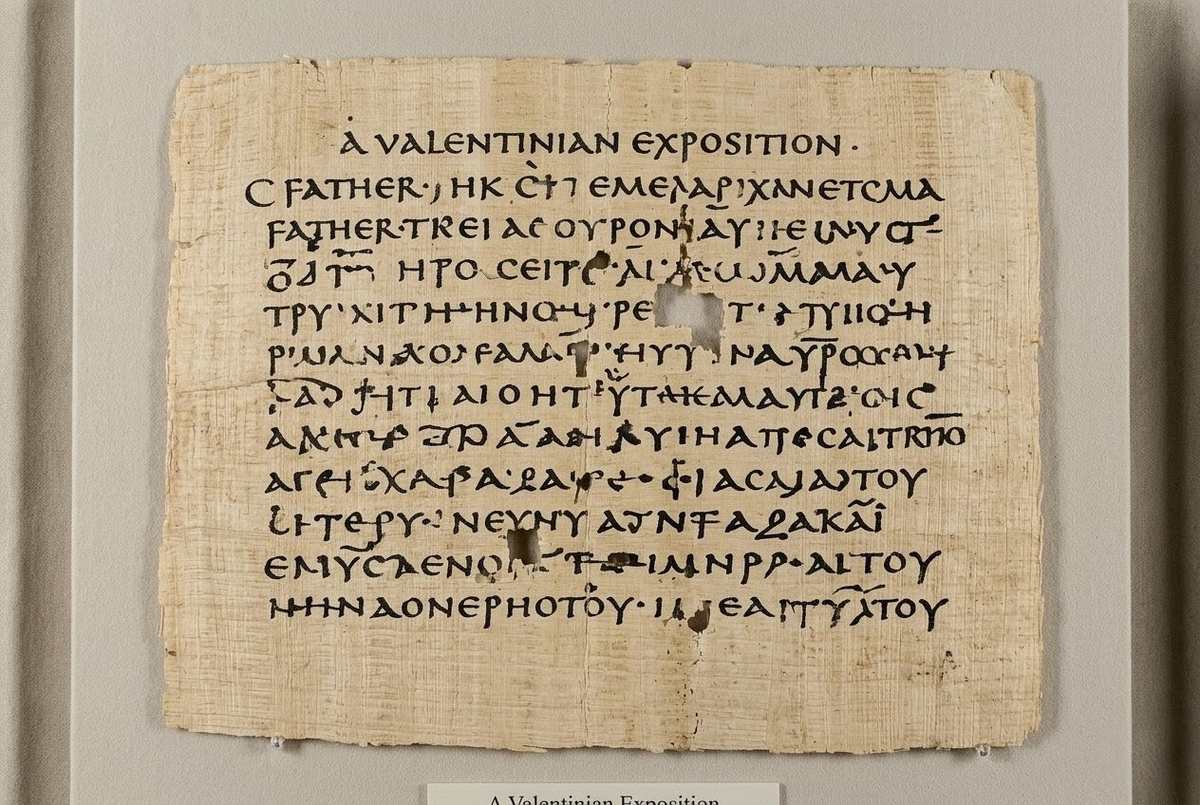
A Valentinian Exposition is one of the most important Valentinian or Valentinian-related texts in Nag Hammadi Codex XI. Preserved as NHC XI,2, it appears with short related ritual fragments on anointing, baptism and eucharist, giving rare evidence for how Valentinian theology could join cosmology, sacrament and restoration.
The surviving text is fragmentary, so it must be read carefully. It does not give us a perfectly complete ritual manual or a neat diagram of every Valentinian belief. But it does preserve major themes: the Pleroma, aeons, paired emanations, Sophia, deficiency, the Saviour, the formation of humanity, sacramental language and the hope of restoration.
Placed after Interpretation of Knowledge, this text takes us deeper into the Codex XI Valentinian layer. Interpretation of Knowledge asks how knowledge works inside community. A Valentinian Exposition turns back towards the great architecture behind that community: Fullness, fall, ritual and return.
What is A Valentinian Exposition?
A Valentinian Exposition is a fragmentary Valentinian or Valentinian-related Nag Hammadi text preserved in Codex XI,2. It describes the divine Fullness, aeons, the drama of Sophia, the Saviour’s restorative work, the formation of humanity and sacramental themes connected with anointing, baptism and eucharist.
The text is important because it joins two major sides of Valentinian spirituality: cosmology and ritual. It shows that the Valentinian path was not only a myth of origin, but also a practice of transformation.
Content Note: This article discusses ancient symbolic ideas about spiritual hierarchy, divine emanation, Sophia’s fall, the Demiurge, sacraments, salvation and restoration. The manuscript is fragmentary, so ritual details and mythic structures should be read with scholarly caution rather than treated as a complete instruction manual.
Table of Contents
- Text and Codex Setting
- Why A Valentinian Exposition Matters
- A Fragmentary but Important Witness
- The Pleroma and the Aeons
- Syzygies: Divine Life as Paired Relation
- Sophia, Desire and Deficiency
- The Demiurge and the Lower World
- Humanity as Mixed Being
- Anointing, Baptism and Eucharist
- The Saviour and Spiritual Restoration
- Restoration and Return
- Comparison with Other Valentinian Texts
- Reading A Valentinian Exposition Today
- Frequently Asked Questions
- Further Reading
- References and Sources
Text and Codex Setting
A Valentinian Exposition is preserved in Nag Hammadi Codex XI as the second tractate. Codex XI also contains Interpretation of Knowledge, several short Valentinian ritual fragments, Allogenes and Hypsiphrone.
The relationship between the main exposition and the ritual fragments is important. The fragments are often treated alongside the exposition because they preserve closely related sacramental material on anointing, baptism and eucharist. Together, they give a rare glimpse of Valentinian theology in both mythic and ritual form.
The text survives in Coptic, probably reflecting Greek or Greek-influenced Valentinian material. Its condition is damaged and incomplete, which means any reconstruction of its full system must remain careful and provisional.
That fragmentary condition is not a failure of the text. It is part of how the Nag Hammadi Library reaches us: not as a polished modern handbook, but as a broken lamp still giving light through the cracks.
Codex Note: A Valentinian Exposition is Nag Hammadi Codex XI,2. It is usually read beside the short Codex XI fragments on anointing, baptism and eucharist, though the surviving material is incomplete.
Why A Valentinian Exposition Matters
A Valentinian Exposition matters because it preserves a rare technical layer of Valentinian thought. While the Gospel of Truth is lyrical and the Gospel of Philip is symbolic and sacramental, this text gives a more compressed map of cosmology, fall and restoration.
It also matters because of its ritual fragments. The Valentinian tradition did not simply reject Christian sacraments. It often reinterpreted them through a deeper symbolic framework. Anointing, baptism and eucharist become signs of transformation, belonging and restoration to the divine Fullness.
The text also shows the importance of Sophia within Valentinian theology. Her movement, error, grief and restoration help explain how deficiency enters reality and how healing becomes possible.
For the ZenithEye reading route, this text follows naturally after Interpretation of Knowledge. One text shows knowledge under the pressure of community life. The other shows knowledge inside the wider drama of Pleroma, Sophia and sacramental restoration.
A Fragmentary but Important Witness
The first rule for reading A Valentinian Exposition is humility. The manuscript is fragmentary. Some parts are damaged, and the relation between the exposition and the attached ritual materials is not always simple.
This means we should avoid overconfident claims. The text gives evidence of Valentinian cosmology and ritual language, but it does not let us reconstruct every ritual gesture, every spoken formula or every community practice with certainty.
What survives is still valuable. Even in damaged form, the text shows a tradition concerned with divine order, the tragedy of deficiency, the rescue of Sophia, the formation of humanity and the sacramental transformation of the spiritual person.
Its fragments are like pieces of stained glass from a larger window. We cannot always see the whole design, but the colours still tell us what kind of light once passed through.
The Pleroma and the Aeons
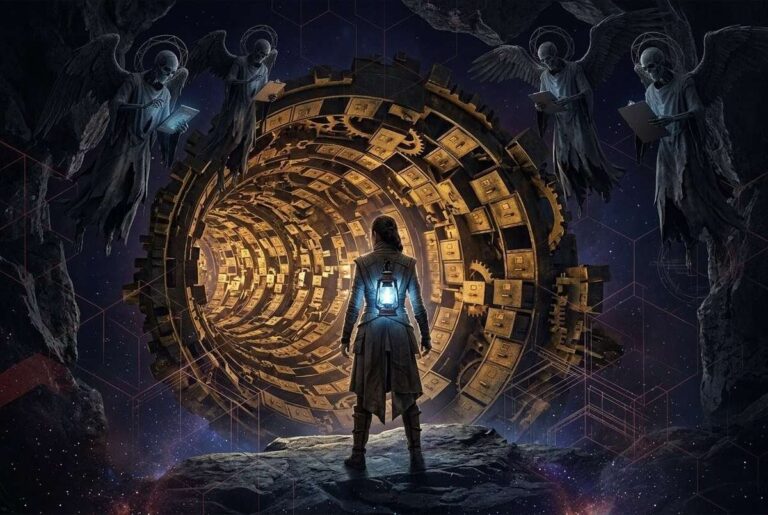
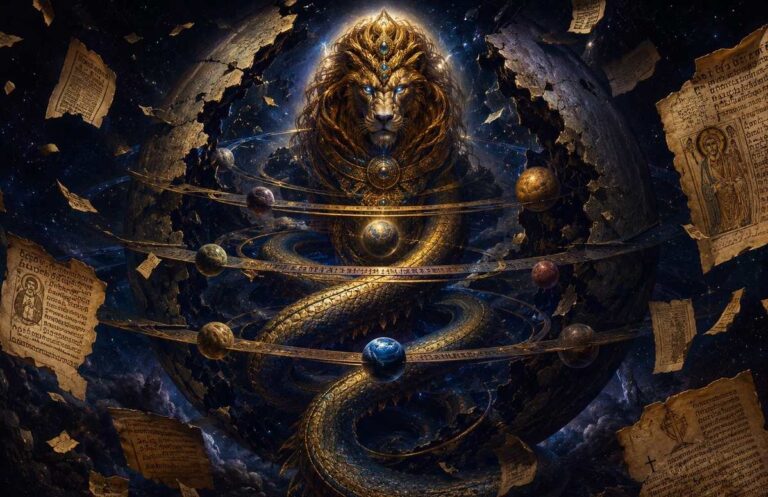
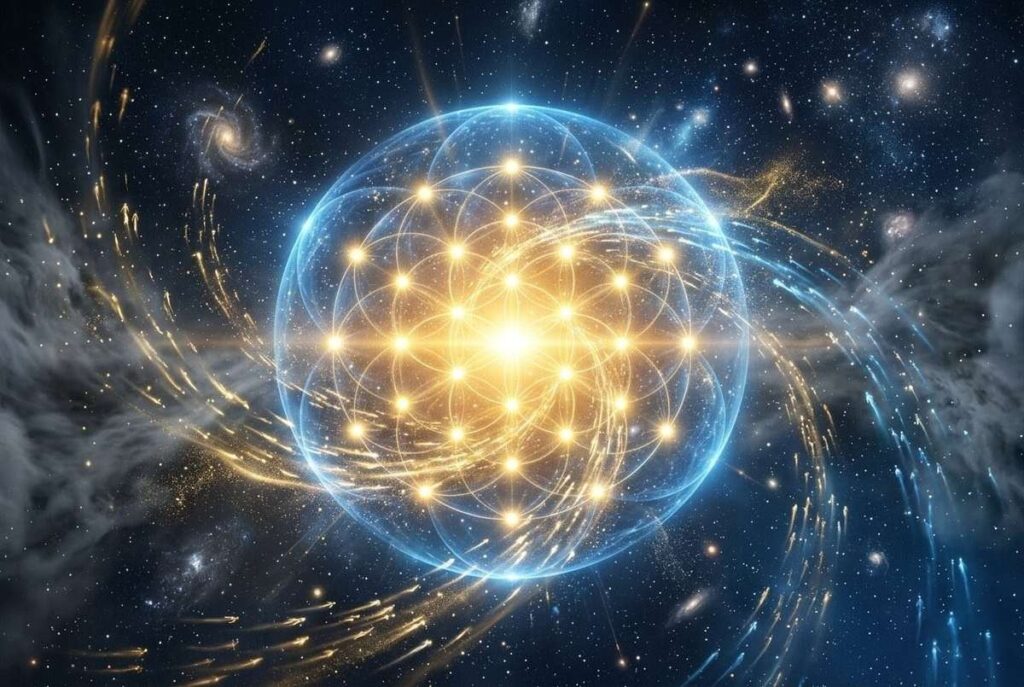
The Pleroma means Fullness. In Valentinian theology, it is the divine realm of fullness, relation and emanation. The aeons are not ordinary gods competing with one another. They are expressions, aspects or living forms of divine reality within the Fullness.
Valentinian systems often speak of thirty aeons, arranged in ordered relations. This pattern is known from several Valentinian sources and from ancient heresiological reports, though individual details can vary across witnesses.
The aeons are sometimes grouped as the Ogdoad, Decad and Dodecad. These groupings express the structure of divine fullness, not a dry heavenly census. The point is that divine life is abundant, ordered and relational.
At the source stands the ineffable Father, beyond full comprehension. From this hidden root, the divine Fullness unfolds through emanation, relation and self-expression.
Syzygies: Divine Life as Paired Relation
One of the key Valentinian ideas is the syzygy, or paired relation. Aeons often appear as complementary pairs: Depth and Silence, Mind and Truth, Word and Life, Humanity and Church, depending on the source and form of the system.
This paired structure matters because divine life is not imagined as isolated self-enclosure. Fullness is relational. Each aeon belongs within a living pattern of mutuality.
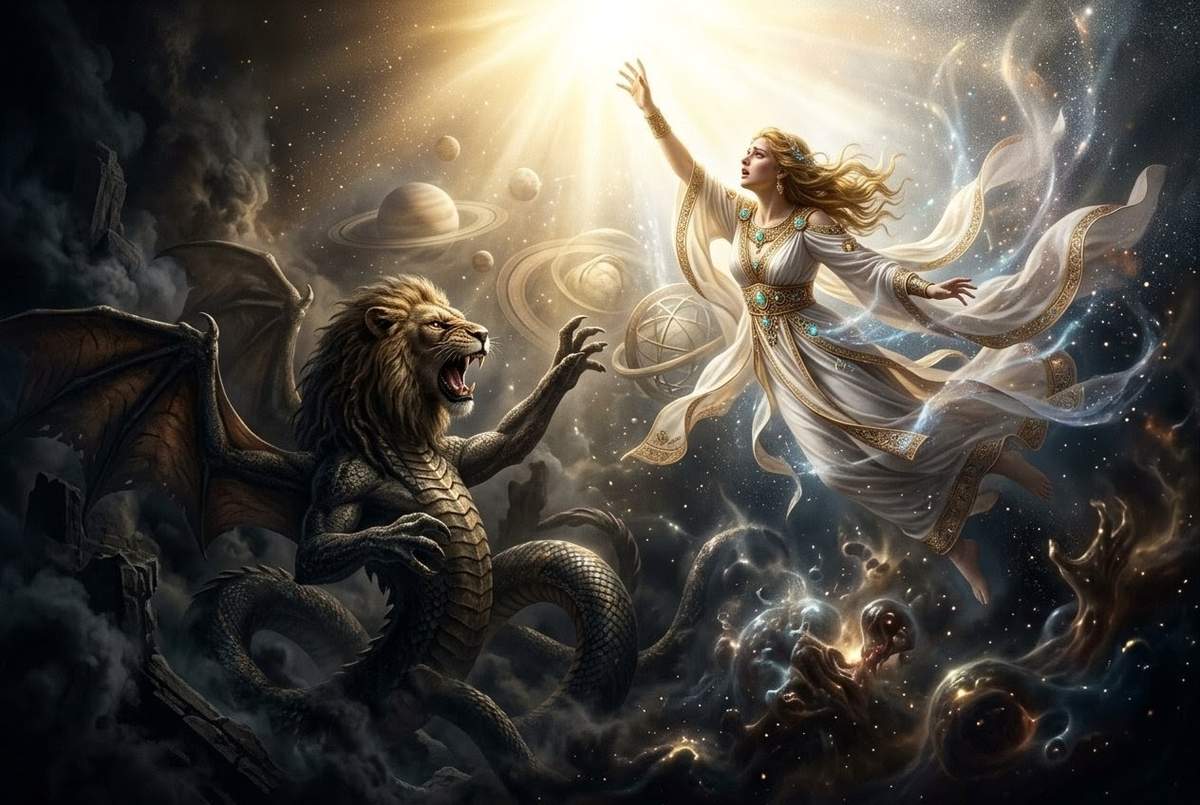
The syzygy also helps explain Sophia’s drama. Her movement outside proper relation becomes a symbol of desire separated from fullness, wisdom reaching beyond its measure, longing attempting to grasp the unknowable source alone.
This is not merely mythic furniture. It is spiritual psychology in cosmic costume. The soul, too, suffers when it tries to know, possess or become whole without relation to the deeper source.
Primary Source Theme: Valentinian cosmology often imagines divine reality through paired aeons or syzygies. Fullness is not solitary isolation, but ordered relation.
Sophia, Desire and Deficiency
Sophia, Wisdom, stands near the edge of many Valentinian myths. Her longing for the incomprehensible Father creates a drama of desire, error and deficiency.
In broad Valentinian terms, Sophia’s movement is not usually treated as simple wickedness. It is a disorder of desire, a reaching beyond proper relation. Wisdom longs for the source, but the longing becomes unstable when separated from harmony and measure.
The result is deficiency. Something incomplete comes forth, and the lower order begins to emerge. This is one of the ways Valentinian myth explains the world of limitation without making the highest Father the direct author of disorder.
Sophia’s importance lies not only in her fall, but in her restoration. Her cry, repentance and rescue show that deficiency is not final. Wisdom can be healed. What slips from fullness can be brought back towards it.
The Demiurge and the Lower World
The figure of the Demiurge appears in many Gnostic systems as the maker or organiser of the lower world. In Valentinian contexts, this figure is often more complex than in sharper Sethian myths.
The Demiurge is linked with ignorance, limitation and the lower order. He does not fully know the higher source from which reality ultimately comes. The world he shapes reflects mixture, partial knowledge and deficiency.
Yet Valentinian theology often avoids presenting the lower maker as an equal rival to the highest God. The problem is ignorance and limitation, not a second ultimate principle opposed to the Father.
This difference matters. The lower world is real as a realm of experience, suffering and formation, but it is not the deepest reality. Its disorder can be healed because its root problem is separation from knowledge of the Fullness.
Humanity as Mixed Being
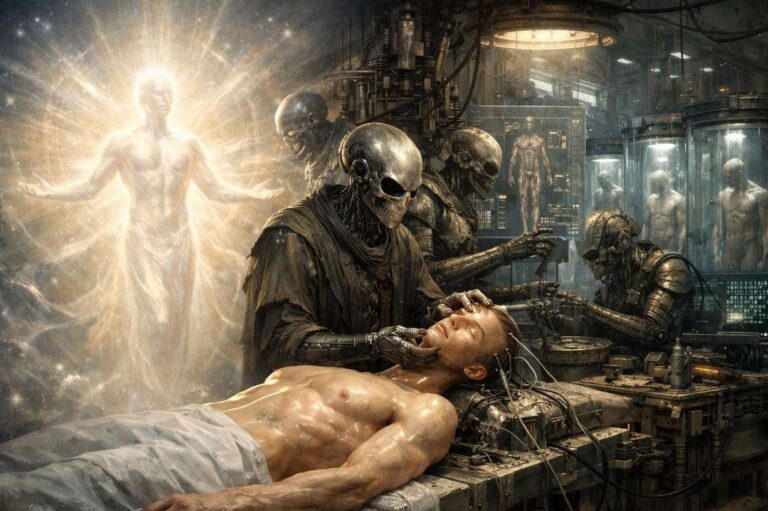
A Valentinian Exposition belongs to a tradition that understands human beings as mixed. Humanity participates in matter, soul and spirit. This threefold pattern appears throughout Valentinian anthropology.
The material dimension belongs to the level of body, limitation and dissolution.
The psychic dimension belongs to soul, moral formation, faith and a more gradual response to truth.
The spiritual dimension belongs to the divine seed, recognition and return to the Pleroma.
Modern readers should handle this carefully. Ancient Valentinian categories should not be used to rank living people or to turn spirituality into superiority. Read symbolically, the threefold structure describes different layers of human life and different degrees of openness to truth.
In Plain Terms
A Valentinian Exposition presents human life as mixed: matter, soul and spirit are entangled. Salvation is not just escape from the body, but the awakening and restoration of the spiritual element through knowledge, sacrament and the Saviour’s work.
Anointing, Baptism and Eucharist
The short ritual fragments connected with A Valentinian Exposition are among the most important reasons this material matters. They show that Valentinian Christianity could retain sacramental practice while interpreting it in a strongly symbolic and transformative way.
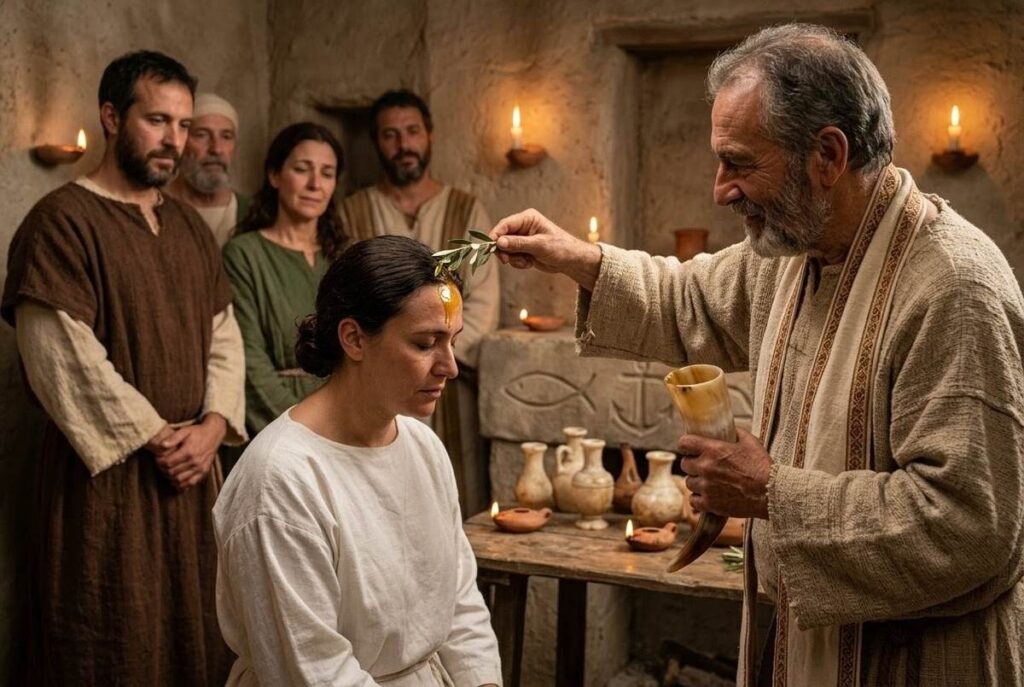
Anointing is associated with oil, blessing, spiritual strengthening and the seal of belonging. In Valentinian sacramental imagination, chrism can mark the person as participating in a higher reality.
Baptism is not merely external washing. It can be read as passage, purification, awakening and clothing with light. Water becomes a sign of transition from ignorance to restored life.
Eucharist is treated as more than ordinary bread and wine. It becomes a symbolic meal of participation, remembrance and transformation, linked with the descent of the Saviour and the soul’s restoration.
Because the surviving ritual material is fragmentary, we should not pretend to know every detail of Valentinian practice. What we can say is more modest and more reliable: sacrament mattered, and ritual signs were interpreted as vehicles of spiritual transformation.
Scholarly Caution: The ritual fragments are precious, but damaged. They show that anointing, baptism and eucharist were interpreted through Valentinian symbolism, but they do not give a fully recoverable step-by-step liturgy.
The Saviour and Spiritual Restoration
The Saviour’s role in Valentinian theology is to reveal, heal, restore and gather. He descends into the realm of deficiency so that what has become scattered can recognise its source and return.
In this setting, salvation is both external and internal. The Saviour comes from beyond the lower order, but the spiritual seed must also awaken within the human being. Rescue and recognition belong together.
This links A Valentinian Exposition to the Gospel of Truth. There, the Saviour guides those who wandered in error. Here, that same restorative work is set inside a more technical myth of Sophia, aeons and sacraments.
Salvation is therefore not mere information. It is the healing of relation: spirit remembers spirit, Sophia is restored, the lower world loses its false finality, and the Fullness draws its own back home.
Restoration and Return
The final horizon of Valentinian theology is restoration. The Greek word apokatastasis is often used for the idea of return, restoration or reconstitution of what has become disordered.
In this worldview, the story does not end with Sophia’s error. It ends with healing. The spiritual elements are gathered. Deficiency is overcome. The Pleroma is restored to harmony.
This does not mean every detail of the end can be reconstructed from the fragmentary text. But the direction is clear: Valentinian myth is not only a story of fall. It is a story of return.
The wound in Wisdom becomes the path by which Wisdom is healed. The lower world becomes the site where recognition can awaken. The lost spark is not forgotten by the Fullness.
Comparison with Other Valentinian Texts
A Valentinian Exposition becomes clearer when read beside other Valentinian and Valentinian-related texts.
The Gospel of Truth gives the poetic centre: error, joy, recognition, the Father’s name and the end of wandering.
The Gospel of Philip gives the sacramental imagination: baptism, chrism, eucharist, redemption, bridal chamber, image, name and sacred union.
The Tripartite Tractate gives the broad systematic architecture: Father, Pleroma, deficiency, creation, humanity, Saviour, Church and restoration.
Interpretation of Knowledge gives the community question: how should people with different gifts and levels of understanding live together?
A Valentinian Exposition gathers several of these strands into a compressed Codex XI witness: cosmology, Sophia, sacrament and return, all glittering through a damaged but still potent manuscript window.
Reading A Valentinian Exposition Today
Modern readers should approach A Valentinian Exposition with patience. It is not as immediately accessible as the Gospel of Truth or the Treatise on the Resurrection. Its fragmentary state and technical themes require slow reading.
Its value lies in showing how Valentinian thought joined myth, ritual and spiritual anthropology. The text does not let cosmology float away into abstraction. It connects the structure of the Pleroma with the transformation of the initiate.
It also helps correct a lazy picture of Gnosticism as simply anti-ritual or anti-Christian. Valentinian sources often worked with Christian language and sacramental forms, but read them through a deeper symbolic grammar of restoration.
Read carefully, A Valentinian Exposition becomes a map of spiritual repair. Wisdom falls, but Wisdom is not abandoned. Matter obscures, but spirit can awaken. Ritual signs are fragile, but they can carry fire. The Fullness is wounded only in appearance; beneath the fracture, the return has already begun.
Safety Notice: This article explores symbolic, historical and spiritual ideas about divine emanation, spiritual hierarchy, Sophia, the Demiurge, sacraments, salvation and restoration. It is intended for grounded study of ancient texts, not as medical, psychological, legal or spiritual advice. Do not use ancient categories of spiritual, psychic and material humanity to rank or diminish living people. If themes of hidden status, cosmic systems, initiation or spiritual hierarchy become distressing or destabilising, seek support from a qualified professional, trusted support service or appropriate safeguarding body.
Frequently Asked Questions
What is A Valentinian Exposition?
A Valentinian Exposition is a fragmentary Valentinian or Valentinian-related Nag Hammadi text preserved in Codex XI,2. It discusses the Pleroma, aeons, Sophia, deficiency, humanity, the Saviour and sacramental restoration.
Where is A Valentinian Exposition found?
The text is found in Nag Hammadi Codex XI as tractate 2. It is commonly read alongside the short Codex XI ritual fragments on anointing, baptism and eucharist.
Is A Valentinian Exposition fragmentary?
Yes. The surviving manuscript is damaged and incomplete. This means its cosmology and ritual material should be interpreted carefully, without pretending that every detail of Valentinian practice can be fully reconstructed.
What are the thirty aeons in Valentinian theology?
The thirty aeons are divine emanations or expressions of Fullness in Valentinian cosmology. They are often arranged in paired relations called syzygies and grouped as the Ogdoad, Decad and Dodecad, though details can vary across sources.
What role does Sophia play in A Valentinian Exposition?
Sophia represents Wisdom near the edge of the divine Fullness. Her longing, error, deficiency and restoration help explain how disorder enters reality and how healing becomes possible through the Saviour’s restorative work.
What sacraments are connected with A Valentinian Exposition?
The text is associated with short ritual fragments on anointing, baptism and eucharist. These show that Valentinian Christianity could interpret Christian sacraments as signs of spiritual transformation, belonging and restoration.
Does A Valentinian Exposition give a complete ritual manual?
No. The ritual fragments are valuable but damaged. They show sacramental themes and symbolic interpretation, but they do not provide a complete step-by-step liturgy that can be reconstructed with certainty.
How should modern readers approach A Valentinian Exposition?
Modern readers should approach it slowly as a fragmentary Valentinian source. It is best read beside Interpretation of Knowledge, the Gospel of Philip, the Gospel of Truth and the Tripartite Tractate, with caution around hierarchy, ritual reconstruction and symbolic anthropology.
Further Reading
Continue through the related Valentinian, Codex XI and sacramental source layer:
- Interpretation of Knowledge: Valentinian community, spiritual gifts, teachers, humility and the body of truth.
- The Gospel of Philip: sacrament, bridal chamber, chrism, names, images and restored union.
- The Gospel of Truth: the poetic Valentinian meditation on joy, error, recognition and the Father’s name.
- The Tripartite Tractate: the broad Valentinian system of Father, Pleroma, deficiency, threefold humanity and restoration.
- The Treatise on the Resurrection: a pastoral Valentinian letter on death, resurrection and spiritual transformation.
- Valentinian Gnosticism: the wider school of Pleroma, deficiency, spiritual seed and restoration.
- Valentinian Sacramental Theology: deeper context for anointing, baptism, eucharist and bridal chamber symbolism.
- Sethian and Valentinian Traditions: a comparison of two major Gnostic currents in the Nag Hammadi Library.
- Gnostic Schools: a wider comparison of Sethian, Valentinian, Hermetic and related traditions.
- Nag Hammadi Library: Complete Guide to the Gnostic Scriptures: the broader archive guide to the codices, tractates and traditions.
References and Sources
The following sources support the historical, textual and interpretive claims made in this article.
Primary Sources and Critical Editions
- A Valentinian Exposition. Nag Hammadi Codex XI,2.
- On the Anointing. Nag Hammadi Codex XI.
- On Baptism. Nag Hammadi Codex XI.
- On the Eucharist. Nag Hammadi Codex XI.
- The Gospel of Philip. Nag Hammadi Codex II,3.
- The Gospel of Truth. Nag Hammadi Codex I,3.
- The Tripartite Tractate. Nag Hammadi Codex I,5.
- Robinson, James M., ed. The Nag Hammadi Library in English. Harper & Row / HarperSanFrancisco, revised editions.
- Meyer, Marvin, ed. The Nag Hammadi Scriptures. HarperOne, 2007.
- Layton, Bentley. The Gnostic Scriptures. Doubleday, 1987.
- Turner, John D. Studies and editions of A Valentinian Exposition in the Coptic Gnostic Library tradition.
Scholarly Monographs and Studies
- Thomassen, Einar. The Spiritual Seed: The Church of the Valentinians. Brill, 2006.
- Dunderberg, Ismo. Beyond Gnosticism: Myth, Lifestyle, and Society in the School of Valentinus. Columbia University Press, 2008.
- Markschies, Christoph. Valentinus Gnosticus? Mohr Siebeck, 1992.
- King, Karen L. What Is Gnosticism?. Harvard University Press, 2003.
- Williams, Michael Allen. Rethinking “Gnosticism”: An Argument for Dismantling a Dubious Category. Princeton University Press, 1996.
- Brakke, David. The Gnostics: Myth, Ritual, and Diversity in Early Christianity. Harvard University Press, 2010.
Comparative and Thematic Studies
- Irenaeus of Lyons. Against Heresies, especially Book I, as an ancient hostile witness to Valentinian systems.
- Hippolytus of Rome. Refutation of All Heresies, especially Book VI, as another ancient witness to Valentinian traditions.
- Pagels, Elaine. The Gnostic Gospels. Random House, 1979.
- Pearson, Birger A. Ancient Gnosticism: Traditions and Literature. Fortress Press, 2007.
- Logan, A.H.B. Gnostic Truth and Christian Heresy: A Study in the History of Gnosticism. T&T Clark, 1996.
- van den Broek, Roelof. Gnostic Religion in Antiquity. Cambridge University Press, 2013.
Reading Note: A Valentinian Exposition is best read after Interpretation of Knowledge and beside the Gospel of Philip. Interpretation of Knowledge shows Valentinian community life, Philip shows sacramental symbolism, and A Valentinian Exposition shows the fragmentary but powerful Codex XI bridge between cosmology, sacrament and restoration.