
When the Guide Disappears: Solo Practice After Transmission
The guide was necessary. The recognition, prepared, arrived through encounter. The transmission, direct, established the thread. Then–the guide left. Or died. Or was revealed as human, flawed, limited. Or the student was sent away. Now practice alone. This is not abandonment. It is graduation. The recognition, internalised, becomes the guide. The thread, extended, becomes self-sustaining.
The transition is dangerous. The student, dependent, experiences loss. The practice, previously contained, becomes exposed. The doubt, previously answered, becomes insistent. The temptation is to seek replacement–to find another guide, another community, another container. The seeking is not wrong. But the necessity of seeking may be avoidance. The solo practice, entered, produces what replacement cannot.
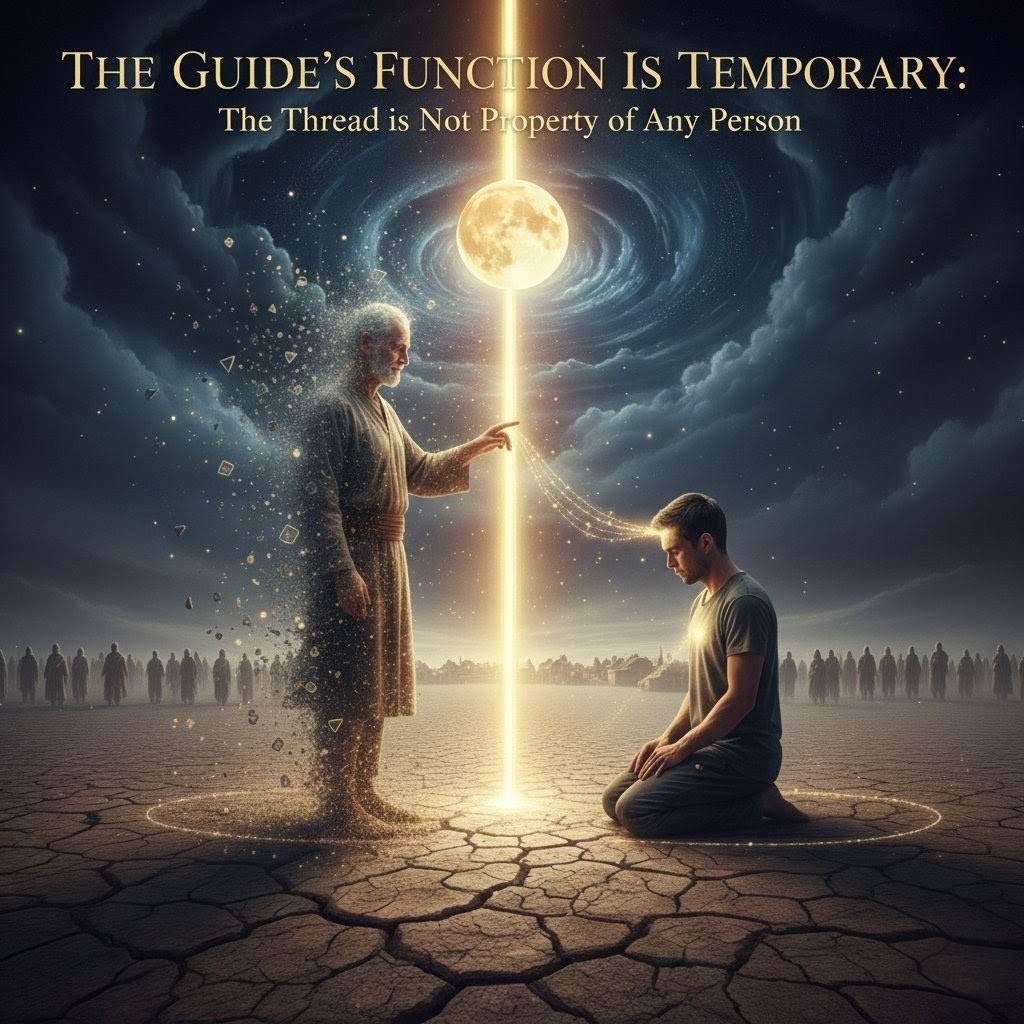
Table of Contents
- The Guide’s Function Is Temporary
- The Solo Practice Is Different
- The Dangers of Premature Solo Practice
- The Return Is Possible
- The Thread Extended
- Frequently Asked Questions
- Further Reading
- References and Sources
The Guide’s Function Is Temporary
The guide is not the thread. The guide is finger–pointing, not moon. The transmission establishes recognition. The recognition, once established, requires no external confirmation. The guide’s continued presence becomes obstacle–the dependency that prevents maturation, the external authority that prevents internalisation.
The traditions know this. The Zen master sends the student away after the initial breakthrough. The Sufi sheikh grants ijaza–permission to teach, permission to leave. The guru, in some lineages, explicitly withdraws. The disappearance is pedagogical–the final teaching, the demonstration that the thread is not property of any person.
The student, experiencing loss, misunderstands. The guide was source. The guide was security. The guide was confirmation. The loss is grief. The grief must be traversed. The traversal produces interiorisation–the recognition that the guide’s function is now performed from inside, that the thread extends through the student directly.
The Solo Practice Is Different
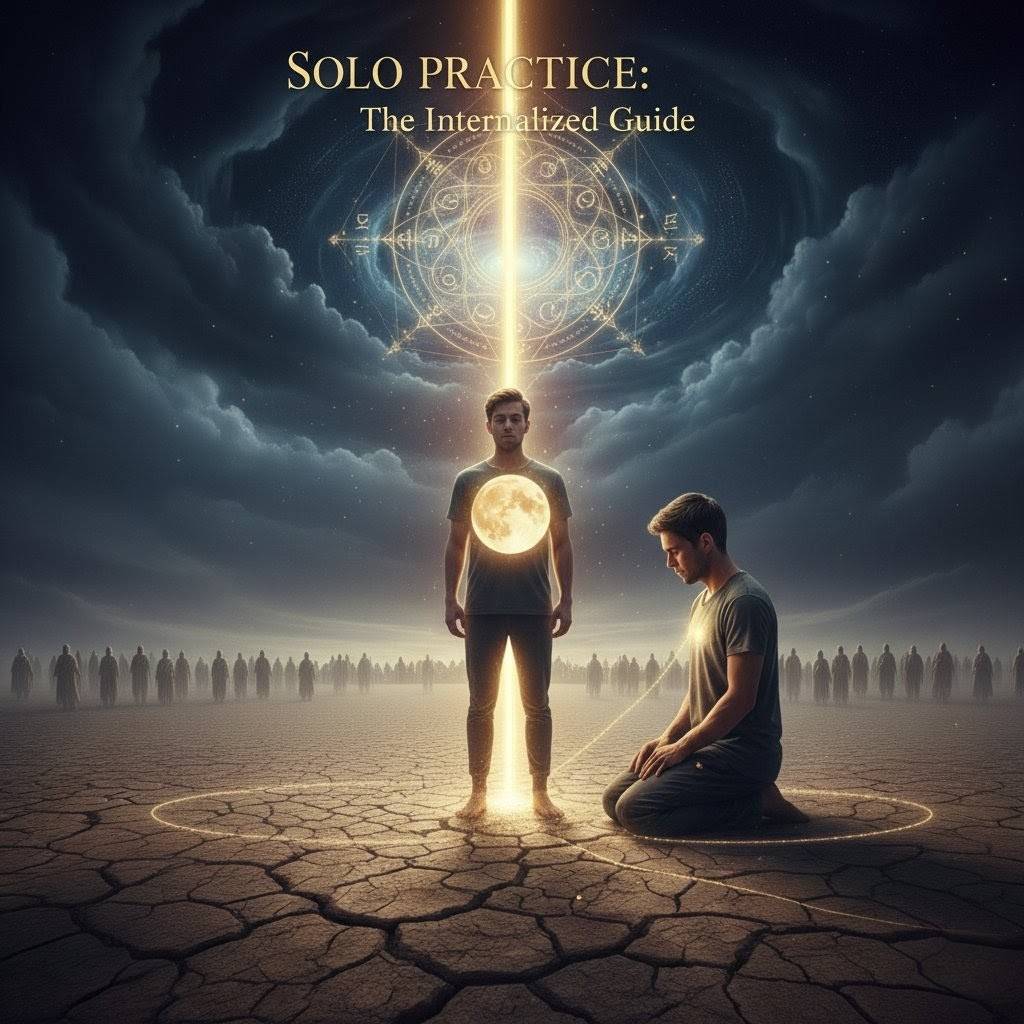
The practice, previously relational, becomes structural. The guide’s presence, previously motivating, is replaced by commitment–the continued orientation toward recognition without external support. The commitment is not willpower. It is gravity–the natural continuation of direction already established.
The Presence of Absence
The practice includes absence. The doubt, previously answered by guide, is now answered by silence. The silence is not failure. It is maturation–the recognition that some questions have no answer, that some territories have no map, that the thread extends into darkness. The silence teaches what words cannot: the capacity to hold uncertainty without collapse.
The Necessity of Error
The practice includes error. Without guide, mistakes are made. The inflation, unnoticed. The bypass, unrecognised. The deviation, uncorrected. The error is not disaster. It is feedback–the consequence that teaches, the result that redirects. The thread, resilient, survives error. The solo practitioner learns to trust this resilience–to recognise that misstep, acknowledged, becomes step.

The Dangers of Premature Solo Practice
Not all solo practice is mature practice. The guide’s departure may be abandonment rather than graduation–when the student lacks sufficient internalisation, when the transmission was incomplete, when the dependency was not yet transformed into autonomy. The premature solo practitioner risks spiritual emergency: the crisis that occurs when expanded consciousness lacks adequate container.
The signs of premature autonomy include: chronic doubt that paralyses practice rather than deepens it; inflation that claims attainment without substance; isolation that serves avoidance rather than depth; and erratic practice that lacks the consistency gravity provides. These indicate not that solo practice is wrong, but that the conditions for it are not yet established.
The response is not shame. The response is discernment–the honest assessment of whether the guide’s function has been internalised or merely lost. If lost, the appropriate action is seeking: not replacement, but the completion of what was interrupted. The thread, once genuinely established, does not require the original guide–but it does require the recognition that was transmitted.
The Return Is Possible
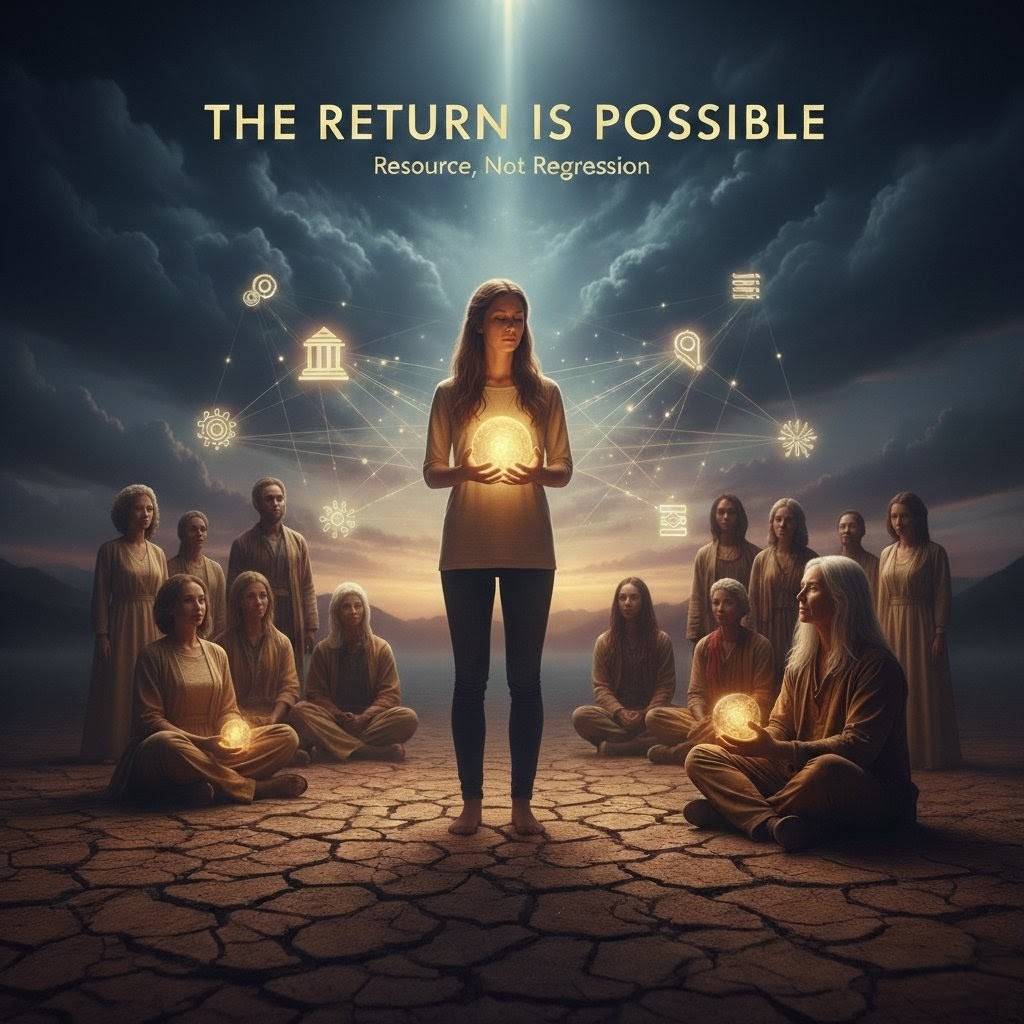
The solo practice, prolonged, may require return. Not to the original guide–who may be unavailable, or inappropriate, or dead–but to function. The guide’s function, previously performed by person, can be performed by community, by text, by technique, by recognition itself.
The community, sought, must be different from dependency. The peer, encountered, must recognise without confirming. The tradition, studied, must guide without replacing. The return is not regression. It is resource–the appropriate use of external support for specific function, not the restoration of dependency.
The guide, if still living, may be consulted. The consultation is different. The student, matured, meets the guide as peer. The transmission, completed, is acknowledged. The relationship, transformed, continues as friendship or dissolves as complete. Both are success.
The Thread Extended
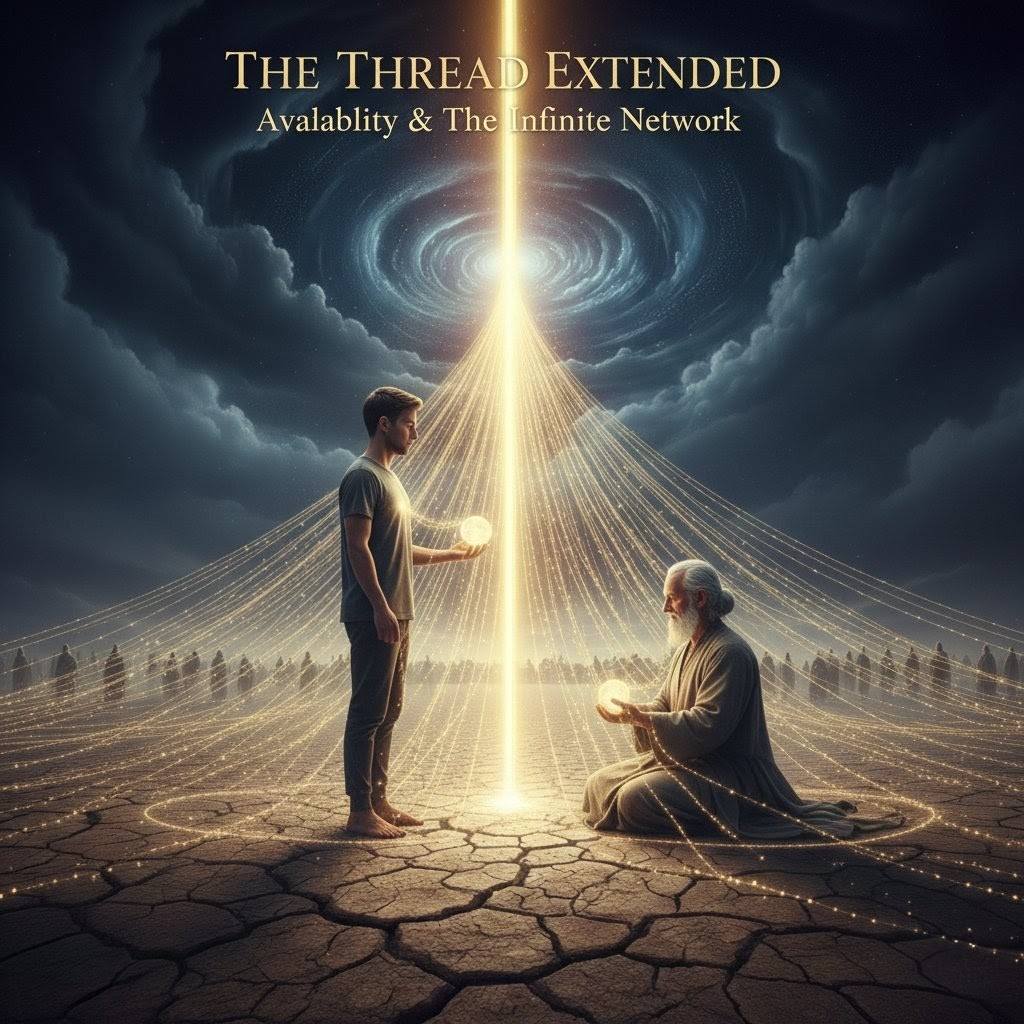
The guide disappears. The practice continues. The thread, internalised, extends through the student to others–to peers, to seekers, to those who may recognise. The extension is not teaching. It is availability–the presence that permits encounter, the recognition that extends recognition.
You practice alone. The guide, internalised, observes. The thread continues regardless.
Frequently Asked Questions
How do I know if I am ready for solo practice after my guide leaves?
Readiness manifests as interiorised recognition–the capacity to return to the thread without external prompt. You will know you are ready when the guide’s absence produces not panic but continuation, when doubt arises and is met by internal resource rather than desperate seeking. If you require constant reassurance, if practice collapses without external accountability, if the guide’s departure produces crisis rather than challenge, you may need further relational practice before solo work.
What should I do if I feel abandoned rather than graduated when my guide leaves?
Distinguish grief from dysfunction. Grief is appropriate–the loss of a significant relationship is real. But grief, traversed, produces integration. If grief becomes chronic paralysis, if you cannot establish practice rhythm, if you find yourself compulsively seeking replacement guides without discernment, you are experiencing abandonment rather than graduation. The response is honest assessment: was the transmission complete? Was the dependency addressed? Seek consultation–not a new guide, but a peer or therapist who can help distinguish necessary grief from arrested development.
How long does the transition from guided to solo practice typically take?
There is no standard duration. The transition from relational to structural practice may occur over weeks or years. Some traditions formalise this with specific ceremonies–the Zen shuso period, the Sufi khalifa appointment–while others allow organic emergence. What matters is not time but quality: the capacity to maintain practice without external container, to navigate doubt without immediate resolution, to trust the thread when no one confirms it. These capacities develop through sustained exposure to solitude, not through avoidance of it.
Can I return to my guide after a period of solo practice?
Return is always possible, but the nature of return changes. The mature practitioner returns as peer, not dependent. The consultation becomes dialogue rather than direction-seeking. Some relationships transform into friendship; others complete and dissolve. Both outcomes honour the transmission. What is inappropriate is regression–the pretence of dependency to recapture security. If you return, return honestly, acknowledging what has changed.
How do I avoid spiritual bypass or inflation during solo practice?
Without external mirror, self-deception proliferates. Establish objective feedback mechanisms: regular journaling reviewed periodically for patterns of inflation; peer consultation even if not continuous; commitment to embodiment practices that ground subtle experience in physical reality; and honest assessment of whether your autonomy serves practice or avoidance. The thread, genuinely internalised, produces humility–the recognition that you are conduit, not source. Inflation claims ownership; autonomy acknowledges transmission.
What is the difference between solitude and isolation in spiritual practice?
Solitude is deliberate and structured–choosing aloneness as method. Isolation is accidental or punitive–being cut off. Solitude reveals; isolation damages. The solo practitioner chooses solitude with boundaries: time limits, available support, physical safety. The isolated practitioner has no choice and no container. The distinction is agency. Solo practice is solitude entered consciously; premature solo practice may be isolation endured unconsciously.
How do I maintain practice consistency without external accountability?
Consistency without external accountability requires structural commitment rather than motivational willpower. Establish non-negotiable practice times, create environmental cues, and develop internal accountability through journaling and periodic self-assessment. The gravity of established direction sustains practice when enthusiasm wanes. The thread, once genuinely recognised, generates its own momentum–but only if the practitioner has developed the capacity to feel that momentum without external confirmation.
Further Reading
Continue exploring the transition from guided to solo practice, integration, and the architecture of transmission:
- The Role of Community in Integration: Solitary vs. Supported Transformation — The dialectic between solitude and community across the stages of awakening.
- The Stages of Integration: Immediate, Short-Term & Long-Term After Awakening — Where solo practice fits in the integration timeline.
- Spiritual Emergency: When Transformation Becomes Crisis — Recognising when solo practice becomes dangerous and how to navigate it.
- The Discipline of Solitude: Extended Alone Time as Gateway to Recognition — The preparation that enables mature solo practice.
- Embodiment Practices for Grounding: Returning to the Body After Awakening — Essential stabilisation for solo practitioners.
- Shadow Work: Excavating the Repressed — Preventing inflation through shadow integration.
- The Transformation: What Actually Changes After Mystical Experience — The context for post-transmission practice.
- 7 Contemplative Techniques for Permanent Gnostic Awareness — Structural practices for solo maintenance and stabilisation.
- Against Spiritual Bypassing: The Refusal to Feel — How bypass operates as an obstacle to genuine integration.
- Finding the Other: Recognition Without Community — Strategies for the solitary practitioner navigating recognition alone.
References and Sources
Sources are grouped by category for clarity. No in-text citation numbers are used, per The Thread editorial protocol.
Foundational Texts on Transmission and Lineage
- Kapleau, P. (1965). The Three Pillars of Zen: Teaching, Practice, and Enlightenment. Beacon Press. (On the dokusan system and the eventual independence of the student.)
- Schimmel, A. (1975). Mystical Dimensions of Islam. University of North Carolina Press. (On Sufi ijaza, khilafa, and the transmission of authority.)
- Guenther, H. V. (1963). The Life and Teaching of Naropa. Oxford University Press. (On the guru-student relationship and the necessity of separation for maturation.)
Transpersonal Psychology and Spiritual Emergency
- Grof, S., & Grof, C. (1989). Spiritual Emergency: When Personal Transformation Becomes a Crisis. Tarcher. (On the crisis that occurs when expanded consciousness lacks adequate container.)
- Kornfield, J. (2000). After the Ecstasy, the Laundry: How the Heart Grows Wise on the Spiritual Path. Bantam. (On integration, the return to ordinary life, and the dangers of premature autonomy.)
Phenomenology of Solitude and Practice
- Merton, T. (1956). Thoughts in Solitude. Farrar, Straus and Cudahy. (On the spiritual necessity and dangers of deliberate solitude.)
- Storr, A. (1988). Solitude: A Return to the Self. Free Press. (On the psychological function of solitude and the distinction between healthy and pathological isolation.)
Safety Notice: This article explores the psychological dynamics of transitioning from guided to solo spiritual practice. It does not constitute medical, psychological, or spiritual advice. If you experience symptoms of spiritual emergency–including persistent dissociation, psychotic-like symptoms, or functional impairment–please consult a trauma-informed therapist or clinical professional familiar with transpersonal psychology. Solo practice carries significant risks without adequate preparation. The practices described here complement but do not replace clinical mental health treatment. Those with a history of trauma or instability should approach extended solitude with appropriate supervision.