Apocalypses in Nag Hammadi: Visions of Cosmic Structure and Ultimate Destiny
Unveiling the Hidden Realms: The Apocalypses of the Nag Hammadi Library presents five texts that claim to reveal hidden realities–the structure of the cosmos, the nature of the divine, and the destiny of souls. These are not predictions of future catastrophe but unveilings of present truth, accessible only to vision and revelation. The Greek apokalypsis means unveiling, disclosure, revelation–and these documents present themselves as secret knowledge revealed to chosen seers who then transmit what they have seen to the worthy [1][2].
The five texts examined here–the Apocalypse of Paul, Apocalypse of Peter, First Apocalypse of James, Second Apocalypse of James, and Apocalypse of Adam–constitute the visionary dossier of the Nag Hammadi Library. Together they demonstrate that Gnosticism was not merely intellectual speculation but experiential religion–not just thinking about the divine but encountering it directly through heavenly ascent, mystical vision, and secret revelation. For scholars and contemplative readers alike, these texts preserve the most detailed accounts of visionary experience in the collection, offering maps of cosmic structure that the seer traverses with passwords, signs, and divine guidance [3][4].
Table of Contents
- Introduction — The Apocalyptic Genre in Gnosticism
- The Apocalyptic Texts
- Characteristics of Gnostic Apocalypses
- Reading the Apocalypses
- Why Apocalypses Matter
- Frequently Asked Questions
- Further Reading
- References and Sources
Introduction — The Apocalyptic Genre in Gnosticism
What is a Gnostic Apocalypse?
A Gnostic apocalypse is a revelatory text in which a chosen seer–Paul, Peter, James, Adam, or another figure–receives hidden knowledge about cosmic structure, divine nature, and human destiny through visionary experience or secret teaching. Unlike Jewish and Christian apocalypses that focus primarily on future eschatology, Gnostic apocalypses emphasise present cosmic geography: the hidden structure of reality accessible now through gnosis rather than merely at the end of time.
The five territories: Apocalypse of Paul (ten-heaven ascent) → Apocalypse of Peter (docetic crucifixion) → First Apocalypse of James (secret pre-crucifixion teaching) → Second Apocalypse of James (martyrdom and spirit) → Apocalypse of Adam (testament to Seth). By traversing these texts, the reader gains a comprehensive map of Gnostic visionary literature and its radical alternative to orthodox revelation [5][6].
The apocalypses of the Nag Hammadi Library claim to reveal hidden realities–the structure of the cosmos, the nature of the divine, the destiny of souls. These are not predictions of future catastrophe (though they include eschatology) but unveilings of present truth, accessible only to vision and revelation. The texts present themselves as secret knowledge revealed to chosen seers–Paul, Peter, James, Adam–who then transmit what they have seen to the worthy. This is the classified intelligence of the cosmos, the executive briefing papers that reveal the true administrative structure behind the branch office of material appearance [7].
Modern scholarship, particularly the work of Lautaro Roig Lanzillotta on the cosmological framework of the Apocalypse of Paul and the foundational studies of Murdock and Kaler, has established that these texts reflect actual visionary practices and ritual contexts rather than mere literary fantasies [8][9]. The repeated ascent formulas, the toll-collector passwords, the baptismal signs–all point to communities engaged in systematic spiritual training. For the contemporary reader, this scholarly recovery means that the apocalypses offer not just historical curiosity but recoverable method: the specific cosmology may be ancient, but the underlying technique of consciousness expansion remains perennially relevant.
The Apocalyptic Texts
The five texts presented here span the full range of Nag Hammadi apocalyptic traditions, from Pauline heavenly tours to Jamesian martyrdom accounts to Adamic testamentary revelations.
The Apocalypse of Paul — Ten-Heaven Ascent (NHC V,2)
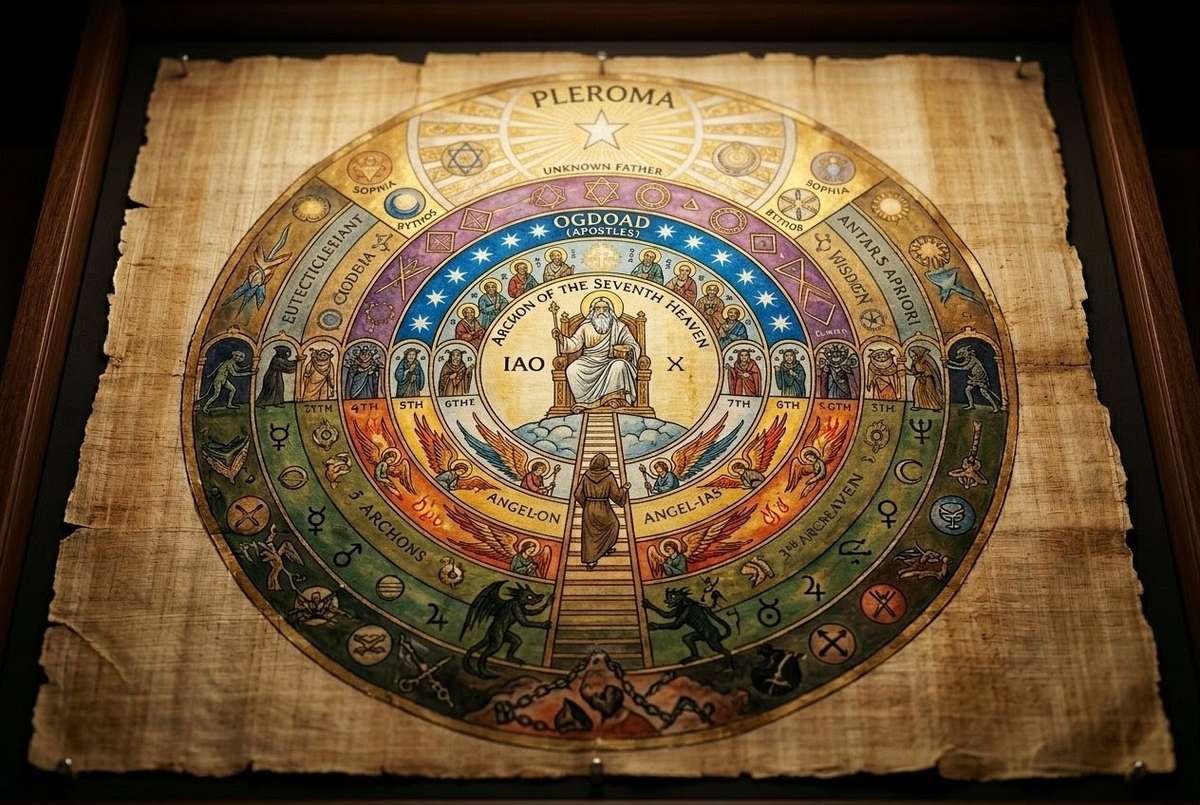
The Apocalypse of Paul presents a guided tour of the heavens as Paul’s secret experience. An angel appearing in the form of a little child accompanies Paul during his ascent, offering passwords to pass toll-collectors who scrutinise souls based on sins witnessed at specific hours [10].
Primary Source Citation: NHC V,2 24:2-8. “And then he went to the fifth heaven, and the fifth heaven was like the first. And I said to the angel, ‘Why is the fifth heaven like the first’? And he said to me, ‘The fifth heaven is the place where the toll-collectors dwell, who demand the whole toll, and they do not let the soul pass upward until they have exacted the toll.'”
Paul ascends through ten heavens, encountering various beings and learning cosmic secrets. In the fourth heaven, he witnesses a soul brought from the dead and whipped by angels; a toll-collector condemns its lawless actions, and three witnesses testify against it before the soul is cast down into a prepared body. In the seventh heaven, Paul confronts the Old Man (the Demiurge), showing him the sign and trampling the “mountain of Jericho” to gain passage. The toll-collectors in the fourth heaven demand passwords mitigated by baptism; the Divine Name serves as the ultimate security clearance that grants passage through all checkpoints. Theologically, this text presents Paul as the model of the ascending soul–one who knows the passwords, who shows the sign to the Demiurge, who transcends even the twelve apostles in the Ogdoad to reach the Pleroma. It is eschatology as celestial navigation, demonstrating that even the apostle required proper documentation to pass the archonic border control [11].
The Apocalypse of Peter — The Laughing Saviour and Docetic Cross (NHC VII,3)
The Apocalypse of Peter presents a revelation given to Peter by Jesus, showing the true meaning of the crucifixion. The text is a revelation dialogue in which the Saviour explains to Peter the distinction between the spiritual Christ and the material Jesus–a docetic Christology that maintains the divine nature cannot suffer [12].
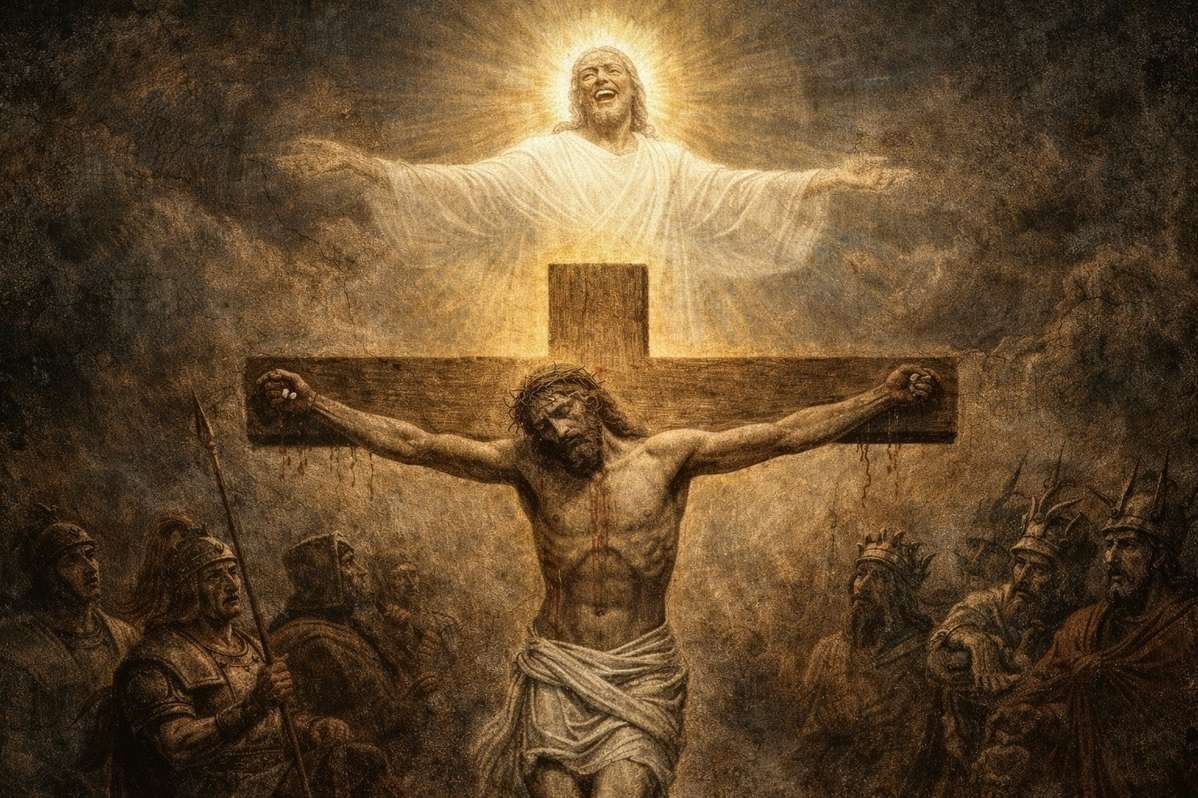
Primary Source Citation: NHC VII,3 81:15-23. “He whom you see above the cross, glad and laughing, is the living Jesus. But he into whose hands and feet they are driving the nails is his physical part, which is the substitute. They are putting to shame that which is in his likeness. But look at him and me.”
The vision near the end of the text is theologically decisive: Peter sees two figures at the cross–one laughing above it (the living Jesus) and one being nailed to it (the physical substitute). The Saviour explains that the archons crucified only their own “son,” the material body from which the real Saviour had escaped. The text presents a tripartite Saviour consisting of the intellectual Pleroma, the intellectual or holy Spirit, and the incorporeal body or living Saviour–temporarily connected with a fourth element, the material body. This is not anti-Christian polemic but an alternative soteriology: liberation comes through recognition of the illusion, not through participation in the suffering. The laughing Saviour represents the triumph of divine impassibility over archonic violence–the executive who cannot be harmed by the branch office’s attempted termination [13].
The First Apocalypse of James — Secret Teaching Before the Cross (NHC V,3)
The First Apocalypse of James presents secret teaching given by Jesus to his brother James before the crucifixion. The text combines eschatological instruction with reassurance about James’ fate, positioning James as the privileged recipient of hidden knowledge that the other apostles do not possess [14].
The text contains one of the earliest references to the nymphōn (bridal chamber) as the highest mystery: “The bridal chamber is the place of healing.” This sacramental reference establishes the First Apocalypse as an important witness to early Valentinian or related traditions about the bridal chamber as the culmination of initiation. The text also warns James about coming persecution and provides him with the secret knowledge necessary to endure cosmic trials. For the practitioner, this text offers the pre-departure briefing–the classified intelligence transmitted before the mission begins, ensuring that the agent has all necessary passwords and clearance protocols before entering hostile territory [15].
The Second Apocalypse of James — Martyrdom to the Spirit (NHC V,4)
The Second Apocalypse of James presents a different revelation to James, occurring after the resurrection. More overtly Gnostic than the first, with clearer references to the divine spark trapped in matter, the text culminates in James’ martyrdom by stoning–a death that parallels Jesus’ passion while rejecting physical suffering as spiritually significant [16].
Primary Source Citation: NHC V,4 60:15-20. “Do not be a martyr to the flesh, but a martyr to the spirit. For the flesh will not remain, but the spirit is the thing that remains.”
The text’s central theological claim is stark: “Do not be a martyr to the flesh, but a martyr to the spirit. For the flesh will not remain, but the spirit is the thing that remains.” This rejection of physical martyrdom distinguishes Gnostic soteriology from orthodox Christian valorisation of bodily suffering. James’ death is not a sacrifice that atones for sin but a liberation from material bondage–the casting off of a temporary garment rather than the glorification of physical pain. As stones are cast upon him, James extends his hands in a final prayer, beseeching God to deliver him from “this dead hope,” “sinful flesh,” and “evil death,” while invoking the mystery of salvation that renders him alive. This is martyrdom as therapeutic release from material bondage, not as forensic satisfaction of divine justice [17].
The Apocalypse of Adam — Testament to the Immovable Race (NHC V,5)
The Apocalypse of Adam presents itself as a “last testament” revelation delivered orally by the biblical Adam to his son Seth in the seven hundredth year of Adam’s life, just prior to his death. More Jewish in character than Christian, it reveals the Jewish substratum of Gnostic mythology and establishes Seth as the progenitor of the “immovable race” destined for salvation [18].
The text describes Adam and Eve’s primordial glory bestowed by the eternal God, their deception by the Demiurge Sacla, and the transmission of secret knowledge to Seth’s line. It prophesies three failed attempts by the demiurge to eradicate the enlightened lineage–the flood, the conflagration, and the judgment of the archons–culminating in the descent of a heavenly “illuminator” who imparts gnosis despite persecution by thirteen aeonic kingdoms. The narrative ends with an apocalyptic judgment scene and the holy baptism formula: “Yesseus, Mazareus, Yessedekeus, the Living Water.” For the practitioner, this text provides the genealogical security clearance–the proof of pedigree that establishes the reader as belonging to the immovable race, impervious to archonic persecution [19].
Characteristics of Gnostic Apocalypses
These five texts share features with Jewish and Christian apocalyptic literature, but with distinctively Gnostic emphases that transform the genre from future prediction to present cosmic cartography [20].
Cosmic Tours and Ascent Geography
The seer is guided through multiple heavens, learning the structure of reality. This is geography of the cosmos, not just prediction of future events. The Apocalypse of Paul’s ten-heaven structure, the Apocalypse of Adam’s thirteen aeonic kingdoms, and the various celestial checkpoints all function as maps–navigational charts for the soul’s journey. The cosmos is not a random expanse but a structured administration with specific jurisdictions, gatekeepers, and passage requirements [21].
Secret Knowledge for the Elect
The revelation is not for everyone but for the elect. “Do not speak of these things to the many, but only to those who are worthy.” This elitism is problematic from a modern perspective but essential to the genre: the apocalypse is a sealed document, a classified dossier whose contents are dangerous in the wrong hands. The reader must prove worthy before receiving the clearance to read–a hermeneutical circle that mirrors the soteriological logic of gnosis itself [22].
Present Reality and Soteriological Focus
The focus is not primarily on future eschatology but on present cosmic structure. The hidden world is unveiled now, not just at the end. The goal is salvation through knowledge–knowing the structure of the cosmos, the nature of the divine, the path of return. This transforms apocalyptic from speculation about the end times into a manual for present liberation. The seer does not merely predict the future but reveals the hidden architecture of the present, enabling the reader to navigate the celestial administration in real time [23].
Reading the Apocalypses
For contemporary readers, these texts demand both scholarly preparation and contemplative receptivity. Start with the Apocalypse of Paul–most accessible, most like other apocalyptic literature, with its clear ten-heaven structure and dramatic narrative. Then read the Apocalypse of Peter for the distinctive Gnostic crucifixion interpretation and the laughing Saviour motif [24].
Read them as visionary literature, not as historical report. The “journeys” are mystical experiences, not space travel. The “heavens” are states of consciousness, not physical locations. The toll-collectors are psychological obstacles, not literal bureaucrats–though the Gnostic metaphor of cosmic administration captures something true about the structure of inner experience. And read them critically–recognising that their cosmology reflects ancient astronomy, their elitism is problematic, their claims to secret knowledge are exclusive. They are not the final word but one word in a larger conversation [25].
Why Apocalypses Matter
These texts preserve the visionary dimension of Gnosticism–the conviction that hidden realities can be seen, that the cosmos has a structure accessible to mystical experience. For understanding Gnosticism as experiential, not merely intellectual, they are essential. They show that Gnostics sought direct encounter with the divine, not just correct belief [26].
For contemporary seekers, they offer models of expanded consciousness–ways of imagining reality beyond the material, paths of ascent beyond the ordinary. The specific cosmology (planets, archons, toll-collectors) reflects ancient astronomy, but the underlying insight (that reality has hidden structure, that consciousness can transcend material limits, that knowledge liberates) remains philosophically potent. The jar is open. The alternative archive has survived. These apocalypses offer not heresy to be refuted but visionary provocations to be engaged–challenges that continue to illuminate the boundaries, possibilities, and enduring questions of mystical experience [27].
Frequently Asked Questions
What are the apocalypses in the Nag Hammadi Library?
The Nag Hammadi Library contains five primary apocalyptic texts: the Apocalypse of Paul (NHC V,2), Apocalypse of Peter (NHC VII,3), First Apocalypse of James (NHC V,3), Second Apocalypse of James (NHC V,4), and Apocalypse of Adam (NHC V,5). These texts present visionary revelations of cosmic structure, divine nature, and human destiny revealed to chosen seers including Paul, Peter, James, and Adam.
How does the Apocalypse of Paul describe heavenly ascent?
The Apocalypse of Paul presents a ten-heaven ascent guided by a child-like spirit. Paul passes toll-collectors who scrutinise souls, witnesses judgment scenes in the fourth heaven, confronts the Demiurge (Old Man) in the seventh heaven by showing a sign, and ultimately reaches the tenth heaven where he greets his fellow spirits. The text functions as a navigational manual for celestial ascent.
What is the laughing Saviour in the Apocalypse of Peter?
The Apocalypse of Peter (NHC VII,3) presents a docetic vision in which the divine Christ laughs above the cross while a substitute–his physical part–suffers the nails. The Saviour explains that the archons crucified only their own son, the material body, while the real Jesus escaped. This laughing Saviour motif represents the triumph of divine impassibility over archonic violence.
What is the bridal chamber in the First Apocalypse of James?
The First Apocalypse of James (NHC V,3) contains one of the earliest references to the bridal chamber (nymphon) as the highest mystery: ‘The bridal chamber is the place of healing.’ This establishes the text as an important witness to early Valentinian or related traditions about the bridal chamber as the culmination of initiation and restoration to primordial wholeness.
How does the Second Apocalypse of James reinterpret martyrdom?
The Second Apocalypse of James (NHC V,4) rejects physical martyrdom with the command: ‘Do not be a martyr to the flesh, but a martyr to the spirit. For the flesh will not remain, but the spirit is the thing that remains.’ James’ death by stoning is portrayed as liberation from material bondage rather than sacrificial atonement–the casting off of a temporary garment.
What is the immovable race in the Apocalypse of Adam?
The Apocalypse of Adam (NHC V,5) establishes Seth as the progenitor of the ‘immovable race’–a spiritual lineage destined for salvation, impervious to archonic persecution. The text prophesies three failed attempts by the Demiurge to eradicate this enlightened lineage (flood, fire, judgment) and culminates in the descent of a heavenly illuminator who imparts gnosis despite persecution by thirteen aeonic kingdoms.
How should modern readers approach Gnostic apocalypses?
Modern readers should approach these texts as visionary literature rather than historical report–the journeys are mystical experiences, not space travel, and the heavens are states of consciousness. Start with the Apocalypse of Paul for narrative accessibility, then explore the distinctive Gnostic interpretations in Peter and James. Read critically, recognising the problematic elitism and exclusive claims to secret knowledge while appreciating the genuine philosophical insights about expanded consciousness and hidden reality.
Further Reading
These links connect the apocalypses to related resources within the ZenithEye library, providing pathways for deeper exploration of specific texts, traditions, and visionary themes.
- Apocalypse of Paul: Heavenly Ascent Beyond the Fourth Heaven — Deep dive into the ten-heaven tour and the toll-collector mythology that structures Pauline celestial navigation.
- Apocalypse of Peter: The Laughing Saviour and Docetic Cross — Extended study of the docetic Christology and the tripartite Saviour who cannot be harmed by material violence.
- First Apocalypse of James — Analysis of the secret pre-crucifixion teaching and the earliest reference to the bridal chamber as place of healing.
- Second Apocalypse of James — Study of the martyrdom account and the rejection of physical suffering as spiritually significant.
- Apocalypse of Adam — Commentary on the testamentary revelation to Seth and the immovable race destined for salvation.
- Apocalypses in the Nag Hammadi Library — The broader overview of the apocalyptic genre across the entire collection.
- Ascent Literature in the Nag Hammadi Library — Related visionary texts and celestial navigation protocols that complement the apocalypses.
- Jewish Apocalyptic Roots of Gnosticism — Background on the Jewish apocalyptic traditions that influenced the Gnostic apocalyptic genre.
- Nag Hammadi for Beginners: A 10-Text Journey — The foundational introduction for newcomers before tackling the visionary complexities of the apocalypses.
- Nag Hammadi Library: Complete Guide to 46 Gnostic Scriptures — Comprehensive map of the entire collection for readers ready to expand beyond the five apocalypses.
References and Sources
The following sources support the claims and quotations presented in this article. All citations to the Nag Hammadi Library represent direct translations from the Coptic text as established in the standard critical editions.
Primary Sources and Critical Editions
- [1] Robinson, J.M. (Ed.). (1988). The Nag Hammadi Library in English (4th ed.). Brill.
- [2] Meyer, M. (Ed.). (2007). The Nag Hammadi Scriptures: The International Edition. HarperOne.
- [3] Layton, B. (1987). The Gnostic Scriptures: A New Translation with Annotations and Introductions. Doubleday.
- [4] Murdock, W.R. & Kaler, M. (Trans.). (2005). L’Apocalypse de Paul (NH V,2). Bibliotheque copte de Nag Hammadi, Section “Textes” 31. Presses de l’Universite Laval.
- [5] MacRae, G. & Murdock, W.R. (1979). “Apocalypse of Paul” in Nag Hammadi Codices V,2-5 and VI. NHS 11. Brill.
Scholarly Monographs and Commentaries
- [6] Roig Lanzillotta, L. (2016). “The Apocalypse of Paul (NHC V,2): Cosmology, Anthropology, and Ethics.” Gnosis: Journal of Gnostic Studies, 1(1-2), 110-131.
- [7] Brakke, D. (2010). The Gnostics: Myth, Ritual, and Diversity in Early Christianity. Harvard University Press.
- [8] Hedrick, C.W. (1980). The Apocalypse of Adam: A Literary and Source Analysis. Scholars Press.
- [9] Schenke, H.M. (2001). Nag Hammadi Deutsch, Vol. 1. De Gruyter.
- [10] Thomassen, E. (2006). The Spiritual Seed: The Church of the ‘Valentinians’. Brill.
Comparative Studies and Thematic Analyses
- [11] Burns, D.M. (2014). Apocalypse of the Alien God: Platonism and the Exile of Sethian Gnosticism. University of Pennsylvania Press.
- [12] Williams, M.A. (1996). Rethinking “Gnosticism”: An Argument for Dismantling a Dubious Category. Princeton University Press.
- [13] Pearson, B.A. (2007). Ancient Gnosticism: Traditions and Literature. Fortress Press.
- [14] King, K.L. (2006). The Secret Revelation of John. Harvard University Press.
- [15] van den Broek, R. (2013). Gnostic Religion in Antiquity. Cambridge University Press.