Hermetic Connections in Nag Hammadi: Egyptian Wisdom Meets Greek Philosophy
The Thrice-Greatest Hermes: Hermetic Texts in the Nag Hammadi Library presents a distinctive stream of spiritual teaching–Egyptian wisdom traditions expressed through Greek philosophical concepts, attributed to the legendary figure of Hermes Trismegistus. These texts bridge the gap between Gnosticism and the broader Hermetic tradition that flourished in Roman Egypt, offering a universal spirituality that is neither specifically Christian nor opposed to it. The four texts examined here–the Discourse on the Eighth and Ninth, the Prayer of Thanksgiving, the Asclepius, and the Excerpt from Plato’s Republic–constitute the Hermetic dossier of Codex VI, revealing the syncretistic nature of Roman Egyptian spirituality and its sophisticated integration of Greek, Egyptian, and philosophical elements [1][2].
Hermes Trismegistus is a composite figure–part Egyptian god Thoth (patron of wisdom and writing), part Greek god Hermes (messenger of the gods, guide of souls), part human teacher. The texts attributed to him claim ancient authority while addressing contemporary concerns. Modern scholarship, particularly the work of Jean-Pierre Mahe and Lautaro Roig Lanzillotta, has established that these Hermetic treatises were composed in Egypt between the late first and late third centuries CE, and that they present a bipartite anthropology (spirit and matter) rather than the tripartite framework typical of Sethian Gnosticism [3][4]. For scholars and contemplative readers alike, these texts demonstrate that Gnosticism did not emerge in isolation but participated in broader spiritual movements of the era–movements that valued direct experience of the divine through systematic ritual practice.
Table of Contents
- Introduction — The Thrice-Greatest Hermes
- The Hermetic Texts in Nag Hammadi
- Hermetic Themes
- Hermeticism and Gnosticism
- Reading the Hermetic Texts
- Why Hermetic Connections Matter
- Frequently Asked Questions
- Further Reading
- References and Sources
Introduction — The Thrice-Greatest Hermes
What is the Hermetic Tradition in Nag Hammadi?
The Hermetic tradition refers to a body of texts attributed to Hermes Trismegistus that synthesise Egyptian religious wisdom with Greek philosophical concepts. In the Nag Hammadi Library, four texts in Codex VI represent this tradition: the Discourse on the Eighth and Ninth (ritual ascent), the Prayer of Thanksgiving (liturgical prayer), the Asclepius (cosmological dialogue), and an excerpt from Plato’s Republic (philosophical commentary). These texts present a spirituality focused on direct experience, cosmic sympathy, and the soul’s return to divine source.
The four territories: Discourse on the Eighth and Ninth (mystical ascent protocol) → Prayer of Thanksgiving (communal liturgy) → Asclepius (cosmological dialogue) → Plato’s Republic excerpt (philosophical integration). By traversing these texts, the reader gains a comprehensive map of Hermetic spirituality in its Nag Hammadi context [5][6].
The Hermetic texts in the Nag Hammadi Library represent a distinctive stream of spiritual teaching. They are Egyptian wisdom traditions expressed through Greek philosophical concepts, attributed to the legendary figure of Hermes Trismegistus (“Thrice-Greatest Hermes”). Hermes is a composite figure–part Egyptian god Thoth, part Greek god Hermes, part human teacher–and the texts attributed to him claim ancient authority while addressing contemporary concerns about the nature of the divine, the structure of the cosmos, and the destiny of the human soul [7].
These texts bridge the gap between Gnosticism and the broader Hermetic tradition that flourished in Roman Egypt. Unlike the Sethian and Valentinian texts that dominate the library, the Hermetic material is not explicitly Christian–it does not quote the Hebrew Bible, invoke Jesus, or engage in christological speculation. Yet it shares with Gnosticism a fundamental conviction: that the human soul contains a divine element exiled in matter, capable of return through knowledge (gnosis). This is the classified intelligence of the pagan philosophical schools, the executive memoranda from the Egyptian priesthood that bypassed the branch office of later Christian orthodoxy [8].
The Hermetic Texts in Nag Hammadi
The four texts in Codex VI articulate distinct modalities of Hermetic spirituality–from ritual ascent to communal prayer to cosmological dialogue to philosophical commentary.
The Discourse on the Eighth and Ninth — Ritual Ascent Protocol (NHC VI,6)
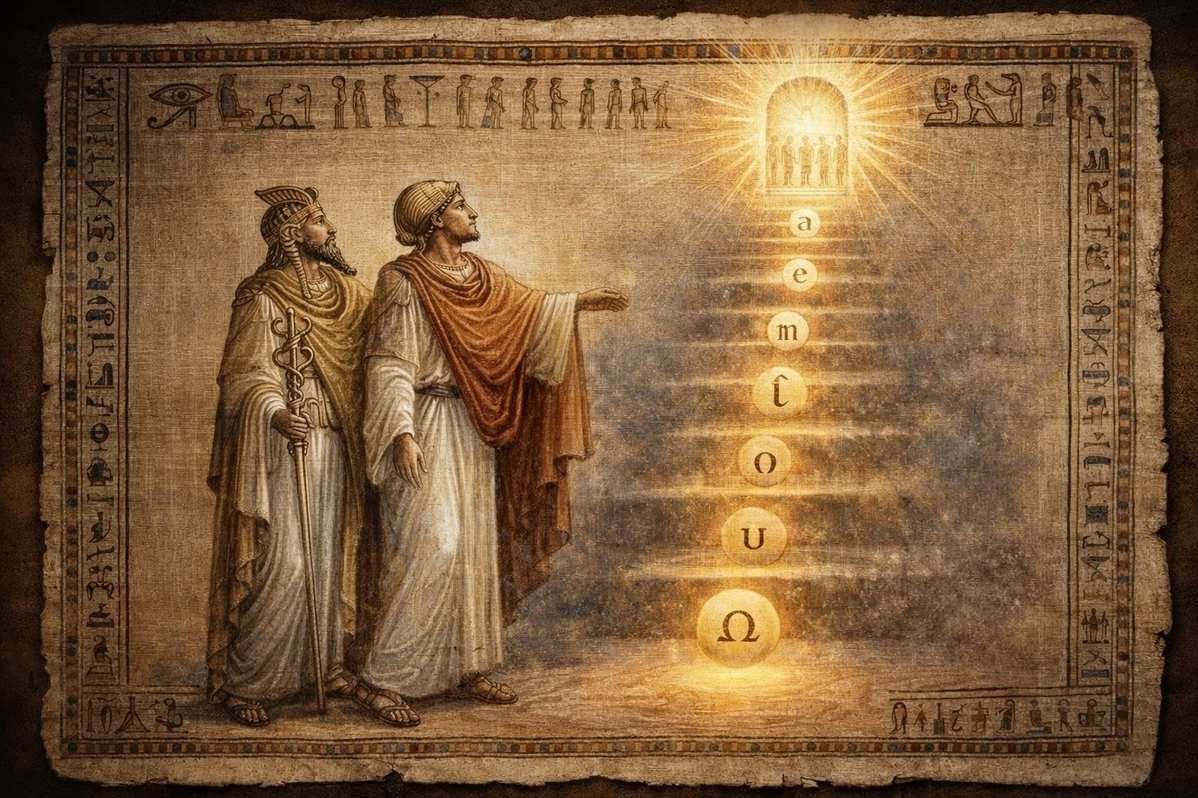
The Discourse on the Eighth and Ninth is the most important Hermetic text in the library–a dialogue between Hermes Trismegistus and his son Tat culminating in shared mystical ascent. The text provides rare detail about actual practice: prayer, invocation, the use of divine names, and the transformation of consciousness through vowel intonations [9].
Primary Source Citation: NHC VI,6 57:1-5. “My father, yesterday you promised that you would bring my mind into the eighth and then you would bring me into the ninth. You have said that the way of ascent is through the seven spheres and the fixed stars.”
The ritual structure is explicit: Hermes leads Tat through a ceremony involving call-and-response vowel sequences (alpha through omega), a prayer for the power to speak, the advent of light-power, and Tat’s ecstatic vision of the Eighth and Ninth spheres. The text culminates in Tat singing “a hymn in silence”–a wordless utterance that expresses the limits of logos and the entry into pure nous. As Wouter Hanegraaff notes, this text occupies the “centre of Hermetic weirdness”–a ritual description that blurs the lines between philosophical and practical Hermetica, employing barbarous words more common to the Greek Magical Papyri [10].
The text also distinguishes between two kinds of people: those “begotten at the start by God” who can immediately grasp the mysteries, and those who advance by stages through pure conscience and abstention from shameful acts. This is not elitism but pedagogy–the recognition that spiritual ascent requires preparation, and that the text itself is dangerous in unprepared hands. For the practitioner, the Discourse offers the most detailed surviving protocol for Hermetic celestial navigation, complete with the sonic passwords required to pass through each planetary checkpoint [11].
The Prayer of Thanksgiving — Communal Liturgy (NHC VI,7)
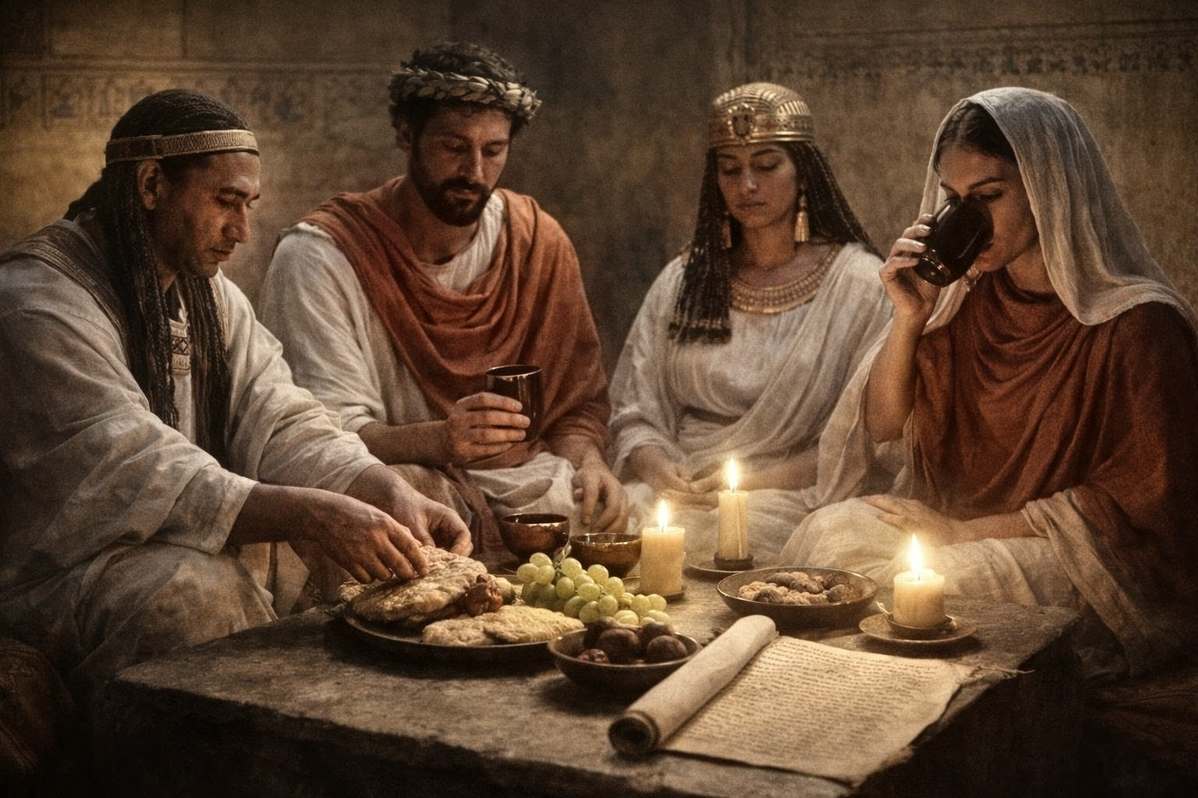
The Prayer of Thanksgiving is a brief but beautiful prayer of gratitude for divine revelation. “We thank you, O father, for the light by which you have illuminated us.” The prayer concludes with the famous instruction: “When they had said these things, they embraced and went to eat their holy food, which has no blood in it” (NHC VI,7 63:33-65:7) [12].
Primary Source Citation: NHC VI,7 63:33-65:2. “We give thanks to you! Every soul and heart reaches up to you, o ineffable Name honored as ‘God’ and praised as ‘Father’, for to everyone and everything you have shown fatherly kindness, affection, love, and sweetest activity.”
Scholarly research has established that this prayer circulated independently before being attached to various texts. It appears as the conclusion to the Latin Asclepius (section 41), as part of a Greek magical spell in Papyrus Mimaut (PGM III.591-611), and as the epilogue to the Discourse on the Eighth and Ninth in Codex VI. The prayer is evidence for ritual kissing and communal meals among the liturgical practices of the Hermetic community in Roman Egypt. As Birger A. Pearson notes, the original Greek version was probably composed in the third century by a leader of a Hermetic fraternity, and its inclusion in multiple contexts demonstrates its centrality to Hermetic worship [13].
The Asclepius — Cosmological Dialogue (NHC VI,8)
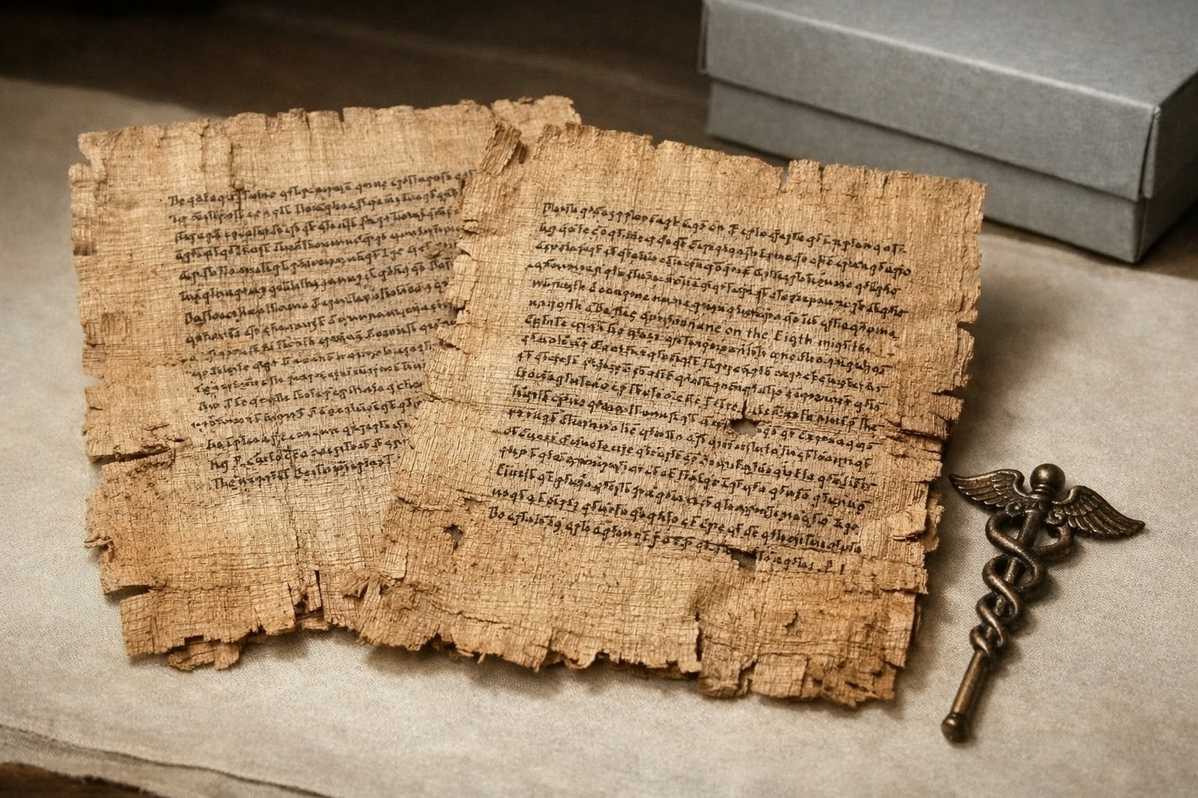
The Asclepius fragment in Nag Hammadi (NHC VI,8) preserves chapters 21-29 of the larger Perfect Discourse (Logos Teleios), a text originally written in Greek but preserved complete only in an expanded Latin translation attributed to Apuleius. The Coptic version is severely fragmentary–its material condition is the worst of the three Hermetic texts in the codex–yet it preserves important material not found in the Latin version [14].
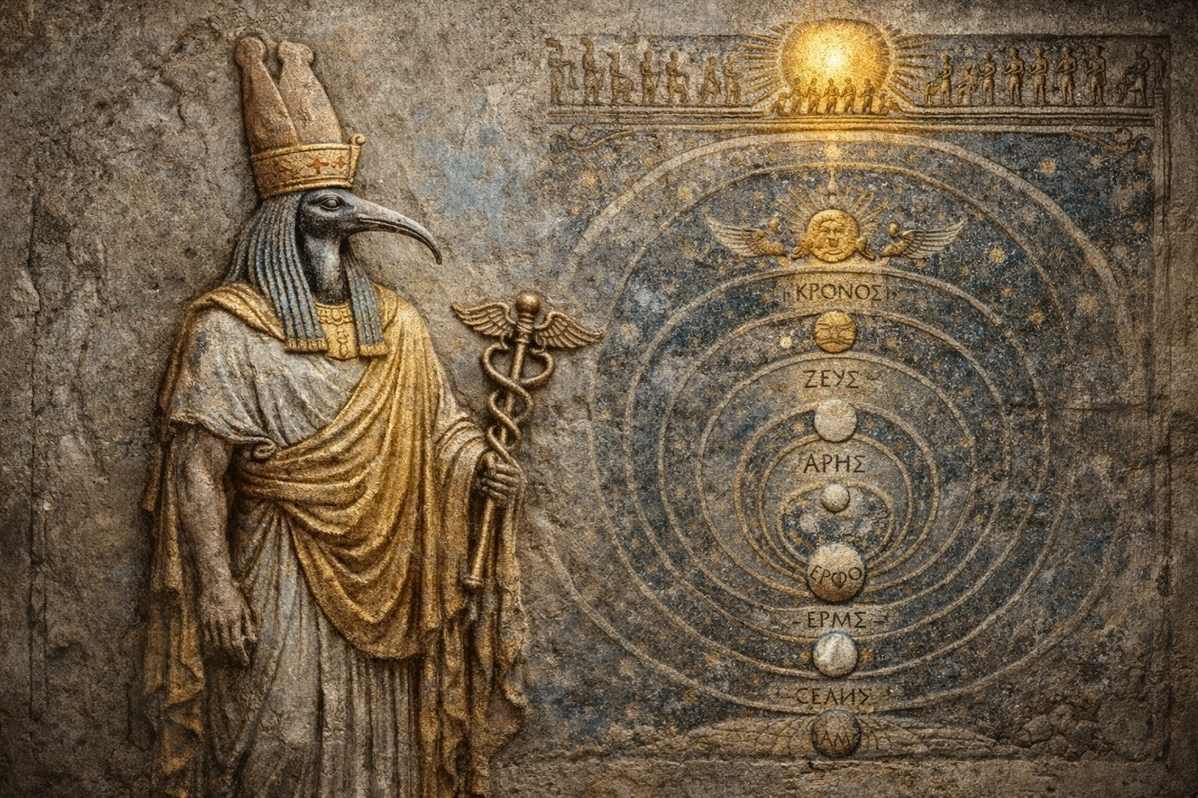
The dialogue between Hermes and his disciple Asclepius (the legendary founder of medicine) addresses cosmology, anthropology, and the nature of the divine. The text begins with a comparison of the mystery with sexual intercourse, presents a strong dualistic worldview structured around binaries (gods/humans, mortal/immortal, good/evil), and includes a remarkable apocalyptic section predicting the downfall of Egyptian religion. “The father of all is one, and from him all things come” (NHC VI,8 67:20-22). The hierarchical cosmos places the divine at the summit and matter at the base, yet the text maintains a more positive attitude toward the material world than typical Gnostic dualism–the cosmos, while inferior to the divine, is still worthy of contemplation as the product of a loving God [15].
Excerpt from Plato’s Republic — Philosophical Integration (NHC VI,5)
The Excerpt from Plato’s Republic (NHC VI,5) presents passages from Republic 588a-589b with Hermetic commentary, illustrating the three different aspects of the soul–the many-headed beast, the lion, and the human being, all moulded into one and competing for domination. The presence of Plato in a Gnostic codex reveals the philosophical sophistication of these traditions and their willingness to integrate Greek philosophical authorities into their spiritual framework [16].
The excerpt was also cited by Eusebius of Caesarea in Praeparatio Evangelica 12.46.2-6, and was alluded to by Plotinus and Proclus–demonstrating that this Platonic material circulated widely in philosophical and religious circles. For the Hermetic reader, the three-part soul analogy provides a psychological map for understanding the internal struggle between material desire, spirited aggression, and rational divinity. This is not mere philosophical decoration but a practical tool for self-knowledge–the foundation upon which all subsequent ascent is built [17].
Hermetic Themes
These four texts share characteristics that distinguish them from specifically Christian Gnostic material and establish the distinctiveness of the Hermetic approach [18].
Cosmic Sympathy and the Divine Spark
The universe is interconnected, governed by correspondences between heavenly and earthly realms. “As above, so below.” The human soul contains a divine element, exiled in matter but capable of return. “Man is a great wonder, a living creature to be worshipped.” This is not the radical dualism of Sethian Gnosticism but a qualified affirmation of cosmic order–the material world is inferior to the divine but not fundamentally evil. The cosmos is the product of a loving God and as such is a clear unity, even if numerous binaries structure the author’s conception of reality [19].
Rebirth Through Knowledge
Salvation comes through gnosis–not faith, not works, but direct knowledge of divine truths. “I am the one who has been born again.” The Discourse on the Eighth and Ninth describes this rebirth as a ritual event: the initiate is not merely instructed but transformed through ceremonial ascent. The Prayer of Thanksgiving expresses gratitude for this illumination. The Asclepius explores the ontological implications of such knowledge. Together, these texts present a soteriology of recognition rather than atonement–the soul remembers its divine origin and returns to its native source [20].
Practical Spirituality
Hermetic texts include prayers, rituals, and specific practices–not just theory but method. The Discourse provides the ascent protocol; the Prayer provides the liturgical form; the Asclepius provides the cosmological framework; the Plato excerpt provides the psychological map. This is spirituality as systematic training, not as vague mysticism. The practitioner is given concrete tools: vowel intonations, directional prayers (facing east at sunrise, south at sunset), communal meals without blood, oaths of secrecy. These are the operational manuals of a living religious community, not the speculative abstractions of isolated philosophers [21].
Hermeticism and Gnosticism
The relationship between Hermeticism and Gnosticism is complex. They share common cosmology, common soteriology, and common practice–yet they differ in significant ways that illuminate the diversity of Roman Egyptian spirituality [22].
Common Ground
Both describe hierarchical universes with material and spiritual realms, archontic powers, and the possibility of ascent. Both emphasise knowledge (gnosis) as the means of salvation, the divine spark in humanity, and the return to source. Both include ritual elements–prayer, invocation, visualisation, communal meals. The Hermetic texts in Codex VI were likely copied for Christian readership, suggesting that ancient collectors recognised these affinities and saw the Hermetic material as complementary to the Gnostic corpus [23].
Significant Differences
Attitude toward matter: Hermeticism is generally more positive toward the material world than Gnosticism. The cosmos, while inferior to the divine, is still worthy of contemplation and respect as the product of a loving God. The Asclepius maintains that the universe is a clear unity, not a prison designed by an incompetent demiurge.
Historical framework: Gnosticism is deeply engaged with Jewish and Christian biblical tradition; Hermeticism draws more on Egyptian and Greek sources. The Hermetic texts do not reinterpret Genesis, invoke the Hebrew prophets, or engage in christological speculation. They are pagan philosophical texts that address universal questions without sectarian polemic.
Soteriological optimism: Hermeticism tends toward universalism–all souls will eventually return to the divine through stages of purification. Gnosticism is more elitist–only the spiritual seed (the pneumatics) will be saved, while the hylic nature perishes. The Discourse on the Eighth and Ninth explicitly states that even those not “begotten at the start by God” can advance by stages and enter the way of immortality. This is the corporate restructuring of the cosmos, not the selective evacuation of a privileged few [24].
Reading the Hermetic Texts
For contemporary readers, these texts demand both scholarly context and contemplative receptivity. Start with the Prayer of Thanksgiving–brief, beautiful, accessible, providing immediate entry into the devotional atmosphere of the Hermetic community. Then read the Discourse on the Eighth and Ninth for the full mystical system and its detailed ritual protocol [25].
Read them alongside the Corpus Hermeticum (the main collection of Hermetic texts preserved in Greek and Latin) to understand the broader tradition. The Nag Hammadi versions are not isolated curiosities but part of a vast literature that includes the Poimandres, the Secret Sermon on the Mountain, and the Perfect Sermon. And read them as living spirituality, not merely ancient curiosity. The methods they describe–prayer, meditation, ascent–are still practised today in various traditions. The specific cosmology (planetary spheres, vowel correspondences) reflects ancient astronomy, but the underlying technique (consciousness expansion, direct divine encounter) remains perennially relevant [26].
Why Hermetic Connections Matter
These texts reveal the syncretistic nature of Roman Egyptian spirituality–Greek, Egyptian, Jewish, and Christian elements woven together into new patterns. For understanding Gnosticism in its historical context, they are essential. Gnosticism did not emerge in isolation but participated in broader spiritual movements of the era–movements that valued direct experience, philosophical rigour, and the integration of diverse cultural traditions [27].
For contemporary seekers, they offer a spirituality that is neither specifically Christian nor opposed to it–universal, philosophical, practical, focused on direct experience of the divine. The jar is open. The alternative archive has survived. These Hermetic texts offer not heresy to be refuted but wisdom to be encountered–challenges that continue to illuminate the boundaries, possibilities, and enduring questions of human consciousness and its relationship to the divine [28].
Frequently Asked Questions
What are the Hermetic texts in the Nag Hammadi Library?
The Nag Hammadi Library contains four Hermetic texts in Codex VI: the Discourse on the Eighth and Ninth (NHC VI,6), the Prayer of Thanksgiving (NHC VI,7), the Asclepius (NHC VI,8), and an Excerpt from Plato’s Republic (NHC VI,5). These texts synthesise Egyptian religious wisdom with Greek philosophical concepts and attribute their teachings to Hermes Trismegistus.
Who is Hermes Trismegistus?
Hermes Trismegistus (‘Thrice-Greatest Hermes’) is a composite figure–part Egyptian god Thoth (patron of wisdom and writing), part Greek god Hermes (messenger of the gods, guide of souls), and part human teacher. The texts attributed to him claim ancient authority while addressing contemporary concerns about the divine, the cosmos, and the soul’s destiny.
How does the Discourse on the Eighth and Ninth describe ritual ascent?
The Discourse (NHC VI,6) presents a dialogue between Hermes and his son Tat culminating in mystical ascent through the seven planetary spheres to the Ogdoad and Ennead. The ritual involves call-and-response vowel sequences, prayer for divine power, ecstatic vision, and a ‘hymn in silence’–a wordless utterance expressing the limits of logos and entry into pure nous.
What is the Prayer of Thanksgiving and its significance?
The Prayer of Thanksgiving (NHC VI,7) is a brief liturgical prayer of gratitude for divine revelation that circulated independently before being attached to multiple texts. It appears in the Latin Asclepius, the Greek Magical Papyri (PGM III.591-611), and as the epilogue to the Discourse on the Eighth and Ninth. It concludes with instructions for a communal vegetarian meal, providing evidence for actual Hermetic ritual practice.
How does the Nag Hammadi Asclepius differ from the Latin version?
The Nag Hammadi Asclepius (NHC VI,8) preserves chapters 21-29 of the Greek Perfect Discourse in Coptic translation. While the complete text survives only in an expanded Latin version attributed to Apuleius, the Coptic fragment preserves material not found in Latin and presents the dialogue between Hermes and Asclepius on cosmology, anthropology, and the apocalyptic downfall of Egyptian religion.
What are the key differences between Hermeticism and Gnosticism?
While both share hierarchical cosmology, soteriology through gnosis, and ritual practice, they differ in three key areas: (1) attitude toward matter–Hermeticism is more positive, viewing the cosmos as worthy of contemplation; (2) historical framework–Hermeticism draws on Egyptian and Greek sources rather than biblical tradition; (3) soteriological optimism–Hermeticism tends toward universalism (all souls return), while Gnosticism is more elitist (only the spiritual seed is saved).
How should modern readers approach the Hermetic texts?
Modern readers should approach these texts as both scholarly objects and living spirituality. Start with the Prayer of Thanksgiving for devotional accessibility, then the Discourse on the Eighth and Ninth for ritual depth. Read alongside the Corpus Hermeticum for broader context. Recognise that the specific cosmology reflects ancient astronomy, but the underlying methods–prayer, meditation, consciousness expansion–remain perennially relevant.
Further Reading
These links connect the Hermetic texts to related resources within the ZenithEye library, providing pathways for deeper exploration of specific texts, traditions, and philosophical themes.
- Discourse on the Eighth and Ninth: Hermetic Ascent and Rebirth — Deep dive into the ritual ascent protocol, vowel intonations, and the hymn in silence that transcends logos.
- Prayer of Thanksgiving: Hermetic Liturgy and Communal Practice — Extended study of the prayer’s multiple contexts and its evidence for ritual meals in the Hermetic community.
- Asclepius: The Perfect Discourse — Analysis of the fragmentary Coptic version and its apocalyptic section on the downfall of Egyptian religion.
- Plato’s Republic in the Nag Hammadi Library — Commentary on the philosophical excerpt and its integration of Greek psychology into Hermetic spirituality.
- Hermetic Connections — Comparative overview of Hermeticism and Gnosticism, examining shared themes and significant differences.
- Hermetic Connections in the Nag Hammadi Library — Broader guide to the Egyptian-Greek mystical synthesis that produced the Hermetic texts in Codex VI.
- Codex VI: The Hermetic Codex — Overview of the entire codex, placing the Hermetic texts within their manuscript context alongside Christian and philosophical material.
- Gnostic Schools: Sethians, Valentinians, and Hermetics — Guide to the Hermetic tradition as one of the three major schools represented in the Nag Hammadi Library.
- Nag Hammadi for Beginners: A 10-Text Journey — The foundational introduction for newcomers, with the Prayer of Thanksgiving as an accessible entry point.
- Nag Hammadi Library: Complete Guide to 46 Gnostic Scriptures — Comprehensive map of the entire collection for readers ready to expand beyond the Hermetic texts.
References and Sources
The following sources support the claims and quotations presented in this article. All citations to the Nag Hammadi Library represent direct translations from the Coptic text as established in the standard critical editions.
Primary Sources and Critical Editions
- [1] Robinson, J.M. (Ed.). (1988). The Nag Hammadi Library in English (4th ed.). Brill.
- [2] Meyer, M. (Ed.). (2007). The Nag Hammadi Scriptures: The International Edition. HarperOne.
- [3] Mahe, J.P. (1978-1982). Hermes en Haute-Egypte. Vol. I-II. Presses de l’Universite Laval.
- [4] Dirkse, P.A., Brashler, J., & Parrott, D.M. (1979). “The Discourse on the Eighth and Ninth (VI,6).” In Nag Hammadi Codices V,2-5 and VI. NHS 11. Brill.
- [5] Dirkse, P.A., Brashler, J., & Parrott, D.M. (1979). “The Prayer of Thanksgiving (VI,7).” In Nag Hammadi Codices V,2-5 and VI. NHS 11. Brill.
Scholarly Monographs and Commentaries
- [6] Hanegraaff, W.J. (2019). Hermetic Spirituality and the Historical Imagination. Cambridge University Press.
- [7] Fowden, G. (1986). The Egyptian Hermes: A Historical Approach to the Late Pagan Mind. Princeton University Press.
- [8] Copenhaver, B.P. (1992). Hermetica: The Greek Corpus Hermeticum and the Latin Asclepius. Cambridge University Press.
- [9] Pearson, B.A. (2007). Ancient Gnosticism: Traditions and Literature. Fortress Press.
- [10] Roig Lanzillotta, L. (2021). “The Discourse on the Eighth and the Ninth (NHC VI,6), the Prayer of Thanksgiving (NHC VI,7), and the Asclepius (NHC VI,8).” Gnosis: Journal of Gnostic Studies, 6(1), 49-78.
Comparative Studies and Thematic Analyses
- [11] Bull, C.H. (2018). “The Great Mystery of Godliness.” In The Secret Gospel of Mark. Wissenschaftliche Untersuchungen zum Neuen Testament. Mohr Siebeck.
- [12] DeConick, A.D. (2001). “The Great Mystery of Godliness.” In Nag Hammadi Codices V,2-5 and VI. NHS 11. Brill.
- [13] Krause, M. & Labib, P. (1971). Gnostische und hermetische Schriften aus Codex II und Codex VI. Verlag J.J. Augustin.
- [14] Mahé, J.P. (1995). “Hermetic Texts in Nag Hammadi.” In La Fable Apocryphe. Brepols.
- [15] Williams, M.A. & Jenott, L. (2006). “Inside the Covers of Codex VI.” In Coptica-Gnostica-Manichaica. BCNH Etudes 7. Presses de l’Universite Laval.