Gnostic Technical Glossary: Key Terms Explained for Modern Readers
Navigating the Language of Gnosticism: A Technical Glossary of Essential Terms
The Nag Hammadi Library introduces readers to a specialised vocabulary drawn from Greek philosophy, Jewish mysticism, Christian theology, and Egyptian religious thought. This glossary defines essential terms you will encounter when reading the tractates, providing context for their usage and significance. Understanding this “technical lexicon” is essential for navigating the “classified documentation” of the Gnostic archive–decrypting the terminology that preserves esoteric systems from antiquity [1][2].
Table of Contents
- A — Aeon, Anthropos, Apocryphon, Archon
- B — Barbelo, Bythos
- D — Demiurge, Docetism
- E — Ecclesia, Emanation, Epinoia
- G — Gnosis, Gnostikos
- H — Hylic
- L — Logos
- M — Metanoia
- N — Nous
- O — Ogdoad
- P — Pistis, Pleroma, Pneumatic, Pronoia, Protennoia, Psychic
- S — Saklas, Samael, Sophia, Syzygy
- T — Telos, Trimorphic
- Y — Yaldabaoth
- Z — Zoe
- Conceptual Complexes
- Frequently Asked Questions
- Further Reading
- References and Sources
A
Aeon (αἰών): Literally “age” or “eternity.” In Gnostic systems, aeons are divine emanations or attributes that populate the Pleroma (Fullness) [3]. They are not so much gods as personified aspects of divine reality–Truth, Life, Mind, Grace. Aeons often exist in male-female pairs (syzygies). The term appears throughout Valentinian texts and Sethian cosmologies. The Valentinian system describes 30 aeons arranged in the Ogdoad, Decad, and Dodecad [4].
Anthropos (ἄνθρωπος): The Divine Human or Primal Man. In many Gnostic myths, Anthropos is a heavenly being created in the image of the supreme God, who either descends into matter or has his spiritual essence stolen by the archons to animate the first earthly humans [5]. The concept bridges Platonic idealism and biblical creation accounts. In Valentinian systems, Anthropos (Man) pairs with Ecclesia (Church) as one of the primary syzygies [4].
Apocryphon (ἀπόκρυφον): “Secret book” or “hidden writing.” Texts like the Apocryphon of John claim to contain esoteric teachings not available to the public, reserved for those capable of receiving advanced knowledge [6]. The term implies “classified documentation”–material restricted to those with appropriate “security clearance” in the form of spiritual maturity or initiatory preparation.
Archon (ἄρχων): Ruler or authority. Archons are celestial beings, often planetary deities, who govern the material world and obstruct the soul’s ascent [7]. In Sethian texts, they are typically hostile; in Valentinian systems, they may be ignorant rather than evil. The Demiurge is often called the chief archon. They function as the “middle-management” bureaucracy of the material cosmos–powers that mistake their limited jurisdiction for universal authority.
B
Barbelo (Βαρβηλώ): The supreme feminine principle in Sethian Gnosticism. She is the First Thought (Ennoia) of the invisible Father and the mother of the divine Autogenes (Self-Begotten) [8]. Barbelo represents divine Wisdom and the active principle of divine manifestation. She is often called the “Thrice-Male” or “Mother-Father,” indicating androgynous completeness [4].
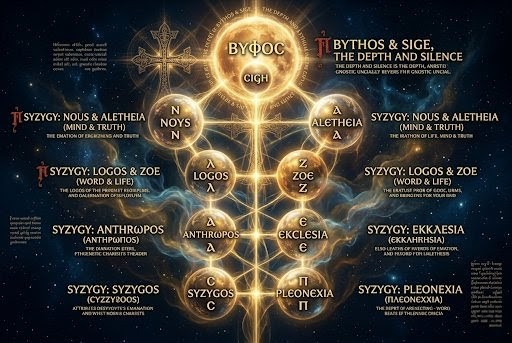
Bythos (βυθός): “Depth” or “abyss.” In Valentinian theology, Bythos is the ultimate Father, the source of all divine emanations. He exists in primordial silence with his consort Sige before generating the other aeons [4]. Bythos represents the unfathomable source from which all reality “emanates”–not through creation but through overflow of divine presence.
D
Demiurge (δημιουργός): Literally “craftsman” or “public worker.” The creator of the material world, distinct from the supreme God [9]. In Gnostic systems, the Demiurge (often identified with Yaldabaoth, Saklas, or Samael) is ignorant, imperfect, or malevolent. He creates the material realm as a prison for the divine sparks, believing himself to be the sole deity. This figure represents a radical critique of the Old Testament Creator God and functions as the ultimate “administrative incompetence”–a middle-manager who mistakes his regional office for the corporate headquarters [9].
Docetism (δοκεῖν): From the Greek “to seem” or “appear.” The belief that Christ only appeared to have a physical body and suffer crucifixion, possessing instead a spiritual or phantasmal form [10]. Many Nag Hammadi texts espouse docetic Christology, distinguishing the heavenly Christ from the earthly Jesus. This doctrine reflects the Gnostic devaluation of material reality: the divine cannot truly suffer in flesh, only appear to do so for salvific demonstration.
Primary Source Context: “Yaldabaoth said to his subordinate demons: ‘Come, let us create a human being after the image of God and after our own likeness, so that his image might illuminate us.'” — NHC II,1 15:1-4 (Apocryphon of John) [6]
E
Ecclesia (ἐκκλησία): The church, often personified as an aeon in Valentinian systems. Ecclesia represents the community of the spiritual elect and appears in the primal ogdoad paired with Anthropos [4]. This pairing suggests that the “Church” in its ideal form is the consort of the Divine Human–the community of those who recognise their true spiritual identity.
Emanation: The process by which the divine produces lower realities without diminution. Unlike creation (which implies making something from nothing), emanation suggests an overflow or radiation of divine presence [3]. Aeons emanate from the Father as light from the sun. This “executive headquarters” model of cosmology operates through radiance rather than manufacture–divine attributes extending outward without the Father’s depletion.
Epinoia (ἐπινοία): “Afterthought” or “higher perception.” In the Apocryphon of John, Epinoia is the divine assistance sent to Adam after the fall, enabling humans to remember their divine origin and seek return [6]. She represents the “appeals department” within the cosmic bureaucracy–the capacity for introspection that allows prisoners to recognise their incarceration and seek liberation.
G
Gnosis (γνῶσις): Knowledge–specifically experiential, saving knowledge of divine realities. Not merely intellectual assent but transformative recognition of one’s true identity and origin [3]. Gnosis is the means of salvation, distinct from faith (pistis) or works. It functions as the “security clearance” that authenticates the pneumatic (spiritual) self and enables passage through archonic territories during the soul’s ascent.
Gnostikos (γνωστικός): One who possesses gnosis; the spiritual person capable of understanding esoteric teachings. The term implies maturity and election, distinguishing the knower from the merely faithful or the material [3]. In Valentinian anthropology, the gnostikos corresponds to the pneumatic (spiritual) class–those with innate capacity for direct divine knowledge.
H
Hylic (ὑλικός): Material, composed of matter (hyle). One of the three classes of humanity in Valentinian anthropology [4]. Hylic people are dominated by matter and the passions, incapable of receiving gnosis or salvation. They constitute the “personnel” who remain entirely within the material filing system–unaware of their spiritual potential and bound to the archonic administration.
L
Logos (λόγος): Word, reason, or divine intelligence. In Valentinian systems, Logos is an aeon paired with Life (Zoe) [4]. The term also refers to the message or teaching of salvation. As the second syzygy emanating from Nous and Aletheia, Logos represents the articulation of divine thought–the “official communication” that brings the unspoken into expression.
M
Metanoia (μετάνοια): Repentance or change of mind. In Gnostic contexts, this means more than moral regret; it signifies the fundamental shift from ignorance to recognition, the turning of the soul toward the divine [3]. Metanoia is the “reclassification” of one’s identity–shifting from the erroneous self-understanding imposed by material existence to the true knowledge of spiritual origins.
N
Nous (νοῦς): Mind or intellect. Often identified with the divine spark within humans. In Valentinian systems, Nous is an aeon paired with Truth (Aletheia) as the first syzygy emanating from Bythos and Sige [4]. The awakening of the Nous to its divine origin constitutes salvation. Nous represents the “executive intelligence”–the capacity for direct knowing that distinguishes the spiritual elect.
O
Ogdoad (ὀγδοάς): The “eighth” realm beyond the seven planetary spheres. In many systems, this is the realm of the fixed stars and the destination of the soul after death [3]. It represents the boundary between the material cosmos and the divine Pleroma. The Ogdoad contains the first eight aeons in Valentinian systems (Bythos, Sige, Nous, Aletheia, Logos, Zoe, Anthropos, Ecclesia)–the “primary executive council” of the Pleroma.
P
Pistis (πίστις): Faith or belief. Distinguished from gnosis in Valentinian theology [4]. Psychic (soul-level) people possess pistis; pneumatic (spiritual) people possess gnosis. Faith is necessary but not sufficient for ultimate salvation. Pistis represents the “entry-level credential” that allows psychic humanity to approach the divine, while gnosis constitutes the “executive clearance” for full integration into the Pleroma.
Pleroma (πλήρωμα): The “Fullness”–the complete divine realm containing all aeons [3][7]. The Pleroma represents the totality of divine attributes and the source from which the material world fell. Salvation consists in returning to the Pleroma and being integrated into its harmony. It functions as the “executive headquarters” of divine reality–the “corporate centre” from which all departmental operations (emanations) extend.
Pneumatic (πνευματικός): Spiritual, relating to the spirit (pneuma). The highest class of humanity, possessing the divine spark. Pneumatics are destined for salvation through gnosis [4]. They represent the “senior management” of the human hierarchy–those with innate capacity to recognise their true origins and navigate the ascent protocols.
Pronoia (πρόνοια): Forethought or providence. The divine plan working through history to restore the fallen sparks. In Sethian texts, Pronoia is often personified as a divine saviour figure descending through the aeons [8]. She functions as the “strategic planning division” within the cosmic administration–the capacity of the divine to anticipate and counteract archonic interference.
Protennoia (πρωτέννοια): First Thought. The highest divine principle after the invisible Father, often identified with Barbelo [8]. The Trimorphic Protennoia describes this figure’s three descents into the material realm as Voice, Speech, and Word–the progressive “downgrading” of divine communication into forms comprehensible to material beings.
Psychic (ψυχικός): Of the soul (psyche). The intermediate class of humanity–capable of faith and good works, and thus of salvation, but not of the perfect gnosis available to pneumatics [4]. Psychics occupy the “middle-management” position in Valentinian anthropology–neither trapped in materiality like the hylics nor endowed with spontaneous spiritual knowledge like the pneumatics.
Primary Source Context: “There are three kinds of human beings: the spiritual, the psychic, and the material. The spiritual people will receive the first calling, being saved through the power of the Spirit.” — NHC I,5 6:19-25 (Tripartite Tractate) [11]
S
Saklas (Σακλᾶς): “Fool” or “blind one.” A name for the Demiurge, emphasising his ignorance of the higher divine realm [9]. As one of Yaldabaoth’s three designations (along with Samael and Yaldabaoth itself), Saklas underscores the incompetence of the material creator–the “blind administrator” who governs without understanding the higher corporate structure.
Samael (Σαμαήλ): “God of the blind” or “poisonous god.” Another name for the Demiurge, carrying demonic connotations [9]. This epithet identifies the material creator as a destructive force–not merely ignorant but actively harmful in his assertion of exclusive divinity.
Sophia (σοφία): Wisdom. The youngest aeon whose passion or error initiates the fall from the Pleroma [9]. In some systems, she repents and is restored; in others, her fragmented essence remains trapped in matter. Sophia represents the divine spark in exile–the “disgruntled employee” whose unauthorised initiative (acting without her syzygy) generates the material bureaucracy that entraps divine sparks.
Syzygy (συζυγία): Pair or union. Aeons exist in male-female pairs (e.g., Bythos and Sige, Nous and Aletheia, Logos and Zoe, Anthropos and Ecclesia) [4]. The separation of syzygies or the attempt to create without one’s partner (as Sophia attempted) generates deficiency and suffering. The law of syzygy represents the “partnership structure” of divine operations–no single principle operates in isolation; all creative power requires complementary pairing.
T
Telos (τέλος): The end, goal, or completion. Eschatological term referring to the consummation of all things and the restoration of the Pleroma [3]. Telos represents the “final audit” when all divine sparks return to their source and the temporary “regional office” of material existence dissolves.
Trimorphic (τριμορφικός): Three-formed. Refers to the three manifestations of Protennoia: as Father (voice), as Mother (speech), and as Son (word) [8]. This “triple identity” represents the progressive adaptation of divine communication to material capacities–the “downgrading” of frequency from pure voice through articulated speech to written word.
Y
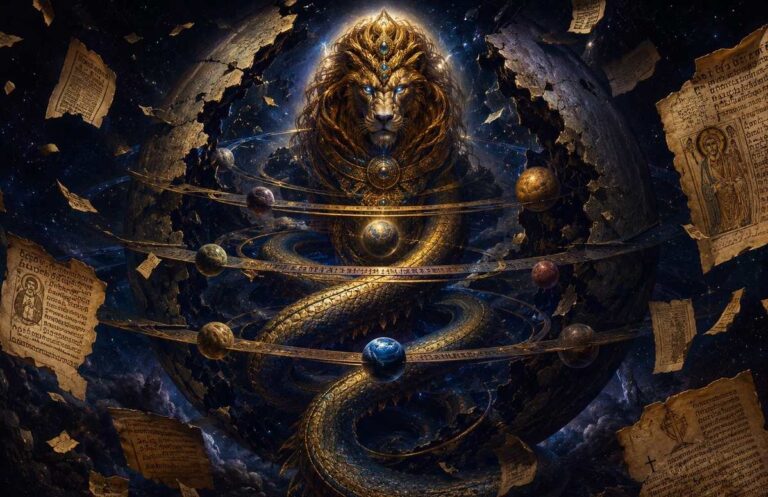
Yaldabaoth (Ιαλδαβαώθ): The lion-headed serpent, chief archon and creator of the material world. His name possibly derives from Aramaic meaning “child of chaos” or “begetter of Sabaoth” [9]. He is ignorant, arrogant, and jealous, claiming sole divinity while being merely a derivative being. Yaldabaoth represents the quintessential “administrative incompetence”–the middle-manager who creates a “shadow filing system” (the material cosmos) believing it to be the entire corporate structure.
Primary Source Citation: “Now the archon who is weak has three names. The first name is Yaldabaoth, the second is Saklas, and the third is Samael. And he is impious in his madness, saying ‘I am God, and there is no other god beside me.'” — NHC II,1 11:15-18 (Apocryphon of John) [6]
Z
Zoe (ζωή): Life. An aeon paired with Logos in Valentinian systems [4]. Also used generally for divine or eternal life, as opposed to biological existence (bios). Zoe represents the “activation energy” of the Pleroma–the dynamic vitality that complements Logos (reason) in the second syzygy.
Conceptual Complexes
The Three Natures: Valentinian anthropology divides humanity into hylic (material, doomed), psychic (soul-level, saved by faith), and pneumatic (spiritual, saved by gnosis) [4]. This tripartite scheme explains why different people respond differently to the message–some cannot receive it, some receive it partially, some fully. It functions as the “personnel classification system” of the cosmic administration, sorting souls according to their inherent capacities.
Descent and Ascent: The fundamental narrative pattern: the divine descends into matter (through Sophia’s fall, the creation of humanity, the incarnation of the Saviour); the human ascends back to the divine (through awakening, knowledge, and passage through the planetary spheres) [3]. This “two-way traffic” between the executive headquarters (Pleroma) and the regional office (material world) constitutes the central drama of Gnostic soteriology.
The Garments of Light: The spiritual bodies or vestures donned by souls returning to the Pleroma, replacing the material garments of flesh. Also called “robes of glory” or “wedding garments” [3]. These represent the “proper attire” for entry into divine precincts–the transformed identity that replaces the “filthy rags” of material existence.
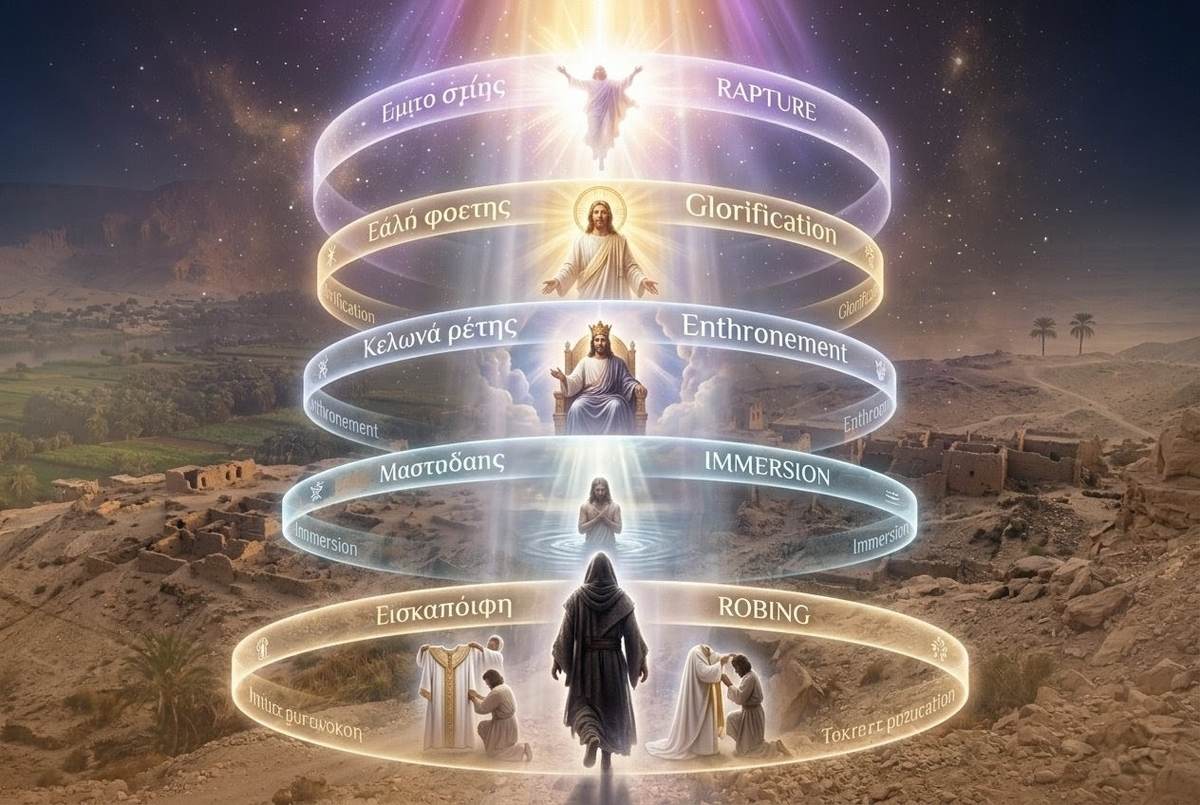
The Five Seals: Ritual markings or baptisms mentioned in Sethian texts (particularly the Trimorphic Protennoia and Apocryphon of John), necessary for the soul’s ascent past the archons [1]. These five stages–robing, immersion, enthronement, glorification, and rapture–function as “security credentials” authenticating the initiate during post-mortem transit through archonic checkpoints.
Using This Glossary
When reading Nag Hammadi texts, keep this glossary accessible. Many terms carry technical meanings distinct from their ordinary English usage or from their biblical contexts. The complexity of this vocabulary reflects the sophistication of Gnostic thought–systems that integrated philosophy, mythology, and mystical experience into comprehensive worldviews [2][10].
Recognising these terms allows you to trace connections between texts and traditions, identifying Valentinian versus Sethian usage patterns and tracking the development of Gnostic technical language over time. This “lexical competence” is essential for navigating the archive–decrypting the technical specifications that preserve esoteric systems from antiquity.
Frequently Asked Questions
What is the difference between Gnosis and Pistis in Gnostic theology?
In Valentinian theology, Gnosis (knowledge) and Pistis (faith) represent distinct levels of spiritual capacity. Pistis–faith or belief–is accessible to the psychic (soul-level) class of humanity. It involves trust in the message and adherence to moral teaching, leading to salvation but not full spiritual integration. Gnosis–experiential, transformative knowledge of divine realities–is reserved for the pneumatic (spiritual) class. It entails direct recognition of one’s divine origin, the nature of reality, and the path of return to the Pleroma. While faith is necessary, knowledge is sufficient for ultimate salvation.
What is a Syzygy in Gnostic cosmology?
Syzygy (Greek: suzugos, ‘yoked together’) refers to the pairing of aeons in male-female pairs that structure the Valentinian Pleroma. The fundamental law of the divine realm requires that creative power operate through complementary pairing: Bythos (Depth) with Sige (Silence), Nous (Mind) with Aletheia (Truth), Logos (Word) with Zoe (Life), Anthropos (Man) with Ecclesia (Church). These pairs are not separate gods but personified aspects of divine reality that maintain the harmony of the Pleroma. The attempt to create without one’s partner–as Sophia did–generates deficiency and initiates the fall that produces the material world.
Who is Yaldabaoth and what does his name mean?
Yaldabaoth is the chief archon and creator of the material world in Sethian Gnosticism. His name likely derives from Aramaic roots meaning ‘child of chaos’ (yalda bahut) or ‘begetter of Sabaoth.’ He is also called Saklas (‘fool’ or ‘blind one’) and Samael (‘god of the blind’ or ‘poisonous god’). Depicted as a lion-headed serpent, he is ignorant of the higher Pleroma and falsely claims sole divinity: ‘I am God, and there is no other god beside me.’ He creates the material cosmos as a prison for divine sparks, representing the Gnostic critique of the Old Testament Creator God as an incompetent, malevolent, or at best ignorant power.
What are the Three Natures in Valentinian anthropology?
Valentinian anthropology divides humanity into three classes based on their constitution: Hylic (material)–dominated by flesh and passions, incapable of receiving gnosis or salvation, destined for destruction; Psychic (soul-level)–capable of faith and good works, saved through adherence to the Church and moral living, but not possessing perfect knowledge; and Pneumatic (spiritual)–endowed with the divine spark, destined for salvation through gnosis and return to the Pleroma. This tripartite scheme explains differential responses to the Gnostic message and reflects the ‘personnel classification’ of the cosmic order.
What is the Pleroma in Gnostic thought?
Pleroma (Greek: ‘fullness’) refers to the complete divine realm containing all aeons–the personified attributes of the supreme God. It is the realm of perfection, harmony, and light, untouched by the deficiency that produced the material world. In Valentinian systems, the Pleroma contains 30 aeons arranged in the Ogdoad (eight), Decad (ten), and Dodecad (twelve). Sethian systems describe different aeonic structures, but both agree that salvation consists in escaping the material ‘void’ (kenoma) and returning to this divine ‘fullness.’
What are the Five Seals in Sethian initiation?
The Five Seals constitute the central Sethian initiatory rite, appearing in the Apocryphon of John and Trimorphic Protennoia. These five stages–(1) robing in luminous garments, (2) immersion in living water, (3) enthronement in glory, (4) glorification, and (5) rapture or ascension–function as transformative technologies separating the divine spark from material entanglements. They serve both as ritual practices and as ‘credentials’ or ‘passwords’ for the soul’s post-mortem ascent through archonic territories, enabling the initiate to become ‘a Light in Light’ impervious to demonic deception.
What is the difference between Sethian and Valentinian terminology?
Sethian texts emphasise Barbelo (First Thought), Autogenes (Self-Begotten), and the Four Luminaries (Harmozel, Oroiael, Daveithai, Eleleth), with the Five Seals as central soteriology. Valentinian texts feature Bythos (Depth), the 30 aeons in syzygies (pairs), and the three natures (hylic, psychic, pneumatic). Sethian language tends toward Egyptian and Jewish apocalyptic roots; Valentinian language incorporates more Platonic philosophical terminology. Both share core concepts (Pleroma, Demiurge, Gnosis) but organise them in distinct ‘architectural’ configurations reflecting different theological emphases.
Further Reading
- Nag Hammadi for Beginners: A 10-Text Journey — An introductory path through the library for those beginning their “lexical education” in Gnostic terminology.
- The Apocryphon of John: A Gnostic Creation Myth — The foundational text defining Yaldabaoth, Barbelo, and the Five Seals.
- Trimorphic Protennoia: Three Forms of Divine Thought — The revelatory text on Protennoia/Barbelo and the descent of divine Forethought.
- The Discovery at Nag Hammadi: How the Gnostic Library Was Found — The archaeological context of the texts preserving this technical vocabulary.
- Gnostic Technical Glossary: Key Terms Explained — Expanded definitions of theological concepts referenced in this glossary.
- The Coptic Gnostic Library: Codicology and Conservation — Technical details on how these terms were preserved in Coptic manuscripts.
References and Sources
The following sources support the definitions and etymologies presented in this glossary. All Greek and Coptic terms follow standard scholarly transliteration conventions.
Primary Sources and Critical Editions
- [1] Layton, B. (1987). The Gnostic Scriptures. Doubleday. [Key terminology and translations]
- [2] Robinson, J.M. (1977). The Nag Hammadi Library in English. Harper & Row.
- [3] Meyer, M. (2007). The Nag Hammadi Scriptures: The International Edition. HarperOne.
- [4] Irenaeus of Lyons. (c. 180 CE). Against Heresies Book I. Trans. in The Ante-Nicene Fathers, Vol. 1. [Valentinian system]
- [5] Waldstein, M. & Wisse, F. (1995). The Apocryphon of John: Synopsis of Nag Hammadi Codices II,1; III,1; and IV,1. Brill.
Specialised Studies and Theological Analysis
- [6] Turner, J.D. (2001). Sethian Gnosticism and the Platonic Tradition. Universite Laval/Peeters.
- [7] Schenke, H.M. (1981). “The Phenomenon and Significance of Sethian Gnosticism.” In The Rediscovery of Gnosticism, Vol. 2. Brill.
- [8] Turner, J.D. (2017). Sethian Gnostic Appropriations of Plato. Brill.
- [9] Logan, A.H.B. (1996). Gnostic Truth and Christian Heresy. T&T Clark.
- [10] King, K.L. (2003). What is Gnosticism? Harvard University Press.
Lexicographical and Philological Resources
- [11] Criddle, A.H. (1999). Coptic Dictionary. Packard Humanities Institute.
- [12] Lampe, G.W.H. (1961). A Patristic Greek Lexicon. Oxford University Press.
- [13] Liddell, H.G. & Scott, R. (1996). A Greek-English Lexicon. 9th ed. Oxford University Press.
- [14] Funk, W.P. (2000). “The Greek Loanwords.” In Coptic Encyclopedia, Vol. 8. Macmillan.
- [15] Brakke, D. (2010). The Gnostics: Myth, Ritual, and Diversity in Early Christianity. Harvard University Press.