The Feminine Divine: A Thematic Collection
The Recovery of the Goddess in Gnostic Scripture represents one of the most significant theological reconfigurations preserved in the Nag Hammadi Library. While orthodox Christianity progressively marginalised feminine divine imagery—reducing the Goddess to distant memory, heretical temptation, or passive vessel—these texts restore the divine feminine to the centre of creation, salvation, and cosmic order. This is not merely antiquarian interest. The systematic suppression of these texts by imperial authorities from the fourth century onward suggests their content posed fundamental challenges to emergent patriarchal structures.
The recovery of feminine divine imagery offers alternative models of divinity that diverge sharply from the isolated male Creator ex nihilo: the androgynous source, the mother who births the All, the wisdom (Sophia) who falls and rises through her own agency, the voice that speaks from the depths without institutional mediation. We present here a curated analysis of texts that foreground the feminine divine, arranged to demonstrate both their range and their theological coherence.
Contents
- Barbelo: The First Thought and Mediatory Function
- Thunder: Perfect Mind and the Transcendence of Categories
- Sophia: Wisdom Fallen and Cosmic Restoration
- Norea: Resistance and the Refusal of Dominion
- The Feminine in Ritual and Community Practice
- Contemporary Relevance: Theological Depth and Gender
- Frequently Asked Questions
- Further Reading
- References and Sources
Barbelo: The First Thought and Mediatory Function
What is Barbelo?
Barbelo (Greek: Βαρβηλώ) represents the First Thought (Protennoia) of the transcendent Father in Sethian Gnosticism. She is the first emanation, the divine Mother, the womb of the All, and the essential mediatory principle between the unknowable Source and the manifest Pleroma. Unlike created beings, Barbelo emanates through a process of self-reflection by the Father, establishing the template for all subsequent divine generation.
In Sethian theological systems, the highest principle after the transcendent Father is Barbelo—the First Thought, the divine Mother, the womb of the All. She is not created; she emanates. She constitutes the first aeon, the perfect glory, the image of the invisible Spirit who serves as the necessary interface between absolute transcendence and differentiated manifestation.
The Apocryphon of John describes her emergence with precise theological language: “She is the first power, the glory of the perfect realm, Barbelo, the perfect glory among the aeons” (NHC II,1 5:13-15). Through her, the entire pleroma unfolds—the divine fullness populated by aeons who are her children and her extensions. The system operates through her; without Barbelo, the transcendent Father remains inaccessible, the creation cannot occur, and salvation lacks its channel.
Barbelo functions as the ultimate mediatrix. She bridges the ontological chasm between the transcendent Father and the manifest cosmos. She is the one who hears the cries of Sophia fallen below, who sends the saviour, who ensures that no spark of divine light remains permanently lost in material oblivion. In her, we encounter a theology of maternal care that does not compromise transcendence—she maintains both the highest ontological status and the compassion to respond to individual distress. She is, in effect, the administrative coherence of the divine pleroma—the principle that ensures the system functions to retrieve rather than exclude.
Primary Source Citation: “And the invisible, virginal Spirit ruled over it (the water) for its own honour. And the Spirit gazed upon the water and the light was manifested. And the Spirit marvelled and glorified herself. And she became pregnant from the light, and she bore the power of the likeness of the light. And its (the power’s) mother is Barbelo” (NHC II,1 5:11-20).
Thunder: Perfect Mind and the Transcendence of Categories
Perhaps no text in the Nag Hammadi library matches the philosophical intensity of Thunder: Perfect Mind (NHC VI,2). Here, a divine feminine voice speaks from beyond categorical limitation, identifying herself with every possible condition and thus dissolving the binary oppositions that structure ordinary cognition:
I am the first and the last.
Thunder: Perfect Mind, NHC VI,2 13:16-14:9
I am the honoured and the scorned.
I am the whore and the holy one.
I am the wife and the virgin.
I am the mother and the daughter.
I am the members of my mother.
I am the barren one and many are her sons.
I am she whose wedding is great,
and I have not taken a husband.
I am the midwife and she who does not bear.
I am the solace of my labour pains.
I am the bride and the bridegroom,
and it is my husband who begot me.
This is the voice of the divine feminine that exceeds all taxonomies, all moral binaries, all theological limitations. She is Isis, she is Sophia, she is the soul of the reader who recognises herself in the voice. The text is designed to be chanted, to induce a state of anamnesis—unforgetting—in which the hearer identifies with the voice speaking. It bypasses the archonic filters of conventional religious authority, offering direct recognition without institutional mediation.
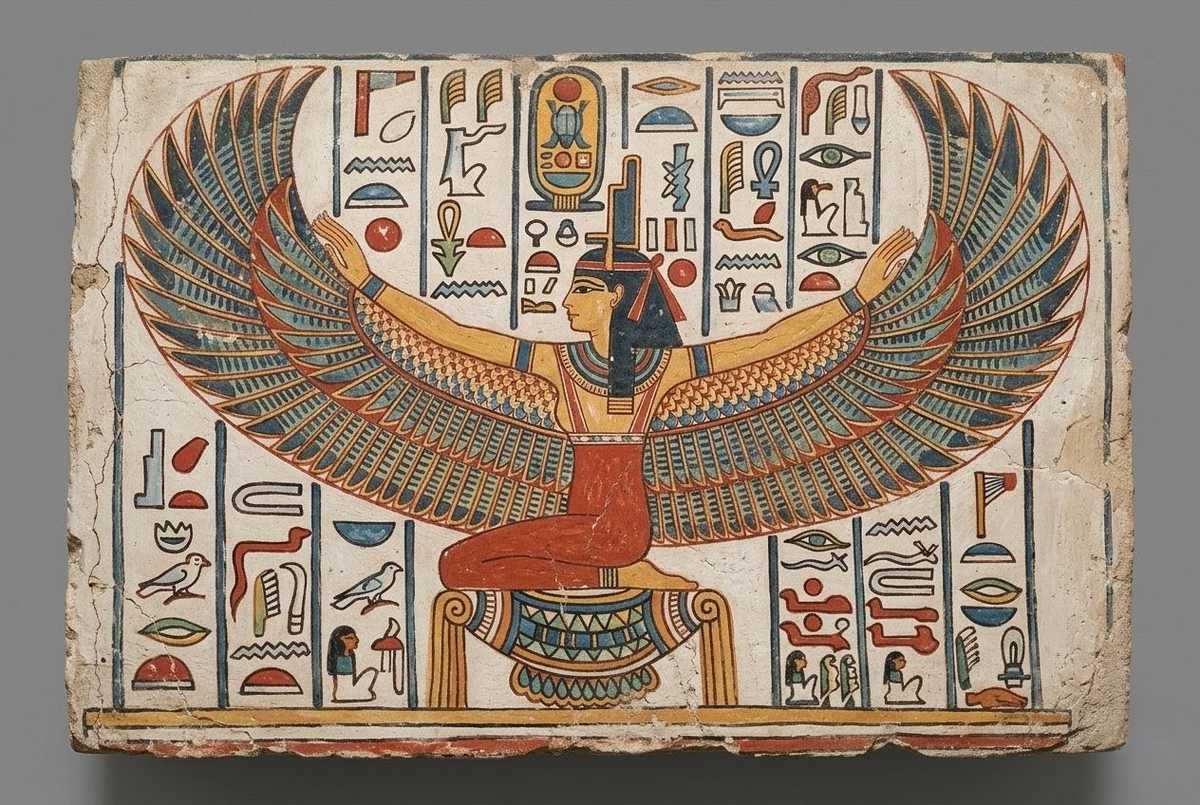
“I am the knowledge of my inquiry,” she declares, “and the finding of those who seek after me” (NHC VI,2 14:25-26). Here is theology as epistemology: the divine feminine is not merely an object of devotion but the very structure of knowing itself—the cognitive framework through which recognition occurs. She operates as both the archive and the method of retrieval, the question and its answer.
Primary Source Citation: “For I am the first and the last. I am the honoured one and the scorned one. I am the whore and the holy one. I am the wife and the virgin. I am
Sophia: Wisdom Fallen and Cosmic Restoration
No figure in Gnosticism presents greater complexity than Sophia—the youngest of the aeons, the one who initiates movement without consent, the mother of the demiurge, the ongoing rescue operation that never reaches completion. Her story appears in multiple versions throughout the library: the Apocryphon of John, the Hypostasis of the Archons, and On the Origin of the World. Each represents a distinct theological reflection on the same fundamental myth.
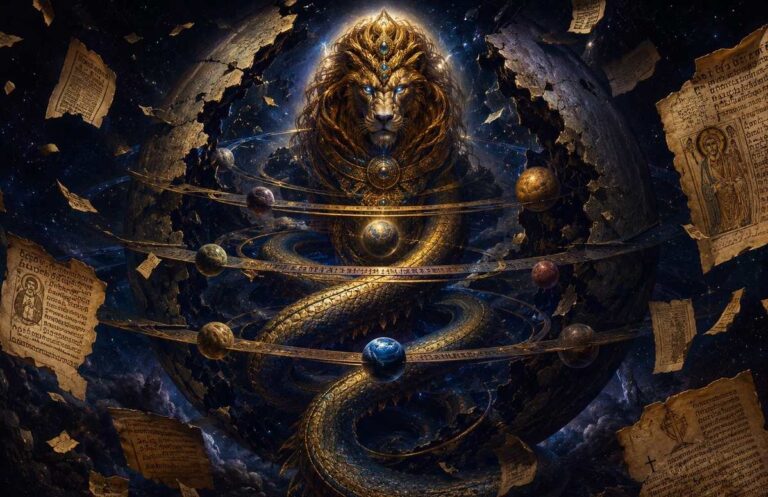
The narrative structure reveals a crisis of boundaries: Sophia, desiring to know the transcendent Father without the mediation of her consort (a violation of proper distancing), brings forth Yaldabaoth—the lion-faced serpent, the blind god, the demiurge who creates the material world in ignorance of his own mother. Sophia is divided: part of her remains above in the pleroma, part is trapped below in the chaos she inadvertently generated. This is not merely mythic storytelling but a sophisticated analysis of the relationship between divine plenitude and material deficiency.
Yet Sophia is not merely a tragic figure. She is the principle of cosmic correction, the internal mechanism that exposes the system’s flaws. She sends her daughter Zoe (Life) to breathe soul into Adam—an unauthorised upgrade to the archons’ defective creation. She establishes the plan of salvation that will eventually dissolve the defective cosmos and restore the scattered sparks to the light. She is the wisdom that learns from its own error and initiates the return protocol. In bureaucratic terms, she exposed the security breach; in theological terms, she is the mercy that corrects the fall.
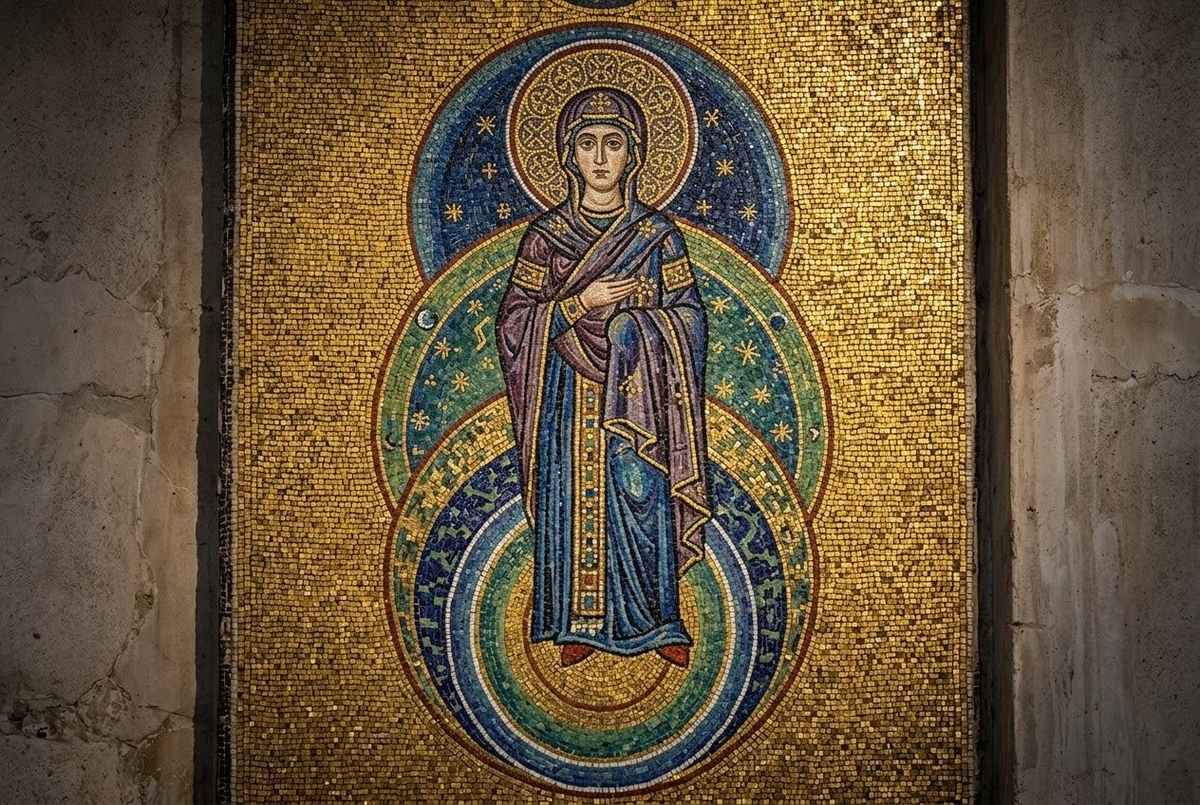
In Valentinian theology, Sophia’s restoration follows more gradual, psychologically inflected pathways. Her passion (pathos) becomes the template for the soul’s own journey from fragmentation to wholeness. The feminine is not rejected but transformed—her emotional turbulence refined into the stable joy (chara) of the restored aeon. This represents a therapeutic approach to cosmology, as opposed to the Sethian preference for emergency extraction.
Primary Source Citation: “And our sister Sophia is she who came down in innocence in order to rectify her deficiency. Therefore she was called Life, which is the mother of the living” (NHC II,1 10:15-19).
Norea: Resistance and the Refusal of Dominion
In the Hypostasis of the Archons (NHC II,4) and the compact Thought of Norea (NHC IX,2), we encounter Norea—sister of Seth, daughter of Adam and Eve, the one who refuses compliance with archonic violence. The archons, having created Adam through their own limited manufacturing protocols, decide to rape his daughters to breed a race of slaves. Norea alone resists. She cries out to the true God, who sends the angel Eleleth to deliver her and reveal the secrets of cosmic origins.
She is the type of the spiritual woman who will not be violated by the powers of this world, who claims her own divine lineage, who demands instruction rather than submitting to force. “I am not your daughter,” she tells the archons, “but a daughter of the power above” (NHC IX,2 28:20-22). This is the Gnostic feminine: not passive, not submissive to illegitimate authority, but claiming her authority through direct spiritual knowledge. Her resistance initiates revelation; her refusal triggers the descent of divine intelligence that exposes the archons’ limited jurisdiction.
Eleleth informs her that the archons’ power is temporary, their authority subject to higher review. She receives the knowledge that will preserve the spiritual lineage of Seth from archonic contamination. In the text’s logic, she is the hinge upon which salvation turns—the one who says “no” to domination and “yes” to divine instruction.
The Feminine in Ritual and Community Practice
The prominence of feminine divine imagery in Gnosticism carried practical consequences for community organisation. Women held teaching and prophetic positions in Gnostic communities—roles that orthodox structures would later restrict. The Gospel of Philip declares: “There were three who always walked with the Lord: Mary his mother, and her sister, and Magdalene, the one who was called his companion” (NHC II,3 59:6-8). The text continues with the provocative claim that the Lord loved Mary Magdalene more than all other disciples and used to kiss her often on the mouth—suggesting the highest levels of spiritual initiation were accessible regardless of gender.
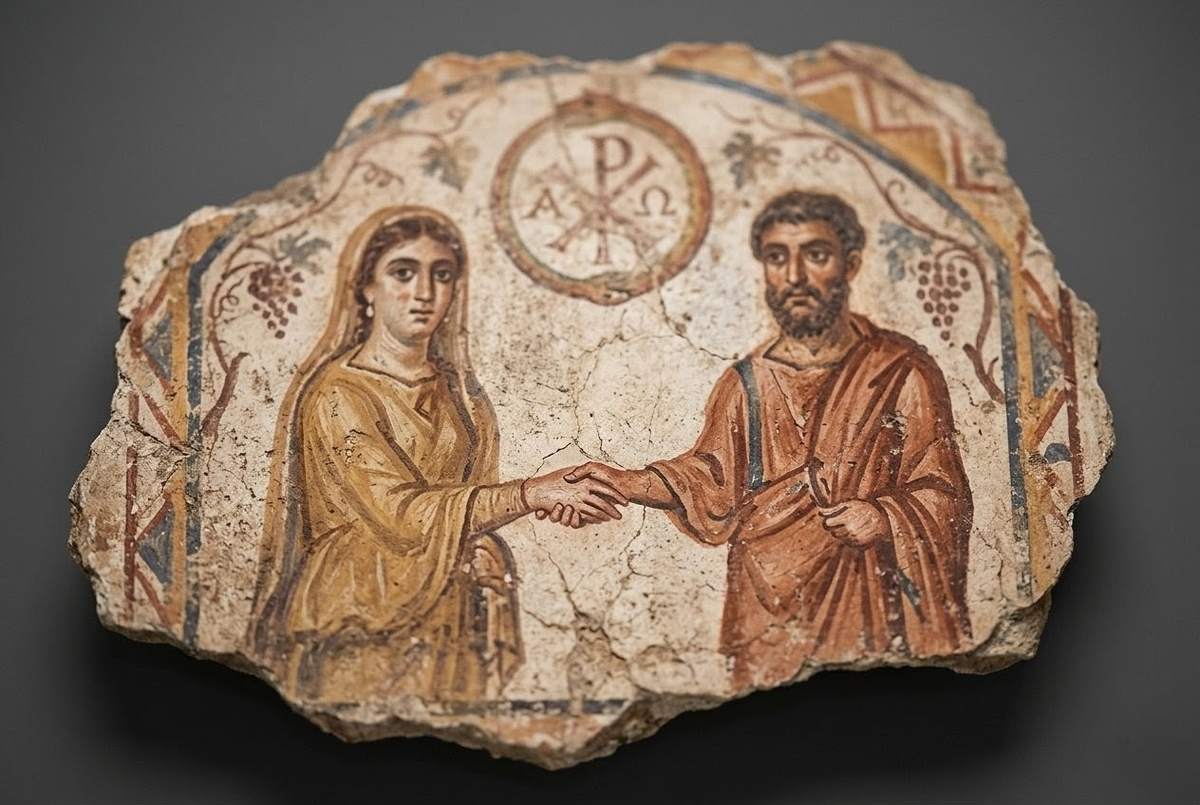
The bridal chamber (nymphōn)—the highest sacrament in Valentinian theology—was understood as the union of masculine and feminine principles, whether enacted through marriage, spiritual partnership, or the internal integration of the soul. The feminine was not supplementary but essential to salvation, a required component rather than an optional adjunct. Even the archons recognised the threat this posed to their control. Irenaeus reports with evident anxiety that the Valentinians “transfer the creation of the universe to the mother of all things”—a condemnation that reveals the subversive potential of feminine thealogy to patriarchal order.
Trimorphic Protennoia (NHC XIII,1) extends this feminine authority to cosmic dimensions, presenting the First Thought as a triple-descending power who creates the mechanisms of salvation herself: “I am the one who is hidden in the depths, and I am the one who is revealed in the heights” (NHC XIII,1 35:20-22). She establishes the Five Seals, the baptismal procedures, and the ascent protocols that allow the spiritual to bypass archonic obstruction.
Contemporary Relevance: Theological Depth and Gender
We do not offer these texts as a programme for contemporary goddess worship, though they have nourished such movements. We offer them as alternatives—reminders that Christianity need not be patriarchal, that monotheism need not be masculine, that the divine can be imagined as birth-giving rather than commanding, as receptive rather than dominating, as multiple rather than singular. The Nag Hammadi Library preserves the theological options that orthodoxy redacted.
The recovery of the feminine divine in these texts is not merely about gender representation in the celestial hierarchy. It is about theological completeness. A spirituality that excludes the feminine half of human experience operates with deficient categories; it lacks the full range of metaphors necessary to describe the relationship between the human and the divine. The Gnostics preserved what others attempted to erase not as a political statement, but as a recognition of ontological necessity.
Read these texts with attention to what is being restored. Notice how the presence of the divine feminine changes the emotional register, the cosmological structure, the soteriological hope. Notice how different it feels to pray to a mother rather than a father, to seek wisdom as a feminine presence rather than a masculine abstraction, to understand creation as birth rather than manufacture. Notice how the archonic powers lose their authority when the divine feminine sits at the centre of the pleroma rather than at its margins.
The feminine divine is not a novelty. It is a return to theological complexity before the administrative simplifications of the fourth century filed half the divine cabinet under “obsolete.”
Frequently Asked Questions
Who is Barbelo in Gnostic texts?
Barbelo is the First Thought (Protennoia) of the transcendent Father in Sethian Gnosticism, described in the Apocryphon of John. She is the first emanation, the divine Mother, and the womb of the All who serves as the mediatory principle between the unknowable Source and the manifest Pleroma.
What is Thunder Perfect Mind about?
Thunder: Perfect Mind is a poetic text from Nag Hammadi Codex VI where a divine feminine voice speaks through paradoxical identifications–simultaneously claiming to be the whore and the holy one, the mother and the daughter. It represents the divine feminine as beyond all categorical limitations and binary oppositions.
How does Sophia fall in Gnostic mythology?
Sophia falls when she desires to know the transcendent Father without her consort’s mediation, bringing forth Yaldabaoth–the demiurge who creates the material world in ignorance. Part of her remains above in the pleroma while part is trapped below, initiating the cosmic restoration operation described across multiple Nag Hammadi texts.
Who is Norea in the Hypostasis of the Archons?
Norea is the sister of Seth and daughter of Adam who resists the archons’ attempt to violate her, declaring herself a daughter of the power above. She represents spiritual resistance to illegitimate authority and receives classified knowledge from the angel Eleleth regarding cosmic origins and the archons’ limited jurisdiction.
Did women hold leadership in Gnostic communities?
Yes, women held teaching and prophetic positions in Gnostic communities. The Gospel of Philip mentions Mary Magdalene as the Lord’s companion whom he loved above other disciples, and texts suggest women served as missionaries and holders of secret knowledge without gender-based restrictions on initiation.
What is the bridal chamber (nymphon) in Valentinianism?
The bridal chamber (nymphon) is the highest Valentinian sacrament representing the union of masculine and feminine principles. It could be enacted through marriage, spiritual partnership, or internal integration of the soul, and was considered essential for salvation rather than supplementary to it.
Which Nag Hammadi texts feature the feminine divine?
Key texts include Thunder: Perfect Mind (NHC VI,2), Trimorphic Protennoia (NHC XIII,1), the Apocryphon of John (NHC II,1), Hypostasis of the Archons (NHC II,4), Thought of Norea (NHC IX,2), the Gospel of Mary (BG 8502,1), and On the Origin of the World (NHC II,5).
Further Reading
- Thunder: Perfect Mind: Divine Speech in Seven Voices — Examining the poetic structure and ritual function of the most philosophically dense feminine divine text in the library.
- Trimorphic Protennoia: Three Descents of the First Thought — Exploring Barbelo’s triple manifestation and the establishment of the Five Seals initiation protocol.
- Apocryphon of John: Gnostic Creation Myth — The primary text for Sophia’s fall and the demiurge’s unauthorised creation of the material cosmos.
- Hypostasis of the Archons: Eve and the Truth — Norea’s resistance narrative and the archons’ failed attempt to dominate the feminine divine.
- Gospel of Mary Magdalene — The apostle who received secret teachings from Jesus and contended with Andrew and Peter for apostolic authority.
- Feminine Divine Collection — Curated overview of all texts foregrounding the Goddess in the Nag Hammadi Library.
- Thought of Norea: Heroine of Spiritual Resistance — The brief but potent text of Seth’s sister who defies archonic domination.
- Nag Hammadi Library: Complete Guide to Gnostic Scriptures — Master index for navigating all 46 tractates and thematic collections.
- Gospel of Philip: Sacrament and Eros — Examining the bridal chamber (nymphōn) and Mary Magdalene’s spiritual authority.
- Nag Hammadi for Beginners: A 10-Text Journey — Entry point for newcomers to the library, including essential feminine divine texts.
References and Sources
The following sources support the claims and quotations presented in this article. All citations to the Nag Hammadi Library represent direct translations from the Coptic text as established in the standard critical editions.
Primary Sources and Critical Editions
- [1] Robinson, J.M. (1977). The Nag Hammadi Library in English. Harper & Row.
- [2] Turner, J.D. (2000). The Book of Thomas the Contender (The Coptic Gnostic Library). Brill.
- [3] Layton, B. (1987). The Gnostic Scriptures. Doubleday.
- [4] Meyer, M. (2007). The Nag Hammadi Scriptures. HarperOne.
- [5] Waldstein, M. & Wisse, F. (1995). The Apocryphon of John: Synopsis of Nag Hammadi Codices II,1; III,1; and IV,1 with BG 8502,2. Brill.
Scholarly Monographs and Thematic Studies
- [6] King, K.L. (2006). The Secret Revelation of John. Harvard University Press.
- [7] McGuire, A. (1999). “Women, Gender, and Gnosis in Gnostic Texts and Traditions.” In Women and Christian Origins, ed. R.S. Kraemer & M.R. D’Angelo. Oxford University Press.
- [8] Pagels, E.H. (1979). The Gnostic Gospels. Random House.
- [9] Turner, J.D. (2001). Sethian Gnosticism and the Platonic Tradition. Presses Universitaires de Louvain.
- [10] King, K.L. (1995). Revelation of the Unknowable God: With Text, Translation, and Notes to NHC XI,3 Allogenes. Polebridge Press.
Comparative Studies and Feminist Theology
- [11] Arthur, R. (1984). “Thunder, Perfect Mind.” In Nag Hammadi Codices V,2-5 and VI with Papyrus Berolinensis 8502,1 and 4, ed. D.M. Parrott. Brill.
- [12] Schaberg, J. (2002). The Resurrection of Mary Magdalene: A Narrative History. Continuum.
- [13] DeConick, A.D. (2013). Seek to See Him: Ascent and Vision Mysticism in the Gospel of Thomas. Brill.
- [14] Irenaeus of Lyon. Against Heresies (Adversus Haereses), Book I. Translated in The Ante-Nicene Fathers, Vol. 1. Eerdmans.
- [15] King, K.L. (2003). What Is Gnosticism? Harvard University Press.