The Three Witnesses: Textual Development in the Apocryphon of John
The Apocryphon of John (NHC II,1; III,1; IV,1) presents a peculiar scandal to modern bibliographic sensibilities: one text, simultaneously existing in three distinct bureaucratic incarnations across the Nag Hammadi Library. While orthodox traditions consolidated their canons into singular, enforceable editions, Sethian communities preserved their foundational revelation in multiple recensions–short, long, and longer still–each adapted to specific pedagogical or liturgical jurisdictions. This textual multiplicity reveals not confusion, but rather a sophisticated understanding of sacred literature as living administration rather than fossilised decree.
Table of Contents
- The Triple Witness and Textual Fluidity
- The Short Version: Codex III’s Administrative Concision
- The Long Versions: Codices I and II’s Cosmic Expansion
- Mechanisms of Expansion: Redaction as Cosmic Administration
- Theological Development or Liturgical Adaptation?
- Implications for Reading the Nag Hammadi Library
- Frequently Asked Questions
- Further Reading

The Triple Witness and Textual Fluidity
The Apocryphon of John holds the distinction of being the most frequently copied text in the Nag Hammadi collection–a testament to its authority within Sethian circles. Unlike the solitary preservation of the Gospel of Thomas or the Thunder: Perfect Mind, this revelation appears in three distinct versions: a short recension in Codex III and two long recensions in Codices I and II. This triple attestation provides textual scholars with an unusual opportunity to observe the development of Gnostic theology in real time, revealing how Sethian communities expanded, modified, and refined their foundational myths across the second and third centuries CE.
A Scandal of Multiplicity
The existence of multiple versions challenges simplistic assumptions about Gnostic “scripture.” Rather than fixed canonical texts enforced by hierarchical decree, these communities possessed fluid traditions that adapted to changing circumstances, expanded to address new cosmological questions, and contracted for specific liturgical or pedagogical purposes. Comparing the three witnesses illuminates both the core commitments and the creative developments of Sethian Christianity–demonstrating that textual stability mattered less than narrative fidelity to the essential architecture of divine fall and restoration.
The Bureaucracy of Divine Revelation
Approaching these manuscripts through the lens of celestial administration proves instructive. Just as archontic powers generate copies of copies–simulations distancing the created from the uncreated–so too do human scribes generate variants that refract the original light through different prisms of concern. Yet unlike the archontic project of obfuscation, these textual multiplications serve clarification: each version illuminates specific aspects of the Sethian mythos that its siblings render in shadow. The short version offers bureaucratic efficiency; the long versions provide comprehensive regulatory coverage.
What is a Recension?
In textual criticism, a recension refers to a particular version or edition of a text resulting from deliberate editorial revision. Unlike accidental copying errors, recensional changes reflect intentional redaction–scribal or editorial interventions that expand, condense, or restructure material for specific audiences or purposes. The Apocryphon of John exists in at least three distinct recensions: the short version (Codex III) and two long versions (Codices I and II), each representing different stages or contexts of Sethian transmission.
The Short Version: Codex III’s Administrative Concision
The Codex III version presents a concise, tightly structured revelation that reads like an executive summary of cosmic events. Following the narrative frame–John’s despair after the crucifixion, the polymorphic appearance of the Saviour, and the initial questions concerning supreme divine reality–the text offers a relatively brief account of the Pleroma, the catastrophic fall of Sophia, the creation of the material world by the deluded Yaldabaoth, and the formation of ensouled humanity.
Manuscript Context and Advanced Instruction
The presence of Eugnostos the Blessed and Sophia of Jesus Christ in the same codex suggests that Codex III preserves materials for advanced instruction–texts assuming the reader’s familiarity with basic Sethian mythology that could therefore be presented with administrative brevity. This manuscript context indicates that the short version functioned not as an introduction for novices, but as a refresher for initiates already versed in the complex angelological and cosmological frameworks of the tradition.
Christological Economy in Miniature
Key features distinguish this abbreviated edition. The brevity of the cosmogonic narrative notably lacks the elaborate lists of archontic angels found in the long versions–suggesting either confidence in the reader’s prior knowledge or a pedagogical focus on theological essentials over demonological catalogue. The Christology presents the Saviour primarily as the Revealer, with less emphasis on his pre-incarnate glory or post-resurrection authority. This economy of christological description suggests a community less concerned with establishing Jesus’ cosmic credentials than with the content of his revealed knowledge.
The Condensed Five Seals
Perhaps most significantly, the short version references the Five Seals as the necessary mechanism of salvation but offers no ritual detail regarding their performance. This allusive treatment contrasts sharply with the lengthy liturgical descriptions in Codices I and II, suggesting that Codex III’s audience already possessed practical familiarity with Sethian initiation rites. The text functions as theological reinforcement rather than ritual instruction–a distinction crucial for understanding the varied functions of these manuscripts within ancient communities.
The Long Versions: Codices I and II’s Cosmic Expansion
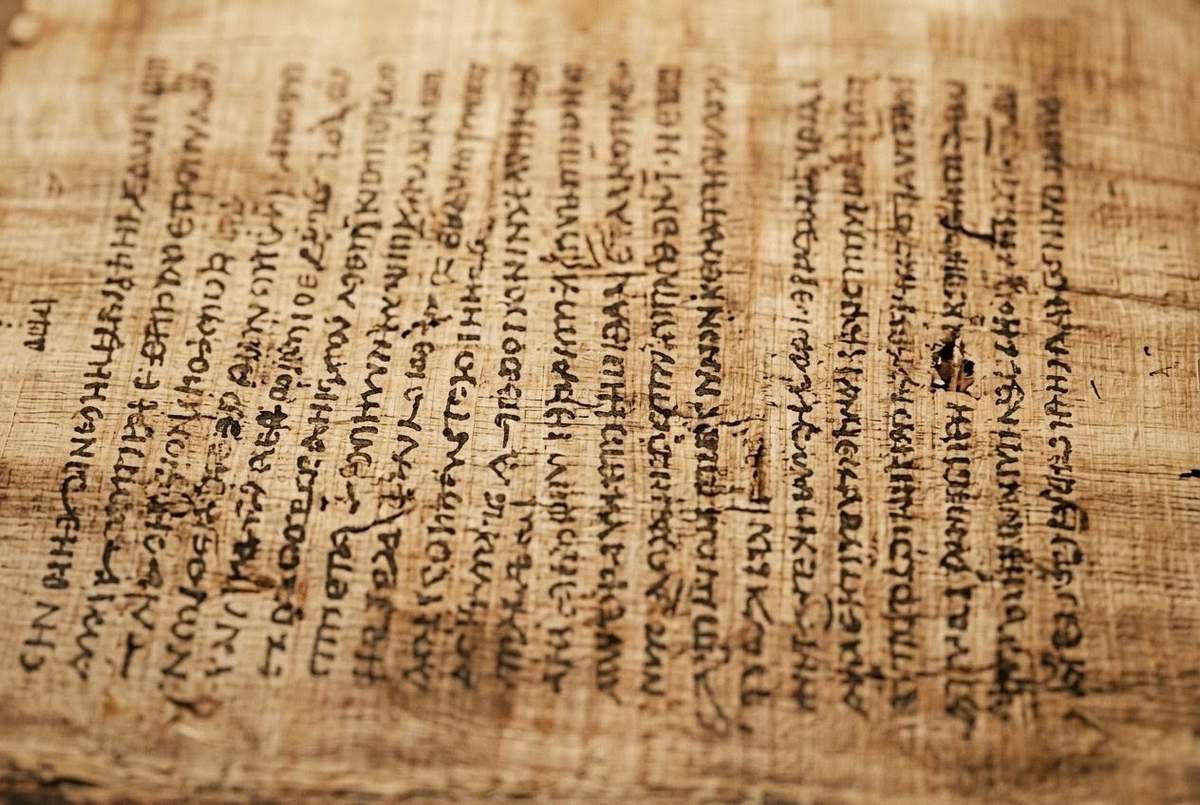
The long versions in Codices I and II substantially expand the short text, adding approximately thirty percent additional material. While Codex II (part of the “Crown Jewels” collection alongside the Gospel of Thomas and Gospel of Philip) and Codex I (the Jung Codex, containing Valentinian as well as Sethian materials) share the long recension, they exhibit minor textual variations suggesting independent transmission histories–parallel bureaucratic channels through which the same essential revelation travelled.
The Crown Jewels and the Jung Codex
Codex II’s status as the “Crown Jewels” of the library signals the premium placed upon its contents by the community that buried these texts. The presence of the long Apocryphon here suggests that this version represented the definitive edition for that particular community–a comprehensive statement of Sethian cosmogony worthy of preservation alongside Thomas and Philip. Conversely, Codex I’s mixed Valentinian-Sethian contents indicate a collection bridging traditions, with the long Apocryphon serving to anchor the Sethian component of a hybrid library.
The 30% Expansion: Angelology and Demonology
The expansions focus on several theological areas of pressing concern to second-century ascent practitioners:
- Angelology: Extensive lists of archontic authorities, their specific planetary spheres, and their destructive intentions. These passages reflect developed demonological speculation and astrological concern, providing the traveller with a detailed map of hostile territories.
- Cosmogonic detail: Greater elaboration of the emanation process, the aeonic hierarchies, and the specific mechanisms of Sophia’s fall into materiality.
- Ritual specificity: Detailed descriptions of the Five Seals, including the specific formulae and their protective functions against the seven planetary powers.
- Polemical expansion: Extended attacks on “orthodox” Christian views, particularly regarding the nature of the creator god and the canonical status of the Jewish scriptures.
Parallel Transmission and Independent Variants
The relationship between the Codex I and Codex II long versions reveals parallel transmission rather than direct copying. Minor textual variations–differences in phrasing, the ordering of certain passages, and the specific names of angelic entities–suggest that these manuscripts descended independently from a common ancestor, each accumulating distinct editorial modifications during their separate journeys through Egyptian Sethian communities. This pattern mirrors the broader phenomenon of Nag Hammadi textual fluidity: authority derived from mythic structure rather than verbatim preservation.
Primary Source Citations: Apocryphon of John exists in three Coptic witnesses: NHC II,1 (pp. 1-32), NHC III,1 (pp. 1-40), and NHC IV,1 (pp. 1-86). The Codex IV version, though fragmentary, largely agrees with Codex II’s long recension. The short version (Codex III) lacks the extensive angelological lists found at II 10:22-11:25 and the detailed Five Seals ritual description at II 31:25-32:9. All three versions share the frame narrative of John on the Mount of Olives and the core descent-ascent pattern of the saviour.
Mechanisms of Expansion: Redaction as Cosmic Administration
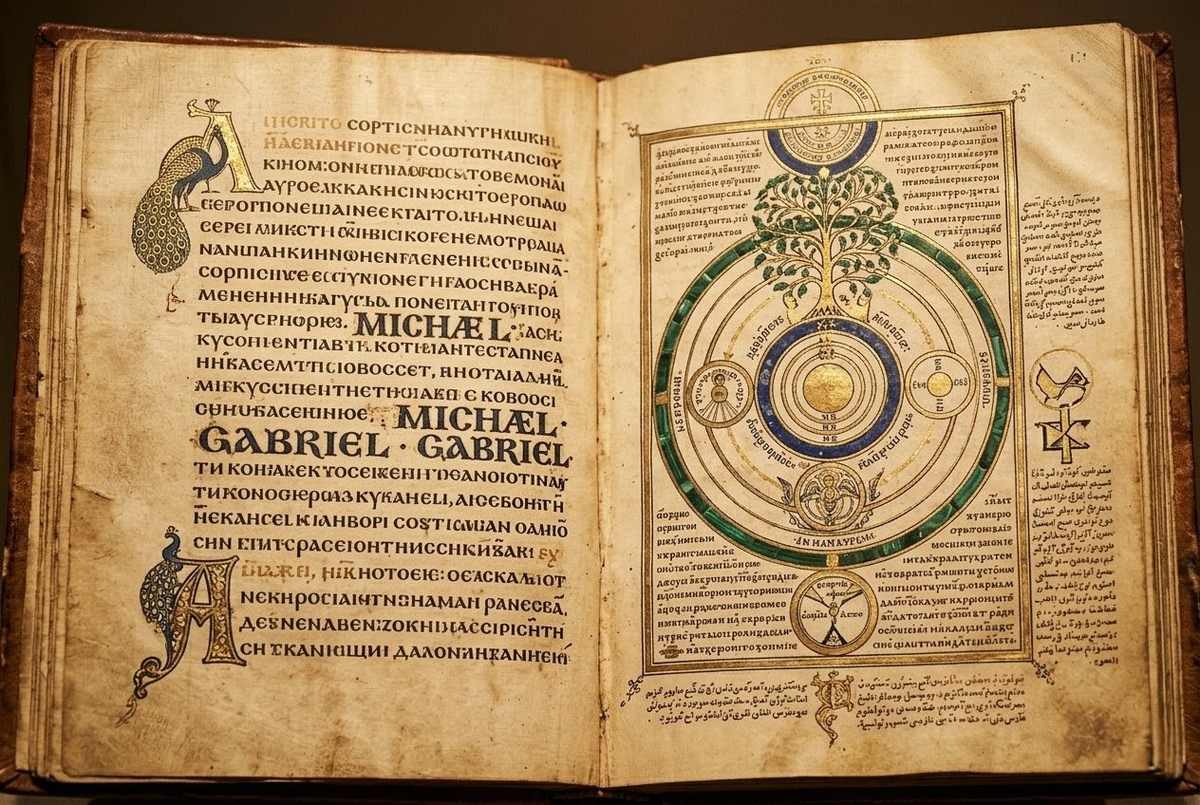
Comparing the versions reveals specific redactional techniques that illuminate ancient editorial practices. The long versions insert blocks of material–sometimes marked by repetition or awkward transitions–into the short version’s framework. This suggests that scribes and teachers possessed both a core text and supplementary traditions that they combined according to liturgical or pedagogical context, treating the material with the flexibility of administrative documents rather than the rigidity of imperial decrees.
Redactional Signatures and Awkward Transitions
Textual scholars identify redactional activity through seams in the narrative–places where the prose shifts abruptly, where information seems repetitious, or where the grammatical subject changes without clear antecedent. The long versions contain several such signatures: the insertion of the lengthy angelic catalogue into the middle of Yaldabaoth’s creative activity, and the expansion of the brief “breathing of the spirit” into a complex narrative about the androgynous spiritual Adam.
The Adam Narrative Insertion
For example, the short version mentions that Yaldabaoth “created a man” with characteristic archontic efficiency, but the long versions insert a lengthy narrative about the androgynous spiritual Adam, the creation of the material body, and the breathing of the spirit by the Mother. This expansion reflects developing interest in protological speculation and the theological significance of the human body–a concern perhaps less pressing for the Codex III community but crucial for those wrestling with emergent proto-orthodox incarnational theology.
From Ritual Reference to Liturgical Script
Similarly, where the short version references the Five Seals as the means of salvation, the long versions describe them as a ritual sequence involving baptism, chrismation, and the reception of secret names. This shift from passing reference to detailed description suggests liturgical development–the text functioning not merely as mythological narrative but as actual script for initiation rites. The manuscript has transformed from theological treatise into performance document, reflecting the changing needs of communities actively engaged in Sethian ritual practice.
The Five Seals: Sethian Initiation Protocol
The Five Seals represent the sacramental mechanism of Sethian salvation described in the Apocryphon of John. According to the long versions, these involve: (1) baptism in living water, (2) anointing with oil (chrismation), (3) redemption through ritual formulae, (4) the bridal chamber (nuptial union), and (5) consumation in the light. These seals serve as passports through the planetary spheres, identifying the ascending soul as a citizen of the Pleroma rather than property of the archons. The short version references these seals briefly; the long versions provide the detailed liturgical choreography necessary for their performance.
Theological Development or Liturgical Adaptation?
The relationship between the versions raises fundamental questions about the development of Sethian theology. Do the expansions represent doctrinal evolution–the community’s beliefs becoming progressively more complex over time–or liturgical adaptation–adding practical detail for ritual use while maintaining stable core commitments? The evidence supports a both/and rather than either/or conclusion, revealing a tradition simultaneously conservative in its essentials and flexible in its applications.
The Doctrinal Evolution Hypothesis
Proponents of the evolutionary model point to the angelological expansions as evidence of ongoing speculation about the powers of the planets and their role in preventing soul-ascent. The detailed lists of archontic names and jurisdictions suggest a community increasingly concerned with mapping the hostile territories between earth and Pleroma–a cosmological precision perhaps unnecessary for earlier, less systematised expressions of the tradition. The development from simple reference to complex ritual description similarly suggests elaboration over time.
Liturgical Pragmatism and Performance Contexts
Conversely, the liturgical adaptation hypothesis suggests that all three versions existed simultaneously within different performance contexts. The short version served catechetical purposes–teaching the mythic narrative without overwhelming novices with complex ritual detail–while the long versions provided the comprehensive documentation necessary for actual initiatory performance. This model posits not chronological development but synchronic specialisation: different editions for different offices within the community’s bureaucratic hierarchy.
The Stable Core: Pleroma, Sophia, and the Demiurge
Regardless of which hypothesis obtains, the core structure remains strikingly consistent across all three witnesses: the transcendent Father beyond conception, the fallen Sophia whose passion generates matter, the ignorant Demiurge Yaldabaoth who fashions the material prison, the ensouled Adam who receives the divine spark, and the descending Saviour who reveals the path of return. This stability amid variation characterises Gnostic textual production at its finest: the Apocryphon of John possessed authority not because its wording was fixed but because its narrative structure conveyed essential truth about the human predicament and its resolution.
Implications for Reading the Nag Hammadi Library
The three witnesses of John caution against treating Nag Hammadi texts as fossilised artefacts petrified at a single moment of composition. These were living documents, adapted for specific communities, copied with intentional modifications, and performed with varying emphases according to liturgical need. The scholar’s task is not to reconstruct an hypothetical ur-text–some pristine original corrupted by subsequent transmission–but to map the range of Sethian theological possibilities as they actually existed in antiquity.
Living Documents vs Fossilised Artefacts
Modern print culture conditions us to expect textual stability: the notion that a book should remain identical across thousands of copies. Ancient manuscript culture operated on radically different principles. Scribes functioned as editors and interpreters, not mere photocopiers. The Apocryphon of John demonstrates that Sethian communities embraced this fluidity, treating their scriptures as resources for ongoing revelation rather than relics of past authority.
Pedagogical Concision vs Liturgical Elaboration
For contemporary readers, the versions offer different entry points into Sethian thought. The short version provides an accessible introduction to the mythological framework–ideal for those encountering Gnosticism for the first time. The long versions offer detailed engagement with ancient cosmology, demonology, and ritual practice, suited for those seeking to understand the specific technologies of Sethian ascent. Together, they demonstrate the richness and flexibility of Gnostic imagination, refusing reduction to a single “official” narrative while maintaining fidelity to the essential pattern of divine sparks trapped in material darkness and illuminated by salvific knowledge.
Mapping Sethian Theological Possibilities
Ultimately, the three recensions of the Apocryphon of John invite us to abandon the quest for a single “original” Gnosticism in favour of mapping a spectrum of related positions. Like different departmental regulations within the same celestial administration, each version addresses specific concerns while remaining accountable to the same ultimate authority–the revealed knowledge of the transcendent Father, the error of the fallen Mother, and the redemption offered through the Saviour’s descent. In recognising this multiplicity, we honour the texts as their creators intended: not as closed canons, but as open invitations to gnosis.
“The Apocryphon of John exists in three distinct versions across the Nag Hammadi Library–two long recensions in Codices I and II, and one short recension in Codex III. This textual multiplicity reveals Sethian Christianity’s fluid approach to scripture, where narrative fidelity mattered more than verbatim preservation. The short version offers concise mythological instruction for advanced initiates, while the long versions provide detailed angelological catalogues and ritual descriptions of the Five Seals necessary for planetary ascent.”
Frequently Asked Questions
What is the Apocryphon of John and why does it exist in three versions?
The Apocryphon of John (Secret Book of John) is a Sethian Gnostic text describing the creation of the world by the ignorant Demiurge Yaldabaoth and the rescue of divine sparks trapped in human bodies. It exists in three versions–a short recension in Codex III and two long recensions in Codices I and II–because Sethian communities treated scripture as living documentation, expanding or contracting the text according to pedagogical and liturgical needs rather than enforcing rigid canonical uniformity.
Which Nag Hammadi codices contain the Apocryphon of John?
The Apocryphon of John appears in Nag Hammadi Codex I (the Jung Codex), Codex II (alongside the Gospel of Thomas and Gospel of Philip), and Codex III (with Eugnostos and Sophia of Jesus Christ). A fragmentary copy also exists in Codex IV. This makes it the most frequently attested text in the entire library, indicating its central importance to Sethian communities.
What are the main differences between the short and long versions?
The short version (Codex III) presents an efficient, condensed narrative lacking elaborate angelic catalogues and detailed ritual descriptions. The long versions (Codices I and II) expand the text by approximately thirty percent, adding extensive lists of archontic authorities, detailed cosmological mechanisms, and specific instructions for the Five Seals initiation ritual necessary for ascending past the planetary spheres.
What are the Five Seals mentioned in the Apocryphon of John?
The Five Seals represent the Sethian sacramental system of salvation described in the text. According to the long versions, these include baptism in living water, anointing with oil (chrismation), redemption through secret formulae, the bridal chamber (nuptial union), and consummation in light. These seals function as passports through the planetary spheres, identifying the ascending soul as belonging to the Pleroma rather than the material realm.
Is the Apocryphon of John Sethian or Valentinian?
The Apocryphon of John represents classical Sethian Gnosticism, featuring the divine Seth as the prototype for saved humanity and the distinct Sethian cosmological framework of the Father, Mother Barbelo, Sophia, and Yaldabaoth. However, its presence in Codex I alongside Valentinian texts suggests that some communities read it within broader Gnostic contexts, though the text itself maintains Sethian theological characteristics throughout all three recensions.
Which version of the Apocryphon of John is the oldest?
Scholars debate whether the short version represents the original core subsequently expanded, or whether both long and short versions descended independently from a common ancestor. The current consensus suggests the short version may preserve an earlier theological stage, while the long versions represent liturgical elaboration for actual ritual practice. However, all surviving manuscripts date to the fourth century CE, requiring careful textual analysis to determine redactional relationships.
Why is the Apocryphon of John important for understanding Gnosticism?
The Apocryphon of John provides the most comprehensive surviving account of classic Gnostic cosmology–the fall of Sophia, the creation of the material world by a deluded demiurge, the divine spark in humanity, and the saviour’s descent to reveal secret knowledge. Its three versions demonstrate that Gnostic communities valued narrative fidelity over verbatim preservation, treating their scriptures as flexible resources for ongoing revelation rather than fixed fossilised decrees.
Further Reading
To explore the texts and their contexts in depth:
- The Apocryphon of John: Gnostic Creation and Salvation — A comprehensive study of the primary long version text and its cosmological framework.
- The Apocryphon of John: A Short Version Overview — Detailed examination of the Codex III short recension and its pedagogical context.
- Three Witnesses: The Apocryphon of John Manuscripts Compared — Scholarly comparison of textual variants across all three recensions.
- The Hypostasis of the Archons: Eve and the Truth of Genesis — Compare another Sethian creation myth with similar themes of archontic deception.
- The Five Seals: Sethian Initiation and Ritual Practice — Detailed analysis of the sacramental system referenced in all three versions.
- Codex I: The Jung Codex and Valentinian Traditions — Explore the manuscript context of one long version among mixed Sethian-Valentinian materials.
- Codex II: The Crown Jewels of the Library — Discover the prestigious collection containing the other long version alongside Thomas and Philip.
- Codex III: Sethian Cosmology and Christian Adaptation — Study the manuscript containing the short version and its advanced theological context.
- Sethian and Valentinian Traditions in the Nag Hammadi Library — Understand the theological streams that produced these variant texts.
- The Nag Hammadi Library: A Complete Guide to the Gnostic Scriptures — Comprehensive overview of the entire collection and its historical significance.