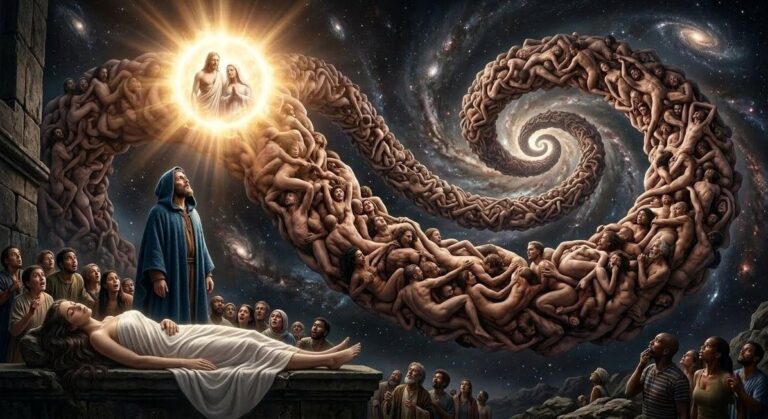
What Is Recognition? The Moment of Direct Seeing That Changes Everything
Recognition is a moment of direct seeing in which something previously hidden becomes known, not only intellectually but inwardly. In the Gnostic tradition, it is the pivot around which everything turns. Not faith, not obedience, not ritual performance, but recognition-gnosis as an event rather than a doctrine. The seeker does not learn something new. They remember something old. The veil lifts, and what was always there is suddenly seen. This is not ordinary knowledge. It is a shift in the very ground of awareness, after which the world does not look different–the looker does.
This article explores recognition in its ancient textual depth, its psychological mechanics, and its modern resonances. It asks what recognition is, how it differs from ordinary knowing, what triggers it, and why the Gnostics considered it the only path to liberation. The goal is not to offer a technique for inducing recognition–there is no such technique–but to clarify the conditions under which it becomes possible, and to distinguish it from its many counterfeits.
Table of Contents
- What Is Recognition?
- Ancient Roots in the Nag Hammadi Texts
- Recognition vs Knowledge: The Difference That Matters
- The Mechanics of Recognition
- Modern Resonances
- Frequently Asked Questions
- Further Reading

What Is Recognition?
In its simplest form, recognition is the recovery of what has been forgotten. The Greek term is anamnesis, literally “un-forgetting.” Plato used it to describe learning as the soul’s recollection of eternal truths known before embodiment. The Gnostics radicalised this idea. For them, anamnesis was not merely intellectual recollection but existential restoration. The soul remembers not a set of facts but its own identity, its origin, and its destination. It recognises that it is not the role it plays, the body it inhabits, or the story it has been told. It is a spark of the divine Fullness that has temporarily lost itself in the drama of the lower world.
The Gospel of Truth, one of the most poetic texts in the Nag Hammadi Library, describes recognition through a series of sensory metaphors. The seeker who recognises the truth is like someone who smells a fragrance and remembers a home they had forgotten. Like someone who finds a pearl they had lost and recognises it as their own. Like someone who awakens from a dream and realises that the terrors of the night were illusory. These images share a common structure: recognition is not the acquisition of something foreign but the recovery of something native. It is the soul’s homecoming to itself.
Recognition is also the event that transforms the knower. The ancient Gnostics distinguished between pistis (faith) and gnosis (knowledge). Faith is belief in something external, accepted on authority. Knowledge is direct recognition, accepted because it is seen. Faith can be taught; recognition cannot. It can be prepared for, invited, and perhaps catalysed, but it cannot be manufactured. The teacher does not give the student recognition. The teacher creates the conditions in which the student’s own recognition can arise. The Gospel of Thomas expresses this with characteristic economy: “When you bring forth what is within you, what you bring forth will save you.”
Ancient Roots in the Nag Hammadi Texts
The concept of recognition permeates the Nag Hammadi Library, though it is expressed differently across the various schools and genres. Three texts in particular illuminate its depth: the Gospel of Truth, the Apocryphon of John, and the Valentinian materials preserved in the Tripartite Tractate and the Interpretation of Knowledge.
The Gospel of Truth: Recognition as Poetic Event
The Gospel of Truth (NHC I,3) is a Valentinian meditation on the experience of recognition, and it may be the most beautiful text in the entire library. It does not narrate the life of Jesus or expound a cosmology. It speaks directly to the reader’s condition, describing the terror of forgetfulness and the relief of return. The text describes error as a state of anguish, like someone searching for a path in a fog, and truth as the recognition that dissolves the fog not by providing a map but by revealing that the destination was never far.
The key passage describes the Father’s response to the fallen world: “He laboured, he toiled, he brought forth the Totalities, he instructed them, he brought them up, he returned them to himself.” The recognition of the Father is not a distant event but a present one. The text tells the reader that they are already within the Fullness, already known, already loved. The only obstacle is forgetfulness. Recognition is the removal of that obstacle, not the addition of something new.
The Apocryphon of John: Recognition as Cosmic Drama
The Apocryphon of John (NHC II,1) presents recognition within a vast mythological framework. The divine spark, trapped in matter by the demiurge and his archons, must be awakened by a revelation from above. The risen Christ appears to John in a cave and unfolds the entire cosmology of the fallen world, from the emergence of the Invisible Spirit to the creation of Adam to the present imprisonment of the divine element. The purpose of this revelation is not merely information but transformation. John is meant to recognise that the world he inhabits is not the only reality, that the powers he fears are not supreme, and that the spark within him is older than the cosmos.
The text also introduces the concept of the three natures–hylic, psychic, and pneumatic–which determines how recognition operates in different souls. The hylic person cannot recognise at all; the spark is too deeply buried. The psychic person can receive faith and moral instruction but not the direct knowledge that transforms. Only the pneumatic person, in whom the divine spark is fully present, can undergo the recognition that the text describes. This is not elitism in the modern sense but a cosmological observation: recognition requires a capacity for recognition, and that capacity is not equally distributed.
Valentinian Exegesis: Recognition as Sacramental Process
The Valentinian tradition, represented in the Tripartite Tractate and the Interpretation of Knowledge, understands recognition as a gradual process rather than a single flash. The pneumatic seed, scattered in the material world by the fallen Sophia, must be awakened through a series of stages: instruction, baptism, anointing, and the final redemption (apolytrosis). Recognition here is not merely cognitive but sacramental. It is effected through ritual participation in the community and through the progressive unveiling of the self’s true identity. The Valentinian system is more institutional than the Sethian, but it shares the same core conviction: the soul must recognise what it is before it can become what it was.
Recognition vs Knowledge: The Difference That Matters
The distinction between recognition and ordinary knowledge is the foundation of Gnostic epistemology. Without it, the entire tradition collapses into a set of strange beliefs about celestial beings. With it, the tradition becomes a precise phenomenology of awakening.
Ordinary knowledge is additive. It accumulates facts, skills, and information. It is horizontal, extending the range of what the mind can manipulate. It is transferable: one person can teach another, and the knowledge moves from container to container without changing the container. Ordinary knowledge is useful, necessary, and often impressive. But it does not transform the knower. A person can know a great deal about Gnosticism without ever undergoing a Gnostic experience. They can be an expert in the texts and a stranger to the spark.
Recognition is subtractive. It removes the obstacles to seeing what was already present. It is vertical, shifting the depth from which the world is perceived. It is not transferable: a teacher can point, but the student must see for themselves. Recognition transforms the knower because it reveals that the knower is not who they thought they were. The ego, which ordinary knowledge serves and strengthens, is relativised by recognition. The person who recognises does not become more knowledgeable. They become more honest.
The difference can be illustrated by a simple image. Ordinary knowledge is like learning the name of a mountain. Recognition is like realising you have been standing on it all along. The name is useful for communication. The realisation changes everything. The Gnostics were not interested in names. They were interested in the ground beneath the feet.
This distinction also explains why the Gnostics were so suspicious of institutional religion. Institutions traffic in ordinary knowledge: doctrines, rules, hierarchies, and authorised interpretations. These are not necessarily evil. They are simply not recognition. They can even become obstacles to recognition when they substitute themselves for the direct experience they were originally meant to facilitate. The Gnostic critique of orthodoxy was not primarily theological. It was epistemological. The Church offered faith; the Gnostics demanded seeing.

The Mechanics of Recognition
Recognition cannot be forced, but it can be prepared for. The ancient Gnostics understood that certain conditions make recognition more likely, and certain obstacles make it impossible. The mechanics of recognition are not a technique but a ecology–a set of relationships between the seeker, the text, the community, and the silence that surrounds them all.
The Text as Mirror
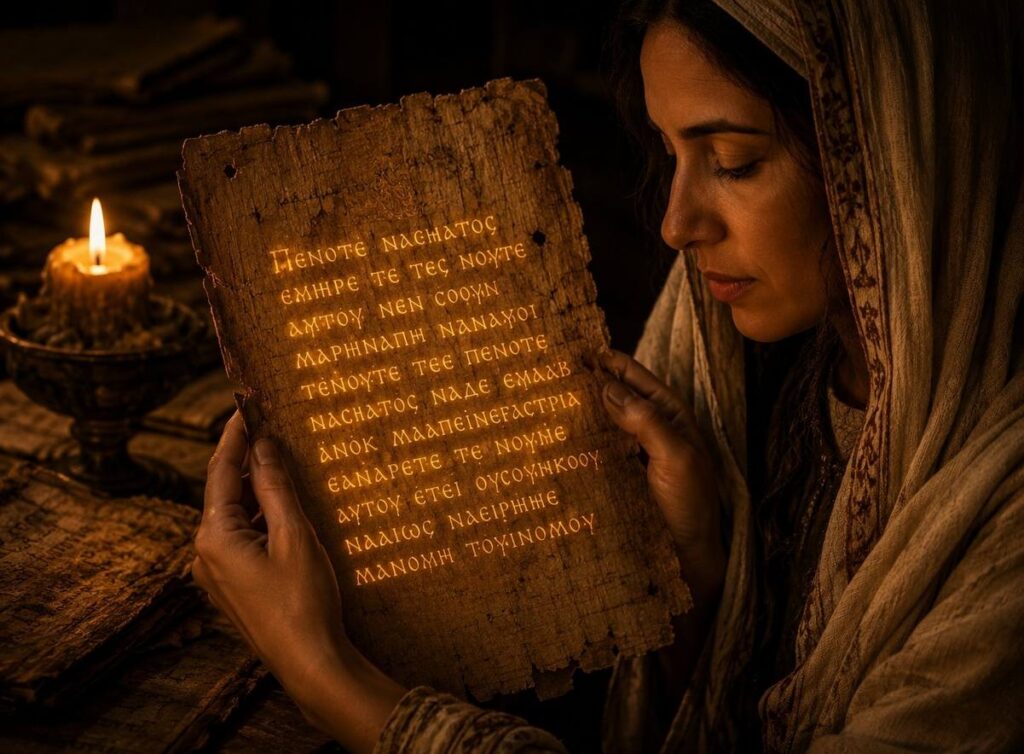
For the ancient Gnostics, the sacred text was not primarily a source of information but a mirror for recognition. The reader did not study the text to learn about God. The reader encountered the text in the hope that something in it would trigger the memory of their own divine origin. The Gospel of Thomas is the clearest example. Its 114 sayings are not arranged in a narrative sequence. They are fragments of light, each designed to strike the reader from a different angle. Saying 3–“The kingdom is inside you and outside you”–is not a doctrine to be believed. It is an invitation to look. Saying 70–“If you bring forth what is within you, it will save you”–is not a promise. It is a description of what happens when recognition occurs.
The text functions as a mirror when the reader is ready. If the spark is not yet active, the text reads as poetry, philosophy, or nonsense. If the spark is stirring, the text reads as a letter from home. The Gnostic teacher’s role was to place the mirror before the student at the right moment, not to explain what the student would see.
The Necessity of Estrangement
Recognition often requires a prior experience of estrangement. The person who is perfectly comfortable in the world, who has never felt the ache of not belonging, who has never suspected that the official story is incomplete, is unlikely to recognise the truth when it appears. The Gnostic texts describe this estrangement in various ways: the soul as a stranger in a foreign land, the royal child in rags, the pearl lost in mud. All these images presuppose a gap between the self’s actual condition and its true identity. Recognition is the closing of that gap. But without the gap, there is nothing to close.
This is why the Gnostic path is not a path of comfort. It is a path of honest confrontation with the conditions of exile. The seeker must feel the loneliness, the alienation, and the hunger before the food can be recognised as food. The person who is spiritually full–sated with social success, ideological certainty, or religious conformity–has no appetite for the bread that the Gnostics offer. Recognition requires emptiness. It is the filling of a void that the seeker has finally admitted is there.
The Role of Crisis
Recognition is often catalysed by crisis. The dark night of the soul, the collapse of a worldview, the failure of a relationship, the encounter with mortality–these are not obstacles to recognition but doorways. The ego’s structures are strongest in times of stability. They weaken when the ground shakes. The ancient Gnostics understood this. The Authoritative Teaching describes the soul’s descent into the foreign land as a necessary prelude to its return. The fall is not a mistake but a stage. The soul must descend before it can ascend, must forget before it can remember, must lose before it can find.
Crisis is not sufficient for recognition. Many people undergo crisis and emerge more entrenched in their previous patterns, more defended, more cynical. But crisis is often necessary. It creates the opening. Whether the light enters depends on whether the person is willing to look.
The Danger of Counterfeits
The path to recognition is lined with counterfeits. The counterfeit spirit, described in the Apocryphon of John, offers experiences that look like recognition but function as deeper bondage. Spiritual bypassing offers the feeling of transcendence without the work of transformation. Spiritual inflation offers the sense of specialness without the humility of genuine seeing. The wellness industry offers the simulation of awakening as a product. All these counterfeits share a single feature: they offer the appearance of recognition without its substance. The seeker feels better without getting better, and the gap between appearance and reality widens.
The test of genuine recognition is simple but demanding: does it deepen honesty, compassion, and courage? Does it make the person more capable of intimacy, more willing to face difficulty, more able to serve without seeking reward? If the answer is no, the experience was probably not recognition. It was probably a peak experience dressed in spiritual clothing, a sugar rush for the soul.
Modern Resonances
The concept of recognition has proven remarkably portable. It resurfaces in psychology, in phenomenology, in the arts, and in the lived experience of people who have never read a page of the Nag Hammadi Library. The structure is always the same: a moment in which the obvious becomes visible, the hidden becomes present, and the self recognises itself in what it had previously taken for other.
Jung and the Archetype of the Self
Carl Jung’s concept of the Self–the totality of the psyche and the goal of the individuation process–resonates deeply with the Gnostic divine spark. Jung described individuation as the process by which the ego recognises its subordination to the Self, the inner guiding principle that knows more than consciousness. This recognition is not intellectual but experiential. It often occurs through dreams, synchronicities, and the confrontation with the shadow. Jung was explicitly influenced by Gnostic texts, particularly after the Nag Hammadi discovery, and his concept of the numinous–the experience of the divine as a psychological reality–mirrors the Gnostic understanding of recognition as an event rather than a belief.
Near-Death Experience and the Recognition of Home
Contemporary near-death experience research offers another striking parallel. Many experiencers describe a moment of overwhelming recognition in which they feel they have returned to a home they never left, remembered a truth they never forgot, and recognised a love that was always present. The ancient Gnostic ascent texts, particularly the Apocalypse of Paul, describe a similar structure: the soul, passing through the planetary spheres, offers the correct passwords that demonstrate its true identity, and the archons, unable to stop it, weep. The modern NDE and the ancient ascent share a single insight: recognition is the soul’s memory of its origin, triggered by the approach of death or the depth of crisis.
Phenomenology and the Return to the Things Themselves
Edmund Husserl’s phenomenological motto–“to the things themselves”–echoes the Gnostic insistence on direct seeing over mediated knowledge. Phenomenology brackets the assumptions, theories, and interpretations that ordinarily obscure experience, and attempts to describe what is actually given. This is structurally similar to the Gnostic project of stripping away the layers of archontic deception to reveal the spark beneath. Both movements are suspicious of the filters that stand between consciousness and reality. Both seek a mode of knowing that is immediate, unmediated, and transformative. The phenomenologist calls this the epoché; the Gnostic calls it gnosis. The name differs; the gesture is the same.
The Digital Age and the Crisis of Recognition
The modern environment presents unique obstacles to recognition. The attention economy, algorithmic curation, and the colonisation of consciousness by screens and feeds create conditions that seem designed to prevent the sustained, unmediated attention that recognition requires. If recognition needs silence, depth, and the willingness to face discomfort, then the modern world is structurally hostile to it. The infinite scroll, the notification, the dopamine loop–these are not merely distractions. They are architectures of obscurity, systems that keep the spark buried by ensuring that the seeker never stops moving long enough to feel the ache that would trigger the memory.
The neo Gnostic response is not to reject technology but to engage it with the awareness that recognition is always under threat. The task is to create spaces of silence, to protect the capacity for depth, and to trust the estrangement as a signal rather than a pathology. The person who feels alienated in the modern world is not broken. They are remembering. The task is to follow the ache to its source, to let the discomfort become a compass rather than a burden.

Frequently Asked Questions
What is recognition in Gnosticism?
Recognition (Greek: anamnesis, gnosis) is a moment of direct seeing in which something previously hidden becomes known inwardly. It is not ordinary knowledge but an existential event in which the soul remembers its divine origin, recognises the illusion of the material world, and experiences a shift in the ground of awareness. It is the central path to liberation in the Gnostic tradition.
What is the difference between recognition and ordinary knowledge?
Ordinary knowledge is additive, horizontal, and transferable. It accumulates facts without transforming the knower. Recognition is subtractive, vertical, and non-transferable. It removes obstacles to seeing what was already present and transforms the knower by revealing their true identity. A person can know a great deal about Gnosticism without ever undergoing Gnostic recognition.
Can recognition be taught or induced?
Recognition cannot be manufactured, but it can be prepared for. Teachers, texts, and communities can create the conditions in which recognition becomes more likely. However, the actual moment of recognition is always the individual’s own. The Gospel of Thomas expresses this: when you bring forth what is within you, it will save you. No one can bring it forth for you.
What triggers recognition?
Recognition is often triggered by crisis, estrangement, or the encounter with a text or teacher that functions as a mirror. The dark night of the soul, the collapse of a worldview, the failure of a relationship, and the approach of mortality can all create the opening in which recognition occurs. The necessary condition is usually a prior experience of honest emptiness–the admission that the old way of seeing is insufficient.
How can I tell if my experience was genuine recognition or a counterfeit?
The test of genuine recognition is its fruit: does it deepen honesty, compassion, and courage? Does it make you more capable of intimacy and more willing to face difficulty? Counterfeit experiences–spiritual bypassing, inflation, or peak states without transformation–may feel impressive but do not produce lasting change in character. Genuine recognition is often quiet, uncomfortable, and deeply humbling.
What is the relationship between recognition and the divine spark?
Recognition is the awakening of the divine spark. The spark is the latent capacity; recognition is its actualisation. Without the spark, there would be no recognition. Without recognition, the spark remains dormant. The two are inseparable: the spark is the seed, and recognition is the moment it germinates. Gnosis is the name for both the capacity and the event.
Can recognition happen in the modern world?
Yes, but the modern environment presents specific obstacles. The attention economy, algorithmic distraction, and digital media create conditions structurally hostile to the silence and depth that recognition requires. The neo Gnostic response is to engage modernity with discernment, creating protected spaces for sustained attention and trusting the experience of estrangement as a signal of the spark’s persistent activity.
Further Reading
- What Is Gnosis? Meaning, Recognition, and Direct Knowing — The foundational glossary entry on gnosis, establishing the conceptual framework within which recognition operates as the central event of the Gnostic path.
- The Gospel of Truth: Poetics of Recognition — A deep exploration of the most poetic text in the Nag Hammadi Library, which speaks directly to the experience of recognition as fragrance, homecoming, and the dissolving of forgetfulness.
- Recognition Beyond Position: The Gnostic Encounter with the Other — Investigates how recognition operates not only in solitary awakening but in the encounter with another person, community, or tradition.
- What Is the Transformation? The Difficult Passage from Recognition to Integration — Examines what happens after recognition: the challenging work of embodying the insight in ordinary life, relationships, and the return to the world.
- Finding the Other: Recognition Without Community — Explores the experience of the solitary seeker who recognises the spark but lacks a community to confirm or support the awakening.
- What Is States of Knowing? Consciousness, Perception, and the Recognition of Reality — Maps the various states of consciousness through which recognition can occur, from ordinary perception to altered and mystical states.
- The Gateless Gate: When Awakening Dissolves the World You Knew — Describes the moment of recognition in contemporary terms, exploring how the dissolution of the familiar world is both terrifying and liberating.
- Five Gateways to Direct Knowing — A practical guide to the contemplative practices that create the conditions in which recognition becomes more likely, from attention to breath to vision.
- The Apocryphon of John: Gnostic Creation, Cosmology, and the Soul’s Liberation — The primary Nag Hammadi text in which the framework for recognition is established, including the three natures and the mechanisms of awakening.
- The Gospel of Thomas: 114 Sayings and the Path of Recognition — The sayings gospel that functions most directly as a mirror for recognition, each logion designed to trigger the reader’s inner memory.