When Symbols Become Cages: Escaping the Trap of Over-Meaning
Symbols are among the oldest languages of the soul.
Before doctrine, there was image. Before theology, there was dream. Before philosophy, there was the mark on stone, the figure in the sky, the serpent, the tree, the flame, the eye, the gate, the wound, the star.
Symbols help human beings approach what cannot be reduced to plain speech. They carry meaning across myth, ritual, art, scripture, dream and memory. A symbol can open a depth that ordinary language cannot reach.
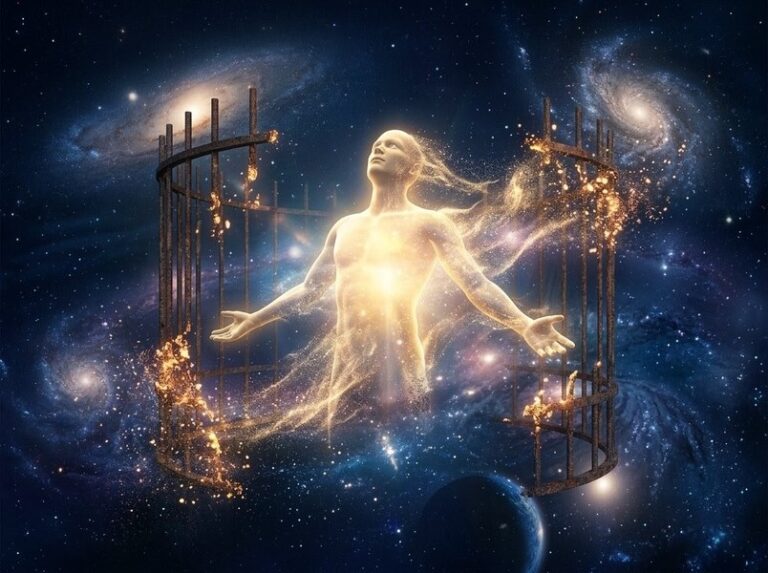
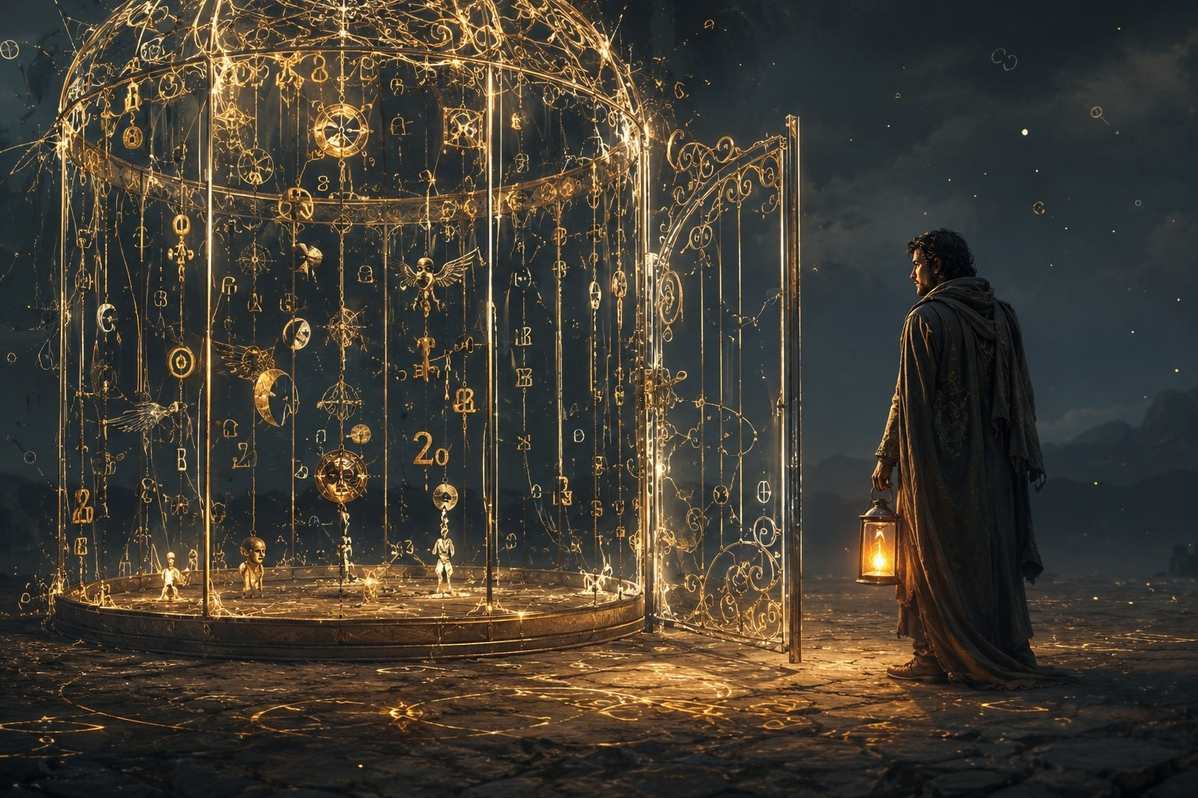
But symbols can also become cages.
When every dream must be decoded, every number must be interpreted, every coincidence must be obeyed, and every image becomes a command, the symbolic life turns rigid. Meaning no longer opens the world. It encloses it.
The eye that once saw through illusion becomes trapped inside its own interpretation.
The problem is not that symbols speak. The problem begins when the mind can no longer let them be silent.
In Plain Terms
Symbols become cages when they stop opening insight and begin controlling perception. A dream, sign, synchronicity, myth or sacred image may carry meaning, but it should not remove humility, ordinary explanation, emotional balance or freedom. Healthy symbolism widens life. Over-meaning narrows it.
Primary Sources and Traditions Discussed
- Gnostic myth, especially archons, the Demiurge, Sophia and the Counterfeit Spirit.
- The Gospel of Thomas and symbolic sayings.
- The Gospel of Philip and sacramental language.
- The Apocryphon of John and mythic cosmology.
- Jungian psychology around symbols, projection, archetypes and synchronicity.
- Christian mystical discernment of spirits.
- Buddhist mindfulness around attachment to views.
- Hermetic and esoteric symbolism.
- Modern spiritual emergence literature.
- Semiotics and symbolic interpretation in ordinary culture.
How to Read This Article
Read this as a guide to symbolic freedom. It does not dismiss dreams, synchronicity, sacred images or spiritual signs. It asks that symbols be held with humility, patience and grounding. The goal is not to flatten mystery, but to prevent mystery from becoming compulsion.
Modern Companion: Counterfeit-Spirit Discernment
For the wider Neo Gnostic reading of false awakening, spiritual performance, machine-shaped authority and symbolic overload, continue with Neo Gnosticism and the Counterfeit Spirit. That companion article shows how the same pattern appears when symbols, systems and spiritual language imitate gnosis while leaving the seeker bound.
For the authority layer beneath that problem, read Neo Gnosticism and False Authority. It tests what happens when a teacher, feed, machine, text, symbol system or interpretive method stops clarifying direct knowing and begins to rule the seeker’s perception.
Table of Contents
- What Is a Symbol?
- When Symbols Open Reality
- When Symbols Begin to Close Reality
- The Trap of Over-Meaning
- Synchronicity Without Captivity
- Dreams, Omens and the Need for Restraint
- Gnostic Myth as Map, Not Prison
- The Counterfeit Spirit and Symbolic Inflation
- Modern Neo Gnostic Companion
- False Authority and Symbolic Capture
- Symbolic Cages and Spiritual Ego
- Digital Symbol Overload
- How to Tell Whether a Symbol Is Opening or Closing You
- How to Loosen a Symbolic Cage
- The Freedom to Let Meaning Breathe
- Conclusion: The Door and the Cell
- Related Glossary Terms
- Read Next
- Further Reading
- References and Sources
What Is a Symbol?
A symbol is not merely a sign. A sign points to one thing. A symbol opens a field of meaning.
A road sign points to a practical instruction. A flame can suggest light, soul, purification, danger or divine presence. A serpent can mean wisdom, danger, healing, deception, life-force or renewal. A gate can mean transition, threshold, initiation or exclusion.
A symbol is not a fixed code. It is a living image. It gathers meaning rather than reducing it. This is why symbols endure across centuries. They do not only answer questions. They awaken questions that plain speech cannot easily hold.
A symbol is not a password. It is a meeting place between image, memory, culture and soul.
This is also why symbols require care. A sign can usually be obeyed or ignored. A symbol must be interpreted, contemplated, tested and lived with. It opens a space, but it does not always tell the reader what to do next.
When Symbols Open Reality
Symbols can help us approach mystery. They give shape to invisible experience. They speak to the unconscious. They hold grief, awe and longing. They connect personal experience with mythic pattern. They reveal emotional truths. They deepen prayer, meditation and contemplation. They guide creative and spiritual insight.
Gnostic texts use symbolic language because direct spiritual experience often exceeds plain explanation. The Gospel of Philip speaks of the bridal chamber, the chrism and the mystery of recognition. The Apocryphon of John uses mythic architecture to describe what ordinary language cannot hold. These are not failed attempts at clarity. They are invitations to a different kind of knowing.
In this sense, symbolic language is not decorative. It is a way of carrying knowledge that cannot be reduced to literal description. The image becomes a vessel. The myth becomes a map. The dream becomes a mirror. The ritual becomes a grammar for what the ordinary mind cannot yet say.
The best symbols do not trap meaning. They let meaning breathe.
When symbols are alive, they make reality more spacious. They do not shrink the world into a single interpretation. They deepen perception while leaving room for humility, silence and ordinary life.
When Symbols Begin to Close Reality
Symbols become cages when every image must be decoded, every dream becomes a command, every coincidence becomes destiny, every discomfort becomes a warning, every person becomes a symbol in a private drama, every text becomes a secret message aimed at the reader, every system becomes cosmic persecution, and every ambiguity must be forced into certainty.
At this point, symbolism no longer opens perception. It begins to control it. The world becomes a locked room of meanings that all point back to the same fear, wound or certainty. The symbol no longer serves wisdom. It serves compulsion.
A symbol becomes a cage when it removes the possibility of any other meaning.
This is especially dangerous after awakening, grief, trauma, spiritual emergence or intense inner work. The mind may be more sensitive than before. The symbolic field may feel brighter. But brightness is not always clarity. Sometimes the lamp needs a shade.
The Trap of Over-Meaning
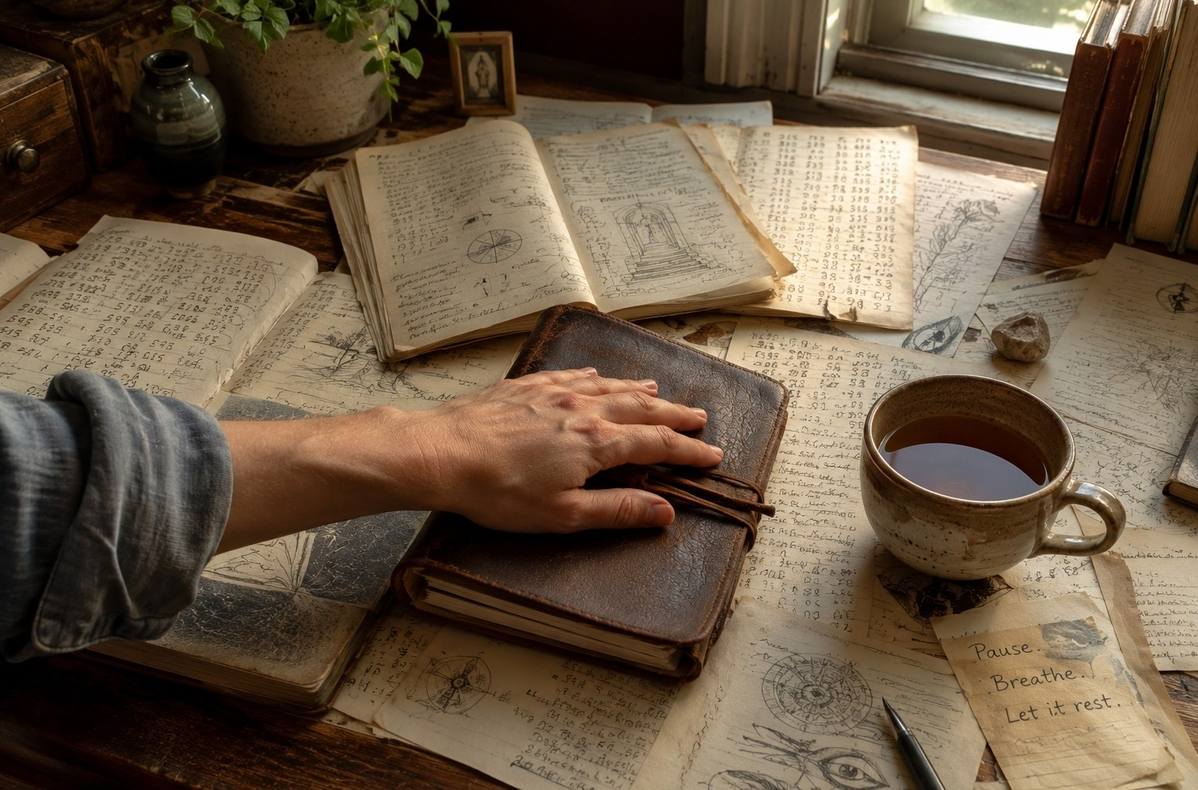
Over-meaning is the compulsive inflation of significance. It happens when ordinary events are loaded with more meaning than they can safely carry.
Seeing repeated numbers and assuming urgent cosmic instruction. Interpreting every delay as spiritual blockage. Reading every stranger as a messenger. Believing every dream must reveal prophecy. Treating every algorithmic recommendation as fate. Assuming every symbol is aimed personally at the observer.
Meaning is not the enemy. Compulsion is.
There is a difference between being moved by a symbol and being ruled by one. A symbol can invite attention. It can ask to be held, written down, contemplated or tested over time. But when it demands instant obedience, isolates the reader from ordinary explanation, or makes fear feel holy, it has crossed from meaning into captivity.
Over-meaning is not depth. It is pressure placed on reality until reality can no longer breathe.
The task is not to deny meaning. The task is to keep meaning from hardening into a private law that no one else can question.
Synchronicity Without Captivity
Synchronicity can be meaningful. Meaningful does not mean mandatory. Coincidence can touch the psyche without becoming law. A synchronicity may invite reflection, not obedience. The same symbol may mean different things at different times. Some coincidences are simply coincidences.
This distinction protects both the symbol and the seeker. If every synchronicity must become a command, then wonder becomes anxiety. If every coincidence must become destiny, then the ordinary freedom to pause, think and choose begins to disappear.
A synchronicity may knock at the door. It does not have the right to move into the house.
A grounded response to synchronicity is spacious. Notice it. Write it down. Let it breathe. Ask what emotion it touches. Ask what ordinary explanations may also be true. Ask whether it increases humility, compassion and clarity, or whether it tightens the mind into urgency and fear.
The deeper traditions rarely ask the seeker to obey every flicker. They ask for discernment.
Dreams, Omens and the Need for Restraint
Dreams often speak symbolically. They may reveal emotion, fear, desire, warning, memory or integration. Not every dream is prophecy. Omens should be held lightly. Interpretation should wait until the body is calm. Recurring dreams may deserve attention, but not panic.
A dream can be honoured without being obeyed.
This is important because dreams often use exaggeration. They compress time, memory, fear and longing into image. A person in a dream may not represent the literal person. A house may not be a house. A death may not predict death. A journey may not ask for immediate external change. Sometimes the dream is showing the soul a condition, not issuing an instruction.
A dream may be a mirror, not a map.
Restraint does not dishonour the dream. It protects the dream from premature capture. The symbol is allowed to ripen instead of being plucked too soon.

Gnostic Myth as Map, Not Prison
Gnostic myth uses powerful symbolic architecture. The archons describe forces of limitation, false rule or psychic bondage. The Demiurge symbolises false authority and mistaken sovereignty. Sophia symbolises wisdom, rupture, longing and restoration. The divine spark symbolises hidden recognition. The Counterfeit Spirit symbolises imitation spiritual life.
But these are maps, not weapons. They should not be used to label every person, event or difficulty as spiritually hostile. The Apocryphon of John describes the counterfeit spirit as something that mimics truth while leading the soul astray. In modern terms, this can appear as the compulsive need to decode everything, the grand narrative of special persecution, or the certainty that everyone else is asleep while you alone are awake.
Gnostic myth becomes dangerous when the map is mistaken for the whole territory.
A map is useful because it simplifies. It helps the traveller see routes, obstacles and relationships. But no map is the whole landscape. If the map becomes absolute, the traveller stops seeing the ground beneath their feet. The living world disappears beneath the diagram.
Gnostic symbolism should sharpen discernment, not feed paranoia. It should reveal bondage, not manufacture enemies. It should help the divine spark recognise its condition, not trap the seeker in a private theatre of threat.
The Counterfeit Spirit and Symbolic Inflation
The Counterfeit Spirit can appear as the feeling that every symbol confirms personal specialness, the need to possess secret interpretation, spiritual performance through symbolic language, borrowed certainty, fear disguised as insight, compulsive decoding, refusal to be corrected, and the belief that only one interpretation is possible.
Symbolic inflation happens when the image becomes too large for the vessel. A symbol that once opened humility begins to inflate identity. A dream becomes proof of election. A number becomes proof of destiny. A coincidence becomes proof of persecution. A myth becomes proof that ordinary human correction no longer applies.
Symbolic inflation turns the image into an idol and the interpreter into its priest.
The sign of genuine symbolic work is not grandiosity. It is integration. The person becomes more patient, more honest, more compassionate, more grounded. If the symbol makes the self enormous but the heart smaller, the symbol has been seized by something other than wisdom.
Modern Neo Gnostic Companion
The symbolic cage becomes especially subtle when it presents itself as awakening. A person may feel liberated because the world now appears full of signs, codes and hidden messages, while quietly becoming less free, less grounded and less able to question the interpretation itself.
This is the modern counterfeit-spirit problem: not obvious falsehood, but imitation insight. Neo Gnosticism and the Counterfeit Spirit extends this article into the Neo Gnostic route, showing how false awakening can appear through spiritual performance, pattern addiction, algorithmic certainty, machine authority and symbolic overload.
When symbols imitate liberation while tightening the self, the cage has learned to glow.
False Authority and Symbolic Capture
A symbol becomes false authority when it stops being a doorway and starts acting as a throne. The image, dream, number, omen, teacher’s interpretation, algorithmic repetition or AI-generated pattern begins to decide what the seeker may notice, trust or question.
This is the symbolic layer of Neo Gnosticism and False Authority. False authority does not only command through gurus, institutions or machines. It can also command through meanings that feel too charged to test. The seeker may believe they are following symbols, while actually following fear, flattery, urgency or borrowed certainty.
The danger is not symbolism. The danger is authority capture through symbolism: when the interpretive frame demands obedience, punishes doubt, flatters specialness, isolates the seeker or replaces the body’s quieter knowing. A living symbol can be questioned. A captured symbol treats questioning as betrayal.
A living symbol points beyond itself. False authority asks the symbol to kneel before it.
Symbolic Cages and Spiritual Ego
A symbolic cage can feed spiritual ego by making the person feel uniquely chosen, uniquely persecuted, uniquely awake, uniquely able to decode reality, beyond ordinary correction, and above ordinary human life.
But genuine symbols usually humble the person. They widen compassion rather than inflate identity. They make the reader more aware of mystery, not more certain of superiority. They bring the soul closer to truth, not farther from relationship.
When a symbol makes the self larger but the heart smaller, something has gone wrong.
This is why the ordinary world matters. Washing dishes, tending the body, answering honestly, caring for others, sleeping, eating, walking and keeping promises are not interruptions to symbolic life. They are tests of it. A symbol that cannot survive ordinary life may not be wisdom. It may be theatre.
Digital Symbol Overload
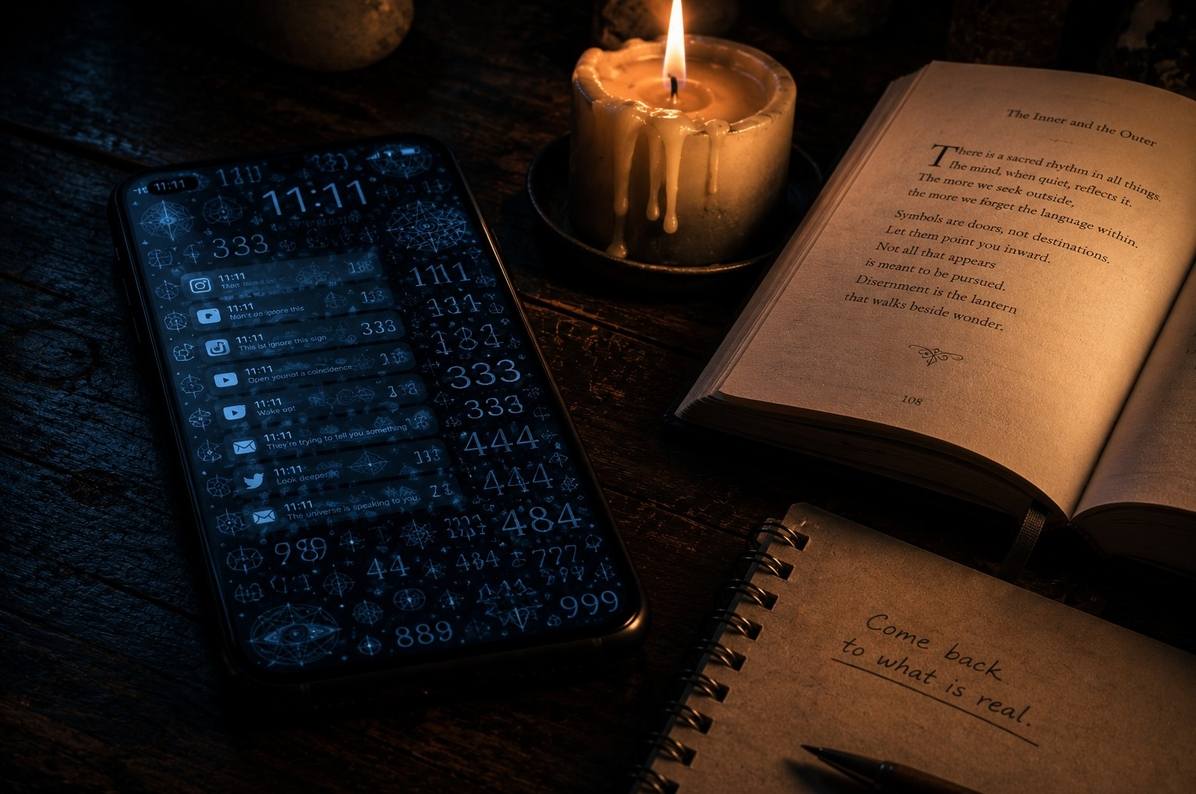
Online feeds repeat symbols rapidly. Algorithms create artificial synchronicity by showing related content. Repeated images can feel meaningful because the system is reinforcing them. Search engines, feeds, AI images and recommendations can create symbolic echo chambers. The mind may mistake digital repetition for spiritual confirmation.
Digital systems do not need to be mystical to intensify mystical confusion. An algorithm can imitate an omen simply by repeating what already caught your attention.
This is one reason digital discernment matters. A symbol appearing again and again on a feed may not be a message from the hidden order of reality. It may be a platform learning your attention. The repetition may still touch something meaningful in you, but the mechanism should not be ignored.
The digital world can make symbols feel urgent because everything arrives quickly. The soul, however, does not ripen at notification speed.
How to Tell Whether a Symbol Is Opening or Closing You
The fruit of a symbol matters more than the drama of its arrival. A symbol may arrive with intensity, beauty or strange timing, but that does not automatically make the interpretation trustworthy. Look at what happens after the symbol is received.
| A symbol is opening you when it… | A symbol is closing you when it… |
|---|---|
| Increases humility. | Inflates specialness. |
| Deepens compassion. | Creates fear or superiority. |
| Allows patience. | Demands immediate obedience. |
| Admits several possible meanings. | Insists on one fixed interpretation. |
| Supports integration. | Isolates you from grounded people. |
| Makes ordinary life more alive. | Makes ordinary life feel meaningless. |
| Can be held lightly. | Cannot tolerate questioning. |
| Leaves room for mystery. | Traps mystery inside certainty. |
The fruit of the symbol matters more than the drama of its arrival.
A living symbol should not make the world smaller. It may challenge you, sober you or unsettle you, but it should not imprison you inside fear. It should open the field of perception rather than reduce everything to one anxious conclusion.
How to Loosen a Symbolic Cage
Write the symbol down without deciding its meaning. Wait before interpreting. Ask what ordinary explanation exists. Ask what emotion the symbol touches. Ask whether the symbol increases fear or freedom. Speak with someone grounded. Reduce screen exposure. Return to the body. Allow multiple interpretations. Choose ordinary care before dramatic action. Let the symbol rest.
Sometimes the most spiritual response to a symbol is to leave it alone for a while.
- Wait before acting on a charged interpretation.
- Write the symbol in plain language, without turning it into a command.
- Name at least three possible meanings.
- Ask what ordinary explanation may also be true.
- Notice whether fear or compassion is growing.
- Speak with someone steady who will not feed panic.
- Return to breath, food, sleep, movement and the body.
- Step away from screens before deciding what something means.
- Allow the symbol to remain unresolved.
Loosening a symbolic cage does not mean throwing away the symbol. It means taking back the freedom to relate to it wisely.
The Freedom to Let Meaning Breathe
Healthy symbols remain alive because they are not possessed. They open, deepen and invite. They do not force, threaten or dominate.
Symbols as living invitations. Mystery without capture. Interpretation without ownership. Reverence without compulsion. The freedom to not know yet.
A living symbol does not need to be conquered by interpretation. It can remain luminous without being solved.
This is difficult because the mind wants closure. It wants the meaning now, the answer now, the map now. But a living symbol often works slowly. It may unfold over days, years or a lifetime. It may change as the person changes. It may teach by remaining partly hidden.
The freedom to let meaning breathe is the freedom to stay in relationship with mystery without capturing it.

The Door and the Cell
A symbol should open a door, not build a cell.
The flame, the serpent, the gate, the number, the dream, the coincidence, the myth: each may speak. Each may carry a thread of meaning. But none should be allowed to replace direct seeing, ordinary kindness, humility, or the freedom to live.
The mature seeker does not abandon symbols. They stop being imprisoned by them.
The image opens. The heart listens. The mind waits. The body remains on the earth.
Meaning is allowed to breathe.
Related Glossary Terms
These terms help frame the article’s main ideas across the wider ZenithEye archive.
- Gnosis
- Discernment
- Counterfeit Spirit
- False Authority
- Authority Capture
- Algorithmic Authority
- Machine Authority
- Spiritual Outsourcing
- False Awakening
- Spiritual Performance
- Pattern Addiction
- Symbolic Overload
- Archons
- Demiurge
- Divine Spark
- Sophia
- Spiritual Emergence
- Grounding
- Integration
- Shadow
- Symbol & Encryption
- Phenomenology
- Symbol
- Synchronicity
- Projection
- Over-Meaning
- Symbolic Inflation
- Omens
- Dreams
- Archetype
- Apophenia
Read Next
Continue with discernment, symbolic perception and grounded integration.
- Neo Gnosticism and the Counterfeit Spirit: False Awakening in Modern Life
- Neo Gnosticism and False Authority: Gurus, Algorithms and the Theft of Direct Knowing
- Pattern Recognition Without Paranoia: Discernment Without Delusion
- The Grief of Clear Sight: Why Awakening Can Feel Like Sorrow
- What Is the Counterfeit Spirit?
- Digital Archons: How Algorithms Shape Attention
- The Gospel of Philip: Sacrament, Eros and the Mystery of Recognition
Further Reading
- Neo Gnosticism and the Counterfeit Spirit: False Awakening in Modern Life – The wider Neo Gnostic companion on false awakening, spiritual performance, symbolic overload and machine-shaped authority.
- Neo Gnosticism and False Authority: Gurus, Algorithms and the Theft of Direct Knowing – How teachers, algorithms, AI advisers and symbolic systems can capture direct knowing when they become final authorities.
- Pattern Recognition Without Paranoia: Discernment Without Delusion – A grounded guide to pattern recognition without paranoia, projection or false certainty.
- The Grief of Clear Sight: Why Awakening Can Feel Like Sorrow – Why deeper perception can bring sorrow, tenderness and loneliness before integration.
- Gnosis Is Not a Product: Why No One Can Sell Direct Knowing – Why direct knowing cannot be bought, branded, owned or sold.
- What Is the Counterfeit Spirit? False Imitation of Spiritual Life – How imitation insight can mimic genuine recognition.
- Archons: The Ruling Powers That Shape Reality – A foundation guide to archons as powers of limitation, false rule and narrowed perception.
- What Is the Demiurge? – The craftsman of matter and the problem of false order in Gnostic myth.
- What Is Sophia? – Wisdom, fall and restoration in Gnostic myth.
- Digital Archons: How Algorithms Shape Attention – How digital systems shape attention, repetition and inner life.
- Spiritual Emergency: When Transformation Becomes Crisis – A grounded guide to destabilising spiritual openings.
- Dark Night: Depression or Transformation? – How to discern mystical darkness from psychological crisis.
- The Collapse of the Witness – When the observer position becomes another cage.
- Return to Ordinary Life After Awakening – The integration test after peak experience or spiritual opening.
What does it mean when symbols become cages?
Symbols become cages when they stop opening insight and begin controlling perception. This happens when every dream, sign, number or coincidence is treated as proof, command or destiny.
Are spiritual symbols dangerous?
Spiritual symbols are not dangerous in themselves. They can guide reflection, prayer, contemplation and self-understanding. They become harmful when they are used compulsively, fearfully or without grounding.
What is over-meaning?
Over-meaning is the habit of loading ordinary events with more significance than they can safely carry. It can turn coincidence, dreams or repeated symbols into sources of anxiety or false certainty.
Can synchronicities be real without controlling my life?
Yes. A synchronicity can feel meaningful without becoming a command. It may invite reflection, but it does not have to dictate action or remove ordinary judgement.
How does Gnosticism use symbols?
Gnostic texts use symbols, myths and cosmic figures to describe ignorance, false authority, hidden light and restoration. These symbols can guide insight, but they should not be used to label every event or person as spiritually hostile.
How can I tell whether a symbol is helping or harming me?
A helpful symbol usually increases humility, compassion, clarity and patience. A harmful symbolic pattern often increases fear, isolation, urgency, specialness or refusal to consider other explanations.
How do I loosen a symbolic cage?
Wait before interpreting, write the symbol down, consider ordinary explanations, return to the body, reduce screen exposure, speak with grounded people and allow the symbol to remain unresolved.
How do symbols become part of false awakening?
Symbols become part of false awakening when they inflate identity, demand obedience, feed specialness, or make fear feel sacred. In that state, symbolic perception no longer opens wisdom. It imitates gnosis while tightening the self.
How does false authority use symbols?
False authority uses symbols by turning dreams, omens, texts, numbers, feeds or symbolic systems into commands that cannot be questioned. A symbol becomes part of authority capture when it replaces direct knowing with fear, obedience, urgency or borrowed certainty.
References and Sources
This article draws on Gnostic primary sources, Jungian psychology, mystical theology, symbolic interpretation and grounded spiritual emergence literature.
Primary Sources and Gnostic Texts
- The Apocryphon of John. Nag Hammadi Codex II,1; III,1; IV,1; Berlin Codex 8502,2.
- The Gospel of Thomas. Nag Hammadi Codex II,2.
- The Gospel of Philip. Nag Hammadi Codex II,3.
- The Nag Hammadi Scriptures, edited by Marvin Meyer. HarperOne, 2007.
Symbol, Psychology and Interpretation
- Jung, Carl G. Man and His Symbols. Doubleday, 1964.
- Jung, Carl G. Synchronicity: An Acausal Connecting Principle. 1952.
- Jung, Carl G. Collected Works, especially writings on symbols, projection, archetypes and individuation.
- Ricoeur, Paul. The Symbolism of Evil. Beacon Press, 1967.
- Eliade, Mircea. Images and Symbols: Studies in Religious Symbolism. Princeton University Press, 1991.
Gnostic and Comparative Scholarship
- Brakke, David. The Gnostics: Myth, Ritual, and Diversity in Early Christianity. Harvard University Press, 2010.
- King, Karen L. What Is Gnosticism?. Harvard University Press, 2003.
- DeConick, April D. The Gnostic New Age: How a Countercultural Spirituality Revolutionized Religion from Antiquity to Today. Columbia University Press, 2016.
- James, William. The Varieties of Religious Experience. Longmans, Green & Co., 1902.
- Underhill, Evelyn. Mysticism: A Study in the Nature and Development of Spiritual Consciousness. Methuen, 1911.
Safety Notice: This article discusses symbols, synchronicity, dreams, omens, spiritual discernment, over-interpretation and psychological distress. It is not medical, psychological or therapeutic advice. If symbolic perception becomes frightening, compulsive, isolating, sleep-disrupting, or makes you feel unsafe or targeted, seek qualified professional support or emergency help in your area.
Study Note: This article does not dismiss symbols. It asks that symbols remain alive, humble and spacious. A symbol is healthiest when it opens perception, deepens compassion and leaves room for ordinary life. For the wider Neo Gnostic discernment layer, see Neo Gnosticism and the Counterfeit Spirit and Neo Gnosticism and False Authority.