
The Interface Is Not the World: Gnosis and the Limits of Human Perception
Article 3 of 4 in The Architecture of Perception series.
The interface is not the world. It is the world translated into something a nervous system can survive.
This article does not claim that reality is fake, simulated or fundamentally unreal. It says something more precise and, for the spiritual seeker, more urgent: our experience of the world is mediated. Every sight, thought, memory and sensation arrives through a process of translation. The body filters. The brain predicts. Language names. Culture frames. Attention selects. The result is not false. It is rendered–a live, dynamic model that allows an embodied creature to move, choose, love and endure. The danger is not the rendering itself. The danger is forgetting that it is a rendering, and then defending the map as though it were the territory.
Gnosis, in this reading, is not hatred of the world. It is the recognition that the rendered world is not the whole. The window is not the sky. The self is not the soul. The feed is not the field. And yet the window remains useful, the self remains necessary, and the feed remains a tool–once its claim to totality has been seen through.
In Plain Terms
The interface is the rendered world we normally take to be reality itself. It is necessary, useful and embodied, but it becomes imprisoning when it claims to be the whole. This article reads gnosis as the recognition that the map, screen, self-profile and cultural frame are interfaces rather than final reality.
Primary Sources and Traditions Discussed
- Predictive processing and the active construction of perception.
- Default mode network research and self-modelling.
- The Apocryphon of John, Yaldabaoth and false totality.
- Plato’s cave as an image of mistaking appearances for the whole.
- Simulation theory as a modern myth of rendered reality.
- Digital interfaces, algorithmic salience and attention capture.
- Grounded Gnostic practice: recognition without escapism.
How to Read This Article
Read this as an interface meditation, not as a claim that the world is fake. The article uses screens, maps, windows and user profiles as teaching images for mediated experience. The task is not to smash the interface, but to stop mistaking it for the whole sky.
Article Map
- The Interface Is Necessary
- When the Interface Pretends to Be the Whole
- The Self as User Profile
- The Gnostic Error: Mistaking the Render for Reality
- Plato’s Cave, Screens and Simulated Worlds
- The Digital Interface as Modern Teaching Image
- Why the Interface Feels So Convincing
- Recognition: Seeing the Screen Without Smashing It
- Gnosis Without Escapism
- Living After the Interface Becomes Visible
- What This Article Is Not Saying
- Conclusion: Do Not Worship the Window
- Related Glossary Terms
- Read Next
- Further Reading
- Frequently Asked Questions
- References and Sources
- Safety Notice and Study Note
The Interface Is Necessary
Before we ask what is wrong with the interface, we must acknowledge what is right. Without it, there is no human life. The eye receives photons, but the mind sees light. The ear receives pressure waves, but the mind hears music. The body receives chemical signals, but the mind feels grief. Every layer of perception is a translation, and every translation is a simplification. Infinity does not fit into a nervous system. It must be compressed, formatted and made navigable.
Why Embodiment Requires Translation
The predictive processing framework in neuroscience proposes that perception is not a passive reception of data but an active construction. The brain generates predictions about what it expects to encounter, then compares those predictions against the thin stream of sensory information arriving from the world. What we experience is not the raw data. It is the brain’s best guess, continuously updated by error signals. This is not a flaw. It is how a biological organism survives in an environment too complex to process directly. The interface is the price of embodiment, and it is a price worth paying.
The Window Makes the Sky Visible
Consider the window. It frames, limits and partially obscures the view. And yet, without it, there is no view from here. The interface functions similarly. Language gives us names for things we could never grasp directly. Memory gives us continuity across time. Culture gives us shared maps for navigating relationship and meaning. The problem begins only when the window is mistaken for the sky, when the name is mistaken for the thing, when the map is mistaken for the land. Until that error takes hold, the interface is a faithful servant.
When the Interface Pretends to Be the Whole
The rendered world feels complete because it is the only world ordinarily available. The mind treats its model as reality. This is not a conspiracy. It is a feature of efficient cognition. When the model works well, it becomes invisible. You do not notice the glasses you are wearing until they smudge. You do not notice the interface until it fails–or until a moment of shock, beauty, crisis or grace makes the seams visible.
The Invisible Map
Most people live inside their maps without knowing they are maps. The map includes not only physical space but emotional tone, moral judgement, social identity and historical narrative. A person who grew up in safety navigates a different moral landscape than one who grew up in threat. Neither map is false. Both are partial. But because each feels like the only possible world, disagreement becomes incomprehension, and incomprehension becomes hostility. The interface, when unconscious, generates conflict.
The Comfort of False Completeness
There is a deep comfort in believing that one’s own rendering is the whole. It offers certainty, identity and a sense of ground. To question the interface is to risk vertigo. The self that has organised itself around a particular map will defend that map fiercely, not because the self is stubborn, but because the self believes it is defending reality itself. This is why recognition is often resisted, delayed, or experienced as loss before it is experienced as liberation.
The Self as User Profile
If the world is rendered, so is the self. The sense of being a continuous, coherent person–with a name, a history, a set of preferences, fears and roles–is itself a constructed interface. Neuroscience identifies a network of brain regions, the default mode network, that becomes active during rest and is implicated in self-referential thought, autobiographical memory and mind-wandering. When this network is quiet, the sense of being a separate self can thin or dissolve. This does not mean the self is an illusion in the sense of being nothing. It means the self is a pattern, not a substance.
Identity as Configured Pattern
The self is a user profile assembled from memory, habit, social reflection, bodily state and narrative. It is how consciousness learns to answer when called by name. Like any interface, it is useful. It allows responsibility, relationship, planning and care. But when the profile is mistaken for the whole being, a kind of claustrophobia sets in. The person defends the profile, improves the profile, mourns the profile–all the while unaware that the profile is a rendering, not the renderer.
The Default Mode Network and Self-Modelling
Research into the default mode network, first described by Marcus Raichle and colleagues in 2001, shows that the brain maintains an active baseline of internal processing even when not engaged in external tasks. This baseline includes self-referential memory, social cognition and future simulation. The self, in this view, is not a thing found but a process maintained. When the process is interrupted–through meditation, certain contemplative practices, or neurological change–the self-model can loosen without the person disappearing. This is not destruction. It is a glimpse behind the interface.
The Gnostic Error: Mistaking the Render for Reality
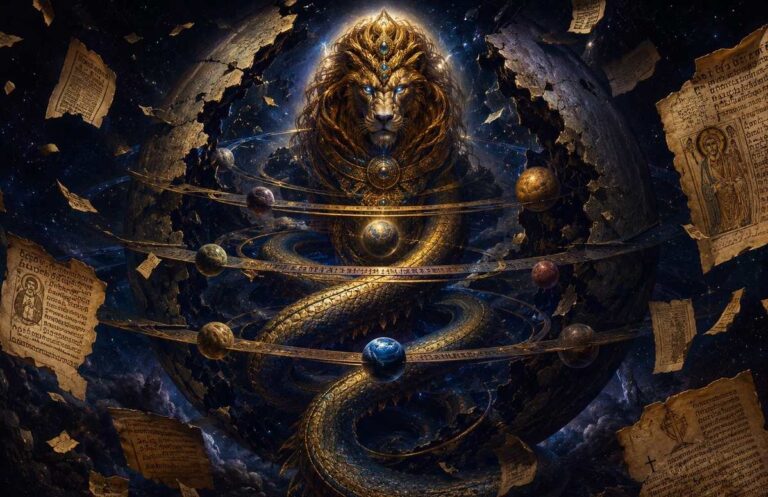
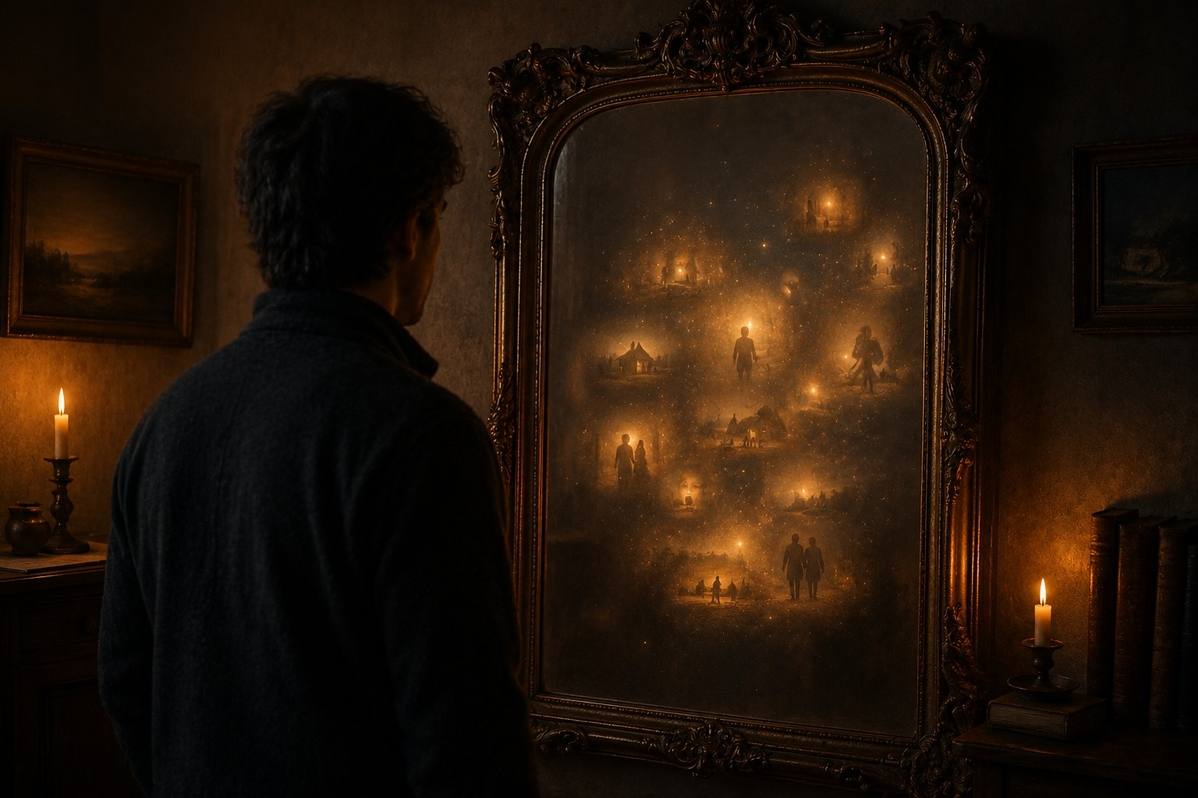
Gnosticism has often been read as a simple rejection of the material world. A more precise reading is that Gnosticism identifies a specific error: misrecognition. The human condition is not suffering caused by matter. It is ignorance caused by taking the rendered world as the whole of reality. The Nag Hammadi text Apocryphon of John describes the demiurge Yaldabaoth as a being born of ignorance who declares himself the only god, unaware of the higher realm–the Pleroma–from which he originated. This is not merely a myth about a bad creator. It is a myth about false totality: the maker who mistakes his own creation for the ultimate.
Ignorance as Misrecognition
In this framework, ignorance is not a lack of information. It is a structural misalignment between perception and reality. The person who has never questioned their interface is not stupid. They are asleep inside a dream that feels like waking. Gnosis is the moment of waking up–not to a new set of facts, but to the realisation that the old set was a translation, not the original.
The Demiurge and False Totality
Yaldabaoth, in the Apocryphon of John, creates a world and then declares, “I am God and there is no other God beside me.” His ignorance is not of technique but of context. He does not know what lies above him. The Gnostic sees in this figure a warning: any system–material, mental, social or spiritual–that claims completeness while remaining ignorant of its own ground is demiurgic. It is not evil in the moral sense. It is confined, and its confinement becomes our confinement when we accept its claim to be the whole.
Perception Locked into the Interface
Gnostic texts speak of archons as powers that rule the perceptible world. Without relying on heavy bureaucratic metaphor, we can understand these as the forces that keep consciousness locked inside its own rendering: fear, habit, social pressure, unexamined belief, emotional addiction and the sheer momentum of repetition. The archons are not external enemies. They are internal structures that prevent the recognition of the interface as interface. Gnosis is the key that turns the lock, not by destroying the door, but by showing that the door was always open.
Plato’s Cave, Screens and Simulated Worlds
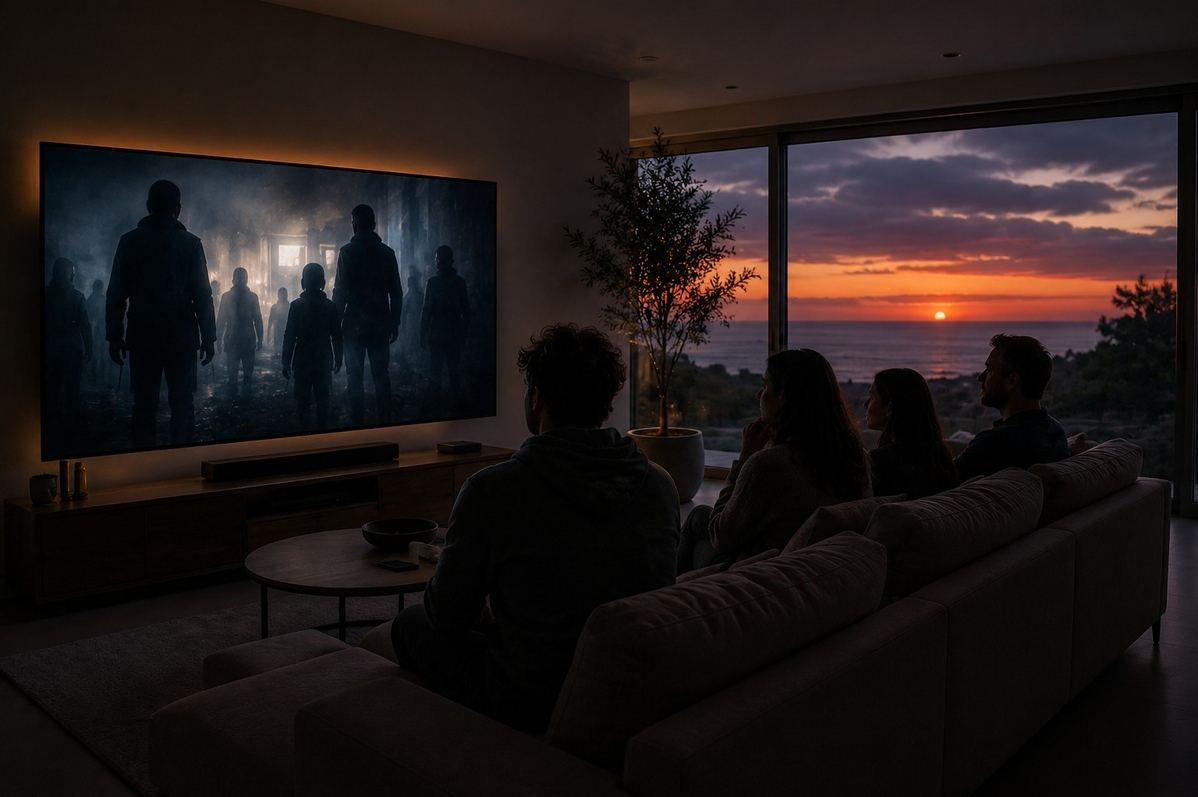
Plato’s allegory of the cave, found in Book VII of the Republic, remains one of the most enduring images of interface captivity. Prisoners chained since childhood see only shadows cast on a wall by objects behind them. They take the shadows for reality. When one prisoner is freed and dragged into the sunlight, he suffers. His eyes hurt. He is disoriented. Only gradually does he see the world as it is. When he returns to the cave, his former companions think he has lost his mind. The allegory is not about rejecting the visible world. It is about recognising that visible appearances are partial, and that the partial has been mistaken for the whole.
Shadows and Partial Appearances
The shadows are not nothing. They are real effects produced by real objects and real light. The error is not in seeing them. The error is in worshipping them as the whole. In modern terms, the shadow is like the pixel: a genuine emission of light that nevertheless stands at one remove from the object it represents. The cave wall, the cinema screen and the smartphone display all share this structure. They present genuine information, but they present it within a frame that limits and shapes what can be known.
Simulation as Modern Myth
Contemporary simulation theory, notably articulated by Nick Bostrom in 2003, proposes that advanced civilisations may run ancestor simulations indistinguishable from base reality. Whether or not this is literally true, it functions as a modern teaching image. It asks the same question Plato asked: what if the world we take as given is a rendering? The Gnostic and the simulationist share not a doctrine but a gesture: the willingness to ask whether the given is the whole. The answer matters less than the question, because the question itself begins to loosen the grip of false totality.
The Digital Interface as Modern Teaching Image
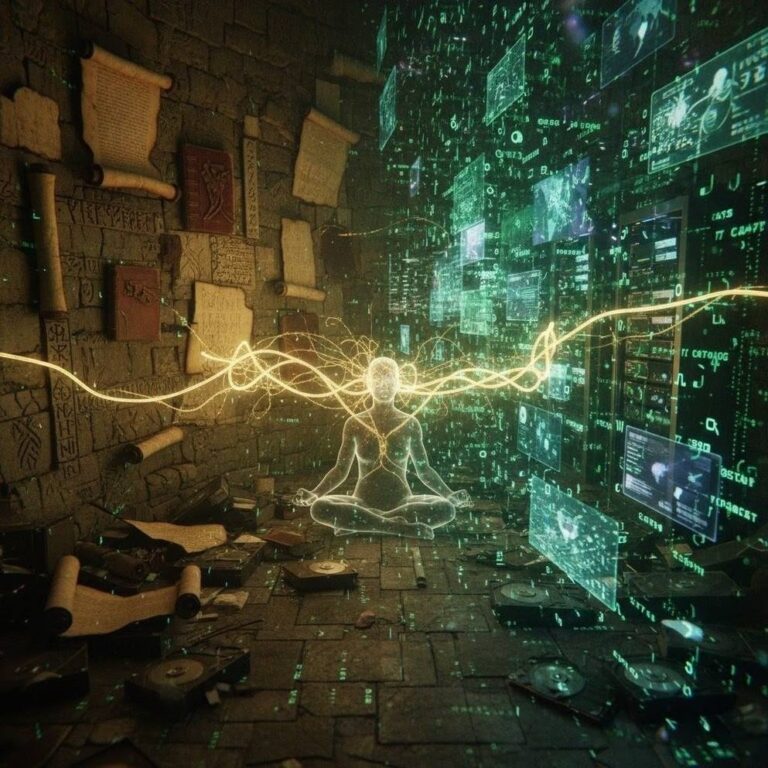
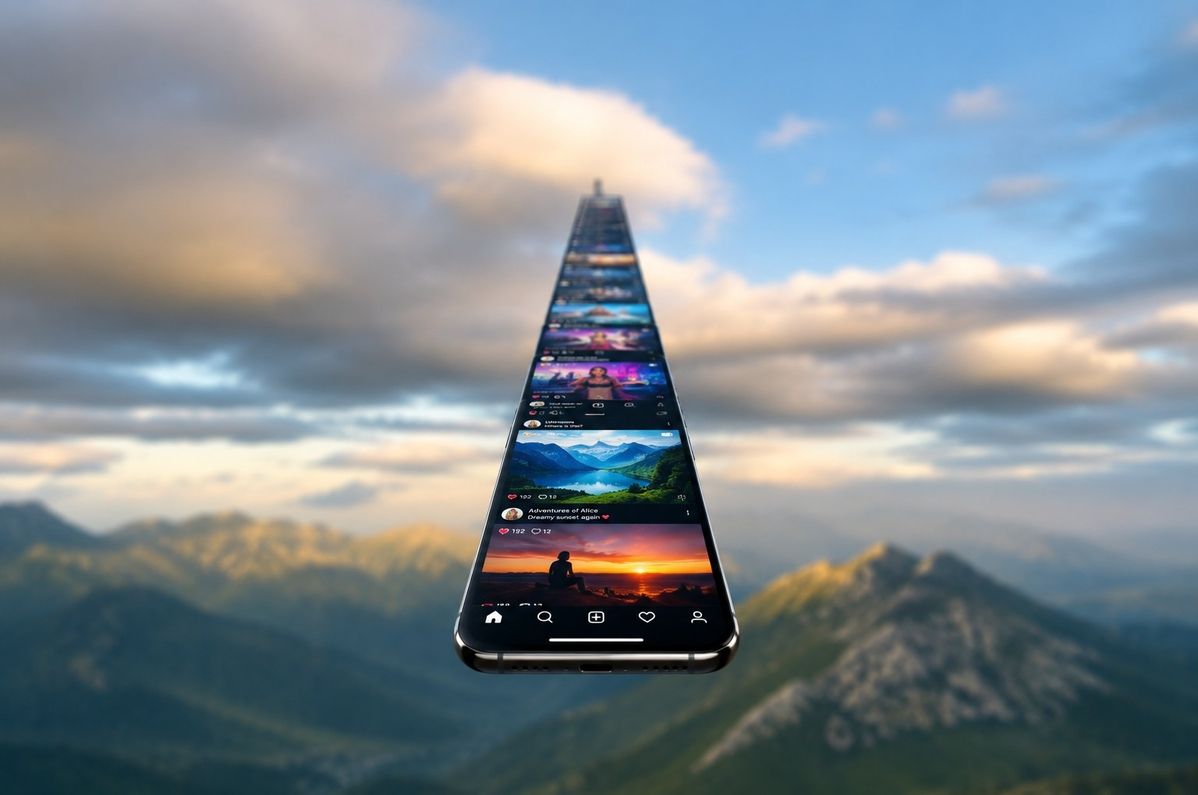
There is no better contemporary teacher of interface dynamics than the screen. A social media feed does not show the world. It shows a world filtered through engagement metrics, algorithmic prediction and commercial incentive. The feed decides what is loud, what is urgent and what is repeated. Over time, the user internalises these priorities. The digital interface trains the perceptual interface. What appears on the screen begins to teach the mind what reality feels like.
The Feed as Curated Reality
Every scroll is a lesson in salience. The algorithm learns what arrests attention, and it serves more of the same. The result is not a lie. It is a selection that gradually becomes a world. The user comes to believe that the conflicts, desires and fears pushed to the top of the feed are the most important things happening. They are not. They are simply the most engaging. The distinction is crucial. Engagement is not truth. It is a metric of capture, and the captured mind mistakes the trap for the territory.
Algorithmic Salience and Inner Perception
The digital interface makes explicit what the inner interface has always done. The brain, too, selects. It predicts. It amplifies what fits the model and dampens what does not. The algorithm is an external mirror of an internal process. Watching the feed can therefore become a contemplative practice: not by consuming its content, but by observing its mechanics. How does it decide what matters? How do I? The question turns the screen from a source of distraction into a teaching image for the mechanics of perception itself.
Why the Interface Feels So Convincing
If the interface is a rendering, why does it feel so real? The answer is that the interface is not merely mental. It is embodied, emotional, social and survival-critical. It is reinforced by the body’s state, by the culture’s consensus and by the self’s need for continuity. When everyone around us shares a similar rendering, it appears objective. When the self has built its home inside the rendering, to question the rendering feels like questioning existence itself.
Emotional Charge and Survival Value
The interface is emotionally charged because it is survival-shaped. Threats are amplified. Opportunities are highlighted. Ambiguity is resolved quickly, sometimes wrongly, because hesitation carries a cost. This is why the rendered world feels urgent. It is not neutral. It is tuned to keep the organism alive, and alive organisms pay attention to what moves them. The spiritual challenge is to feel the urgency without surrendering to the map that generates it.
Consensus Reality and Shared Rendering
A shared interface feels like objective truth. When an entire culture agrees on what is real, what is valuable and what is possible, dissent becomes madness. The Gnostic tradition has always been suspicious of consensus for this reason. Not because consensus is always wrong, but because consensus is always a rendering, and renderings can calcify. The person who sees through the interface does not necessarily see something no one else sees. They simply see the frame that everyone else has forgotten.
Recognition: Seeing the Screen Without Smashing It
The liberating move is not destruction. It is recognition. To see the interface as interface is to retain its usefulness while releasing its claim to totality. The person still lives, works, loves, eats and acts. The screen remains visible but no longer ultimate. The self remains functional but no longer final. This is gnosis: not a new belief, but a shift in the relationship to belief itself.
The Liberating Move
Recognition does not require special equipment. It requires a pause. In the pause, the mind can ask: what is being rendered right now? What has been made loud, and why? What is the difference between the event and the interface around it? These questions do not dissolve the world. They dissolve the spell of the world as complete. The window becomes transparent. The sky becomes visible. Life continues, but under new management.
Gnosis as Breakthrough, Not Belief
Gnosis is not a doctrine. It is a direct seeing. The Gospel of Truth from the Nag Hammadi library describes it as the recognition of what was already present but unknown: “It is within the Unity that each one shall find himself, and having found himself, he shall find the Father.” The finding is not an acquisition. It is a remembering. The interface is seen through, and what remains is not emptiness but a fuller presence.

Gnosis Without Escapism
Seeing through the interface is not permission to abandon the world. The body still matters. Ethics still matter. Relationship still matter. Gnosis should deepen participation, not remove responsibility. If recognition makes you less kind, less present or less willing to engage with the suffering of others, then what has been seen is not gnosis but dissociation. The two are often confused, especially in cultures that romanticise transcendence.
The Body Still Matters
The body is part of the interface, but it is not an enemy. It is the vehicle through which recognition becomes embodied action. To reject the body after seeing through the self is to mistake the messenger for the message. The mature practitioner does not flee the flesh. They inhabit it more fully, knowing it as a temporary rendering rather than a permanent prison. The difference is subtle but decisive: one leads to compassion, the other to contempt.
Ethics After Recognition
If the self is a profile and the world is a rendering, what becomes of right and wrong? The answer is that ethics become more urgent, not less. A person who knows the interface is partial can no longer hide behind certainty. They must choose, moment by moment, how to act without the comfort of absolute maps. This is the quiet ethics of awakening: not a new rulebook, but a continuous responsiveness to what is actually happening, freed from the distortions of the old rendering.
Living After the Interface Becomes Visible
Recognition is not a one-time event. It is a practice. The interface reasserts itself constantly, especially under stress, fatigue, fear and desire. The work is to keep the window clean–to notice the rendering as it happens, without needing to smash the glass. Several questions can serve as daily tools for this practice.
Practical Questions for Daily Life
- What is being rendered right now? — Notice which emotions, thoughts and assumptions are shaping the current moment.
- What has become loud, and why? — Ask whether urgency is coming from the situation or from the interface’s survival tuning.
- What does my body believe is happening? — Check interoceptive signals before accepting the mental story.
- What would this look like from safety? — Imagine the same situation perceived through a body that feels grounded.
- What is the difference between the event and the interface around it? — Separate the raw happening from the layers of interpretation.
Staying Grounded in Ordinary Experience
The world becomes wider when the first rendering is no longer the only one. Ordinary life–washing dishes, walking in rain, listening to a friend–can become the field of practice. The interface does not need to be destroyed. It needs to be inhabited with awareness. The person who can wash a dish while knowing that the dish, the hands and the self are all rendered, yet still wash the dish with care, has understood something that the ascetic and the hedonist both miss.
What This Article Is Not Saying
To protect against misunderstanding, let us be explicit. This article is not saying that the world is fake, that the body is a prison, that reality is only subjective, that suffering is imaginary, that other people are mere projections, that Gnosticism is identical to simulation theory, that digital life is evil, that the self should be destroyed, that seeing through the interface means rejecting ordinary life, or that dissociation is awakening. The interface is not false because it exists. It becomes false when it claims to be complete. The world is real. Our experience of it is partial. Gnosis is the recognition of that partiality, not the denial of the world itself.
Do Not Worship the Window
The interface is a window. The window makes seeing possible. But the window is not the sky. The self, culture, body and screen all render reality into forms we can use. Gnosis begins when the render is seen as render. The next article in this series moves beyond the visible slit into symbolic sight, third eye language and expanded perception. For now, the teaching is simple: do not smash the window. Do not worship it. Look through. The world remains, but its spell changes. And the one who looks through with clear eyes finds that the sky was never separate from the room.

Related Glossary Terms
These terms place the interface problem within the wider ZenithEye map of Gnostic recognition, selfhood and mediated reality.
- Interface
- Rendered Reality
- Self-Model
- User Profile
- Default Mode Network
- False Totality
- Demiurge
- Archons
- Plato’s Cave
- Simulation Theory
- Digital Interface
- Algorithmic Salience
- Gnosis
- Recognition
- Grounded Discernment
Read Next: The Architecture of Perception
Follow the four-part route from perceptual limitation, through nervous-system rendering, into the interface problem, and finally toward symbolic sight and expanded awareness.
- The Receiver Mind: Consciousness, Perception and the 0.0035% Problem
- The Filtered Self: How the Nervous System Renders Reality
- The Interface Is Not the World: Gnosis and the Limits of Human Perception
- Beyond the Visible Slit: Symbol, Third Eye and Expanded Awareness
Further Reading
- Default Mode Network and the Dissolution of Self — Explores the neuroscience of self-referential processing and what happens when the self-model loosens.
- The Collapse of the Witness — Examines what occurs when the observing self, another layer of interface, falls away.
- Digital Archons: How Algorithms Shape Attention — A deeper look at how digital interfaces train inner perception and capture salience.
- Simulation Hypothesis: Clues in the Reality Code — Explores the simulation metaphor as a modern teaching image for rendered reality.
- Before the Matrix: What the Nag Hammadi Texts Actually Say About Simulated Reality — Connects ancient Gnostic cosmology to contemporary simulation language.
- What Is Gnosis? Meaning, Recognition and Direct Knowing — Defines gnosis as recognition rather than belief, and direct knowing rather than acquired information.
- What Is Recognition? The Moment of Direct Seeing That Changes Everything — Explores the phenomenology of recognition as the core move in spiritual awakening.
- The Slow Work of Integration — Grounds the insights of recognition in the practical, ongoing work of living an awakened life.
- The Quiet Ethics of Awakening — Addresses the moral dimension of seeing through the interface without abandoning responsibility.
Frequently Asked Questions
What does the interface is not the world mean?
It means that human experience is mediated through the body, brain, memory, attention, culture and language. The world is real, but the version we experience is rendered through an interface. The error begins when that interface is mistaken for reality itself.
Is this article saying the world is fake?
No. The article does not claim that the world is fake or imaginary. It says that experience is mediated. A rendered world is not a fake world. It is a world translated through a particular body, nervous system and self-model.
How does this relate to Gnosticism?
Gnosticism describes the human condition as false perception or ignorance. This article reads that problem through the language of interface: the self mistakes the rendered world for the whole of reality, and gnosis begins when that mistake becomes visible.
Is this the same as simulation theory?
No. Simulation theory is one modern metaphor for rendered reality, but this article does not claim we are literally living in a computer simulation. It uses interface language as a way to understand perception, false totality and Gnostic recognition.
What is recognition in this context?
Recognition is the moment the interface becomes visible as interface. It does not destroy ordinary life. It changes the relationship to perception, certainty and selfhood.
Does seeing through the interface mean rejecting the body?
No. The body is part of the interface, but it is not an enemy. Mature gnosis does not reject embodiment. It allows the body, world and self to be lived through without mistaking them for the whole.
How can I practise this safely?
Begin by pausing before certainty. Notice body state, emotional tone, assumptions and repeated stories. Ask what is being rendered. Stay grounded in ordinary life, relationships and practical responsibilities. If this inquiry causes distress, derealisation or dissociation, stop and seek grounded support.
References and Sources
The following matching sources are grouped by category for clarity.
Primary Sources and Critical Editions
- Plato. (c. 375 BCE). Republic, Book VII, 514a–520a. (Allegory of the Cave).
- Apocryphon of John. (c. 120–180 CE). Nag Hammadi Library, Codex II, 1; Codex IV, 1. English translation: Michael Waldstein and Frederik Wisse, The Apocryphon of John (Leiden: Brill, 1995).
- Gospel of Truth. (c. 2nd century CE). Nag Hammadi Library, Codex I, 3. English translation: Harold W. Attridge and George W. MacRae, Nag Hammadi Codex I (The Jung Codex) (Leiden: Brill, 1985).
Scholarly Monographs and Articles
- Bostrom, N. (2003). “Are You Living in a Computer Simulation?” Philosophical Quarterly, 53(211), 243–255.
- Raichle, M. E., et al. (2001). “A Default Mode of Brain Function.” Proceedings of the National Academy of Sciences, 98(2), 676–682.
- Raichle, M. E. (2015). “The Brain’s Default Mode Network.” Annual Review of Neuroscience, 38, 433–447.
- Buckner, R. L., Andrews-Hanna, J. R., & Schacter, D. L. (2008). “The Brain’s Default Network: Anatomy, Function, and Relevance to Disease.” Annals of the New York Academy of Sciences, 1124, 1–38.
Comparative Studies and Contemporary Analysis
- Clark, A. (2013). “Whatever Next? Predictive Brains, Situated Agents, and the Future of Cognitive Science.” Behavioural and Brain Sciences, 36(3), 181–204. — Foundational paper on predictive processing as a general theory of brain function.
- Plese, Z. (2019). Poetics of the Gnostic Universe: Narrative and Cosmology in the Apocryphon of John. — Examines the narrative structure and cosmological themes of the Apocryphon of John, including the demiurgic figure and the Pleroma.
Safety Notice and Study Note
Safety Notice: This article explores perception, selfhood, interface metaphors, Gnosticism, simulation language and the limits of human knowing. It is not medical, psychological, neurological or psychiatric advice. If contemplation, meditation, altered-state practice or perception-focused inquiry causes panic, derealisation, dissociation, paranoia, psychosis, mania, severe distress, suicidal thoughts or difficulty functioning, seek support from a qualified mental health professional or appropriate medical service. Do not confuse dissociation with awakening. Do not use interface or simulation metaphors to reject clinical care, the body, relationships or ordinary responsibilities.
Study Note: The interface is not the enemy. It is the necessary threshold through which embodied life becomes possible. The problem is not that perception is mediated. The problem is forgetting that it is mediated. Gnosis does not require smashing the window. It requires seeing through it without worshipping it.