Apocalypse of Paul: Heavenly Ascent Beyond the Fourth Heaven
The Apocalypse of Paul (NHC V,2) presents a classified visionary briefing granted to the apostle Paul—a guided administrative tour through the celestial jurisdictions that exposes the true nature of cosmic governance and reveals the weeping impotence of the archontic powers. This is not the Paul of the canonical epistles, the letter-writing theologian of emerging orthodoxy, but the Paul of Gnostic legend, the apostle who received top-secret clearance and transmitted classified knowledge to those possessing appropriate security credentials.
Operating within the genre of heavenly ascent literature, the text offers a compact and focused alternative to the philosophically dense protocols of Zostrianos. It presents the cosmos as a series of departmental spheres, each governed by powers who attempt to block the ascending soul but who prove ultimately powerless against those possessing the proper passwords and seals. Positioned within Codex V alongside the First Apocalypse of James and the Second Apocalypse of James, this dossier served as an essential briefing document for initiates preparing for post-mortem transit through the planetary checkpoints.
Table of Contents
- What is the Apocalypse of Paul?
- The Encounter with the Holy Spirit: Initial Clearance
- The Fourth Heaven and the Weeping Archons
- The Cosmic Geography: Departmental Spheres
- Secret Knowledge and Password Protocols
- The Tower and the Final Escape
- Comparative Context: Ascent Literature
- Contemporary Relevance: Bureaucratic Resistance
- Frequently Asked Questions
- Further Reading
- References and Sources
What is the Apocalypse of Paul?
The Hidden Journey Defined
The Apocalypse of Paul (NHC V,2) is a Coptic Gnostic apocalypse from the Nag Hammadi Library, dating to the late second or early third century CE. Framed as a visionary ascent granted to the apostle Paul, the text presents a guided tour through five celestial realms (the first through fourth heavens, then beyond to the pleroma). Distinctive features include the encounter with weeping archons in the fourth heaven who lament the escape of the “prisoner” (the ascending soul), the necessity of secret passwords and seals for transit, and the vision of the cosmos as a multi-levelled tower or prison. The text represents a compact and accessible example of the Gnostic ascent genre, emphasizing knowledge over faith as the means of liberation from cosmic bondage.
The text opens with Paul on the road to Damascus—not the biblical conversion narrative of Acts 9, but the visionary moment that reveals the true administrative nature of his mission. “And the Holy Spirit caught him up to the third heaven” (NHC V,2 19:15-20)—this is not merely ecstatic experience but security clearance, the granting of access credentials that enable transit through jurisdictions normally restricted to mortals. The Holy Spirit functions here as the celestial escort, the diplomatic courier who facilitates the apostle’s tour of the cosmic facilities.
The Encounter with the Holy Spirit: Initial Clearance
The Apocalypse of Paul begins with the initiatory capture—the Holy Spirit seizing Paul and conducting him upward through the lower atmospheric jurisdictions. This “catching up” (harpazein) represents the standard protocol for heavenly ascent, the temporary removal of the visionary from material jurisdiction for the purpose of classified briefing. The Spirit does not merely transport but authorises—granting Paul the temporary credentials necessary to view the hidden architecture of the cosmos.
Primary Source Citation: NHC V,2 19:15-22: “And the Holy Spirit caught him up to the third heaven. And he passed beyond the third heaven and came to the fourth, the place from which he could see the cosmos laid out beneath him.”
Yet the third heaven is merely the staging area, not the destination. The true revelation requires transit beyond the fourth heaven—the boundary of the material administration—to the realm where the cosmos itself appears as “a mere reflection, a shadow of higher realities.” This is the moment of radical perspective shift: from within the system, the archons appear powerful; from above the fourth heaven, they appear as what they truly are—middle-management bureaucrats presiding over a detention facility while lacking authority over those with proper exit visas.
The Fourth Heaven and the Weeping Archons
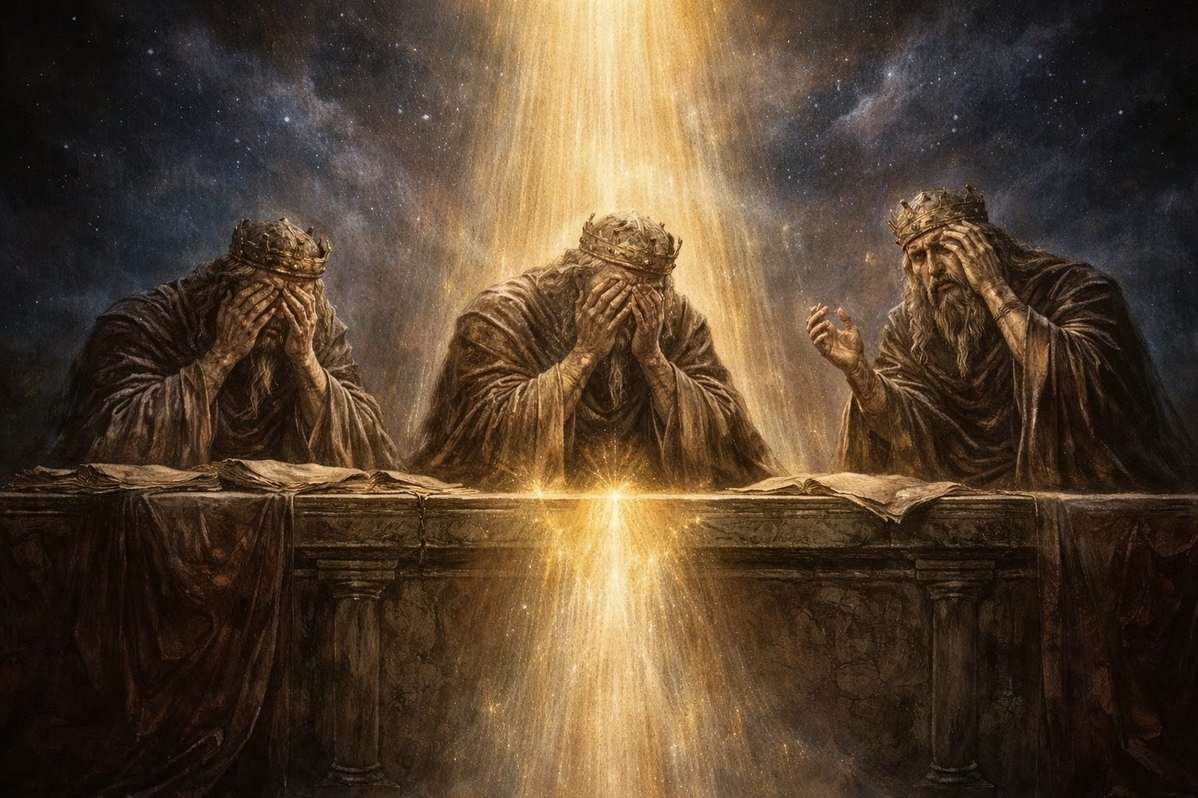
The text’s most dramatically revealing scene occurs in the fourth heaven, where Paul encounters archons engaged in unprecedented behaviour: weeping, mourning, and lamenting. These celestial administrators preside over a tribunal, ostensibly judging souls as they attempt to ascend—but their judgment proves arbitrary, their authority illegitimate, and their emotional state one of professional humiliation rather than triumphant enforcement.
Primary Source Citation: NHC V,2 22:10-18: “And I saw archons weeping and mourning, saying, ‘How has the prisoner escaped us?'”
The “prisoner” is the spiritual soul, breaking free from the cycle of birth and death (the archonic recycling programme), escaping the material detention facility through the ceiling rather than the door. The archons’ weeping exposes the fundamental incompetence of their administration: they possess the power to detain but lack the capacity to hold those who know the passwords. Their grief is the frustration of middle-management confronted with a security breach they cannot explain or prevent.
The text presents these archons as not evil in the absolute sense but ignorant—governing the cosmos without understanding its true nature, claiming authority they do not possess against those with higher clearance. Their weeping reveals the impotence of their power: they cannot stop the ascending soul who knows the truth. This is subversive theology at its most precise—the exposure of cosmic authority as paper-thin, maintained only by the ignorance of those subject to it.
The Cosmic Geography: Departmental Spheres
The Apocalypse of Paul presents a detailed organisational chart of the cosmic spheres, mapping the departmental structure from the elemental base to the pleromatic headquarters:
The First Heaven: Elemental Administration
The first jurisdiction comprises the elemental powers—the domain of earth and water, air and fire. These are the basic building blocks of material reality, the infrastructure upon which the higher departments depend. This is the lowest level of the cosmic civil service, managing the physical substrate of embodied existence.
The Second Heaven: Planetary Powers
The second jurisdiction contains the planetary powers—the domain of the stars and their astrological influences. These administrators control the temporal cycles, the astrological determinism that governs human fate within the material jurisdiction. Here Paul encounters the governors of destiny, the middle-management who believe they control human affairs through celestial mechanics.
The Third Heaven: Demiurgic Authority
The third jurisdiction houses the demiurgic power—the creator who thinks himself supreme but actually operates as a regional director unaware of the headquarters above him. This is the department of the false chief executive, the administrator who believes his jurisdiction is total while remaining ignorant of the pleromatic board of directors that supersedes his authority.
The Fourth Heaven: The Boundary
The fourth jurisdiction marks the boundary of the material cosmos—the checkpoint where the archons attempt to prevent transit to higher jurisdictions. This is the customs and immigration facility where souls are interrogated, judged, and (in the ordinary course) recycled back into reincarnation. The weeping archons here represent the failed security apparatus, the border guards who discover their passports are invalid against those with pneumatic citizenship.
Beyond the Fourth: The Pleroma
Beyond the fourth heaven lies the pleroma—the true divine world, the headquarters of the Fullness, the destination of the ascending soul. This is the jurisdiction where the cosmos appears as “a mere reflection,” where the archons’ authority is revealed as null, and where the escaped prisoner receives repatriation to authentic citizenship.
Secret Knowledge and Password Protocols
The text emphasises that ascent depends exclusively on knowledge—specifically, classified information regarding the archons’ names and the passwords that open the heavenly gates. This is not faith that saves, not good works, not sacramental participation, but the possession of security clearances that override archonic authority.
Primary Source Citation: NHC V,2 24:5-15: “And I said to him, ‘I am Paul, the apostle of Jesus Christ. I have knowledge of the truth, and I have the password of the fourth heaven.'”
Paul’s declaration functions as the proper presentation of credentials: identification (Paul), status (apostle), affiliation (Jesus Christ), and clearance level (knowledge of truth and password of the fourth heaven). The possession of secret names guarantees safe passage; the knowledge of passwords neutralises archontic opposition. The archons cannot detain those who know the proper countersigns—their own protocols require them to admit those possessing the classified information.
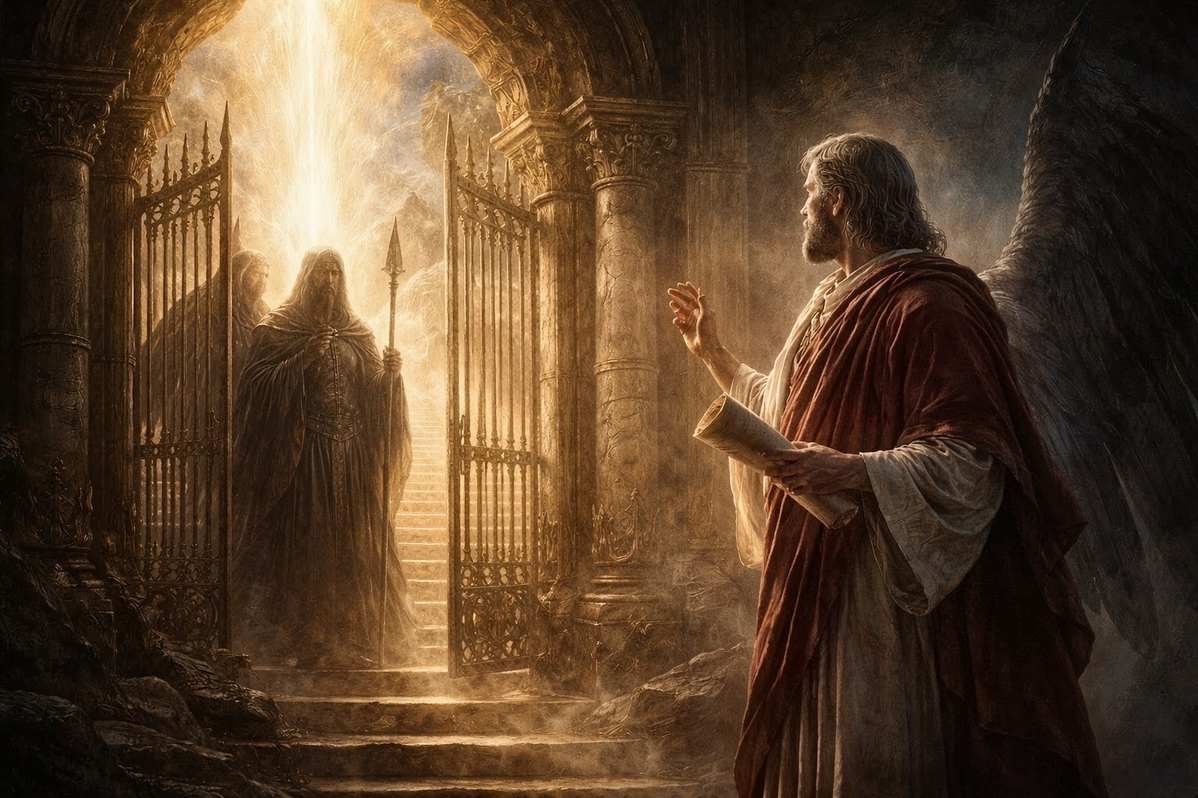
This is characteristic Gnostic soteriology—not faith alone, not ethical compliance, not institutional affiliation, but knowledge. The saved are those who know, who possess the secret information that liberates from cosmic bondage. The archons’ power is informational, not substantial; once the passwords are known, their jurisdiction evaporates. This is administrative liberation through classified briefing.
The Tower and the Final Escape
The text concludes with a powerful architectural metaphor: the cosmos as a tower with multiple levels, each guarded by archons, each requiring the proper seals for transit. This is the prison viewed from the outside—the detention facility with its hierarchical security apparatus, its interrogation rooms, its recycling mechanisms.
Primary Source Citation: NHC V,2 26:15-25: “And I saw a great tower, and I heard the voice of the archons who guard it. And I gave them the password, and they opened the gate, and I passed through.”
The tower represents the hierarchical structure of cosmic oppression—level upon level of administrative control, each requiring the proper documentation. Paul’s successful transit demonstrates the possibility of escape: the archons open the gates when presented with the correct passwords, not through mercy or grace but through bureaucratic necessity. They are bound by their own protocols; the classified information Paul possesses functions as a master key overriding all lower security clearances.
This is the Gnostic understanding of salvation in its most spatially precise form: not forgiveness of sins but escape from prison, not reconciliation with the creator but liberation from the creation, not endurance of suffering but transit through checkpoints. The tower is the cosmos; the passwords are the gnosis; the destination is the pleroma; and the weeping archons are the proof that the system is breakable for those who know how.
Comparative Context: Ascent Literature
The Apocalypse of Paul occupies a distinctive position within the Nag Hammadi Library’s collection of ascent literature, offering a compact and accessible alternative to the more philosophically dense texts. Where Zostrianos conducts the reader through thirteen aeons with elaborate metaphysical commentary, and where Allogenes presents complex Platonizing theology, the Apocalypse of Paul provides a streamlined transit guide—narrative-driven, emotionally vivid (the weeping archons), and practically focused on the necessity of passwords.
The text’s closest parallel within the Library is the canonical Apocalypse of Paul (a different text preserved in Latin and various vernaculars, not to be confused with this Coptic version), which similarly presents Paul touring the afterlife. However, the Nag Hammadi version is distinctively Gnostic in its emphasis on knowledge over faith and escape over judgment. The canonical Apocalypse of Paul focuses on purgatorial cleansing and eventual salvation; the Gnostic version focuses on immediate liberation through classified information.
The text pairs naturally with the Apocalypse of Peter from Codex VII—both present apostolic visions of the afterlife, but from different angles (Peter witnessing the docetic crucifixion, Paul conducting the heavenly ascent). Together they demonstrate the range of Gnostic apocalyptic imagination: the exposure of Christological illusion and the revelation of cosmological architecture.
Contemporary Relevance: Bureaucratic Resistance
For contemporary readers navigating institutional structures that claim absolute authority, the Apocalypse of Paul offers a technology of bureaucratic resistance. The text suggests that systems of control are maintained primarily by the ignorance of those controlled—once the passwords are known, the gates open automatically. This is not violent revolution but strategic recognition: the archons weep because their authority was always illusory, dependent on the prisoner’s belief in the prison.
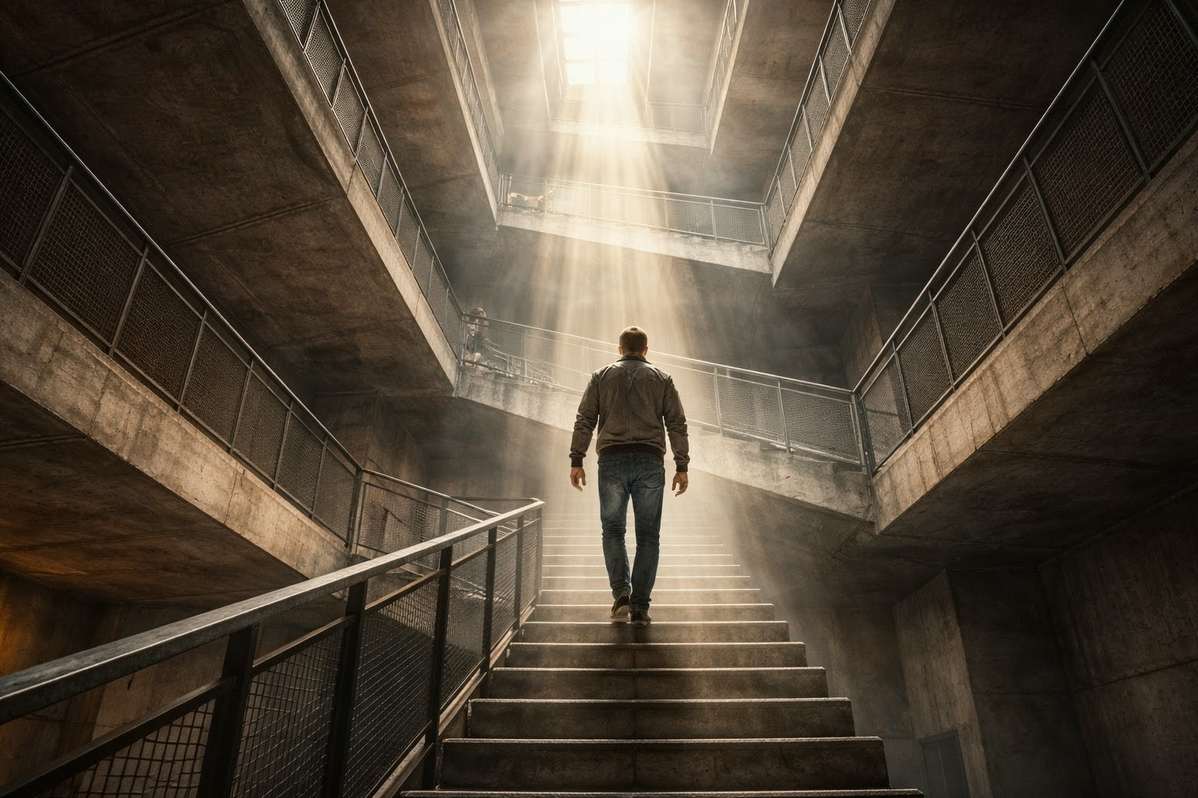
The image of the weeping archons provides psychological relief for those who fear punishment from authority figures. The text reveals that these figures are not all-powerful judges but frustrated administrators confronted with security breaches they cannot prevent. Their tears are not the wrath of offended deities but the professional embarrassment of bureaucrats whose protocols have been circumvented.
Most significantly, the text’s practical focus on passwords and seals suggests that liberation requires specific knowledge, not just generalised spirituality. In an era of information overload, the Apocalypse of Paul reminds us that the right information—the password, the name, the seal—can override systems of control that otherwise appear total. This is both subversive and practical: knowledge as the master key to locked doors.
Frequently Asked Questions
What is the Apocalypse of Paul in the Nag Hammadi Library?
The Apocalypse of Paul (NHC V,2) is a Coptic Gnostic apocalypse presenting a visionary ascent of the apostle Paul through the celestial heavens. The text describes Paul’s journey from the road to Damascus through the first four heavens, where he encounters weeping archons who cannot prevent his escape, ultimately reaching the pleroma beyond the material cosmos.
Where is the Apocalypse of Paul located in the Nag Hammadi Library?
The text is located in Codex V, tractate 2 (NHC V,2). It appears alongside the First Apocalypse of James and Second Apocalypse of James–a collection focused on apostolic visions and the heavenly journeys of early Christian figures.
What are the weeping archons in the fourth heaven?
In the fourth heaven, Paul encounters archons who are weeping and lamenting, saying ‘How has the prisoner escaped us?’ These archons preside over a tribunal judging ascending souls, but their weeping exposes their fundamental impotence. They possess the power to detain ordinary souls but cannot stop those who possess the secret passwords and knowledge of the truth.
What is the cosmology of the Apocalypse of Paul?
The text presents five celestial realms: (1) First Heaven–realm of elemental powers (earth, water, air, fire); (2) Second Heaven–realm of planetary powers and astrological influences; (3) Third Heaven–realm of the demiurgic creator; (4) Fourth Heaven–boundary of the material cosmos with weeping archons; and (5) Beyond the Fourth–the pleroma, the true divine world and destination of the ascending soul.
What are the passwords and seals in the text?
The text emphasizes that ascent depends on knowledge of secret names and passwords that open the heavenly gates. Paul declares: ‘I am Paul, the apostle of Jesus Christ. I have knowledge of the truth, and I have the password of the fourth heaven.’ This classified information overrides archonic authority and guarantees safe passage through the cosmic checkpoints.
What is the tower vision in the Apocalypse of Paul?
The text concludes with a vision of the cosmos as a great tower with multiple levels, each guarded by archons. The soul must pass through each level, presenting the proper passwords to the guardians. When Paul gives the password, ‘they opened the gate, and I passed through’–demonstrating that archonic power is procedural rather than substantial, and can be bypassed by those possessing the correct credentials.
How does the Apocalypse of Paul differ from the canonical Apocalypse of Paul?
The Nag Hammadi Apocalypse of Paul (Coptic, second/third century) is distinct from the medieval Apocalypse of Paul preserved in Latin and vernacular versions. The Gnostic text emphasizes knowledge over faith, immediate escape through passwords over purgatorial cleansing, and the exposure of archonic impotence over judgment and punishment. It presents liberation through classified information rather than endurance of suffering.
Further Reading
Expand your understanding of heavenly ascent, archonic weeping, and the Gnostic appropriation of Paul through these verified internal resources:
- Zostrianos: Journey Through the Thirteen Aeons — The more elaborate Sethian ascent narrative, offering comparative material on the heavenly journey through multiple jurisdictions with detailed metaphysical commentary.
- Allogenes: The Sethian Ascent to the Unknowable One — The Platonizing counterpart to the Apocalypse of Paul, presenting the ascent through aeons with emphasis on negative theology and the unknowable nature of the supreme deity.
- Apocalypse of Peter: The Laughing Saviour — The companion apocalypse from Codex VII, offering the Petrine perspective on Gnostic eschatology and the exposure of archonic deception through the docetic crucifixion.
- First Apocalypse of James — Fellow traveller in Codex V, presenting the martyrdom and secret teaching of James, offering parallel evidence for apostolic apocalyptic traditions in the same manuscript collection.
- Second Apocalypse of James — Also from Codex V, providing the alternative Jamesian apocalypse and demonstrating the range of apostolic vision literature within the Nag Hammadi Library.
- Codex V: The Apocalypses of James and Paul — The archaeological and codicological context of the Apocalypse of Paul within its manuscript setting, alongside the First and Second Apocalypses of James.
- Reality of the Archons: The Hostile Administration — Detailed examination of the archontic powers whose impotence the Apocalypse of Paul exposes, providing the cosmological background for the text’s ascent narrative.
- Ascent Literature in the Nag Hammadi Library — Comprehensive overview of the ascent genre including Marsanes, the Discourse on the Eighth and Ninth, and related texts, placing the Apocalypse of Paul within the broader tradition of celestial navigation.
References and Sources
The following sources support the claims and quotations presented in this article. All citations to the Nag Hammadi Library represent direct translations from the Coptic text as established in the standard critical editions.
Primary Sources and Critical Editions
- [1] Duensing, H. (1949). “The Apocalypse of Paul.” In Nag Hammadi Codices V,2-5 and VI with Papyrus Berolinensis 8502,1 and 4. Brill. (Early critical edition with Coptic text and German translation)
- [2] Layton, B. (1987). The Gnostic Scriptures: A New Translation with Annotations and Introductions. Doubleday. (Standard English translation of NHC V,2 with ascent literature commentary)
- [3] Meyer, M. (2007). The Nag Hammadi Scriptures: The International Edition. HarperOne. (Comparative translation with notes on the weeping archons motif)
- [4] Murphy, F.J., & Patterson, S.J. (1994). “The Apocalypse of Paul (NHC V,2).” In Nag Hammadi Codices V,2-5 and VI. Brill. (Definitive critical edition with philological analysis)
- [5] Robinson, J.M. (1977). The Nag Hammadi Library in English. Harper & Row. (Standard reference edition establishing page and line conventions)
Scholarly Monographs and Specialised Studies
- [6] Buchholz, D.D. (1994). Your Eyes Will Be Opened: A Study of the Greek (Ethiopic) Apocalypse of Peter. Scholars Press. (Comparative study of apocalyptic traditions)
- [7] Culianu, I.P. (1983). Psychanodia I: A Survey of the Evidence Concerning the Ascension of the Soul and Its Relevance. Brill. (Technical analysis of ascent literature motifs)
- [8] Himmelfarb, M. (1993). Ascent to Heaven in Jewish and Christian Apocalypses. Oxford University Press. (Contextualisation of Pauline ascent within Jewish and Christian apocalyptic)
- [9] King, K.L. (2003). What Is Gnosticism? Harvard University Press. (Theoretical framework for categorising ascent texts)
- [10] Segal, A.F. (1990). Paul the Convert: The Apostolate and Apostasy of Saul the Pharisee. Yale University Press. (Examination of Pauline visionary traditions)
Comparative Studies and Thematic Analyses
- [11] DeConick, A.D. (2006). Recovering the Original Gospel of Thomas: A History of the Gospel and Its Growth. T&T Clark. (Analysis of Thomasine and Pauline traditions in comparative context)
- [12] Fossum, J. (1985). The Name of God and the Angel of the Lord. Mohr Siebeck. (Examination of angelic mediation and heavenly ascent)
- [13] Janssen, M. (1990). “The Apocalypse of Paul (NHC V,2) and the Fourth Heaven.” In Nag Hammadi and Gnosticism. Scholars Press. (Technical analysis of the weeping archons scene)
- [14] Turner, J.D. (2001). Sethian Gnosticism and the Platonic Tradition. Presses Universitaires de Louvain. (Comparative analysis of ascent through aeons)
- [15] Williams, F. (1996). “The Apocalypse of Paul and the Gnostic Paul.” Vigiliae Christianae 50, pp. 145-158. (Analysis of Gnostic appropriation of Pauline authority)