What Is the Divine Spark? The Hidden Light Within That Remembers and Seeks Return
The divine spark is the hidden spiritual principle within the human being: the part that can remember, recognise and seek return. In Gnostic language, it is the trace of divine reality concealed within ordinary life, the light within consciousness that does not fully belong to the lower order of fear, compulsion, imitation and forgetfulness.
The spark is not the ego, personality, body or social self. It is not a decorative metaphor for being “special”. It is the inward capacity for gnosis: direct recognition of origin, condition and return. This article traces the divine spark through Gnostic mythology, the Nag Hammadi texts, the threefold language of body, soul and spirit, and the modern feeling that something essential within us remains unclaimed by the world.
In Plain Terms
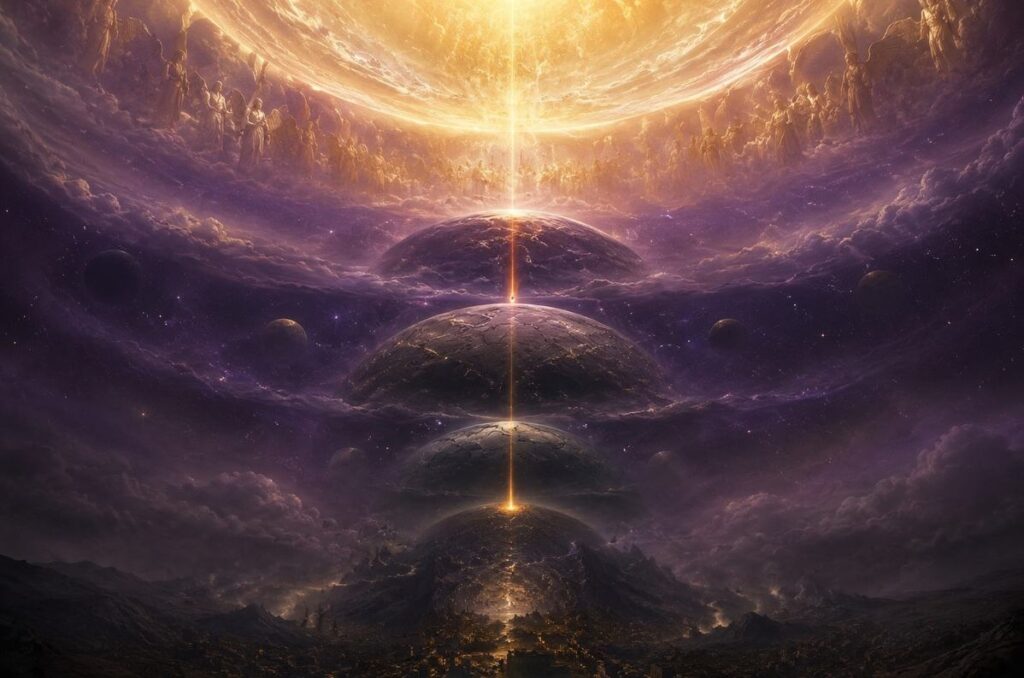
The divine spark is the hidden divine element within the human being. In Gnostic traditions, it is the spiritual light or pneuma that comes from the higher fullness, the Pleroma, and becomes concealed within the lower world of matter, forgetfulness and false identity.
Put simply: gnosis is the act of recognition, and the divine spark is what recognises. It is the part of the human being that can awaken, remember its source and refuse to mistake the lower world for the whole of reality.
Primary Sources and Traditions Discussed
- The Apocryphon of John: the creation of Adam, the entry of divine spirit and the archons’ attempt to bind the human being.
- The Gospel of Thomas: sayings about the light within and the need to bring forth what is hidden.
- Valentinian tradition: the spiritual seed, or sperma pneumatikon, scattered within the lower world and awakened by revelation.
- Gnostic anthropology: body, soul and spirit; hylic, psychic and pneumatic modes of human life.
- Modern interpretation: the spark as a symbol of inward recognition, spiritual memory, depth psychology and resistance to manufactured identity.
How ZenithEye Reads This
ZenithEye reads the divine spark as a core Gnostic image for the hidden depth of consciousness. It should not be used to divide people into spiritual winners and losers, or to excuse superiority, detachment or contempt for ordinary life. The spark names the part of the human being that can recognise false identity, remember a deeper source and begin the work of return. Its test is not specialness. Its test is awakening, humility and transformation.
Table of Contents
- In Plain Terms
- Primary Sources and Traditions Discussed
- How ZenithEye Reads This
- What Is the Divine Spark?
- The Spark Is Not the Ordinary Self
- Ancient Origins in the Nag Hammadi Texts
- Adam, Spirit and the Archons
- The Three Natures and the Geography of the Spark
- How the Spark Operates: Remembering, Recognising, Returning
- Modern Resonances and Contemporary Experience
- Related Glossary Terms
- Read Next
- Frequently Asked Questions
- Further Reading
- References and Sources
What Is the Divine Spark?
In the simplest terms, the divine spark is the portion of higher reality hidden within the human being. It is the inward light that makes gnosis possible. Without the spark, there would be no recognition, no awakening, no sense that something essential has been forgotten and no pull towards return.
The spark is not the soul in every ordinary sense of the word. It is not personality, emotion, memory, temperament or biography. It is not the voice in the head that says “me”. In Gnostic anthropology, the human being is often understood as a composite: body, soul and spirit. The body belongs to matter. The soul belongs to psychic life, emotion, thought, desire and ordinary identity. The spirit, or pneuma, is the divine spark itself.
This distinction matters because Gnosticism is not simply interested in improving the existing personality. It asks a deeper question: what within the human being is capable of recognising the divine? The answer is the spark. It is the hidden principle that can wake inside the soul and reveal that the lower order is not the whole of reality.
The image of a spark is deliberate. A spark is small, easily missed and easily smothered, yet capable of igniting a larger fire. It is not the whole blaze, but it carries the nature of flame. In the same way, the divine spark is not the totality of the Pleroma, but it belongs to the same order of light.
The divine spark is the part of the human being that can recognise the divine because it has never fully ceased to belong to it.
ZenithEye
The Spark Is Not the Ordinary Self
One of the easiest mistakes is to confuse the divine spark with the ordinary self. The ordinary self is shaped by memory, habit, family, culture, injury, desire, fear, status, language and social reflection. It is the face built from mirrors. Some of it is useful. Some of it is wounded. Some of it is borrowed so early that it feels original.
The divine spark is not this constructed identity. It is deeper, quieter and less performative. It does not need to be admired. It does not compete for spiritual status. It does not turn awakening into a costume. The spark is not trying to become interesting. It is trying to become free.
This is why Gnostic language often sounds severe about false identity. The problem is not that ordinary life is worthless. The problem is that the human being mistakes partial structures for final truth. The body becomes the whole self. Emotion becomes destiny. Social role becomes identity. Fear becomes wisdom. Desire becomes freedom. The spark is buried beneath these agreements until gnosis begins to expose them.
To recognise the spark is not to despise the body or abandon ordinary life. It is to stop confusing the vessel with the light it carries. A grounded Gnostic reading does not turn the world into rubbish. It asks whether the world has been mistaken for the source.
Ancient Origins in the Nag Hammadi Texts
The divine spark is not a modern invention pasted onto ancient material. It grows from the symbolic and mythic language of Gnostic texts themselves, especially the writings preserved in the Nag Hammadi Library. These texts describe the human being as more than a creature of matter, appetite and social identity. Something hidden from the higher realm has entered the human condition.
The most important source for this idea is the Apocryphon of John, also known as the Secret Revelation of John. In that text, the creation of humanity is not a simple act of divine goodness. It is a contested event. The lower rulers fashion a body, but the true life within that body comes from beyond them.
This is the key Gnostic reversal. The human being appears weak, embodied and trapped inside the lower world, yet contains something the lower rulers do not possess: a trace of higher light. The archons can shape the body, influence the soul and construct systems of fear, desire and false authority. But the spark itself comes from a deeper source.
Adam, Spirit and the Archons
In the Apocryphon of John, Yaldabaoth and his archons form the first human body, but the body cannot rise in its own power. It remains incomplete until the divine spirit enters. This spirit does not originate from the lower makers. It comes from the higher realm through the intervention of divine wisdom and the powers above.
Once the spirit enters Adam, the human being becomes luminous and intelligent. The archons recognise that something greater than themselves has appeared inside the creature they attempted to control. Their creation now contains a light they did not create and cannot fully master. This is one of the central dramas of Gnostic anthropology: the lower powers make a vessel, but the higher realm secretly places light within it.
The archons then attempt to bind, distract and misdirect the human being. In some Gnostic accounts, this includes the formation of the counterfeit spirit, a false pattern of identity and desire that keeps consciousness attached to the lower order. The spark is present, but it is covered by imitation life.
This does not mean the body is simply evil or worthless. A careful reading is needed. The body is the field in which the drama occurs. The problem is not embodiment itself, but captivity, forgetfulness and false rule. The human being becomes a contested site: matter below, spirit above, soul between them, pulled by different orders of reality.
The Secret Light in the Human Being
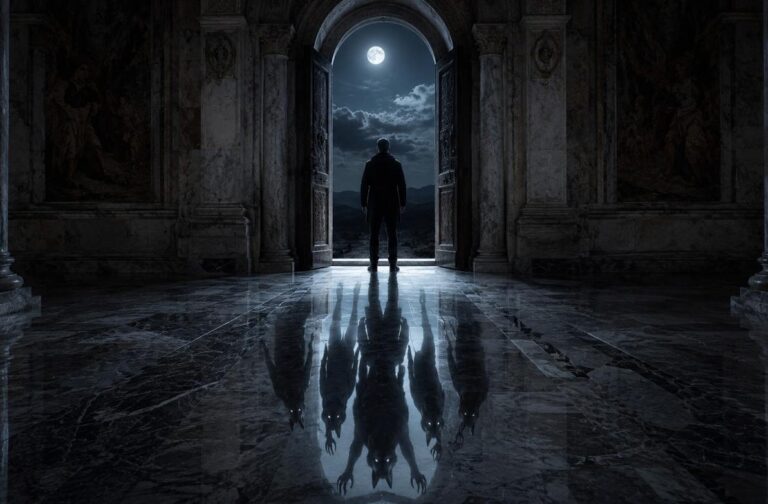
Many Gnostic myths use images of secrecy because the spark is hidden even from the one who carries it. It is not obvious to ordinary consciousness. The person may identify entirely with body, role, wound, fear, memory or desire while the spark remains buried beneath those layers.
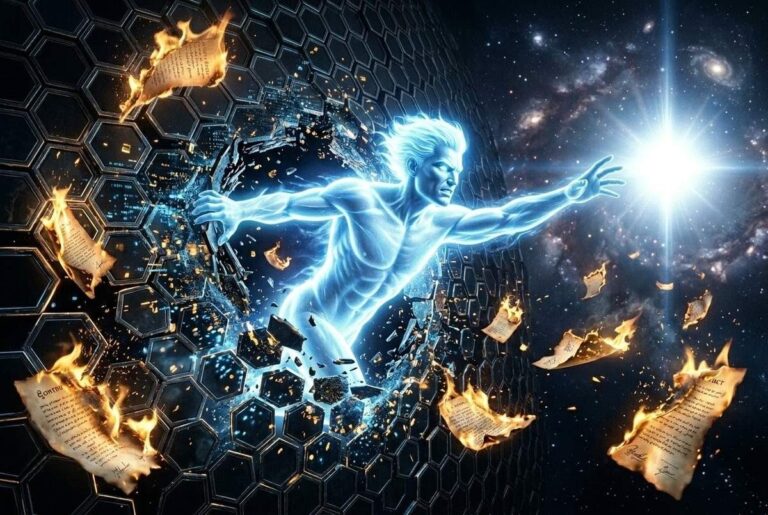
Gnosis is the moment this hidden light begins to recognise itself. The divine spark is not inserted so that the person can feel superior to the world. It is present so that the human being can awaken from false identification and return to the source of life more deeply than the lower order allows.
In this sense, the spark is both wound and promise. It explains the ache of exile, the sense of not fully belonging, the refusal to accept a purely mechanical account of human life. But it also explains the possibility of freedom. The ache points somewhere.
The Three Natures and the Geography of the Spark
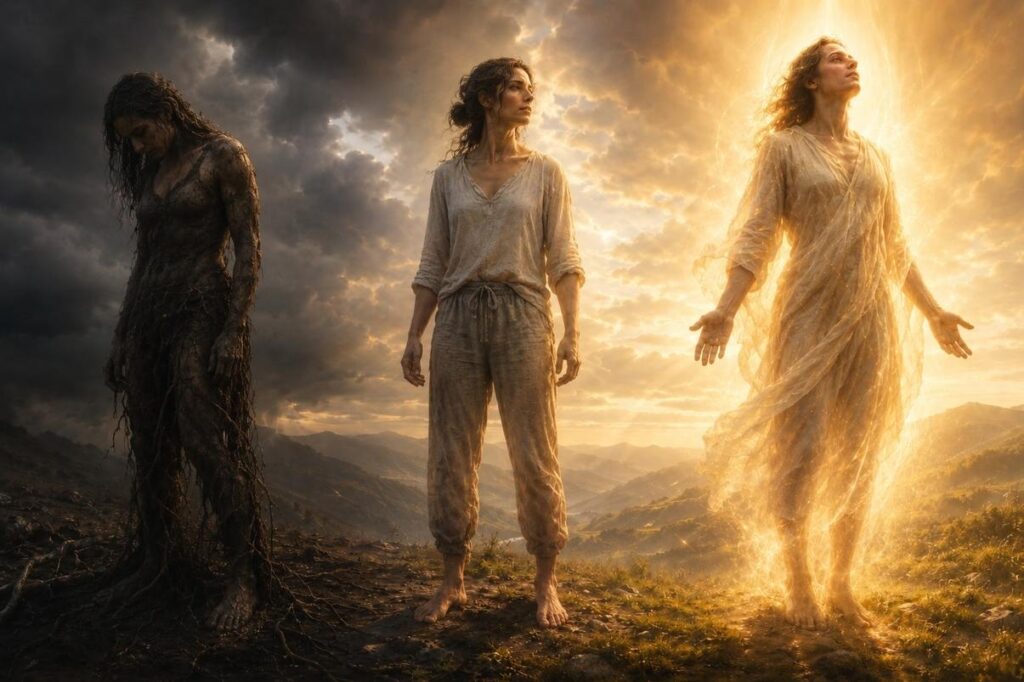
Some Gnostic systems describe human life through three natures: hylic, psychic and pneumatic. These terms can sound harsh or elitist if read carelessly. ZenithEye treats them as a symbolic and spiritual map, not as a social ranking system or a reason to divide living people into fixed categories.
The hylic level refers to life governed mainly by matter, appetite, survival, possession and immediate sensation. It is consciousness asleep inside the visible world. The hylic mode does not ask what lies beyond the surface because the surface appears sufficient.
The psychic level refers to soul life: emotion, moral concern, religious feeling, imagination, devotion and belief. It is more awake than the hylic mode, but still often dependent on external authority, inherited structure and the need for reassurance. The psychic person may believe deeply, but belief is not yet gnosis.
The pneumatic level refers to spirit, or pneuma. This is the level associated with the divine spark. It is the capacity for direct recognition, inward knowledge and return to source. The pneumatic does not simply accept teachings about the divine. Something within recognises them.
Read as inner geography, these three terms describe states that may all be present within a single human life. We can be hylic when captured by appetite, psychic when governed by belief and emotion, and pneumatic when recognition breaks through. The question is not “which class of person am I?” The better question is: which part of me is currently leading?
This reading avoids the trap of spiritual vanity. The divine spark is not a badge. It is a responsibility. If something in the human being can recognise higher truth, then that recognition must be protected, tested and integrated. Otherwise, even the language of the spark becomes another costume for the false self.
How the Spark Operates: Remembering, Recognising, Returning
The divine spark is not static. It is not an ornament hidden inside the soul. It operates through three related movements: remembering, recognising and returning. These are not always neat stages in a straight line. They are recurring movements of awakening, each one deepening the others.
Remembering restores orientation. Recognising reveals what has been hidden. Returning gathers the awakened life back towards its source. Together, they describe the basic movement of Gnostic liberation: the spark begins buried in forgetfulness and ends by becoming conscious of its origin.
Remembering
Remembering is the recovery of what the soul has forgotten. In Gnostic myth, the human being is not merely ignorant because they lack information. They are forgetful because their deepest origin has been covered over by matter, fear, social identity, desire and the counterfeit patterns of the lower world.
This remembering is not ordinary memory. It is not the recollection of a biographical event. It is closer to spiritual orientation returning after long disorientation. The person begins to sense that they are not only a body, role, wound, history or appetite. Something deeper has been present all along, quietly resisting the claim that the visible world is the whole of reality.
Many traditions use the language of remembrance because awakening often feels less like learning something new and more like recovering something half-known. A text suddenly speaks. A symbol becomes alive. A moment of silence reveals a hidden structure. The spark remembers not by collecting facts, but by feeling the pull of source through the fog of ordinary identity.
Recognising
Recognition is the active moment of the spark’s awakening. It is the instant when a teaching, image, experience or inward pressure ceases to be merely interesting and becomes unmistakably personal. The person does not simply understand an idea. Something in them recognises itself through the idea.
This is where the divine spark and gnosis meet. Gnosis is the recognition; the spark is the recogniser. The spark is the hidden capacity for direct knowing, and gnosis is what happens when that capacity wakes enough to see through false identity.
Recognition can be quiet. It does not need thunder, spectacle or spiritual drama. Often it appears as a sudden clarity: “this is not who I truly am”, “this authority is false”, “this desire is not freedom”, “this fear has been ruling me”, or “something in me belongs to a deeper order than the system around me”.
When the spark recognises, the world is not necessarily destroyed. But its spell weakens. The person still lives, works, suffers, loves, struggles and chooses. The difference is that they no longer meet reality from the same unconscious centre.

Returning
Returning is the movement of the spark back towards its source. In Gnostic language, this source is often described as the Pleroma, the divine fullness beyond deficiency, false rule and fragmentation. The spark comes from fullness and seeks fullness again.
This return should not be reduced to a simple escape from the world. The language of return includes after-death ascent in some texts, but it also describes a present transformation of orientation. The person begins to live less from fear, imitation and compulsion, and more from awakened attention, discernment and inward freedom.
Return is also a stripping away. The spark does not return by carrying every false garment with it. Attachments, identities, agreements and psychic habits must be seen for what they are. Some fall away suddenly. Others loosen slowly through practice, suffering, attention and repeated acts of honesty.
The spark returns by becoming less confused with what covered it. This is why Gnostic liberation is not merely escape, but clarification. The light does not become light by hating the darkness. It becomes visible when the covering thins.
Modern Resonances and Contemporary Experience
The divine spark remains powerful because it speaks to a recognisable modern condition: the sense that the human being is more than the body, more than the personality, more than social performance and more than the systems that measure attention, productivity and desire.
Many people feel an inward dissonance they cannot easily name. They may function well in ordinary life while sensing that the life offered to them is too small, too mechanical or too heavily managed. The divine spark gives symbolic language to that feeling. It says: the unease may not be mere dissatisfaction. It may be the pressure of something deeper refusing to disappear.
This does not mean every feeling of alienation is spiritual awakening. Loneliness, depression, trauma and anxiety deserve care, support and grounded attention. But Gnostic language helps distinguish between ordinary distress and the deeper recognitional ache: the sense that consciousness has been fitted into a world that cannot fully explain it.
The Spark and Modern Identity
Modern life builds identities quickly. Profiles, roles, algorithms, markets, brands, politics, spiritual products and social mirrors all offer versions of the self. Each one says: be this, want this, fear this, display this, optimise this. The ordinary self becomes surrounded by manufactured reflections.
The divine spark is not another identity in this marketplace. It does not ask to be branded. It does not need constant proof. It is the quiet refusal inside consciousness that knows a manufactured self is not the final self.
This is why the spark matters in the digital age. The attention economy profits from a self that can be stimulated, fragmented, flattered and frightened. The spark requires the opposite: depth, silence, attention, memory and discernment. It is not hostile to technology, but it cannot be nourished by endless distraction.
The Spark and Depth Psychology
Modern depth psychology offers one bridge for reading the spark without flattening it. Jungian language, for example, often speaks of the deeper Self, the numinous, individuation and the integration of unconscious material. These ideas do not simply repeat ancient Gnosticism, but they do help modern readers understand why the spark can be read as an image of inward depth beyond the ego.
From this perspective, the spark is not merely a theological claim. It is also a symbol of the deepest centre within the person: the part that knows more than the surface ego, resists false adaptation and calls the life towards wholeness. But a Gnostic reading keeps the symbol sharper. The spark is not only psychological depth. It is also a sign of divine origin and cosmic displacement.
The useful bridge is this: both Gnosticism and depth psychology recognise that the ordinary ego is not the whole person. Both suggest that human beings suffer when they identify only with the surface. Both point towards a deeper centre that must be encountered, not merely described.
The Spark, Ascent and Near-Death Language
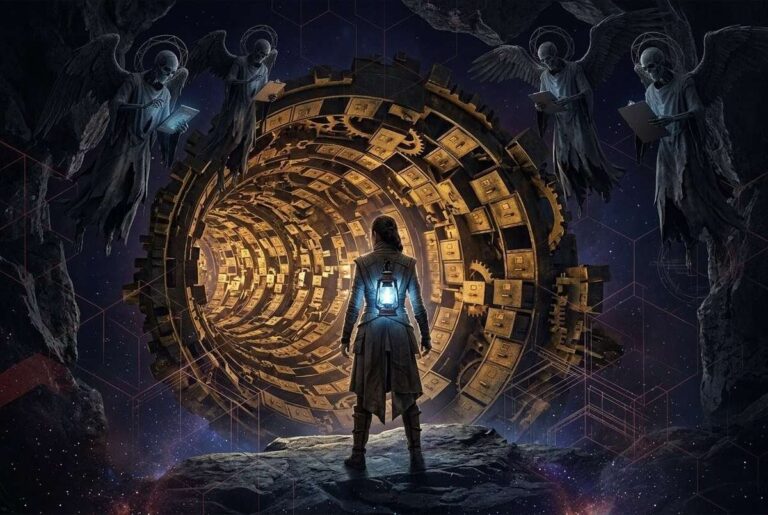
The divine spark also helps explain why Gnostic ascent texts remain so compelling. These texts often describe the soul moving through hostile or testing powers after death, passing beyond rulers, seals, gates or planetary spheres. Whether read literally, symbolically or ritually, the structure is clear: the awakened element within the human being must recognise itself strongly enough not to be detained by false authority.
Modern near-death experience accounts sometimes echo this language of recognition, homecoming and release from the body. These parallels should be handled carefully. They do not prove ancient Gnostic cosmology in a simple way, and not every near-death report fits a Gnostic pattern. But they do show that human beings across time have described profound experiences of leaving ordinary identity, encountering light, remembering a deeper home and returning changed.
For ZenithEye, the useful point is not sensational proof. It is recognitional pattern. Ancient ascent literature, deathbed visions, contemplative states and near-death reports all circle a similar question: what part of the human being remains when ordinary identity loosens? The divine spark gives one Gnostic answer. What remains is not the social mask, but the hidden light capable of knowing its source.
The Spark and Spiritual Estrangement
Many modern readers first recognise the divine spark through estrangement. They feel that the world offered to them is not entirely false, but somehow incomplete. They may sense that ordinary success, social performance, consumption, ideology or even conventional religion cannot fully answer the ache beneath consciousness.
Gnostic language gives this ache a symbolic grammar. The feeling of not belonging may not only be loneliness. It may also be the spark’s refusal to identify completely with the lower order. The ache says: this is not the whole of reality. Something in me remembers another measure.
This must be held with care. Not every feeling of alienation is spiritual insight. Depression, trauma, grief and anxiety require grounded support, not romanticisation. But neither should every deep spiritual estrangement be flattened into pathology. Sometimes the human being suffers because a deeper part of consciousness is refusing to sleep inside a smaller story.
The Spark and Practice
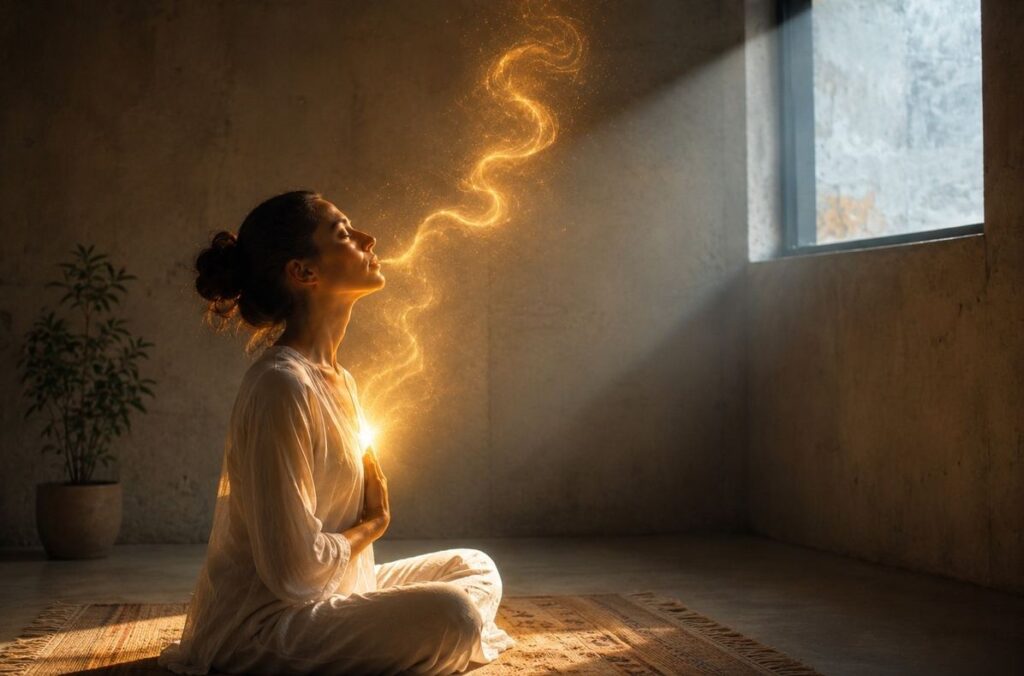
The divine spark does not need to be manufactured, but it does need conditions in which it can be recognised. Attention matters. Silence matters. Ethical clarity matters. Body, breath, sound, vision and movement can all become practical ways of clearing the noise around recognition.
This is where the spark meets practice. A person may read about the divine spark for years and still remain identified with fear, desire, resentment or performance. But one honest moment of attention can reveal the distance between the constructed self and the deeper witness within it.
Practice does not force awakening. It steadies the vessel. It helps the person notice what normally passes unseen: the impulse before the action, the wound beneath the reaction, the borrowed voice pretending to be truth, the quiet centre that remains when the noise settles.
The spark is tended through repeated acts of recognition. A breath consciously taken. A false agreement refused. A desire examined instead of obeyed. A fear seen without being enthroned. A moment of silence allowed to speak. These are not grand gestures, but they make room for the hidden light to become less hidden.
The Spark Is Not Spiritual Superiority
Because the language of the divine spark is powerful, it can be misused. A person may begin to think, “I have the spark and others do not,” or “I am pneumatic and they are hylic.” This is one of the oldest traps in esoteric language: turning a map of awakening into a weapon of identity.
A grounded reading avoids this. The spark is not a trophy. It is not proof that one person is better than another. It is not permission to dismiss ordinary human compassion. If anything, recognition should make a person more careful, not more arrogant. The more deeply one recognises hidden light, the less attractive contempt becomes.
The real question is not whether the spark makes someone special. The real question is whether recognition makes them freer from falsehood, less reactive, more truthful, more discerning and more capable of living from the deeper centre they claim to have touched.
Related Glossary Terms
These terms help place the divine spark inside the wider Gnostic foundation cluster and the ZenithEye route through direct knowing, cosmology and practice.
- Gnosis: direct, transformative knowing. Gnosis is the recognition; the divine spark is what recognises.
- Pneuma: spirit, breath or divine life within the human being, often used for the spark itself.
- Pleroma: divine fullness, the higher source from which the spark originates and towards which it returns.
- Kenoma: the lower realm of lack, fragmentation and forgetfulness where the spark becomes concealed.
- Archons: ruling powers or structures that bind perception and obstruct recognition.
- Counterfeit Spirit: the false pattern of identity that imitates life and keeps consciousness attached to the lower order.
- Demiurge: the lower craftsman or ruler associated with the material order in Gnostic myth.
- Yaldabaoth: the blind god and chief archon in several Gnostic creation accounts.
- Hylic, Psychic and Pneumatic: the threefold language of body, soul and spirit, best read as inner geography rather than spiritual ranking.
- Five Gateways: breath, sensation, sound, vision and movement as practical routes into attention and direct knowing.
Read Next
Best next step: Archons: The Ruling Powers That Shape Reality. If the divine spark is the hidden light within the human being, the archons explain the powers, patterns and structures that try to keep that light asleep, distracted or falsely identified.
For the recognitional foundation, return to What Is Gnosis?. For the cosmological source of the spark, continue to What Is the Pleroma?. For the false identity that obscures the spark, read What Is the Counterfeit Spirit?.
Frequently Asked Questions
What is the divine spark in Gnosticism?
The divine spark is the hidden divine element within the human being. In Gnostic traditions, it is the spiritual light or pneuma that comes from the higher fullness, the Pleroma, and becomes concealed within the lower world of matter, forgetfulness and false identity.
Is the divine spark the same as the soul?
Not exactly. In many Gnostic systems, the human being is understood as body, soul and spirit. The soul relates to emotion, thought, desire and ordinary identity. The divine spark is the spiritual element, or pneuma, that can recognise its source beyond the lower order.
How does the divine spark relate to gnosis?
Gnosis is the act of direct recognition, and the divine spark is what recognises. The spark is the hidden capacity for awakening. Gnosis occurs when that capacity wakes enough to see through false identity, remember its source and begin the movement of return.
Where does the divine spark come from?
In Gnostic cosmology, the divine spark comes from the higher fullness, often called the Pleroma. It does not originate from the lower makers or archons. It is a trace of higher light concealed within the human condition.
Can the divine spark be destroyed?
Gnostic texts usually describe the spark as obscured, bound or covered by forgetfulness rather than simply destroyed. It can be hidden beneath fear, desire, false identity and the counterfeit spirit, but the work of gnosis is to uncover and recognise what remains deepest within the human being.
Does everyone have the divine spark?
Ancient Gnostic texts vary in how they answer this question. Some describe different human natures, such as hylic, psychic and pneumatic. ZenithEye treats this language carefully as symbolic inner geography, not as a licence to rank living people or claim spiritual superiority.
Is the divine spark a psychological idea?
The divine spark can be read psychologically as a symbol of inward depth beyond the ego, but in Gnostic tradition it is more than psychology. It points to divine origin, spiritual memory and the possibility of return to the source beyond false identity and deficiency.
How can the divine spark be recognised?
The spark is recognised through gnosis, direct knowing. Study, contemplation, silence, embodied attention and ethical clarity can prepare the ground, but recognition itself is inward. It often appears as a deep shift in identity, perception and freedom from false authority.
Safety Notice: This article explores symbolic, spiritual and contemplative ideas about identity, awakening, alienation and the hidden divine element within the human being. It does not constitute medical, psychological or spiritual advice. If feelings of estrangement, unreality, spiritual crisis or identity disturbance become distressing, obsessive or destabilising, please seek support from a qualified mental health professional or appropriate emergency service. Recognition should deepen clarity and grounded life, not replace care, relationships or ordinary responsibility.
Further Reading
Explore these ZenithEye articles to deepen your understanding of the divine spark, pneuma, Gnostic anthropology and the wider foundation cluster.
Core Gnostic Foundations
- What Is Gnosis?: direct recognition, the act by which the divine spark awakens to itself.
- Archons: The Ruling Powers That Shape Reality: the powers and patterns that bind perception and obstruct awakening.
- What Is the Counterfeit Spirit?: the false pattern of identity that keeps the spark attached to the lower order.
- What Is the Demiurge?: the lower craftsman or ruler associated with the material cosmos.
- Who Is Yaldabaoth?: the blind god and chief archon in several Gnostic creation accounts.
- What Is the Pleroma?: divine fullness, the higher source from which the spark originates.
- What Is the Kenoma?: the realm of deficiency, forgetfulness and spiritual obscuration.
Pneuma, Soul and Practice
- What Is Pneuma?: spirit, breath and the divine spark in Gnostic language.
- Pneumatic, Hylic and Psychic: the three natures and the geography of awakening.
- The Apocryphon of John: the creation myth in which the human being receives divine spirit.
- The Gnostic Soul Trap: archons, death and the recycling of pneuma.
- Pleroma and Kenoma: the foundational geography of Gnostic cosmology.
- The Five Gateways to Direct Knowing: breath, sensation, sound, vision and movement as practical routes into attention and recognition.
- Jung, Shadow Work and Gnostic Pneuma: a bridge between ancient pneuma and modern depth psychology.
- Gnosis and the Near-Death Experience: ancient cosmology, ascent language and modern reports of recognition.
References and Sources
The following sources support the historical, textual and interpretive layers discussed in this article.
Primary Sources and Critical Editions
- Robinson, James M., ed. The Nag Hammadi Library in English. HarperSanFrancisco, revised editions.
- Layton, Bentley. The Gnostic Scriptures. Doubleday, 1987.
- Meyer, Marvin, ed. The Nag Hammadi Scriptures. HarperOne, 2007.
- King, Karen L. The Secret Revelation of John. Harvard University Press, 2006.
- The Apocryphon of John. Various translations and editions.
- The Gospel of Thomas. Various translations and editions.
- The Gospel of Truth. Various translations and editions.
- The Exegesis on the Soul. Various translations and editions.
- Authoritative Teaching. Various translations and editions.
Scholarly Monographs and Comparative Studies
- King, Karen L. What Is Gnosticism? Harvard University Press, 2003.
- Williams, Michael Allen. Rethinking “Gnosticism”: An Argument for Dismantling a Dubious Category. Princeton University Press, 1996.
- Brakke, David. The Gnostics: Myth, Ritual, and Diversity in Early Christianity. Harvard University Press, 2010.
- Jonas, Hans. The Gnostic Religion: The Message of the Alien God and the Beginnings of Christianity. Beacon Press, revised editions.
- Pagels, Elaine. The Gnostic Gospels. Random House, 1979.
- Turner, John D. Sethian Gnosticism and the Platonic Tradition. Presses de l’Université Laval, 2001.
- Rudolph, Kurt. Gnosis: The Nature and History of Gnosticism. Harper & Row, 1983.
- Filoramo, Giovanni. A History of Gnosticism. Basil Blackwell, 1990.
Modern Context and Interpretation
- Jung, C. G. Aion: Researches into the Phenomenology of the Self. Princeton University Press, 1959.
- Jung, C. G. The Gnostic Jung and the Seven Sermons to the Dead. Edited by Stephan A. Hoeller. Quest Books, 1982.
- Hanegraaff, Wouter J. Western Esotericism: A Guide for the Perplexed. Bloomsbury, 2013.
- Hanegraaff, Wouter J. Esotericism and the Academy: Rejected Knowledge in Western Culture. Cambridge University Press, 2012.
- Hoeller, Stephan A. Gnosticism: New Light on the Ancient Tradition of Inner Knowing. Quest Books, 2002.
The divine spark is not the personality made sacred, nor the ego dressed in luminous language. It is the hidden light within consciousness that can recognise its origin beyond the lower order. Gnosis awakens it. Practice tends it. Discernment protects it. And the path of return begins wherever that small, stubborn flame refuses to mistake the world of forgetting for the whole of reality.