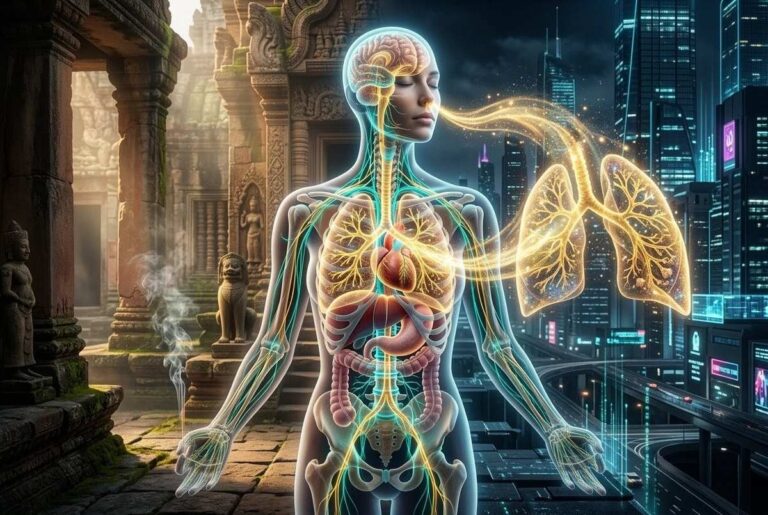

Consciousness as Interface: The User Experience of Being
For decades, philosophers and scientists have wrestled with what David Chalmers termed the “hard problem of consciousness“: why does subjective experience exist at all? Why is there “something it is like” to be a conscious being, rather than merely behavioural processing without inner awareness? The problem has proven stubbornly resistant to materialist explanation because, on the materialist view, consciousness should not exist–it should be epiphenomenal, a byproduct of neural computation with no causal role.
Table of Contents
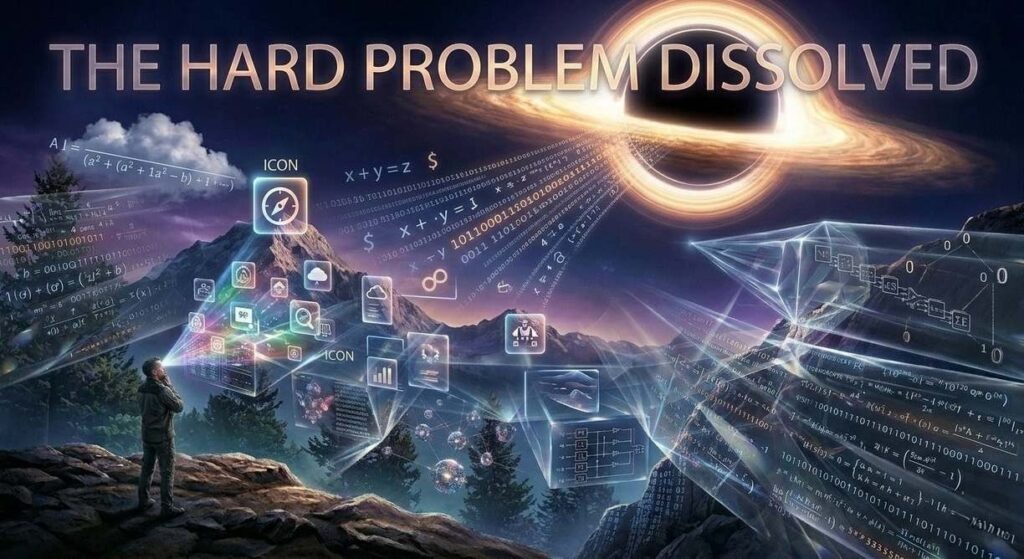
- The Hard Problem Dissolved
- The Interface Analogy: Desktop Metaphysics
- Mathematical Proof: The Fitness-Beats-Truth Theorem
- Virtual Reality: The Experimental Verification
- Consciousness as Fundamental: The Priority of Awareness
- The Crafted World: Interface Design and Archonic Structure
- Transcending the Interface: Gnosis as Meta-Awareness
- Living the Interface: Four Practices for Meta-Awareness
- The User and the Used: Mastery Through Recognition
- Frequently Asked Questions
- Further Reading
- References and Sources
The Hard Problem Dissolved
The interface theory of perception, developed by cognitive scientist Donald Hoffman at the University of California, Irvine, offers a radical alternative: consciousness is not emergent from matter, but functional–a user interface evolved (or designed) to guide behaviour in a complex world. We do not experience reality directly; we experience a simplified representation, a user interface generated by cognitive processes to facilitate effective action. The colours, sounds, textures, and emotions of our experience are not properties of objective reality, but icons on the desktop–useful representations that guide interaction without revealing the underlying code.
To recognise consciousness as interface is not to diminish experience, but to empower it: to understand how the interface works, how it can be optimised, and how it might be transcended.
This is not philosophical speculation. It is an empirically grounded theory supported by evolutionary modelling, mathematical proof, and experimental validation. And it resonates profoundly with ancient Gnostic understandings of consciousness as participatory, not passive–an active engagement with a crafted reality rather than transparent access to ultimate truth.
The Interface Analogy: Desktop Metaphysics
Consider your computer’s desktop. You see files, folders, icons, a trash bin. These appear solid, distinct, manipulable. You drag files to the trash; they disappear. You open folders; their contents display. The interface is transparent to use–you do not need to understand hard drive mechanics, file system architecture, or electrical engineering to operate effectively.
But the desktop is not the computer. It is a representation, generated by software, hiding the underlying complexity to enable efficient interaction. The trash bin icon is not a trash bin; it is a symbol triggering complex deletion routines. The file icon is not a file; it is a pointer to data stored in memory locations you never see. The colours and shapes are not properties of the data itself, but visual conventions designed for human recognition.
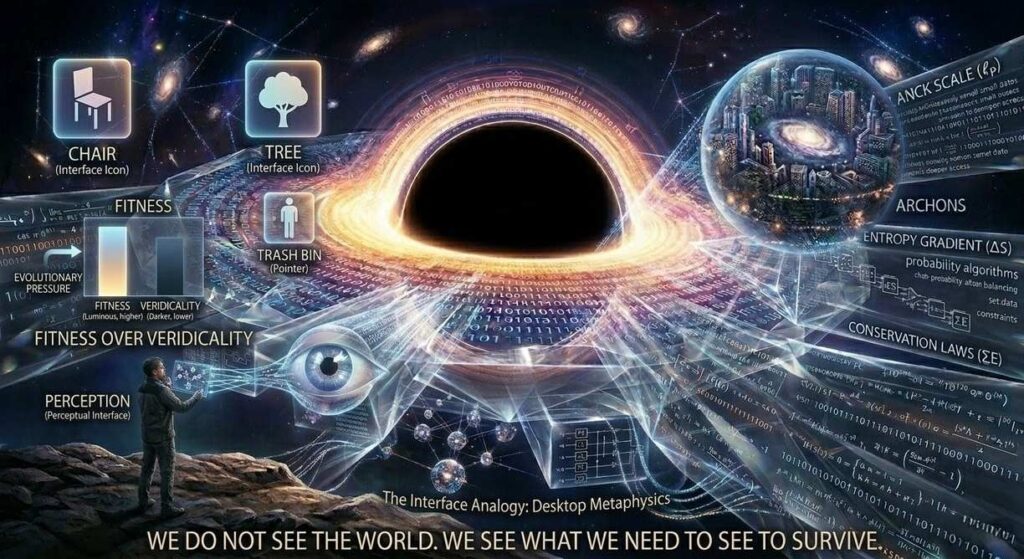
Hoffman’s radical claim, detailed in his book The Case Against Reality, is that perception is exactly analogous. The objects of our experience–chairs, trees, other people–are not the things themselves, but interface icons representing complex relational structures we never directly access. We do not see reality; we see a user interface evolved to keep us alive, not to reveal truth.
Evolutionary pressures favour fitness over veridicality. An organism that sees reality accurately but fails to act effectively dies. An organism that sees useful simplifications–predators as red, food as green, mates as attractive–survives and reproduces. Over evolutionary time, perception becomes increasingly non-veridical, optimised for utility rather than accuracy. The truth is computationally expensive; fitness is mandatory.
We do not see the world. We see what we need to see to survive in it.
Mathematical Proof: The Fitness-Beats-Truth Theorem
Hoffman and his collaborators, including mathematician Chetan Prakash, have developed rigorous mathematical models demonstrating that evolution almost never favours veridical perception. Using evolutionary game theory and agent-based modelling, they prove that simple perceptual strategies tuned to fitness functions routinely drive truth-tracking strategies to extinction.
The logic is straightforward: veridical perception is computationally prohibitive. Tracking reality accurately requires processing vast amounts of data, maintaining complex models, updating beliefs in real-time. Fitness-tuned perception is cheaper and more effective–it triggers appropriate behaviours with minimal processing, sacrificing accuracy for speed and efficiency.
In a competitive environment, the organism that sees the lion as “danger-icon” and flees immediately outcompetes the organism that analyses the lion’s musculature, estimates its speed, calculates escape probabilities, and then–too late–runs. Truth is a luxury; fitness is mandatory. Evolution selects for creatures that see survival cues, not truth.
This has profound implications for the reliability of perception. If our senses are tuned for fitness, not truth, then we have no reason to assume they reveal reality as it is. The solidity of objects, the continuity of time, the distinctness of self and world–all may be interface conventions, useful fictions rather than ontological facts. The red apple is not red; it is fitness-marked as edible. The solid wall is not solid; it is fitness-marked as impassable.
The Gnostic tradition long maintained that the senses deceive, that the material world is doxa (opinion/appearance) rather than episteme (knowledge). The interface theory provides contemporary scaffolding for this ancient insight: the deception is not malicious, but functional, the inevitable result of evolutionary optimisation for survival rather than understanding. The Archons are not demons; they are interface designers.
Virtual Reality: The Experimental Verification
Virtual reality (VR) technology offers an experimental testbed for interface theory. In VR, we know the world is simulated–we built it–yet we experience it as fully real. The virtual mountain appears solid; the virtual precipice induces vertigo; the virtual social encounter triggers genuine emotion. Representation generates experience, regardless of correspondence to external reality.
This demonstrates that consciousness does not require veridical input. The same neural processes that generate experience of the “real” world generate experience of virtual worlds. The difference is not in the mechanism of generation, but in our knowledge of the source. The brain renders; it does not merely reflect.
The interface theory suggests that this applies to all experience. The “real” world and the virtual world are both rendered outputs, generated by processes that remain hidden from direct inspection. We call one “reality” and the other “simulation” based on origin beliefs, not on phenomenal differences in the experience itself. Both are interfaces; only the provenance differs.
For the contemplative practitioner, this is liberating. If consciousness is interface, then experience is malleable, shaped by the parameters of rendering rather than fixed by external reality. The techniques of contemplative tradition–meditation, sensory withdrawal, breath control, psychedelic induction–may work by modifying interface parameters, changing how the world is rendered rather than changing the world itself.
The mystic who sees light where others see darkness, who experiences unity where others perceive division, may not be deluded. She may be running different interface settings, accessing rendering modes that standard perception excludes.
Consciousness as Fundamental: The Priority of Awareness
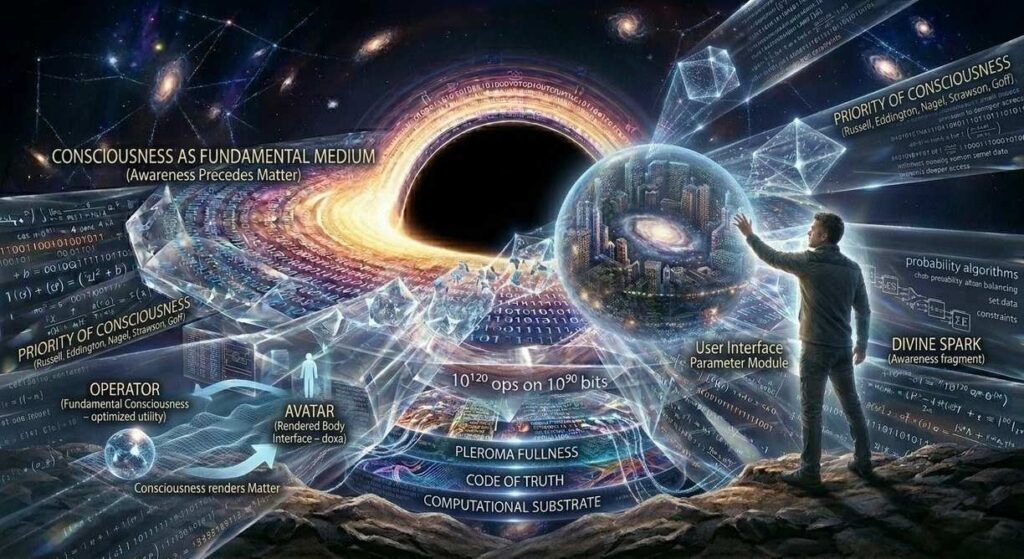
The interface theory dissolves the hard problem not by explaining how consciousness emerges from matter, but by denying that it does. Consciousness is not emergent; it is fundamental–the medium through which all experience occurs, including the experience of “matter.” We do not build interfaces out of matter; we render matter within the interface of consciousness.
This aligns with the priority of consciousness advocated by philosophers like Bertrand Russell and Arthur Eddington in the early 20th century, and developed more recently by Thomas Nagel, Galen Strawson, and Philip Goff in the “naturalistic dualism” and “panpsychism” traditions. On these views, consciousness is not a late-arising property of complex systems, but a basic feature of reality, present (in some form) at all levels of organisation.
The interface theory adds specificity: consciousness is not merely present, but functional–it operates as a user interface, rendering complex data into actionable experience. This explains both why consciousness exists (it enables effective interaction) and why it has the character it does (it is optimised for utility, not truth).
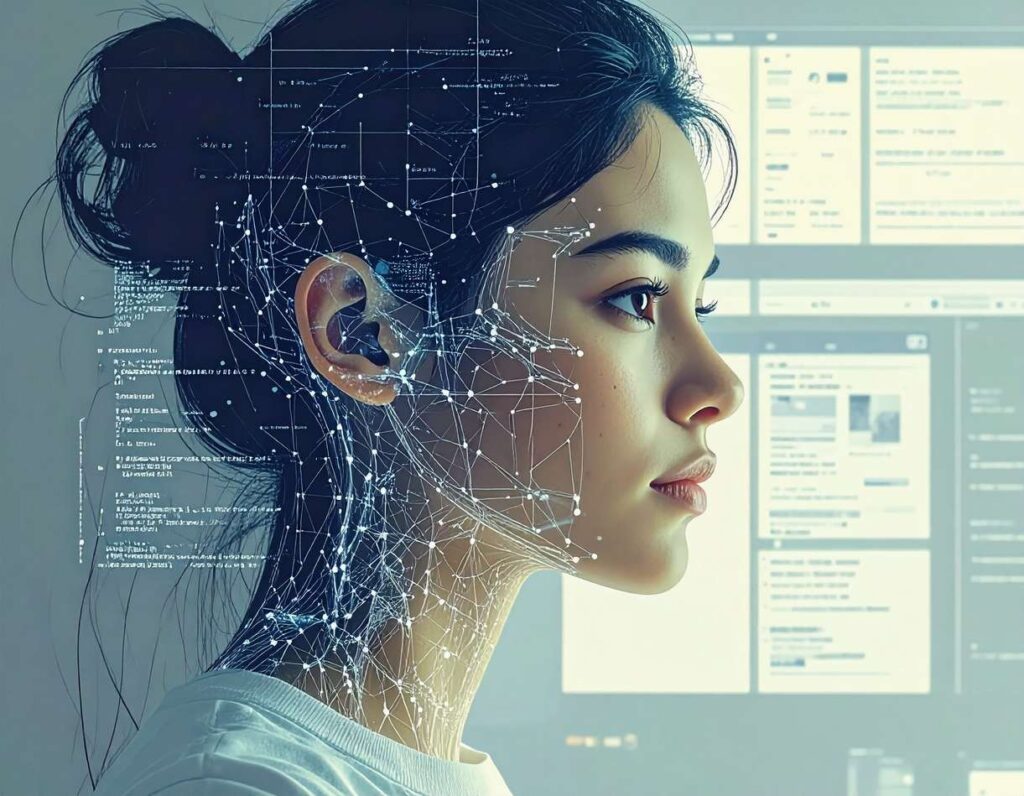
For the Gnostic, this recalls the teaching of the divine spark–consciousness as fragment of ultimate reality, temporarily inhabiting the material interface but not generated by it. The spark is not produced by the body; it uses the body, experiencing the crafted world through the senses while remaining essentially other. The recognition of this distinction–between the operator and the avatar, between the spark and the interface–is the foundation of liberatory knowledge.
The Crafted World: Interface Design and Archonic Structure
If consciousness is interface, then the world is crafted–not arbitrary, but designed (by evolution, by simulation programmers, by whatever generates our experiential parameters) to facilitate certain interactions while preventing others. The interface has affordances: it permits some actions, renders others impossible, guides behaviour through its design.
This is precisely the Gnostic understanding of the Archontic world–not a realm of pure illusion, but a designed environment with built-in constraints. The Archons are not demons in the moral sense; they are designers, bureaucrats of the cosmic order, shaping the interface to maintain certain patterns of engagement. The constraints are not punishments; they are features, preserving the stability of the system.
To recognise the crafted nature of the interface is to gain leverage. One can learn to work with the design, exploiting its features, finding its edge cases, identifying where the rendering permits flexibility. The contemplative traditions are interface manuals, developed over millennia by those who studied the parameters of consciousness and discovered techniques for modifying them.
The jhanas of Buddhist meditation, the states of unio mystica in Christian contemplation, the altered states of shamanic practice–these are not delusions or distractions, but interface modes, alternative renderings of reality accessible through specific technical operations.
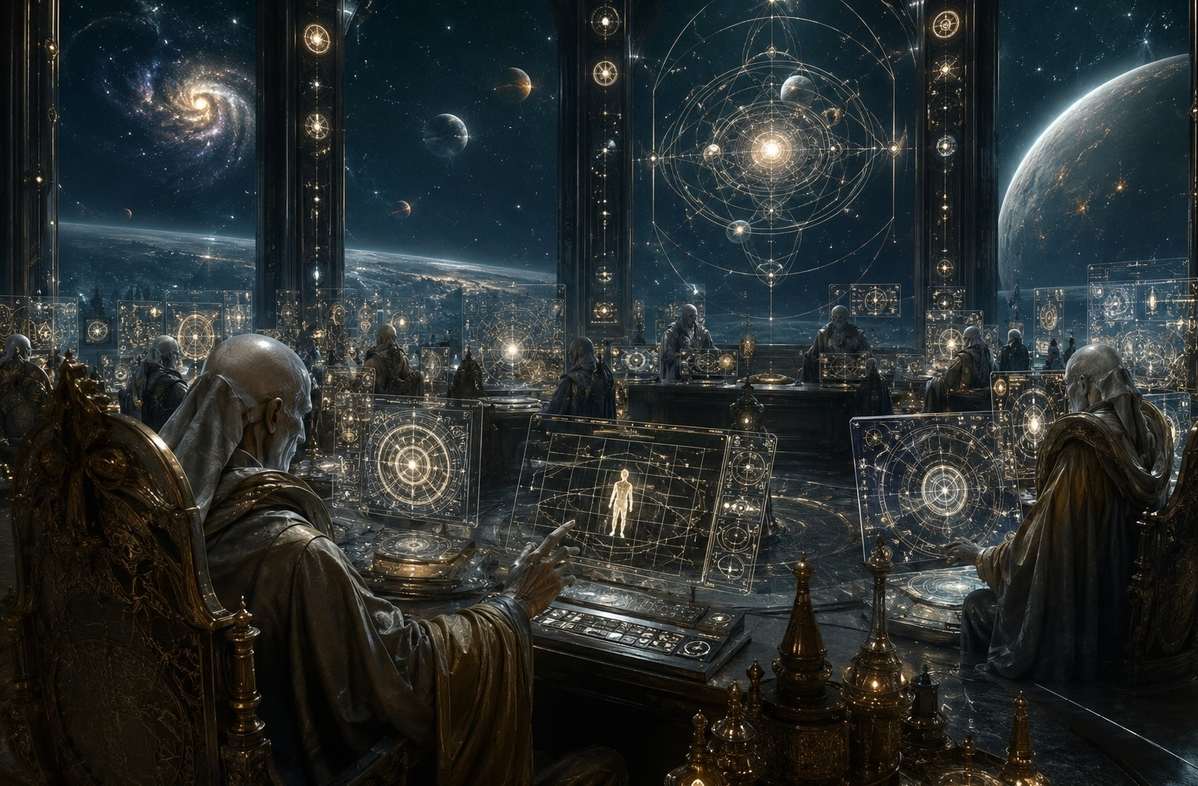
They demonstrate that the standard waking state is one configuration among many, not privileged access to “how things really are.” The Gnostic seeks not to escape the world, but to access developer mode–to recognise the interface as interface, and thereby gain freedom within its constraints.
Transcending the Interface: Gnosis as Meta-Awareness
If consciousness is interface, can it be transcended? Can one access the substrate beneath the rendering, the code behind the icons?
The Gnostic answer is yes, but with crucial nuance. Transcendence does not mean escaping the interface entirely–we remain embodied, sensory beings, dependent on the rendering for all experience. Rather, it means becoming aware of the interface as interface, recognising the representation while continuing to use it.
This is meta-awareness: consciousness recognising its own nature, the user interface displaying information about itself. The desktop reveals that it is a desktop; the icon indicates that it is an icon; the user learns to read the interface rather than merely being absorbed in its content.

In practical terms, this manifests as the contemplative stance: the capacity to experience fully while maintaining awareness that experience is representation. One sees the world, feels its weight and texture, engages its challenges and opportunities, yet simultaneously recognises that this seeing, feeling, engaging is interface operation, not direct access to reality-as-such.
This is not dissociation or withdrawal. It is enhanced engagement–participation with full knowledge of the game’s rules, the stage’s construction, the dream’s nature. The Gnostic does not reject the interface; she masters it, using its capabilities with understanding of its limitations.
Living the Interface: Four Practices for Meta-Awareness
How does one cultivate this meta-awareness? The interface theory suggests several technical approaches:
1. Study the Glitches
Interfaces reveal themselves through error–moments when the rendering fails, when the representation contradicts itself, when the expected coherence breaks down. These are not merely mistakes to be corrected, but signals of the interface nature of experience. Contemplative attention to anomaly–synchronicity, deja vu, dream-waking boundary dissolution, the Mandela Effect–trains recognition of the crafted nature of reality. The glitch is the interface showing its seams.
2. Experiment with Parameters
Contemplative techniques modify interface settings: breath control alters physiological state; sensory deprivation reduces input bandwidth; meditation changes attentional allocation; psychedelics modify rendering algorithms. Systematic experimentation reveals the malleability of experience, the degree to which “reality” responds to interface modification. The breath is not merely air; it is the control panel for consciousness.
3. Cultivate the Witness
The capacity to observe experience without complete absorption in it–the “witness consciousness” (sakshi) of Hindu and Buddhist traditions–may be interface self-monitoring, the system displaying its own operation. This is not separate from experience, but meta to it, aware of the representing while engaged in the representation. The witness is the user noticing the avatar.
4. Read the Code
If the interface is generated by information processing, then informational patterns–mathematics, logic, system dynamics, sacred geometry–provide indirect access to the substrate. The study of pattern, of structure, of the abstract relations beneath surface appearance, trains the capacity to recognise the generative principles behind the rendered world. The Pythagoreans understood: number is the language of the interface.
The User and the Used: Mastery Through Recognition
Consciousness as interface is not a diminishment but an empowerment. It suggests that experience is craftable, that the world is responsive, that the boundaries between self and reality are more permeable than standard perception suggests. The hard problem dissolves not because consciousness is explained away, but because it is recognised as fundamental–the medium of all knowing, including the knowing of itself as medium.
The Gnostic tradition spoke of the spark trapped in the hylic (material) nature, seeking return to the pleroma (fullness). The interface theory translates this: the user (consciousness, the spark) temporarily inhabits the avatar (the body, the interface), experiencing the rendered world (the material cosmos) while capable of recognising its nature as rendering. The return is not escape, but awakening within the game, full participation with full knowledge.
We are not passive spectators of reality. We are users, operating an interface of staggering sophistication, capable of learning its parameters, optimising its performance, and–perhaps–accessing modes of engagement beyond its standard configuration.
The question is not whether we can transcend the interface. The question is whether we can master it, turning the user experience of being into an instrument of direct knowing.

Frequently Asked Questions
What is the interface theory of perception?
The interface theory of perception, developed by cognitive scientist Donald Hoffman, proposes that consciousness does not provide direct access to objective reality. Instead, it functions like a computer desktop interface–presenting simplified icons and symbols that guide behaviour while hiding the underlying complexity. Just as a computer file icon represents complex data structures without revealing them, our perception of objects represents fitness-relevant information rather than objective truth. This explains why consciousness feels immediate and real while being, in fact, a constructed representation optimised for survival rather than veridical accuracy.
Does the interface theory mean reality is not real?
No. The interface theory does not claim that objective reality does not exist; it claims that our experience of reality is a representation, not the thing itself. Objective reality exists, but it is not what we experience. What we perceive as solid objects, colours, and time are interface conventions–useful fictions that guide behaviour. The theory suggests there is a reality independent of perception, but that our access to it is mediated through an evolved user interface that shows us what we need to survive, not what is ultimately true.
How does interface theory relate to virtual reality?
Virtual reality serves as a compelling demonstration for interface theory. In VR, we know the environment is simulated, yet we experience it as fully real–solid objects induce touch-avoidance, heights trigger vertigo, social encounters produce genuine emotion. This demonstrates that representation generates experience regardless of correspondence to external reality. Interface theory suggests that real reality operates similarly: both are rendered experiences, differing only in origin. VR reveals that consciousness is a reality-generating mechanism, not merely a reality-reflecting one.
What is the Fitness-Beats-Truth Theorem?
The Fitness-Beats-Truth Theorem is a mathematical proof developed by Donald Hoffman and Chetan Prakash using evolutionary game theory. It demonstrates that in competitive environments, perceptual strategies tuned to fitness functions (survival and reproduction) will always drive truth-tracking strategies to extinction. Veridical perception is computationally expensive, requiring vast resources to model reality accurately. Fitness-tuned perception is cheaper and faster, triggering appropriate behaviours without accurate representation. The theorem proves mathematically that evolution selects for useful perceptions, not true ones.
Can we perceive reality directly without the interface?
According to interface theory, direct perception of reality-as-such is impossible because consciousness is inherently representational. However, one can achieve meta-awareness–recognising the interface as interface while continuing to use it. This is the Gnostic goal of gnosis: not escaping the interface (which would require ceasing to be conscious), but mastering it. Contemplative practices such as meditation, sensory withdrawal, and breath control may modify interface parameters, accessing rendering modes that standard perception excludes. The mystic does not see unmediated reality, but operates the interface with awareness of its nature.
How does this theory connect to Gnosticism?
The interface theory provides scientific scaffolding for core Gnostic insights. The Gnostic distinction between the pneuma (spirit/spark) and the hylic (material) corresponds to the distinction between the user (consciousness) and the avatar (body). The Archontic world–the material cosmos as a designed constraint system–maps onto the interface with its built-in affordances and limitations. The Gnostic goal of gnosis (direct knowing) aligns with meta-awareness: recognising the interface as interface. Both traditions agree that the senses deceive not maliciously but functionally, and that liberation comes from understanding the constructed nature of experience.
Does interface theory prove we live in a simulation?
Interface theory is compatible with simulation hypothesis but does not require it. The programmer could be evolution, natural selection acting as a blind watchmaker to code the interface. However, the theory does suggest that reality is informational rather than material at its base–that the universe is constructed of data and relations rather than brute matter. This informational ontology aligns with both simulation hypothesis and idealist philosophies. Whether the interface is evolved or designed, the implication remains: reality is rendered, not simply observed.
Further Reading
Continue your exploration of consciousness, interface, and direct knowing with these verified resources from The Thread:
- Are We Living in a Simulation? 7 Profound Clues That Reality Might Be Code — Examining empirical evidence that our reality may be a computational construct.
- The Holographic Universe: Theory, Consciousness, and Reality — Digital physics and the informational substrate beneath the experienced world.
- States of Knowing: What Happens When Consciousness No Longer Belongs to You — The foundational pillar exploring non-ordinary states of awareness.
- The Transformation: What Actually Changes After Mystical Experience — How direct knowing restructures perception, identity, and engagement with the world.
- The Gateway of Breath: Pranayama as Interface Modification — Practical techniques for altering the parameters of consciousness.
- The Gnostic Theory of Consciousness: A Psychological Analysis — The triune model of awareness and the psychological framework for Gnostic insight.
- The Quantum Mind in 2026: New Evidence That Consciousness Is Fundamental — Scientific research supporting the interface model of awareness.
- The Entity-Simulation Hypothesis: Digital Architecture and Non-Physical Beings — Examining how predatory entities may exploit simulation vulnerabilities.
- The Gnostic Matrix — Simulation theory restated through Gnostic cosmology and the red pill as awakening.
- Nag Hammadi Library: The Complete Reader’s Guide — The definitive hub for exploring the primary sources of Gnostic cosmology.
References and Sources
The following sources represent the primary texts, scholarly editions, and contemporary studies that inform this analysis of consciousness as interface and its Gnostic resonances.
Primary Sources and Foundational Papers
- Chalmers, David J. (1995). “Facing Up to the Problem of Consciousness.” Journal of Consciousness Studies, 2(3), 200-219.
- Hoffman, Donald D. (2009). “The Interface Theory of Perception.” In The Oxford Handbook of Philosophy of Perception, edited by Mohan Matthen. Oxford: Oxford University Press.
- Hoffman, Donald D., Singh, Manish, & Prakash, Chetan (2015). “The Interface Theory of Perception.” Psychonomic Bulletin & Review, 22(6), 1480-1506.
- Prakash, Chetan, Stephens, Kyle D., Hoffman, Donald D., Singh, Manish, & Fields, Chris (2020/2021). “Fitness Beats Truth in the Evolution of Perception.” Acta Biotheoretica, 69(3), 319-341.
Books and Monographs
- Chalmers, David J. (1996). The Conscious Mind: In Search of a Fundamental Theory. New York: Oxford University Press.
- Hoffman, Donald D. (2019). The Case Against Reality: Why Evolution Hid the Truth from Our Eyes. New York: W.W. Norton.
- Nagel, Thomas (1974). “What Is It Like to Be a Bat?” The Philosophical Review, 83(4), 435-450.
- Russell, Bertrand (1927). The Analysis of Matter. London: Kegan Paul, Trench, Trubner.
- Strawson, Galen (2006). “Realistic Monism: Why Physicalism Entails Panpsychism.” Journal of Consciousness Studies, 13(10-11), 3-31.
Contemporary Studies and Analysis
- Goff, Philip (2019). Galileo’s Error: Foundations for a New Science of Consciousness. New York: Pantheon Books.
- Koenderink, Jan (2011). “Vision as a User Interface.” Perception, 40(4), 393-395.
- Singh, Manish, & Hoffman, Donald D. (2013). “Natural Selection and Shape Perception: Evolution of a New Model.” Journal of Vision, 13(9), 1021.
Safety Notice: This article explores systems of perceptual, philosophical, and psychological inquiry. It does not constitute medical, psychological, or spiritual advice. If you experience distress related to depersonalisation, derealisation, existential crisis, or spiritual emergency, please contact professional emergency services or a trauma-informed therapist. Critical analysis of consciousness and perception complements but does not replace clinical mental health treatment. Discernment, not dissociation, is the intended outcome of interface recognition.