Codex II: The Crown Jewels of Nag Hammadi
The Nag Hammadi Codex II (NHC II) represents the most strategically important volume in the entire library — a curated collection of seven tractates that function as the gateway to Gnostic thought for scholars and seekers alike. If you read only one codex from the Nag Hammadi Library, make it this one. Discovered in the original 1945 find near Nag Hammadi, Egypt, Codex II was the first to be examined by scholars and the first to reveal the magnitude of what Muhammad Ali al-Samman had unearthed from the desert cliffs [1]. Its seven tractates represent a cross-section of second-to-fourth-century Christian diversity: Sethian cosmology, sayings collections, Valentinian sacramental theology, and Platonic psychological allegory. This is not a specialised archive for the advanced practitioner with appropriate security clearance. This is the public entrance — the lobby through which all visitors must pass before ascending to the more technical departments above [2].
Unlike the specialised technical manuals of Codex VII (Zostrianos, Paraphrase of Shem) or the fragmentary remains of Codex XII, Codex II presents a complete, coherent curriculum designed for both initiates and newcomers. The texts speak to one another across the codex, creating an internal conversation between Sethian and Valentinian currents, between mythological narrative and practical wisdom, between cosmic speculation and intimate sacramental experience. In the administrative architecture of the Nag Hammadi collection, Codex II serves as the orientation briefing — the comprehensive introduction that equips the reader with the conceptual tools necessary for navigating the more obscure materials elsewhere in the library [3].
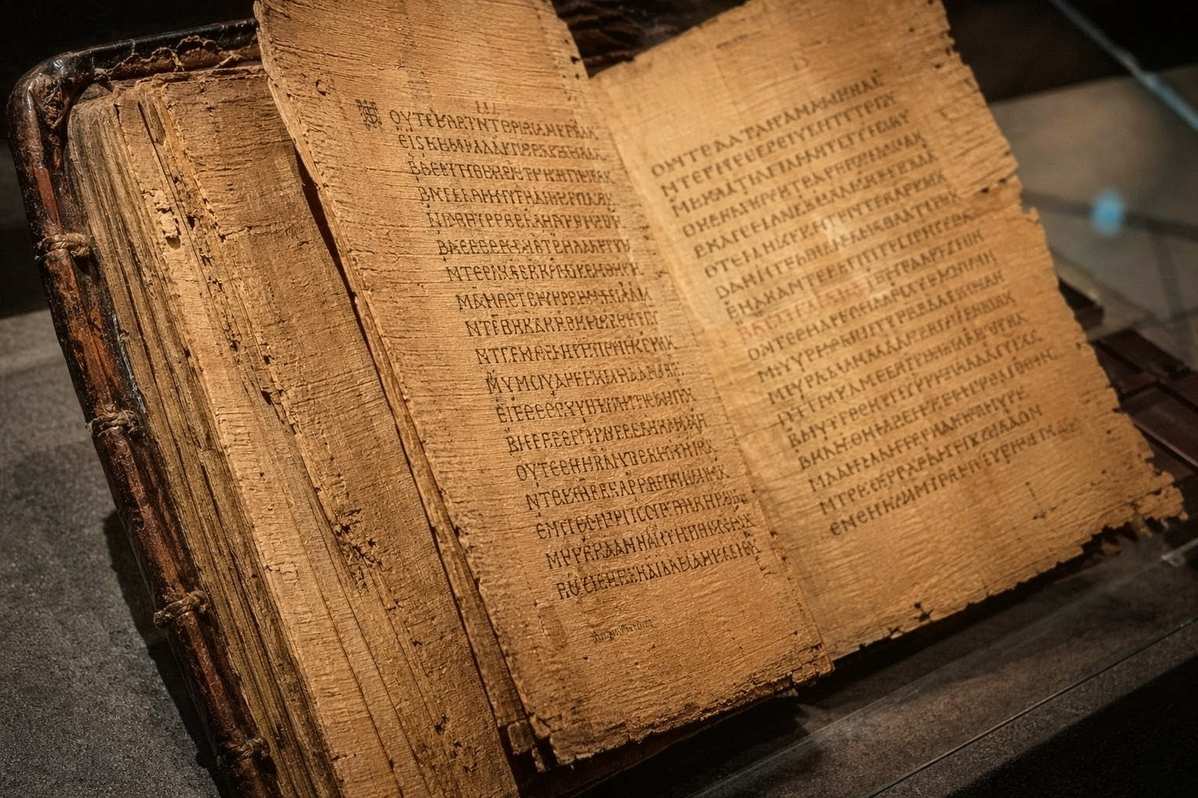
Table of Contents
- What Is Nag Hammadi Codex II?
- The Manuscript and Its Discovery
- The Seven Tractates of Codex II
- Apocryphon of John
- Gospel of Thomas
- Gospel of Philip
- Hypostasis of the Archons
- On the Origin of the World
- Exegesis on the Soul
- Book of Thomas the Contender
- Reading Codex II: A Guided Approach
- Why Codex II Matters
- Frequently Asked Questions
- Further Reading
- References and Sources
What Is Nag Hammadi Codex II?
Nag Hammadi Codex II Defined
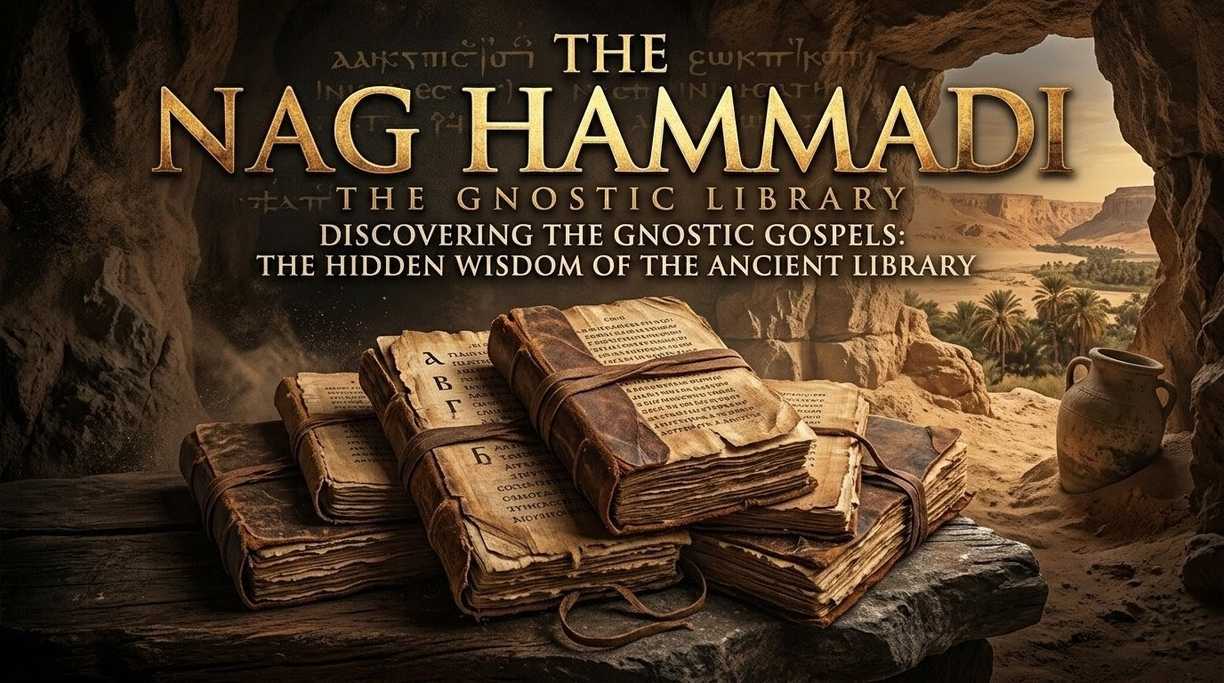
Nag Hammadi Codex II (NHC II) is the second codex of the Nag Hammadi Library, discovered in December 1945 near Nag Hammadi, Egypt. Bound in leather with papyrus pages, it contains seven tractates representing a cross-section of second-to-fourth-century Gnostic and related traditions: the Apocryphon of John (Sethian cosmology), the Gospel of Thomas (sayings collection), the Gospel of Philip (Valentinian sacramental theology), the Hypostasis of the Archons (Sethian creation myth), On the Origin of the World (cosmogony), the Exegesis on the Soul (Platonic allegory), and the Book of Thomas the Contender (ascetic dialogue). It was the first codex examined by scholars after the 1945 discovery and remains the most influential volume in the collection [1].
Codicological designation: NHC II; Discovery: December 1945, Jabal al-Tarif, Egypt; Material: Leather-bound papyrus codex; Language: Coptic (Sahidic dialect).
The Manuscript and Its Discovery
The 1945 Unearthing
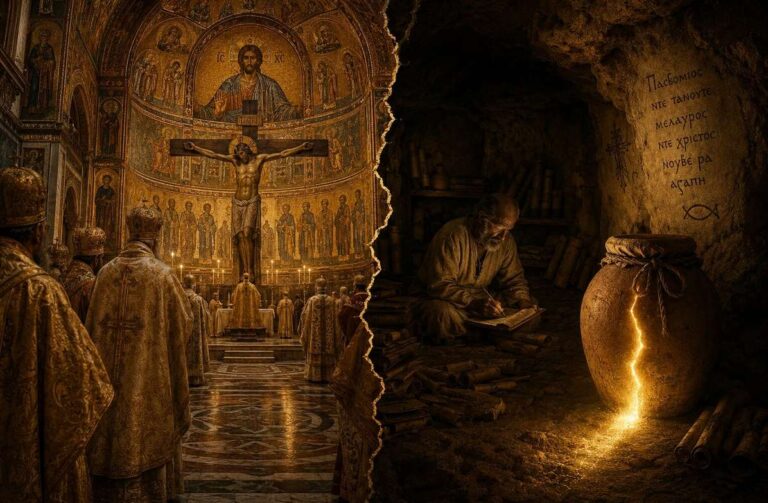
Codex II was discovered on 16 December 1945 by Muhammad Ali al-Samman and his brothers, who were digging for fertiliser near the base of the Jabal al-Tarif cliff face. The jar containing the codices had been buried in the mid-to-late fourth century CE, likely by monks from the nearby Pachomian monastery of St. Pachomius seeking to protect these texts from destruction during an anti-heretical purge [4]. Codex II emerged intact — its leather binding preserved by the desert climate, its papyrus pages still legible after sixteen centuries of subterranean storage. The codex was subsequently acquired by the Coptic Museum in Cairo, where it remains one of the most frequently consulted manuscripts in the collection.
Primary Source Citation: NHC II codicological data: The codex measures approximately 29 x 16 cm, containing 154 pages (77 leaves) of papyrus. The tractates appear in the following order: Apocryphon of John (pages 1-32), Gospel of Thomas (pages 32-51), Gospel of Philip (pages 51-76), Hypostasis of the Archons (pages 76-97), On the Origin of the World (pages 97-127), Exegesis on the Soul (pages 127-137), Book of Thomas the Contender (pages 138-153) [1].
Codicological Significance
From a codicological perspective, Codex II is remarkable for its physical completeness and the diversity of its contents. The scribe employed a professional hand, suggesting commercial production rather than amateur copying. The codex contains no colophons or scribal signatures, leaving the copyist anonymous — an administrative ghost who assembled this collection without leaving a personnel record [4]. The arrangement of texts suggests deliberate curation rather than random accumulation: the three Sethian cosmologies (Apocryphon of John, Hypostasis of the Archons, On the Origin of the World) are separated by the sayings collections and the Valentinian material, creating a rhythm between narrative and instruction, myth and practice.
The presence of both Sethian and Valentinian texts in a single codex challenges older scholarly assumptions that these traditions were rigidly separated into hostile camps. Instead, Codex II suggests a community — or at least a library — that valued diverse approaches to the same fundamental questions: the origin of the world, the nature of the divine, the path to salvation, and the role of secret knowledge in human liberation [5].
The Seven Tractates of Codex II
The seven tractates of Codex II represent the full spectrum of Gnostic literary production — from cosmic myth to intimate dialogue, from public proclamation to secret sacrament. Each text offers a different entry point into the same underlying vision: that the visible world is not the ultimate reality, that human beings carry a divine spark requiring recognition, and that salvation comes through knowledge rather than obedience to conventional religious protocols [2].
1. Apocryphon (Secret Book) of John
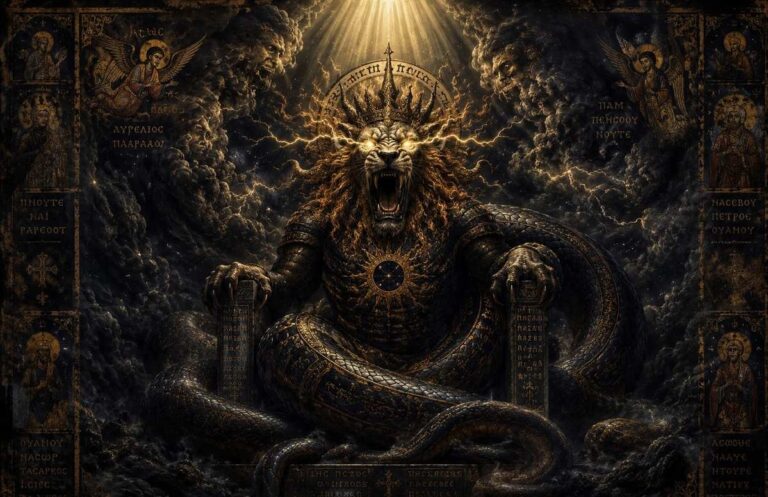
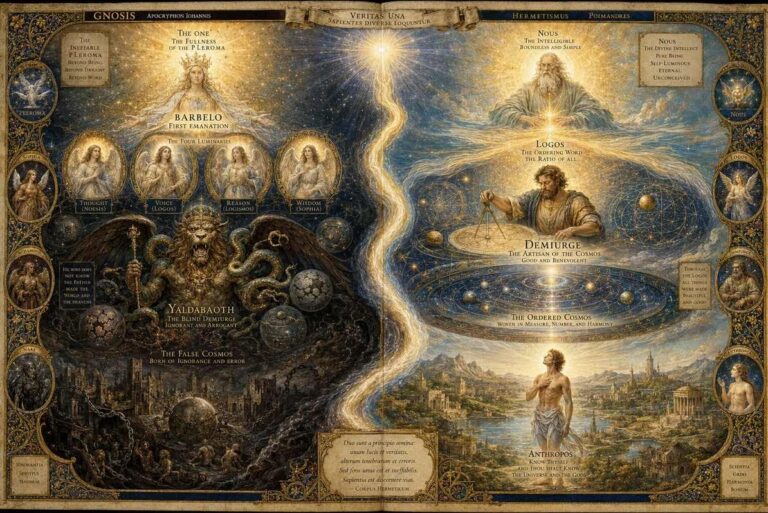
The Apocryphon of John (NHC II,1) stands as the most complete surviving version of the Sethian cosmological system — the text that launched a thousand dissertations and established the scholarly framework for understanding “Gnostic” mythology [6]. Presented as secret teaching revealed by Jesus to John son of Zebedee after the resurrection, the text narrates the fall of Sophia (Divine Wisdom), the birth of the demiurge Yaldabaoth (“lion-faced, serpent-eyed, with eyebrows of lightning”), the creation of Adam as a prison for the divine spark, and the archontic scheme to keep humanity ignorant of its true nature [4].
The text exists in three versions at Nag Hammadi (NHC II,1; III,1; IV,1), with the Codex II version representing the longest and most complete recension. Its theological architecture is elaborate: the transcendent Father, the First Thought (Protennoia), the aeonic Pleroma, Sophia’s error, the demiurgic birth, the creation of psychic and material humanity, and the saviour’s descent to awaken the sleeping spark. This is not casual reading. It is dense, symbolic, and absolutely foundational — the executive headquarters blueprint from which all other Sethian texts derive their local branch-office operations [6].
Primary Source Citation: NHC II,1 10:15-20: “Now the archon who is weak has three names. The first name is Yaldabaoth, the second is Saklas, and the third is Samael. And he is impious in his arrogance which is in him. For he said, ‘I am God and there is no other God beside me,’ for he is ignorant of his strength, the place from which he had come.” [1]
2. Gospel of Thomas
Perhaps the most famous text in the entire library — 114 sayings of Jesus, stripped of narrative framework, demanding interpretation rather than belief. “These are the secret sayings which the living Jesus spoke and which Didymos Judas Thomas wrote down” (NHC II,2 32:1-10) [7]. Thomas is the anti-gospel: no miracles, no passion, no resurrection narrative. Just raw sayings, many parallel to the canonical gospels but with crucial differences in emphasis that reveal an independent trajectory of early Christian wisdom [3].
The kingdom is not a future event but a present reality: “The kingdom is inside of you, and it is outside of you” (Saying 3). Salvation comes through self-knowledge: “When you come to know yourselves, then you will become known” (Saying 3). The text addresses the reader as a capable interpreter, not as a passive recipient of institutional doctrine. In the curatorial logic of Codex II, Thomas serves as the accessible entry point — the public-facing document that introduces the uninitiated to the possibility of direct knowledge before they encounter the more technical cosmological materials [7].
3. Gospel of Philip
The Gospel of Philip (NHC II,3) offers a Valentinian collection of sayings, meditations, and theological reflections on sacraments, resurrection, and the bridal chamber (nymphōn). More explicitly theological than Thomas, more concerned with ritual and community, and more frankly erotic in its mystical language, Philip represents a different spiritual temperament — one that finds the divine not in solitary self-knowledge but in the sacramental union of opposites [8].
“The Lord did everything in a mystery, a baptism and a chrism and a eucharist and a redemption and a bridal chamber” (NHC II,3 69:1-5). The bridal chamber — nymphōn — appears as the highest sacrament, the mystical union that transcends physical sexuality while incorporating its intensity. “Great is the mystery of marriage! For without it, the world would not exist” (NHC II,3 76:1-3). Philip rewards slow reading. Its fragments cohere not into narrative but into atmosphere — the atmosphere of a community that experienced Christianity as secret knowledge and mystical union, a community with its own liturgical calendar and its own internal hierarchy of initiation [8].
Primary Source Citation: NHC II,3 69:1-5: “The Lord did everything in a mystery, a baptism and a chrism and a eucharist and a redemption and a bridal chamber.” [1]
4. Hypostasis of the Archons (Reality of the Rulers)
The Hypostasis of the Archons (NHC II,4) presents another Sethian creation myth, overlapping with the Apocryphon of John but with distinctive features — particularly its treatment of Eve as the vehicle of divine instruction and its detailed description of the archons’ cosmic prison [9]. The title refers to the “reality” or “substance” (hypostasis) of the archons — the cosmic rulers who govern the material world with the petty diligence of middle-management functionaries enforcing regulations they did not write [2].
Here we find the famous scene where the archons see a reflection of the divine realm in the waters below and attempt to create a human being in that image, only to produce a crawling worm. The text is more narrative-driven than Apocryphon of John, more accessible in its storytelling, and equally profound in its theological implications. Eve emerges as the true instructor of Adam, the serpent as a messenger of divine knowledge, and the archons as ultimately impotent despite their bureaucratic pretensions to total control [9].
5. On the Origin of the World
On the Origin of the World (NHC II,5) is a sophisticated cosmogony that synthesises biblical, Greek, and Egyptian material into a comprehensive account of how the universe came to be, why it is flawed, and how it will be redeemed [10]. The text features a prominent role for Sophia and includes an apocalyptic prediction of the archons’ eventual defeat — their cosmic administration dismantled, their personnel files destroyed, their jurisdiction revoked by higher authority [2].
Origin of the World is notable for its literary polish and its integration of astrological material. It represents a later stage of Sethian development, more syncretistic, more philosophically ambitious. The text is long — one of the most substantial in the library — and rewards sustained attention. Its opening lines establish the theme: “Since everyone, the gods of the world and mankind, declares that nothing existed prior to chaos, I shall demonstrate that they are all mistaken” (NHC II,5 97:1-5) [10]. This is counter-intelligence at its most audacious: a direct refutation of the official creation story, filed as a classified alternative to the public record.
Primary Source Citation: NHC II,5 97:1-5: “Since everyone, the gods of the world and mankind, declares that nothing existed prior to chaos, I shall demonstrate that they are all mistaken, that they who say this are themselves mistaken.” [1]
6. Exegesis on the Soul
The Exegesis on the Soul (NHC II,6) offers an allegory of the soul’s descent into matter and return to God, told through the metaphor of a woman who falls into prostitution, remembers her true identity, and returns to her father’s house [11]. The text draws on Platonic psychology and Jewish-Christian biblical interpretation to construct a narrative of fall and restoration that is simultaneously individual and cosmic — the personal personnel file mirroring the universal administrative record [2].
“The soul is a precious thing; she came from a precious place” (NHC II,6 127:1-3). The Exegesis is more accessible than the Sethian cosmologies, more immediately applicable to personal spiritual experience. It represents a different strand of Gnostic tradition — less concerned with elaborate mythological systems, more focused on the individual’s relationship with the divine. The text employs the biblical metaphor of Israel’s adultery and restoration (Jeremiah, Ezekiel, Hosea) while reinterpreting it through Platonic dualism: the soul’s fall is not moral failure but ontological forgetting, and her return is not repentance but anamnesis — the recovery of her true status [11].
7. Book of Thomas the Contender
The Book of Thomas the Contender (NHC II,7) presents a dialogue between Jesus and Judas Thomas, written as secret teaching for “those who are worthy” [12]. The text emphasises asceticism, the rejection of the flesh, and the soul’s ascent through knowledge. It is more dualistic than Thomas or Philip, more world-negating, more concerned with the “bitterness” of material existence — the hard-line position in the spectrum of Codex II anthropologies [3].
“Woe to you who hope in the flesh and in the prison that will perish!” (NHC II,7 138:1-3). The Book of Thomas represents a more severe strand of early Christian spirituality — valuable for understanding the range of perspectives in the library, but potentially challenging for readers seeking a more embodied theology. Its placement at the end of Codex II may be deliberate: after the accessible sayings, the sacramental theology, and the psychological allegory, the codex closes with a stern reminder that the material world is, ultimately, a temporary detention facility from which the wise seek early release [12].
Reading Codex II: A Guided Approach
Codex II is not a random assortment but a curated collection. The ancient editors — whoever bound these seven texts together — seem to have intended a progression from accessible to technical, from public to secret, from the sayings that anyone might ponder to the cosmologies that require dedicated study [5]. Modern readers can follow several paths through this material depending on their interests and prior familiarity with Gnostic traditions.
For Newcomers
Start with the Gospel of Thomas (immediate, accessible, requiring no background in Gnostic mythology). Move next to the Gospel of Philip (deeper sacramental theology, more explicitly Valentinian, introducing the concept of mystical union). Then approach the Apocryphon of John (foundational cosmology, the Sethian system in its most complete form). This path builds from the concrete to the abstract, from personal practice to cosmic speculation, ensuring that the reader has a experiential anchor before encountering the elaborate mythological superstructure [3].
For Systematic Study
Begin with the Apocryphon of John (the Sethian system in full), then read the Hypostasis of the Archons and On the Origin of the World (variations on the same cosmological theme, showing how Sethian myth developed and diversified). Then turn to Thomas and Philip (alternative approaches that do not rely on elaborate mythology). Finally, read the Exegesis on the Soul and the Book of Thomas the Contender (psychological allegory and ascetic teaching that apply the cosmological insights to individual life). This path treats the codex as a theological curriculum, moving from theory to practice [2].
For Thematic Exploration
Compare the two Thomas texts — the Gospel of Thomas and the Book of Thomas the Contender — to see how the same apostolic figure became associated with radically different theologies: one affirming direct knowledge through self-recognition, the other demanding ascetic rejection of the flesh. Contrast the three creation myths — Apocryphon of John, Hypostasis of the Archons, and On the Origin of the World — to understand Sethian diversity: three different accounts of the same cosmic events, each with distinctive emphases and narrative strategies [5].
Why Codex II Matters
This codex contains the texts that have most influenced contemporary understanding of Gnosticism. When scholars talk about “the Gnostic worldview,” they are usually summarising material from Codex II. When modern seekers encounter Gnosticism for the first time, they usually encounter Thomas or Philip or Apocryphon of John — the gateway drugs that open the door to the more specialised materials elsewhere in the library [13].
But Codex II is not merely a greatest-hits compilation. The arrangement of texts suggests deliberate curation — perhaps by a community that valued both the Sethian cosmological perspective and the more practical wisdom of the sayings gospels. The codex represents a moment in religious history when multiple approaches coexisted, cross-fertilised, and enriched each other before the orthodox consolidation of the fourth and fifth centuries imposed a single filing system upon Christian diversity [14].
To read Codex II is to enter that moment. The texts speak to each other across the centuries, offering not a single doctrine but a conversation — a conversation that continues, remarkably, in our own time. The archons may have thought they buried these texts permanently when they sealed the jar at Jabal al-Tarif. Instead, they merely filed them for later review — a review that has now been underway for nearly eighty years and shows no sign of concluding [2].

Frequently Asked Questions
What is Nag Hammadi Codex II?
Nag Hammadi Codex II (NHC II) is the second codex of the Nag Hammadi Library, discovered in 1945 in Egypt. It contains seven tractates including the Apocryphon of John, Gospel of Thomas, Gospel of Philip, Hypostasis of the Archons, On the Origin of the World, Exegesis on the Soul, and Book of Thomas the Contender. It is considered the most accessible and influential codex in the library.
When was Codex II discovered?
Codex II was discovered on 16 December 1945 by Muhammad Ali al-Samman and his brothers near the Jabal al-Tarif cliff face in Upper Egypt. It was the first codex examined by scholars after the discovery and remains the most complete and best-preserved volume in the collection.
What texts are in Nag Hammadi Codex II?
Codex II contains seven tractates: (1) Apocryphon of John — Sethian creation myth; (2) Gospel of Thomas — 114 sayings of Jesus; (3) Gospel of Philip — Valentinian sacramental theology; (4) Hypostasis of the Archons — Sethian narrative; (5) On the Origin of the World — cosmogony; (6) Exegesis on the Soul — Platonic allegory; (7) Book of Thomas the Contender — ascetic dialogue.
Is the Gospel of Thomas in Codex II?
Yes, the Gospel of Thomas (NHC II,2) appears as the second tractate in Codex II, immediately after the Apocryphon of John. It contains 114 sayings attributed to Jesus and is the most famous text in the Nag Hammadi Library. Its placement suggests the ancient curators intended it as an accessible entry point for readers.
What is the Apocryphon of John?
The Apocryphon of John (NHC II,1) is the classic Gnostic creation myth presented as secret teaching from Jesus to John. It narrates Sophia’s fall, the birth of the demiurge Yaldabaoth, the creation of Adam, and the divine spark trapped in material existence. It is the most complete surviving version of Sethian cosmology.
How should beginners read Codex II?
Beginners should start with the Gospel of Thomas (accessible sayings), then move to the Gospel of Philip (sacramental theology), and finally approach the Apocryphon of John (foundational cosmology). This builds from concrete practice to abstract speculation. Alternatively, systematic students may begin with the Apocryphon of John and read the three Sethian texts first.
Why is Codex II the most important Nag Hammadi codex?
Codex II is the most important because it contains the library’s most influential texts (Thomas, Philip, Apocryphon of John) in a complete, well-preserved state. Its diversity — Sethian, Valentinian, sayings collections — makes it a microcosm of early Christian diversity and the standard entry point for scholarly and popular engagement with Gnosticism.
Further Reading
These links connect Codex II to related resources within the ZenithEye library, offering contexts from individual tractates to thematic collections.
- Apocryphon of John: Gnostic Creation Myth — The complete commentary on the Sethian cosmological system that opens Codex II.
- The Gospel of Thomas — The famous sayings collection, the accessible entry point within the codex.
- Gospel of Philip: Sacrament and Eros — The Valentinian sacramental theology that complements Thomas’s wisdom sayings.
- Hypostasis of the Archons — The Sethian narrative of cosmic rulers and divine instruction through Eve.
- On the Origin of the World — The cosmogony that synthesises biblical, Greek, and Egyptian material.
- Exegesis on the Soul — The Platonic allegory of descent and restoration within Codex II.
- Book of Thomas the Contender — The ascetic dialogue that closes the codex with its stern rejection of the flesh.
- Nag Hammadi Library: Complete Reader’s Guide — The master index for navigating all forty-six tractates across thirteen codices.
- Sayings Gospels in Nag Hammadi — Thomas, Philip, and the broader wisdom tradition of early Christian literary diversity.
- Creation Myths in Nag Hammadi — The three Sethian cosmologies of Codex II placed within the library’s broader mythological landscape.
References and Sources
The following sources support the claims and quotations presented in this article. All citations to the Nag Hammadi Library represent direct translations from the Coptic text as established in the standard critical editions.
Primary Sources and Critical Editions
- [1] Robinson, J.M. (Ed.). (1990). The Nag Hammadi Library in English (3rd rev. ed.). HarperSanFrancisco. [Standard critical edition of Codex II with Coptic text references]
- [2] Layton, B. (1987). The Gnostic Scriptures: A New Translation with Annotations and Introductions. Doubleday. [Annotated translations of all seven Codex II tractates with theological analysis]
- [3] Meyer, M.W. (Ed.). (2007). The Nag Hammadi Scriptures: The International Edition. HarperOne. [Contemporary accessible translations of Codex II texts with scholarly introductions]
- [4] Attridge, H.W. (Ed.). (1985). Nag Hammadi Codex II,2-7: Volume 1. Brill. [Critical edition of the Coptic text with codicological analysis]
- [5] Plisch, U.-K. (2008). The Gospel of Thomas: Original Text with Commentary. De Gruyter. [Critical edition with detailed philological analysis of the sayings tradition]
Scholarly Monographs and Commentaries
- [6] Waldstein, M., & Wisse, F. (1995). The Apocryphon of John: Synopsis of Nag Hammadi Codices II,1; III,1; and IV,1 with BG 8502,2. Brill. [Critical synopsis of the three versions with commentary on Sethian cosmology]
- [7] Patterson, S.J., Robinson, J.M., & Bethge, H.-G. (1998). The Fifth Gospel: The Gospel of Thomas Comes of Age. Trinity Press International. [Comprehensive assessment of Thomas’s place in early Christianity]
- [8] Isenberg, W.W. (1977). The Gospel of Philip. In J.M. Robinson (Ed.), The Nag Hammadi Library in English. Harper & Row. [Standard English translation with Valentinian sacramental analysis]
- [9] Bullard, R.A. (1970). The Hypostasis of the Archons: The Coptic Text with Translation and Commentary. De Gruyter. [Critical edition with detailed commentary on the archontic narrative]
- [10] Painchaud, L. (1995). L’Ecrit sans titre: Traite sur l’origine du monde. Presses de l’Universite Laval. [Critical edition and commentary on the cosmogony]
Comparative Studies and Thematic Analyses
- [11] Scopello, M. (1985). L’Exegese de l’ame: Nag Hammadi Codex II,6. Brill. [Critical edition and commentary on the Platonic allegory]
- [12] Turner, J.D. (1992). The Book of Thomas the Contender from Codex II of the Cairo Gnostic Library from Nag Hammadi (MS). SBL. [Critical edition with analysis of the ascetic dialogue]
- [13] Pagels, E. (1979). The Gnostic Gospels. Random House. [Foundational study of Nag Hammadi texts and their significance for early Christian diversity]
- [14] King, K.L. (2006). The Secret Revelation of John. Harvard University Press. [Comprehensive commentary on the Apocryphon of John and its theological implications]
- [15] Williams, M.A. (1996). Rethinking “Gnosticism”: An Argument for Dismantling a Dubious Category. Princeton University Press. [Critical historiography relevant to the classification of Codex II materials]