Paraphrase of Shem: Noetic Baptism and the Three Natures
The Paraphrase of Shem (NHC VII,1)—also transmitted under the title The Revelation to Shem—stands as one of the most theologically distinctive dossiers within the Nag Hammadi Library’s Codex VII. This apocalyptic revelation discourse, addressed to Shem son of Noah, presents a unique tripartite cosmology involving Darkness, Light, and Spirit as the three fundamental natures of existence, and advances a soteriology centred upon noetic baptism—the baptism of the mind that supersedes and abolishes the water rites practised by conventional religious jurisdictions.
Despite its biblical framing, the text bears minimal resemblance to Genesis narratives concerning Shem. The “paraphrase” of the title refers to the radical reinterpretation of scriptural and traditional materials within a Gnostic framework—a process of translating established administrative documents into the classified terminology of the three natures. The text operates as a revelation discourse presenting secret intelligence regarding the nature of reality and the protocols for liberation from the dark jurisdiction, delivered by a revealer figure who speaks as the eternal Mind and Light rather than any historical personality.
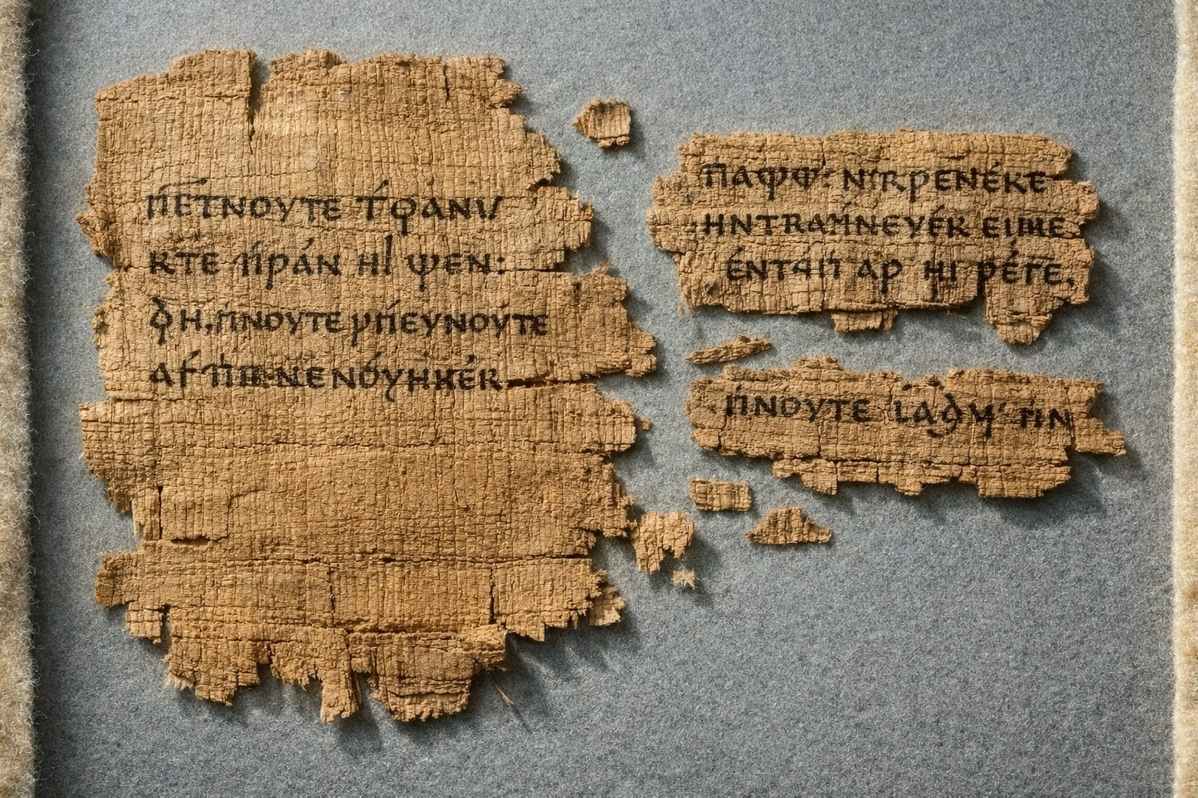
Table of Contents
- What is the Paraphrase of Shem?
- The Three Natures: Darkness, Spirit, and Light
- Noetic Baptism: The Interior Sacrament
- The Cosmic Drama of Extension and Return
- The Revealer as Mind and Light
- Eschatological Dissolution and Restoration
- Comparative Context: Distinctive Trajectories
- Contemporary Relevance: Consciousness Transformation
- Frequently Asked Questions
- Further Reading
- References and Sources
What is the Paraphrase of Shem?
The Revelation Defined
The Paraphrase of Shem (also known as The Revelation to Shem, NHC VII,1) is a Coptic Gnostic apocalypse from the Nag Hammadi Library. Dating to the late second or early third century CE, this text presents a revelation discourse attributed to Shem, son of Noah, featuring a distinctive tripartite cosmology (Darkness, Spirit, Light) and the concept of noetic baptism (baptism of the mind). Unlike Sethian or Valentinian systems, this text proposes that the three natures constitute the fundamental structure of reality, and that liberation occurs through the recognition and separation of these natures within consciousness.
Located as the opening tractate in Codex VII, the Paraphrase of Shem initiates a collection that includes the Second Treatise of the Great Seth, Apocalypse of Peter, and Teachings of Silvanus—a diverse administrative archive revealing the breadth of theological experimentation within Gnostic jurisdictions. The text’s positioning suggests it served as an introductory briefing for initiates entering a distinct trajectory of gnosis, one focused on interior transformation over institutional affiliation or ritual performance.
The Three Natures: Darkness, Spirit, and Light
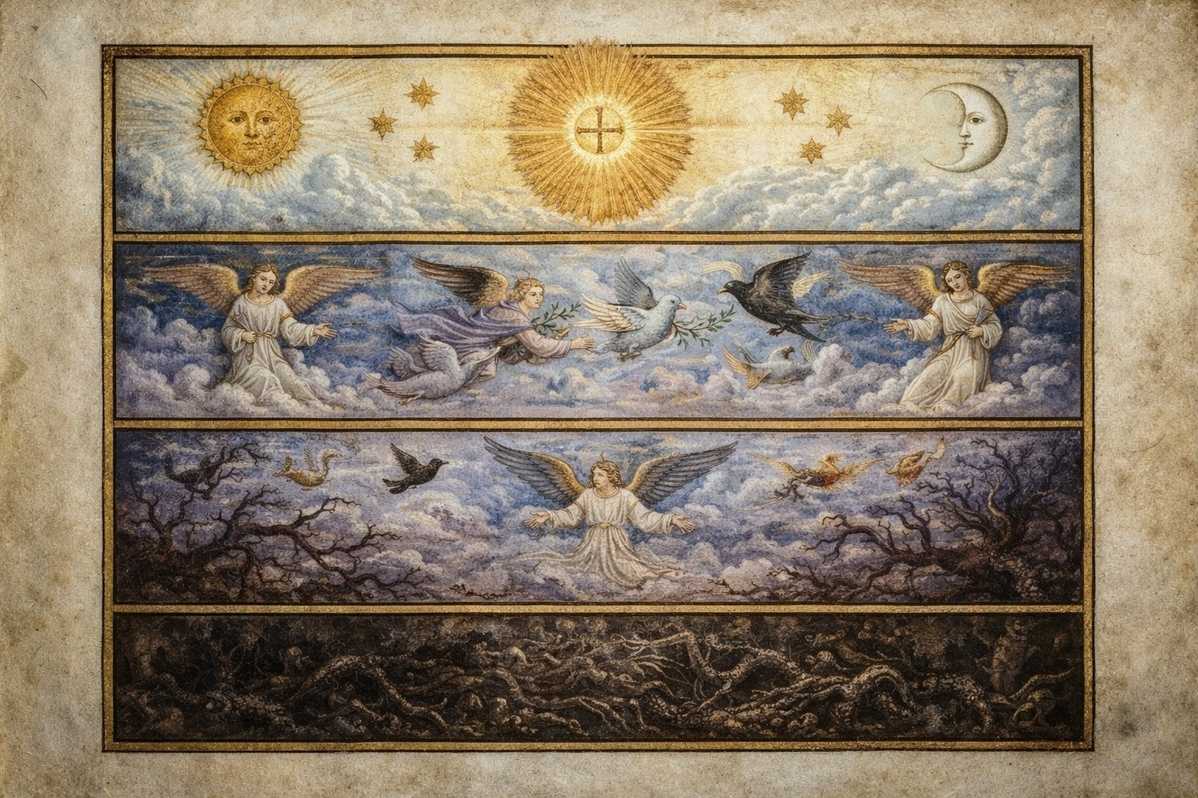
Distinctive to this dossier is its tripartite anthropology and cosmology—a three-tiered organisational structure fundamentally different from the dualistic frameworks dominating other Gnostic administrative centres. Where Sethian texts typically oppose spirit to matter, and Valentinian systems recognise three classes of human being, the Paraphrase of Shem posits Darkness, Light, and Spirit as the three irreducible natures composing both the cosmos and the human subject:
Primary Source Citation: NHC VII,1 25:25-30: “I revealed to you the three natures: the dark, the spirit, and the light. And the dark is the lowest, and the spirit is in the middle, and the light is the highest.”
Darkness: The Lower Jurisdiction
Darkness constitutes the realm of matter, the domain of the demiurgic administration, and the detention facility of the body. In this system, darkness is not merely the absence of light but an active, hostile power—blind, chaotic, heavy, and resistant to illumination. “Darkness is a stormy wind, and it is the enemy of the light” (NHC VII,1 26:5-10)—the material jurisdiction operates as an active antagonist rather than neutral background, a turbulent atmospheric condition threatening to extinguish the light trapped within its domain.
Light: The Higher Administration
Light represents the realm of the divine, the source of all authentic being, and the destination of the spiritual seed. Light is not merely physical illumination but ontological reality—true, stable, alive, and self-subsistent. “The light is the thought of the mind, and it is the living water” (NHC VII,1 26:15-20)—here light functions as the cognitive substance of divine thought, the living water that hydrates the parched consciousness. This is the highest jurisdiction, the ultimate headquarters toward which all separated light-seeds must eventually repatriate.
Spirit: The Mediating Administration
Spirit occupies the intermediate position—the breath that animates, the bridge between light and darkness, the administrative liaison between the highest and lowest jurisdictions. Crucially, spirit is not distinct from light but its active presence in the lower realms—the agent of revelation, the means of ascent, and the negotiator that maintains communication between trapped light and the headquarters above. The spirit constitutes the pneumatic civil service that operates within the dark jurisdiction while maintaining loyalty to the light administration, enabling the eventual extraction of imprisoned light-seeds.
This tripartite structure creates a more nuanced topology than simple dualism. The human subject is not merely spirit trapped in matter, but a complex mixture of all three natures—darkness providing the bodily substrate, spirit providing animation and consciousness, and light providing the divine spark requiring liberation. The task of the Gnostic is to sort these mixtures, to separate the light from the darkness, and to restore the spirit to its proper mediating function rather than allowing it to be colonised by dark material interests.
Noetic Baptism: The Interior Sacrament
Central to the administrative protocols of the Paraphrase of Shem is the concept of noetic baptism (nous-baptism)—a radical transformation of ritual practice that abolishes water purification in favour of mental illumination. This represents not anti-ritual polemic but the assertion of a deeper, interior sacrament that renders external rites obsolete for those possessing sufficient security clearances.
Primary Source Citation: NHC VII,1 29:15-22: “The baptism of the water is abolished, and the baptism of the spirit is revealed. I have baptised you in the mind, and you have received the seal of the light.”
The text explicitly declares the abolition of water baptism—the Jordan rites practised by competing religious jurisdictions are terminated in favour of the baptism of the spirit and mind. “The baptism of the water is abolished, and the baptism of the spirit is revealed” (NHC VII,1 29:15-20)—this is the Gnostic transformation of ritual par excellence, external action giving way to internal transformation, material symbols superseded by direct cognitive illumination.
But the Paraphrase of Shem advances beyond even pneumatic baptism to the baptism of the mind (nous)—the reception of divine knowledge that transforms consciousness itself. “I have baptised you in the mind, and you have received the seal of the light”—this is self-administered initiation, requiring no external officiant or institutional validation. The protocol is explicit: “Place it (the mind) in yourself, and do not let the thought of the body prevail against you” (NHC VII,1 30:5-12). The power resides in the knowledge itself, not in any external administrative authority.

This self-administered protocol represents the ultimate democratisation of initiation—the initiate needs no priest, no church, no external validation. The seal of the light is impressed directly upon the mind through recognition of the three natures and the reception of the revealer’s teaching. This is administrative autonomy: the Gnostic becomes their own baptiser through the transformative power of gnosis itself.
The Cosmic Drama of Extension and Return
The Paraphrase of Shem presents an elaborate cosmological narrative regarding the extension of light into darkness—a mission of revelation rather than creation. The light did not generate the darkness but entered it as an infiltrating presence, extending itself to awaken the spiritual seeds trapped within the material jurisdiction. “And the light extended itself into the darkness, and the darkness did not comprehend it” (NHC VII,1 32:10-15)—this is the Johannine prologue translated into Gnostic administrative terminology, the light shining, the darkness resisting comprehension, the spirit mediating between the two jurisdictions.
The result is a complex cosmos of mixtures—bodies animated by spirit, spirits darkened by matter, light imprisoned in flesh. This is not the orderly creation of a competent demiurge but the chaotic result of light’s unauthorised expedition into hostile territory. The material world as we experience it represents the temporary administrative compromise between light and darkness, a mixed jurisdiction requiring careful navigation by those who recognise its true composition.
The text describes the sorting process that must occur—the separation of the three natures that constitutes both the individual’s salvation and the cosmos’s eventual restoration. Just as the individual must separate the light within from the darkness of the body, so the cosmos must eventually undergo a final audit in which the natures are separated and restored to their proper jurisdictions. This is practical eschatology applied to metaphysical topology.
The Revealer as Mind and Light
The revealer figure in the Paraphrase of Shem is variously identified as the Saviour, the Mind, or the Light—an eternal administrative presence rather than any historical personality. This revealer speaks in the first person with striking immediacy: “I am the mind that came forth from the light. I am the thought of the light” (NHC VII,1 28:5-10)—this is not the historical Jesus of Nazareth but the eternal revealer, the divine voice that speaks through all ages, the light that shines in every enlightened mind regardless of historical positioning.
Primary Source Citation: NHC VII,1 28:15-22: “I have come down to reveal to you what is hidden, and to raise you up to the light. The descent is for the sake of ascent; the revelation is for the sake of liberation.”
This eternal revealer descends for the sake of ascent, reveals for the sake of liberation—there is no permanent incarnation, no historical atonement, only the perpetual administrative protocol of revealing hidden knowledge to those capable of receiving it. The text is not about the past (what a historical saviour did) but about the present (what the light does in the soul right now). This timeless quality distinguishes the Paraphrase of Shem from texts more concerned with historical narratives or apostolic succession.
Eschatological Dissolution and Restoration
The text concludes with apocalyptic predictions regarding the eventual dissolution of darkness and the gathering of light—the final administrative reorganisation that dissolves the mixed jurisdiction of the material world and restores the three natures to their proper departments. “And the light will gather itself together, and it will be separated from the darkness. And the darkness will be destroyed, and the light will be established in its kingdom” (NHC VII,1 45:20-28)—this is not merely the end of the material world but the end of the mixture itself.
The eschatology is restorative rather than revolutionary—the light returns to its source, the darkness returns to nothingness, and the spirit resumes its proper mediating function within the pleroma. There is no eternal detention facility for the damned, no permanent victory for the dark administration—only the recognition that darkness was always temporary, a chaotic interlude in the history of light that must eventually be corrected through the separation of the natures. The cosmos as we know it is temporary administrative confusion awaiting final audit and reorganisation.
Comparative Context: Distinctive Trajectories
The Paraphrase of Shem occupies a distinctive position within the Nag Hammadi filing system, representing a trajectory of interior illumination that contrasts with both the institutional sacramentalism of Valentinianism and the militant cosmological dualism of Sethianism. Where the Gospel of Philip explores the bridal chamber and water baptism as essential protocols, and where Sethian texts such as the Apocryphon of John present the archons as hostile administrators requiring aggressive resistance, the Paraphrase of Shem emphasises individual cognitive transformation as the sole necessary operation.
Its closest parallels within the Library are the Discourse on the Eighth and Ninth—which shares the emphasis on noetic transformation and the eighth and ninth celestial jurisdictions—and Thunder: Perfect Mind—which similarly employs first-person divine speech to convey the paradoxical nature of revelation. However, the Paraphrase of Shem is distinctive in its tripartite cosmology and its explicit abolition of water baptism in favour of noetic initiation.
The text’s location in Codex VII alongside the Second Treatise of the Great Seth—which also emphasises the illusory nature of the crucifixion and the superiority of spiritual knowledge over material events—suggests a collection focused on radical interiority, texts that prioritise the transformation of consciousness over historical narratives or ritual performance.
Contemporary Relevance: Consciousness Transformation
For contemporary readers navigating the complexities of embodied existence, the Paraphrase of Shem offers a sophisticated framework for understanding consciousness as tripartite—composed of material substrate (the body/neurological darkness), animating awareness (spirit/consciousness), and illuminating insight (light/rational and trans-rational cognition). This provides a phenomenologically accurate description of human experience: we are never purely material, never purely spiritual, but always the mixture requiring sorting.

The concept of noetic baptism speaks directly to modern seekers disillusioned with institutional religion but hungry for transformative experience. The text suggests that the essential sacrament is not water poured by authorised priests but recognition impressed upon the mind—gnosis as the only legitimate initiation. This is spiritual democratisation: no external validation required, no institutional affiliation necessary, only the courage to recognise the three natures and align with the light.
The eschatological vision of final separation and restoration provides a hopeful framework for those overwhelmed by the apparent dominance of darkness in the contemporary world. The text assures that the mixture is temporary, that light will eventually gather itself and separate from darkness, and that the dark jurisdiction will eventually be decommissioned. This is not utopian fantasy but topological necessity—the nature of light requires its eventual return to source, and the nature of darkness requires its eventual dissolution.
Frequently Asked Questions
What is the Paraphrase of Shem?
The Paraphrase of Shem (also called The Revelation to Shem, NHC VII,1) is a Coptic Gnostic text from the Nag Hammadi Library. It presents a revelation discourse attributed to Shem, son of Noah, featuring a distinctive tripartite cosmology of Darkness, Spirit, and Light, and the concept of noetic baptism (baptism of the mind) as the true sacrament that replaces water baptism.
Where is the Paraphrase of Shem located in the Nag Hammadi Library?
The text is located in Codex VII, tractate 1 (NHC VII,1). It opens the codex, appearing alongside the Second Treatise of the Great Seth, Apocalypse of Peter, and Teachings of Silvanus–a collection focused on interior transformation and radical gnosis.
What are the three natures in the Paraphrase of Shem?
The three natures are: (1) Darkness–the realm of matter and the body, blind and chaotic; (2) Spirit–the mediating breath that animates and bridges between darkness and light; and (3) Light–the divine realm of truth and living water. The human being is a mixture of all three, requiring sorting and separation for salvation.
What is noetic baptism?
Noetic baptism (from Greek nous, ‘mind’) is the baptism of the mind or consciousness–the reception of divine knowledge that transforms the interior person. The text explicitly abolishes water baptism, declaring: ‘The baptism of the water is abolished, and the baptism of the spirit is revealed. I have baptised you in the mind, and you have received the seal of the light.’
How does the Paraphrase of Shem differ from Sethian and Valentinian texts?
Unlike Sethian texts with their militant hostility toward archons and emphasis on revolutionary escape, and unlike Valentinian texts with their sacramental ecclesiology, the Paraphrase of Shem emphasises individual cognitive transformation through noetic baptism. It lacks the Thirty Aeons of Valentinianism and the Five Seals of Sethianism, proposing instead the simple tripartite structure of Darkness, Spirit, and Light.
Who is the revealer in the Paraphrase of Shem?
The revealer is identified variously as the Saviour, the Mind, or the Light–speaking in first person as an eternal presence rather than a historical figure. The revealer declares: ‘I am the mind that came forth from the light. I am the thought of the light.’ This is not the historical Jesus but the eternal voice of revelation speaking through the text.
What is the eschatology of the Paraphrase of Shem?
The text predicts the eventual dissolution of darkness and the gathering of light–the separation of the three natures and the destruction of the dark realm. ‘The light will gather itself together, and it will be separated from the darkness. And the darkness will be destroyed, and the light will be established in its kingdom.’ This is restorative rather than punitive eschatology.
Further Reading
Expand your understanding of noetic baptism, tripartite cosmology, and distinctive Gnostic trajectories through these verified internal resources:
- Discourse on the Eighth and Ninth: Hermetic Ascent — Shares the emphasis on noetic transformation and ascent through the planetary spheres, offering the Hermetic parallel to the Paraphrase of Shem’s interior baptism.
- Thunder: Perfect Mind: Divine Speech in 7 Voices — The first-person divine speech mode paralleling the Paraphrase of Shem’s revealer figure, presenting the paradoxical self-proclamation of divine presence.
- Second Treatise of the Great Seth — Fellow traveller in Codex VII, sharing the emphasis on the illusory nature of the crucifixion and the superiority of spiritual knowledge over material historical events.
- Teachings of Silvanus: Practical Wisdom — Also preserved in Codex VII, offering a contrasting yet complementary approach to spiritual formation within the same manuscript collection.
- Codex VII: Sethian Technical and Hermetic — The archaeological and codicological context of the Paraphrase of Shem within its manuscript setting, alongside the other six tractates of this diverse codex.
- Gospel of Philip: Sacrament and Eros — The Valentinian sacramental system that the Paraphrase of Shem’s noetic baptism explicitly supersedes, offering essential contrast between water and spirit baptism theologies.
- Apocryphon of John: Gnostic Creation — The Sethian cosmological counterpart, providing contrast between the militant archonology of Sethianism and the tripartite cosmology of the Paraphrase of Shem.
- Five Seals: Sethian Initiation Sacraments — The ritual system that noetic baptism replaces, offering comparative context for understanding the radical interiorisation of sacrament in the Paraphrase of Shem.
References and Sources
The following sources support the claims and quotations presented in this article. All citations to the Nag Hammadi Library represent direct translations from the Coptic text as established in the standard critical editions.
Primary Sources and Critical Editions
- [1] Peel, M.L. (1985). “The Paraphrase of Shem (NHC VII,1).” In Nag Hammadi Codices VII and VIII. Brill. (Critical edition with Coptic text, English translation, and commentary)
- [2] Layton, B. (1987). The Gnostic Scriptures: A New Translation with Annotations and Introductions. Doubleday. (Standard English translation with notes on noetic baptism)
- [3] Meyer, M. (2007). The Nag Hammadi Scriptures: The International Edition. HarperOne. (Comparative translation of NHC VII,1)
- [4] Robinson, J.M. (1977). The Nag Hammadi Library in English. Harper & Row. (Definitive critical edition establishing NHC referencing conventions)
- [5] Krause, M. (1978). “Der Paraphrase des Shem (NHC VII,1).” In Die Gnosis. Walter de Gruyter. (German critical edition with technical analysis)
Scholarly Monographs and Specialised Studies
- [6] Barc, B. (1980). “La Paraphrase de Sem.” BCNH Études. Presses Universitaires de Louvain. (Comprehensive commentary on cosmology and soteriology)
- [7] Chesnutt, R.D. (2009). Revelatory Experiences in the Nag Hammadi Texts. Society of Biblical Literature. (Analysis of revelation discourse in NHC VII,1)
- [8] Fallon, F.T. (1978). The Enthronement of Sabaoth: Jewish Elements in Gnostic Creation Myths. Brill. (Examination of Jewish apocalyptic backgrounds)
- [9] King, K.L. (2003). What Is Gnosticism? Harvard University Press. (Theoretical framework for categorising distinct Gnostic trajectories)
- [10] Perkins, P. (1980). “Gnostic Baptismal Traditions.” Studia Liturgica 14, pp. 178-189. (Comparative analysis of noetic vs. water baptism)
Comparative Studies and Thematic Analyses
- [11] Bullard, R.A. (1970). “The Paraphrase of Shem and the Doctrine of the Three Natures.” Novum Testamentum 12, pp. 132-144. (Technical analysis of tripartite cosmology)
- [12] Funk, W.P. (1997). “Die Paraphrase des Shem und die Johannesapokalypse.” In Nag Hammadi and Gnosticism. Scholars Press. (Analysis of apocalyptic genre)
- [13] Logan, A.H.B. (1996). Gnostic Truth and Christian Heresy: A Study in the History of Gnosticism. T&T Clark. (Contextualisation within second-century diversity)
- [14] Scopello, M. (1985). “The Paraphrase of Shem: A Gnostic Apocalypse.” In Les textes de Nag Hammadi. Presses Universitaires de Louvain. (Literary and theological analysis)
- [15] Turner, J.D. (2001). Sethian Gnosticism and the Platonic Tradition. Presses Universitaires de Louvain. (Comparative cosmological analysis)