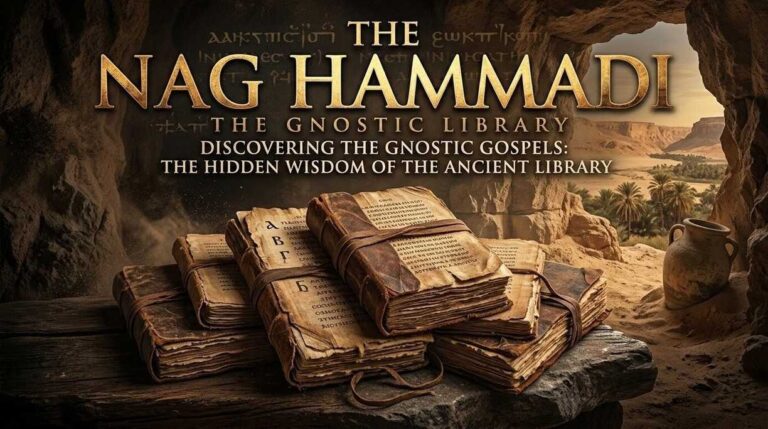
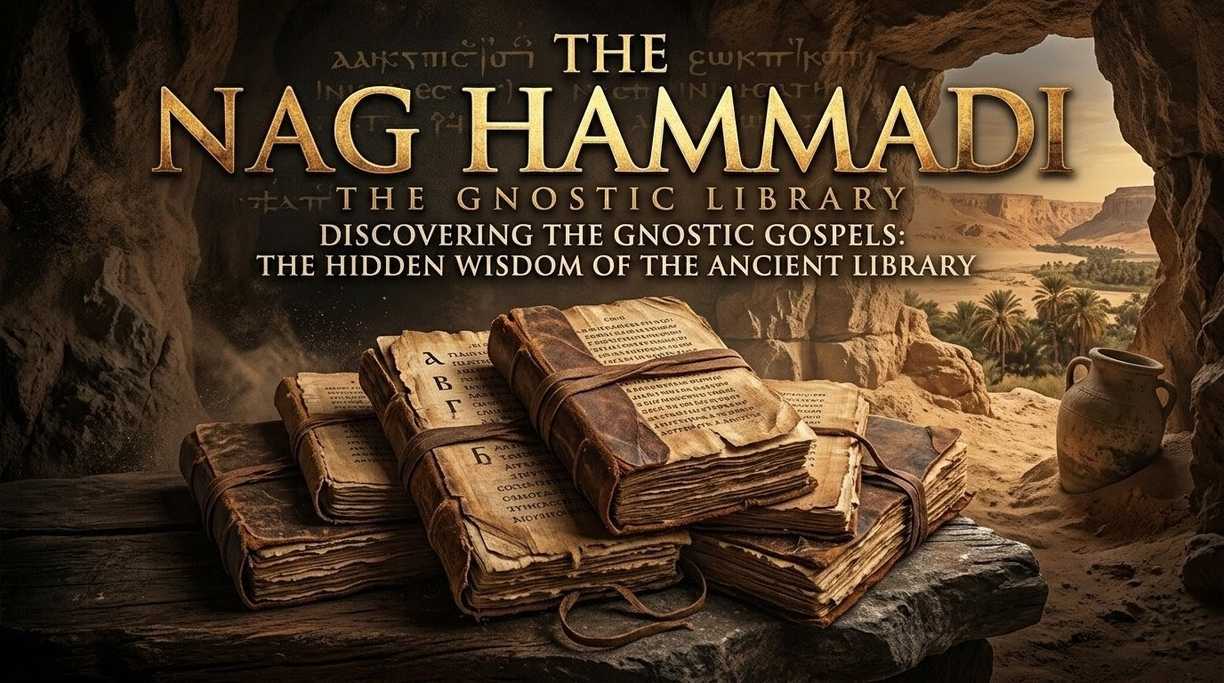
The Discourse on the Eighth and Ninth: A Hermetic Guide to Celestial Ascent
The Discourse on the Eighth and Ninth (NHC VI,6) stands apart within the Nag Hammadi Library as a rare procedural document–a tractate that records not merely cosmological theory but the actual administrative protocol for celestial ascent. Where Sethian texts construct elaborate bureaucratic hierarchies of aeons and archons, this Hermetic dialogue presents something more immediate: a step-by-step guide for navigating the planetary spheres, obtaining the necessary clearances, and arriving at direct encounter with the divine Mind. It is, in effect, the classified operations manual for the Hermetic spiritual intelligence service.
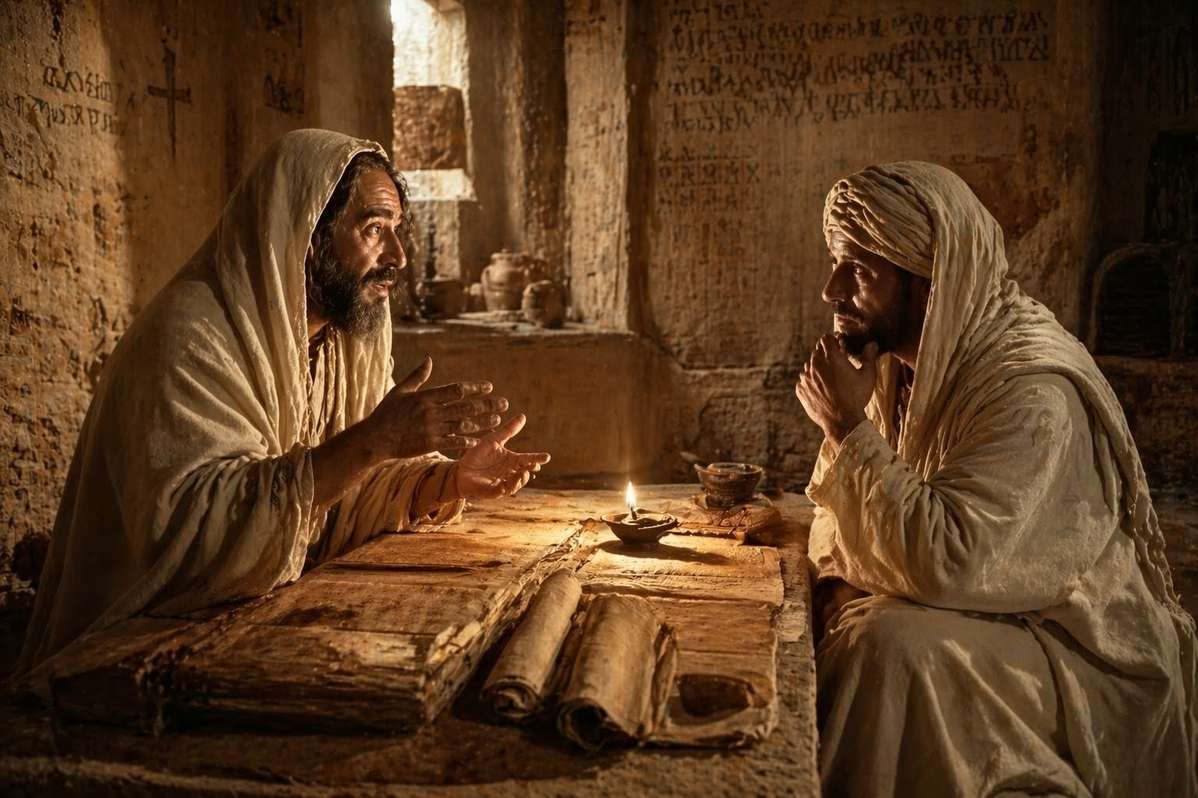
The text unfolds as a dialogue between Hermes Trismegistus and his son-disciple Tat, culminating in a shared visionary experience that transcends the seven planetary realms, passes through the eighth sphere of fixed stars, and penetrates the ninth realm beyond cosmic jurisdiction entirely. “My father, yesterday you promised me that you would bring my mind into the eighth and afterwards you would bring me into the ninth,” Tat reminds his teacher at the outset (NHC VI,6 52.1-5). This opening establishes the text’s practical character from the first line: this is not abstract philosophy but a promised transfer between departmental jurisdictions.
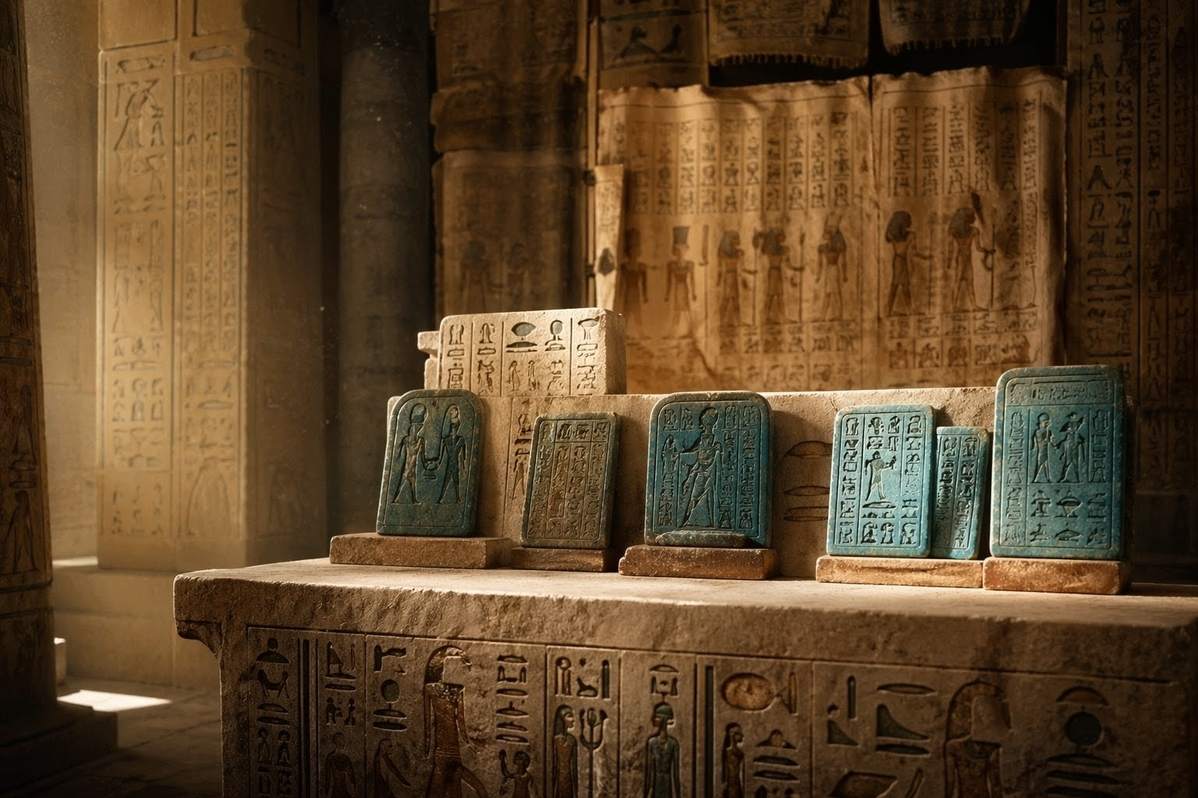
Table of Contents
- The Hermetic Ascent Protocol
- The Method of Mystical Ascent
- Cosmological Architecture: From the Seven to the Ninth
- Comparisons with Related Ascent Texts
- Historical Context and Provenance
- Contemporary Relevance of Hermetic Practice
- Frequently Asked Questions
- Further Reading
- References and Sources
The Hermetic Ascent Protocol
What distinguishes the Discourse from other Nag Hammadi tractates is its unambiguous focus on method. While the Apocryphon of John describes cosmic architecture and Zostrianos catalogues the personnel files of thirteen aeons, the Discourse on the Eighth and Ninth concerns itself with the practitioner’s direct experience of moving through established spheres of authority. The text assumes a bipartite anthropology consistent with other Hermetic writings in the codex: human beings consist of body and soul, with rationality conceived as a dormant capacity within the soul requiring divine activation rather than a separate ontological element [12].
What are the Ogdoad and Ennead?
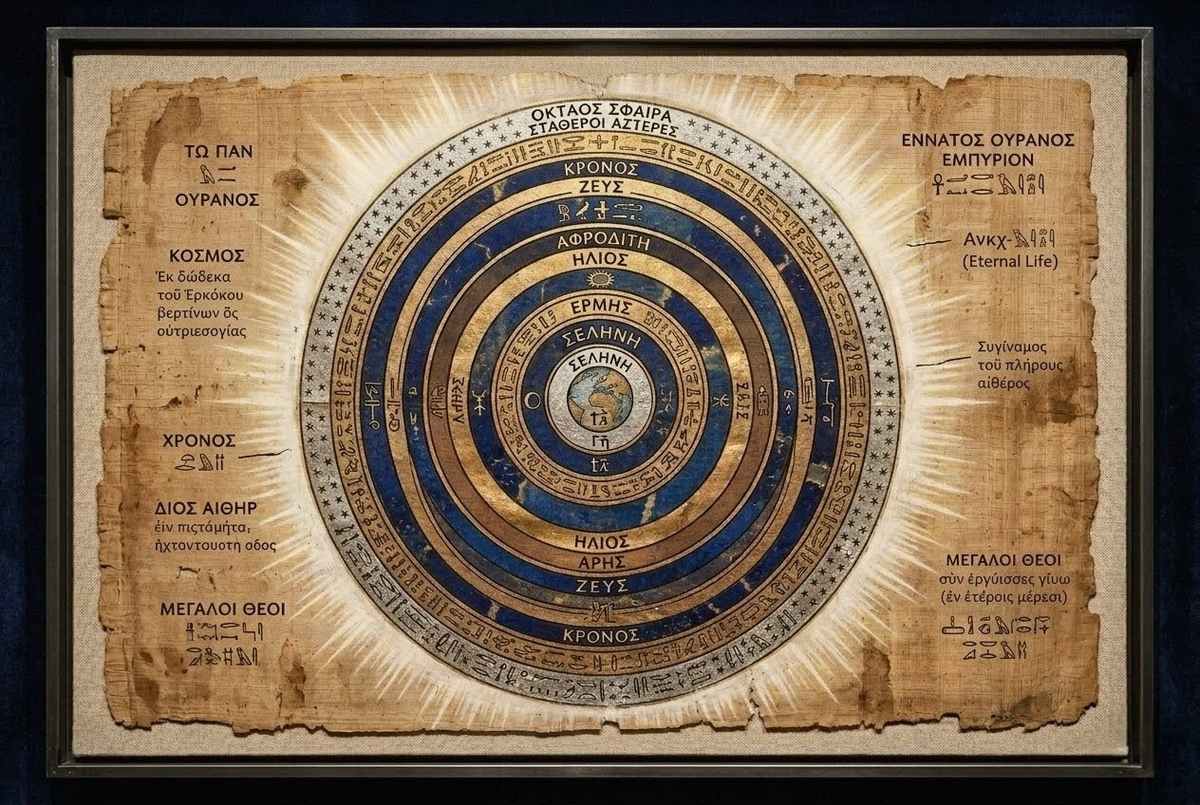
The ogdoad (Greek: ogdoas) is the eighth celestial sphere, the realm of fixed stars and divine powers that oversee cosmic operations from above the planetary bureaucracy. The ennead (Greek: enneas) is the ninth sphere, the realm beyond cosmic structure where the practitioner encounters the unbegotten God and the divine Mind. Together they represent the upper management tiers of the Hermetic celestial administration, accessible only to those who have completed all preliminary clearance procedures in the lower seven spheres.
The ascent follows a precise sequence. The practitioner must first advance through the seventh sphere–the hebdomad associated with the planetary heavens and the domain of fate (heimarmene). Only after demonstrating sufficient piety and renunciation does one become eligible for transfer to the eighth, the ogdoad, where the soul encounters the powers that govern cosmic order. The ninth, the ennead, represents the final jurisdiction: the sphere of direct encounter with the unbegotten God, accessible only to those who have completed all preliminary clearance protocols [6].
The Method of Mystical Ascent
The Discourse provides unusually specific detail about the techniques employed in this celestial transfer. Unlike the cryptic allusions found in Sethian ascent literature, the Hermetic master speaks plainly about the instruments of practice.
Prayer and Invocation
The ascent begins with formal petition. “Let us pray, my child, to the Father of the All, with your siblings, who are my sons, that he may give the spirit of eloquence,” Hermes instructs (NHC VI,6 55.11-13). The prayer is not casual supplication but a structured request for divine assistance–what the text describes as asking that “the gift of the eighth extend to us.” This bureaucratic precision is characteristic: the practitioner must submit the proper paperwork in the form of prayer, addressing the correct authority with the correct formula, before any transfer can be authorised.
The prayer itself follows a set pattern. It acknowledges the ruler of the kingdom of power, celebrates the divine word as “a birth of light,” and requests wisdom sufficient to describe the vision. The petitioners affirm their compliance with cosmic law: “We have already advanced to the seventh, since we are pious and walk in your law. And your will we fulfil always” (NHC VI,6 55.14-15). This is essentially a declaration of eligibility–a statement that all prerequisite conditions have been met and the applicant is ready for promotion to a higher security clearance [7].
Primary Source Citation: NHC VI,6 52.1-5 — “[My father], yesterday you promised [me that you would bring] my mind into the eighth and afterwards you would bring me into the ninth. You said that this is the order of the tradition.” (Translation: Dirkse, Brashler, & Parrott 1979)
The Power of Sacred Names
Central to the ascent protocol is the invocation of divine names through sacred vowel sequences. When the vision arrives, it is accompanied by vocalisations that operate as sonic passwords: “A O EE O EEE OOO III OOOO OOOOO UUUUUU OOOOOOOOOOOO OOO” (NHC VI,6 61.10-15). These vowel chants function as the auditory equivalent of the seals and signs required in Sethian ascent texts–a sonic clearance code that opens perception to the higher realms [9].
The text describes the mechanism clearly. As the power of light descends upon the practitioners, they see “indescribable depths” and recognise themselves as Mind. The father declares: “I am Mind, and I see another Mind, the one that moves the soul! I see the one that moves me from pure forgetfulness” (NHC VI,6 58.1-5). This recognition represents the crucial moment of authentication: the practitioner identifies himself with the divine faculty and thereby gains access to the restricted areas of cosmic administration [7].
The Transformation of Consciousness
The ascent involves what modern phenomenology might describe as an altered state of knowledge, though the text frames it in terms of ontological relocation. The practitioner does not merely imagine the higher spheres; he is transferred there through the power of divine illumination. “For already from them the power, which is light, is coming to us,” the text records at the moment of breakthrough (NHC VI,6 57.29-30).
This transformation is accompanied by the dissolution of ordinary self-boundaries. The visionary sees himself from outside, recognises his own Mind as identical with the divine Mind that governs all souls, and experiences what the text calls “the reflection of the pleroma” (NHC VI,6 57.8-10). The experience is not intellectual but participatory–a direct assimilation to the divine that the text compares to becoming “divine through knowledge” while still embodied [1].
Cosmological Architecture: From the Seven to the Ninth
The Discourse on the Eighth and Ninth preserves a cosmological model shared by Hermetic and Platonic traditions but articulated here with specific reference to the practitioner’s navigational requirements.
The Seven Planetary Spheres
The seven represent the realm of fate and cosmic necessity–the departmental offices where astral powers process the affairs of embodied souls. These are not merely astronomical bodies but administrative centres, each with its own jurisdiction and its own contribution to the cosmic order. The practitioner must pass through all seven, demonstrating compliance with cosmic law at each station, before applying for transfer to higher realms.
The text emphasises that renunciation of worldly attachments is prerequisite. “We have walked in your way, and we have renounced [the passions], so that your vision may come,” the prayer declares (NHC VI,6 55.15-20, reconstructed). This renunciation is not moralistic self-denial but the surrender of lower-level clearances–the release of hebdomadal jurisdiction–in exchange for admission to the ogdoad [6].
The Eighth Sphere of Fixed Stars
The ogdoad represents the first truly transcendent jurisdiction. Here the soul encounters “the souls that are in it, and the angels singing a hymn to the ninth.” The eighth is the sphere of the divine powers who oversee cosmic operations from above. It is also, significantly, the realm where the initiate joins the congregation of Hermes’ spiritual offspring–those who have already completed the ascent and now constitute a kind of celestial civil service, permanently stationed above the planetary bureaucracy [4].
The Ninth Realm of Divine Mind
The ennead is the terminus of ascent–the sphere where all departmental distinctions dissolve into direct encounter with the unbegotten God. “I see the powers that are in the ninth, and they are singing a hymn to the tenth,” the vision reports, suggesting that even the ninth is not the absolute summit but opens onto a tenth level of pure divinity beyond all numerical categorisation (NHC VI,6 58.5-10). Here the practitioner experiences what the text calls “the power that is above all powers, and the one who is above all” [6].
Primary Source Citation: NHC VI,6 58.1-5 — “For already from them the power, which is light, is coming to us. For I see! I see indescribable depths. How shall I tell you, my son? … I am Mind, and I see another Mind, the one that moves the soul! I see the one that moves me from pure forgetfulness.” (Translation: Dirkse, Brashler, & Parrott 1979)
Comparisons with Related Ascent Texts
Positioning the Discourse within the broader Nag Hammadi corpus reveals both its distinctive character and its strategic relationships with neighbouring traditions.
The Discourse shares Codex VI with the Prayer of Thanksgiving (NHC VI,7) and Asclepius 21-29 (NHC VI,8), forming a coherent Hermetic collection within the library. All three texts maintain a bipartite anthropology and a positive–or at least neutral–attitude toward the cosmos that distinguishes them from the anti-cosmic hostility characteristic of Sethian tractates. Where Sethian texts describe the material world as a prison administered by hostile archons, the Hermetic texts in Codex VI tend to view cosmic structure as a legitimate–if lower–department that can be navigated with proper authorisation [12].
Compared to Zostrianos (NHC VIII,1), the Discourse offers a remarkably streamlined ascent. Zostrianos requires the traveller to pass through thirteen aeons, encounter numerous angelic gatekeepers, and receive multiple baptisms and seals. The Discourse compresses this into a single session of prayer and vision, suggesting that the Hermetic tradition possessed a more direct–or perhaps more elite–line of communication with the highest authorities [11].
The relationship with Corpus Hermeticum XIII (Rebirth) is particularly instructive. CH XIII describes a preliminary ritual of rebirth in which the initiate becomes “a stranger to the world” before attempting ascent. The Discourse on the Eighth and Ninth appears to describe the subsequent operation: the actual journey through the spheres undertaken by one who has already been reborn. Together, the two texts outline the complete Hermetic curriculum: first the ritual of ontological transformation, then the visionary ascent to confirm and complete it [13].
Historical Context and Provenance
Nag Hammadi Codex VI was copied in the fourth century CE, though the texts it contains likely originated considerably earlier. The Discourse on the Eighth and Ninth is preserved in Coptic translation from a Greek original, and its theological vocabulary places it firmly within the tradition of philosophical Hermeticism that flourished in Egypt during the first three centuries CE [8].
Jean-Pierre Mahé, the foremost scholar of the text, has demonstrated that the Discourse represents a specifically Egyptian form of Hermetic spirituality–one that incorporates indigenous temple traditions alongside Greek philosophical elements. The instruction to inscribe the text on turquoise steles in hieroglyphic characters and to place it under the guardianship of frog-faced and cat-faced figures reflects Egyptian temple practice, suggesting that the text was not merely literary but intended for actual ritual use within a Hermetic-Egyptian community [3].
Primary Source Citation: NHC VI,6 60.1-15 — “And write an oath in the book, lest those who read the book bring the language into abuse, and not (use it) to oppose the acts of fate. Rather, they should submit to the law of God, without having transgressed at all, but in purity asking God for wisdom and knowledge. And he who will not be begotten at the start by God comes to be by the general and guiding discourses. He will not be able to read the things written in this book.” (Translation: Dirkse, Brashler, & Parrott 1979)
The text’s emphasis on secrecy through oath and restricted access indicates that it functioned within an initiatory structure. Only those “begotten by God”–that is, those who had undergone the preliminary rebirth–could properly read and implement its instructions. This was not a text for public distribution but a classified document for cleared personnel [6].
Contemporary Relevance of Hermetic Practice
For contemporary readers, the Discourse on the Eighth and Ninth offers something rare in ancient literature: a transparent account of systematic mystical practice. The specific cosmological framework–planetary spheres, vowel chants, turquoise steles–belongs to its historical moment. But the underlying method–prayer, concentration, invocation, visionary ascent, and the transformation of consciousness–remains perennially intelligible [7].
The text demonstrates that Hermetic spirituality was not merely speculative but operational. Its practitioners were not armchair philosophers contemplating abstract principles; they were trained operatives executing established protocols for consciousness expansion. The Discourse is the field manual that proves it.
In an age where spiritual traditions are often reduced to self-help formulae, the Discourse demands something more rigorous: preparation, initiation, discipline, and the willingness to become, in the text’s own terms, “a reflection of the pleroma.” The celestial administration, it seems, still requires proper clearance–and the paperwork, though ancient, has not been simplified.

Frequently Asked Questions
What is the Discourse on the Eighth and Ninth?
The Discourse on the Eighth and Ninth is a Hermetic tractate from Nag Hammadi Codex VI that records a dialogue between Hermes Trismegistus and his disciple Tat. Unlike cosmological treatises, it documents actual mystical ascent through seven planetary spheres to the eighth realm and beyond.
Which codex contains the Discourse on the Eighth and Ninth?
The text appears as the sixth tractate in Nag Hammadi Codex VI, designated NHC VI,6. It occupies pages 52 through 61 of the codex, followed by scribal instructions for preserving the text on turquoise steles.
What are the seven, eighth, and ninth spheres in Hermetic cosmology?
The seven spheres represent the planetary heavens governed by fate. The eighth, or ogdoad, is the realm of fixed stars and divine powers. The ninth, or ennead, represents direct encounter with the divine Mind beyond cosmic structure.
How does the Discourse on the Eighth and Ninth describe mystical ascent?
The ascent proceeds through prayer, invocation of divine names, vowel chants, and the transformation of consciousness. The practitioner receives the power of light and experiences vision of the divine realms.
What is the hymn of rebirth in NHC VI 6?
After ascending, Tat sings a hymn describing his vision of indescribable depths, the fountain of life, and his recognition as Mind. The hymn includes sacred vowel sequences and affirms his rebirth through divine knowledge.
How does the Discourse on the Eighth and Ninth compare to Sethian ascent texts?
While Sethian texts like Zostrianos describe elaborate angelic bureaucracies with multiple aeons, the Discourse offers a streamlined Hermetic protocol focused on direct encounter with divine Mind through prayer and vowel invocation.
Why does the Discourse on the Eighth and Ninth emphasize secrecy?
The text requires an oath from readers and instructs that the teaching be inscribed on turquoise steles placed under guard. This reflects the Hermetic concern that unprepared individuals would misunderstand or misuse the sacred language.
Further Reading
The following articles from the ZenithEye archive provide additional context for understanding the Discourse on the Eighth and Ninth within the broader landscape of Gnostic and Hermetic traditions:
- Codex VI: The Hermetic Codex — Examining the complete contents of Nag Hammadi Codex VI, placing the Discourse alongside the Prayer of Thanksgiving and Asclepius within the Hermetic collection.
- Zostrianos: Journey Through the Thirteen Aeons — Contrasting the Discourse’s streamlined Hermetic ascent with the elaborate Sethian bureaucratic navigation documented in Zostrianos.
- Ascent Literature in the Nag Hammadi Library — Surveying the full range of ascent texts across Sethian, Valentinian, and Hermetic traditions.
- Hermetic Connections in the Nag Hammadi Library — Tracing cross-departmental collaboration between Hermetic and Gnostic texts within the library.
- Asclepius 21-29: The Perfect Discourse — Examining the third Hermetic text in Codex VI, which shares the Discourse’s bipartite anthropology and positive cosmological orientation.
- Prayer of Thanksgiving: Hermetic Liturgy — Exploring the liturgical companion piece to the Discourse within Codex VI, demonstrating the practical religious life of Hermetic communities.
- Gnostic Schools: Sethians, Valentinians, and Hermetics — Distinguishing the Hermetic professional development branch from Sethian revolutionary cells and Valentinian diplomatic corps.
- Nag Hammadi Library: Complete Reader’s Guide — The master index for navigating all 46 tractates, codex overviews, and thematic collections.
References and Sources
The following sources support the claims and quotations presented in this article. All citations to the Nag Hammadi Library represent direct translations from the Coptic text as established in the standard critical editions.
Primary Sources and Critical Editions
- [1] Robinson, J.M. (1977). The Nag Hammadi Library in English. Harper & Row.
- [2] Dirkse, P.A., Brashler, J., & Parrott, D.M. (1979). The Discourse on the Eighth and the Ninth. In D.M. Parrott (Ed.), Nag Hammadi Codices V, 2-5 and VI with Papyrus Berolinensis 8502, 1 and 4 (Nag Hammadi Studies 11, pp. 341-373). Brill.
- [3] Mahé, J.-P. (1978). Hermès en Haute-Égypte (2 vols.). Bibliothèque Copte de Nag Hammadi. Presses de l’Université Laval.
- [4] Meyer, M.W. (2007). The Nag Hammadi Scriptures: The International Edition. HarperOne.
- [5] Layton, B. (1987). The Gnostic Scriptures: A New Translation with Annotations. Doubleday.
Scholarly Monographs and Articles
- [6] Mahé, J.-P. (1998). A Reading of the Discourse on the Ogdoad and the Ennead (Nag Hammadi Codex VI.6). In R. van den Broek & W.J. Hanegraaff (Eds.), Gnosis and Hermeticism from Antiquity to Modern Times (pp. 79-86). State University of New York Press.
- [7] Hanegraaff, W.J. (2008). Altered States of Knowledge: The Attainment of Gnosis in the Hermetica. The International Journal of the Platonic Tradition, 2(2), 128-163.
- [8] Fowden, G. (1993). The Egyptian Hermes: A Historical Approach to the Late Pagan Mind. Princeton University Press.
- [9] Bull, C.H. (2018). The Tradition of Hermes Trismegistus: The Egyptian Priestly Figure as a Teacher of Hellenized Wisdom. Religions in the Graeco-Roman World 179. Brill.
- [10] DeConick, A.D. (2016). The Gnostic New Age: How a Countercultural Spirituality Revolutionized Religion from Antiquity to Today. Columbia University Press.
Comparative Studies and Thematic Analyses
- [11] Pearson, B.A. (2007). Ancient Gnosticism: Traditions and Literature. Fortress Press.
- [12] Roig Lanzillotta, L. (2016). Anthropological Views in Nag Hammadi: the Bipartite and Tripartite Conceptions of Human Being. In J. van Ruiten & G.H. van Kooten (Eds.), The Development of a Dualistic Anthropology in Early Judaism and Christianity, and their Umwelts (pp. 136-153). Brill.
- [13] Copenhaver, B.P. (1992). Hermetica: The Greek Corpus Hermeticum and the Latin Asclepius in a New English Translation. Cambridge University Press.
- [14] Logan, A.H.B. (1996). Gnostic Truth and Christian Heresy: A Study in the History of Gnosticism. T&T Clark.
- [15] Festugière, A.-J. (1967). Hermétisme et mystique païenne. Aubier-Montaigne.