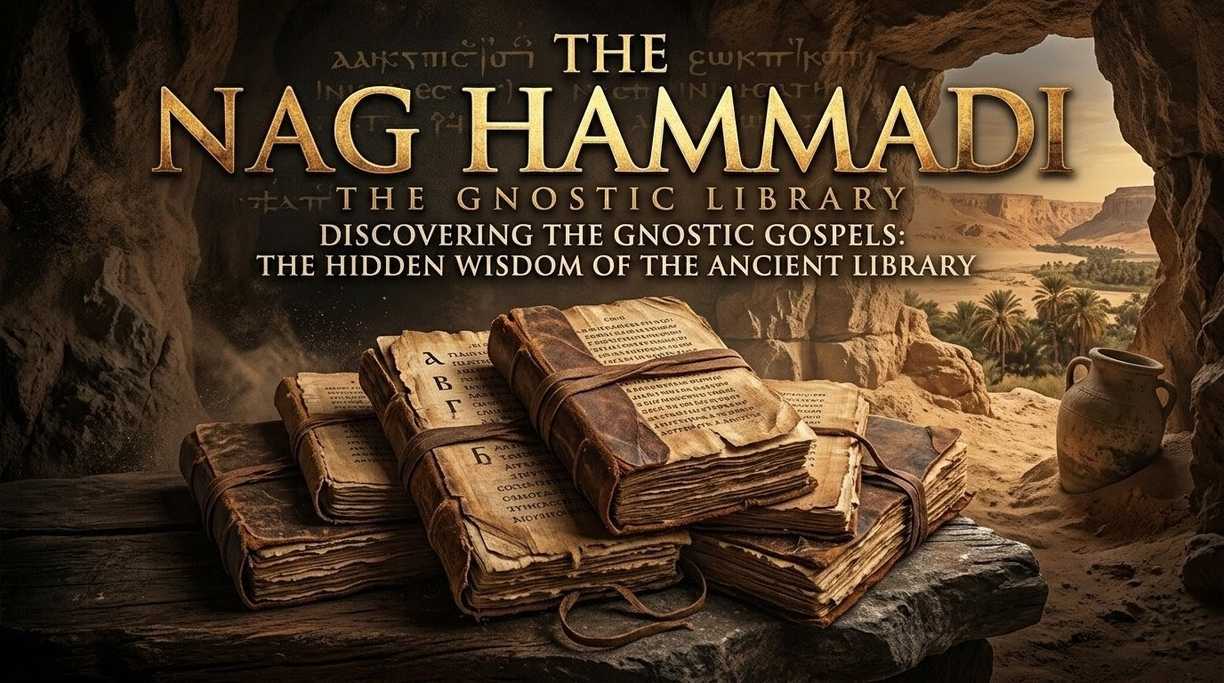
What Is Gnosticism? The Scholarly Debate
The question appears straightforward enough: What is Gnosticism? Yet this seemingly simple inquiry has generated one of the most contentious bureaucratic disputes in the study of early Christianity—a taxonomical crisis that has occupied scholars for decades. For centuries, “Gnosticism” served as a catch-all classification in the heresiological filing cabinets of orthodox authorities, a miscellaneous folder for movements condemned as deviant: Marcion’s rejection of the Old Testament, the complex mythologies of the Sethian administrative underground, the Valentinian diplomatic corps, and dozens of other groups bundled together under a single polemical label. But as modern scholars have examined the primary sources with the scrutiny of internal auditors, the coherence of this category has collapsed into an administrative nightmare of misfiled documents, overlapping jurisdictions, and contested classifications.
David Brakke’s The Gnostics: Myth, Ritual, and Diversity in Early Christianity (2010) represents the culmination of decades of scholarly scepticism—a final audit suggesting that “Gnosticism” as traditionally understood simply did not exist in antiquity as a unified religious movement. The ancient sources do not describe a monolithic “Gnostic” bureaucracy; they describe diverse teachers, texts, and communities that modern scholarship has improperly grouped under a single departmental heading. This is not mere academic nitpicking over filing protocols. If “Gnosticism” is a modern construction rather than an ancient reality, then our entire narrative of early Christian diversity requires fundamental restructuring. The story of orthodoxy triumphing over heresy dissolves into a more complex picture of multiple Christianities developing in parallel, each competing for institutional market share without inherent claim to legitimacy beyond their ability to secure bureaucratic power.

Table of Contents
- The Problem of Definition: Taxonomical Crisis
- The Traditional Model: Gnosticism as Heresy
- The Revisionist Critique: Rethinking the Category
- David Brakke’s Synthesis: The Gnostics
- The Nag Hammadi Challenge: Evidence Overload
- The Social History Approach: Personnel Files
- Terminological Solutions: Reorganisation Proposals
- Implications for Early Christianity
- Contemporary Relevance
- Conclusion: The Question Remains Open
- Frequently Asked Questions
- Further Reading
- References and Sources
The Problem of Definition: Taxonomical Crisis
What is Gnosticism?
Gnosticism refers to a collection of early Christian and related religious movements—self-designated as gnōstikoi—that flourished between the 2nd and 4th centuries CE. These communities shared a conviction that secret knowledge (gnosis) liberates the divine spark from its material imprisonment, though they diverged significantly in mythology, ritual, and social organisation. The category encompasses groups such as the Sethians and Valentinians, who appear in the heresiological filing cabinets of Irenaeus and Epiphanius, yet it remains a modern scholarly construct imposed upon ancient diversity.
The term appears in: Heresiological taxonomies (Irenaeus, Adversus Haereses); Self-designation in Nag Hammadi Codices (specifically Sethian tractates).
The definitional crisis emerges from a fundamental mismatch between ancient self-understanding and modern classification. The heresiologists—church fathers like Irenaeus, Tertullian, and Epiphanius who catalogued competing movements—operated as taxonomical enforcers, creating filing systems that served polemical rather than descriptive functions. In their administrative reports, “Gnosticism” (though they used various terms: gnōsis, hairesis, planē) represented a perversion of apostolic teaching, a demonic deception that threatened the purity of the catholic corporate structure.
Primary Source Citation: Irenaeus, Adversus Haereses I.29.1: “The falsely so-called Gnosis (gnōsis)… these men alter the position of the Scriptures, as we have shown in the books before us.” [1]
Hans Jonas’s The Gnostic Religion (1958) transformed this polemical category into a subject for serious phenomenological study, establishing the first systematic personnel file on the “Gnostic” movement. Jonas identified the “Gnostic” spirit as a particular attitude toward existence—alienation from the world, a sense of being trapped in hostile matter, a desire for secret knowledge (gnosis) that liberates the spirit from its material prison. He traced this spirit from ancient Syrian-Egyptian sects through medieval Manichaeism to modern existentialism. Jonas’s model was enormously influential, establishing Gnosticism as a legitimate field of religious studies. Yet it relied heavily on the heresiological sources, accepting their framing of a unified movement opposed to orthodox Christianity without adequate scrutiny of the primary documentation.
The Traditional Model: Gnosticism as Heresy
The conventional narrative derives from the heresiological bureaucracy—church fathers operating as compliance officers for the emerging catholic administration. In their filing systems, “Gnosticism” served as a miscellaneous folder for everything that failed to meet orthodox standards: Marcion’s rejection of the Old Testament deity, the complex mythologies of the Sethian underground, the Valentinian theological innovations, and dozens of other movements that resisted centralised control.
The traditional model assumes a clear division between orthodoxy and heresy, with “Gnosticism” representing a corruption of pure apostolic teaching. This narrative served the administrative needs of the emerging catholic church, providing a simple binary classification: us versus them, truth versus error, authorised personnel versus rogue operators. The model persists in popular consciousness and in some scholarly circles because it offers cognitive convenience—a simple filing system for complex diversity.

The Revisionist Critique: Rethinking the Category
Michael Allen Williams’s Rethinking “Gnosticism” (1996) launched the most sustained audit of the category, calling for the complete dissolution of the departmental heading. Williams argued that the ancient sources reveal not a single movement but diverse groups with little in common beyond their rejection by the emerging catholic corporate structure. The Sethians, Valentinians, Marcionites, and others were distinct communities with different theologies, rituals, and organisational structures—improperly bundled into a single “Gnostic” folder that obscured more than it revealed.
Primary Source Citation: Williams, M.A. (1996). Rethinking “Gnosticism”: An Argument for Dismantling a Dubious Category, p. 51: “The category ‘Gnosticism’ has been and still is a rather messy taxon, more like the folder labelled ‘Miscellaneous’ or ‘Other’… than like a precisely defined classificatory unit.” [2]
Williams proposed replacing “Gnosticism” with more specific categories: “biblical demiurgical traditions” for texts that reinterpret Genesis, “Platonising” movements for those influenced by Middle Platonism, “Sethian” and “Valentinian” for specific mythological systems. The advantage was precision: instead of imposing a modern category on ancient diversity, scholars could describe historical communities on their own terms, using their own self-designations.
Karen King’s What Is Gnosticism? (2003) approached the question from a different bureaucratic angle, examining how the category functioned in power relationships. King argued that “Gnosticism” was not merely a descriptive term but a tool of exclusion, a mechanism by which orthodox authorities delegitimised competing voices. By labelling movements as “Gnostic,” the church fathers constructed them as deviant, dangerous, and other—regardless of their actual beliefs or practices. King advocated abandoning the category entirely, replacing it with more neutral terms like “alternative Christianities” or simply describing specific texts and communities without recourse to the polemical label. This was not just scholarly precision but ethical responsibility: to stop using a term that carried centuries of heresiological baggage designed to marginalise dissident voices.
David Brakke’s Synthesis: The Gnostics
David Brakke’s The Gnostics: Myth, Ritual, and Diversity in Early Christianity (2010) offers a nuanced middle path through the taxonomical chaos—a proposal to retain the category while severely restricting its application. Brakke accepts that “Gnosticism” as traditionally understood is problematic but argues that we can identify specific historical groups who called themselves “Gnostics” (gnōstikoi) and were recognised as such by external observers.
Primary Source Citation: Brakke, D. (2010). The Gnostics: Myth, Ritual, and Diversity in Early Christianity, p. 29: “I use ‘Gnostic’ to refer to the specific religious group that appears in ancient sources under this name, a group whose mythology is preserved especially in the Sethian literature from Nag Hammadi.” [3]
According to Brakke’s administrative audit, the ancient sources distinguish between three distinct categories:
- Gnostics proper: Specific groups like the Sethians who used gnōstikos as a self-designation and maintained distinct mythological systems involving the demiurge and the divine spark
- Valentinians: Followers of Valentinus with sophisticated theological systems that did not typically use “Gnostic” as a self-identifier, operating instead as a parallel corporate structure
- Other movements: Marcionites, Manichaeans, and others who did not identify as “Gnostic” and maintained distinct administrative identities
The heresiologists conflated these groups under the “Gnostic” label for polemical purposes, creating the illusion of a unified opposing corporation. Modern scholars, by accepting this framework, perpetuated the ancient polemic while imagining they were conducting objective historical analysis. Brakke proposes using “Gnostic” only for those groups who used the term themselves or were clearly identified by contemporaries as belonging to the “Gnostic” tradition. This preserves the category while sharply limiting its application—we can speak of “Gnostics” (specific historical communities) but not “Gnosticism” (a unified religious movement).

The Nag Hammadi Challenge: Evidence Overload
The Nag Hammadi Library lies at the heart of this definitional crisis because it provides the primary documentary evidence for the diversity of early Christian movements. Discovered in 1945 and comprising forty-six tractates across thirteen codices, this archive presents a categorical nightmare for the taxonomical purist. The collection includes:
- Sethian texts: The Apocryphon of John, Trimorphic Protennoia, Hypostasis of the Archons—texts that may represent the “Gnostic” tradition proper with their elaborate archonic bureaucracies and descent protocols
- Valentinian texts: The Gospel of Truth, Tripartite Tractate, Gospel of Philip—theological systems distinct from Sethianism, focused on syzygies and the bridal chamber rather than cosmic escape
- Hermetic texts: The Discourse on the Eighth and Ninth—Egyptian philosophical literature not properly “Christian” at all, representing a separate departmental jurisdiction entirely
- Sayings collections: The Gospel of Thomas—wisdom literature with unclear relationship to other movements, possibly representing a Thomasine bureaucracy parallel to both Sethian and Valentinian structures
- Diverse other texts: Thunder: Perfect Mind, the Hymn of the Pearl, Acts of Thomas—genres and theologies that resist any unified classification

The diversity extends to fundamental theology. Some texts are radically dualistic (spirit vs. matter); others affirm the goodness of creation. Some feature elaborate demiurgical myths with incompetent archonic managers; others lack any creation narrative whatsoever. Some prescribe complex rituals (the Five Seals); others emphasise simple wisdom or contemplative ascent. Some are explicitly Christian; others show no trace of Jesus or the apostles. If all these are “Gnostic,” then the term has lost any specific meaning beyond “non-orthodox ancient text.” If only some are “Gnostic,” then which ones, and by what criteria? The Nag Hammadi discovery thus transformed the definitional question from a scholarly nicety into a categorical emergency.
The Social History Approach: Personnel Files
Partly in response to the taxonomical crisis, scholarship has shifted toward social history—asking not “What did the Gnostics believe?” but “Who were the Gnostics, and what did they do?” This approach, represented by Brakke and others, examines the concrete administrative practices of historical communities: how they met, how they initiated members, how they related to other Christian groups, how they organised their internal hierarchies.
The personnel files reveal considerable diversity in social organisation. Some “Gnostic” groups were elitist circles within larger churches—the Valentinian model of infiltration from within. Others were separate communities with their own rituals and hierarchies—the Sethian model of autonomous corporate structure. Still others were solitary ascetics or wandering teachers operating without institutional backing. There was no single “Gnostic” church or uniform organisational chart; rather, diverse administrative models competed for adherents.
Ritual practice also varied dramatically across the classified materials. The Five Seals appear in Sethian texts as mandatory security clearances but are absent from Valentinian literature. The bridal chamber (nymphōn) is central to Valentinian theology but marginal in Sethianism. Some groups practised water baptism; others rejected all aquatic rituals as archonic traps. These differences mattered profoundly to the ancient participants; modern scholars do them violence by collapsing them into a generic “Gnosticism” that treats diverse ritual economies as identical.
Terminological Solutions: Reorganisation Proposals
Faced with the collapse of the traditional filing system, scholars have proposed various administrative reorganisations:
Solution One: Abandon the Term
Following Karen King, some scholars advocate dissolving the “Gnostic” department entirely in favour of neutral descriptors: “alternative Christianities,” “early Christian diversity,” or simply specific community names (Sethian, Valentinian, etc.). This approach eliminates heresiological baggage but risks losing the ability to refer to those specific groups who did identify as “Gnostic” in their own administrative documents.
Solution Two: Restrict the Term
Brakke’s solution—use “Gnostic” only for those who used it themselves—preserves the category while limiting its scope through strict personnel verification. This acknowledges that some ancient actors did identify as “Gnostics” while rejecting the heresiological umbrella that covered unrelated groups. The disadvantage is the requirement for considerable re-education of students and general readers accustomed to broad “Gnostic” classifications.
Solution Three: Pluralise the Term
Michael Allen Williams speaks of “Gnosticisms” rather than “Gnosticism,” emphasising diversity rather than unity. This preserves the category while denying it refers to a single phenomenon—treating “Gnostic” as an adjective describing multiple movements rather than a noun naming a single religion.
Solution Four: Return to Phenomenology
Some scholars, following Jonas, retain “Gnosticism” as an ideal type—a pattern of thought characterised by alienation from the world, desire for secret knowledge, and rejection of material existence—while acknowledging that no historical group perfectly exemplifies this type. This allows for heuristic use of the category while admitting its limitations as a historical descriptor.
Each solution presents distinct administrative advantages and disadvantages. The “Gnosticism” folder, however reorganised, remains a contested territory in the scholarly bureaucracy.
Implications for Understanding Early Christianity
The Gnosticism debate is not merely semantic quibbling over filing protocols; it fundamentally affects how we understand the first three centuries of Christian administrative development. The traditional model—orthodoxy versus heresy—assumes that there was an original pure Christianity subsequently corrupted by “Gnostic” deviations. The diversity model suggests that multiple Christianities emerged simultaneously, competing for followers and institutional support, with “orthodoxy” representing simply the tradition that won the bureaucratic struggle for control.
If “Gnosticism” was not a unified movement opposing orthodoxy but diverse movements coexisting with various forms of Christianity, then the history of dogma looks radically different. The development of the canon, the creeds, and the episcopal hierarchy was not preservation of apostolic purity but victory of one faction over others in a crowded marketplace of religious options. The “heretics” were not deviants from a pre-existing norm but participants in a pluralistic field where norms were still being established through political and theological contestation.
This does not mean all movements were equally “valid”—that judgment depends on theological commitments beyond historical analysis—but it does mean we cannot assume the winners were right and the losers wrong simply by virtue of their victory. History is written by the victors, and the history of Christianity was written by those who established the catholic church and controlled its administrative records.
Contemporary Relevance: The Archive Reopens
The Gnosticism debate matters beyond the academic bureaucracy. For contemporary spiritual seekers, the Nag Hammadi texts offer alternatives to orthodox Christianity—visions of the divine feminine, of secret knowledge, of the soul’s return to its source through recognition rather than faith. But if “Gnosticism” never existed as a unified phenomenon, what exactly are these seekers recovering?

The answer is: specific historical movements with their own complexities, limitations, and achievements. The Sethians were not New Age mystics; they were ancient Christians with their own dogmas and exclusions operating within a specific administrative framework. The Valentinians were not proto-feminists; they had their own hierarchies and elitisms governing access to secret teachings. Recovering these traditions requires engaging with them on their own terms, not projecting modern desires onto ancient texts or collapsing diverse movements into a convenient but misleading “Gnostic” label.
The scholarly debate thus serves a spiritual function: it reminds us that the past is not a mirror reflecting our own concerns but a foreign country where people thought and lived differently according to distinct bureaucratic logics. To learn from the Gnostics—if we may still call them that—requires the hard work of understanding them as specific historical actors, not merely using them to validate our own spirituality or confirm our own prejudices against orthodox structures.
Valentinian Excerpt: “Do not try to perceive the mystery by means of the flesh, but await the reawakening. For the flesh sees only what is visible, but the spirit sees the invisible.” — Theodotus, Excerpta, via Clement of Alexandria [4]
Conclusion: The Question Remains Open

David Brakke’s question—”What is Gnosticism?”—does not admit a simple filing solution. The term carries too much history, too much polemic, too much scholarly baggage to be used uncritically. Yet the ancient phenomena the term points to were undeniably real: communities who called themselves “Gnostic,” who produced remarkable texts, who practised distinctive rituals, who thought differently about God, world, and salvation than their orthodox competitors.
Perhaps the best we can do is hold the question open, acknowledging the diversity of ancient movements while recognising that some of them did form a recognisable tradition—”Gnostic” in their own self-understanding and in the eyes of their contemporaries. The Nag Hammadi Library is not a “Gnostic Bible” but a collection of diverse writings, some “Gnostic,” some not, all testifying to the creativity and controversy of early Christian thought. To read these texts well requires not the dismissal of categories but their careful, critical use—not “Gnosticism” as a bludgeon but “Gnostics” as specific historical actors who, like us, were trying to understand the ultimate nature of reality and their place within it.
Frequently Asked Questions
What is Gnosticism?
Gnosticism refers to a collection of early Christian and related movements–self-designated as ‘Gnostics’ (gnōstikoi)–that believed secret knowledge (gnosis) liberates the divine spark from material imprisonment. While modern scholars debate whether it constitutes a unified religion or a scholarly construct, the term denotes specific historical communities like the Sethians and Valentinians who flourished between the 2nd and 4th centuries CE.
Did Gnosticism actually exist as a religion in ancient times?
According to David Brakke and recent scholarship, ‘Gnosticism’ as a unified religion did not exist in antiquity. However, specific groups who called themselves ‘Gnostics’ (gnōstikoi) did exist, particularly Sethian communities. The ancient sources describe diverse teachers and texts that modern scholars have grouped together under a label the ancients never used as a universal category.
What is the Nag Hammadi Library?
The Nag Hammadi Library is a collection of forty-six ancient texts discovered in Egypt in 1945. These Coptic codices contain Sethian and Valentinian writings, Hermetic texts, and sayings gospels that reveal the diversity of early Christian movements. The library provides the primary evidence for reconstructing the beliefs and practices of groups traditionally labelled ‘Gnostic’.
Who were the Sethians and Valentinians?
The Sethians and Valentinians were distinct early Christian movements. Sethians identified themselves as ‘Gnostics’ and emphasised elaborate cosmological myths involving the demiurge Yaldabaoth. Valentinians, followers of the teacher Valentinus, developed sophisticated theological systems centred on the bridal chamber (nymphōn) and believed in gradual revelation through church participation. They had different rituals, mythologies, and social organisations.
Why is Gnosticism called a heresy by orthodox Christianity?
The term ‘heresy’ derives from the heresiologists–church fathers like Irenaeus and Epiphanius–who catalogued competing movements as dangerous deviations from apostolic truth. They used ‘Gnostic’ as a polemical tool of exclusion, constructing these movements as deviant regardless of their actual beliefs. Modern scholarship recognises this as a strategy to delegitimise competing Christianities during the formation of orthodox institutional power.
What does gnosis mean in Gnostic traditions?
Gnosis (Greek: γνῶσις) means ‘knowledge,’ but in these contexts refers to direct, experiential knowing that liberates the divine spark from its material imprisonment. Unlike faith (pistis) or doctrinal belief, gnosis is secret, salvific knowledge of one’s true identity and origin. It involves recognition of the archonic nature of reality and the means of escaping the prison of forgetfulness.
Is Gnosticism still practised today?
While ancient Gnostic churches did not survive as continuous institutions, contemporary spiritual seekers engage with Nag Hammadi texts and reconstruct Gnostic practices. Modern ‘Gnosticism’ typically involves studying these ancient sources, recognising the divine spark within, and pursuing direct experiential knowledge. However, these are revivals and reinterpretations rather than unbroken traditions, requiring careful engagement with the historical complexities of the ancient movements.
Further Reading
For those seeking to navigate the library without becoming lost in its archival labyrinth:
- Nag Hammadi Library: The Complete Guide — A comprehensive map of the codices, providing navigation through the forty-six tractates
- Sethian and Valentinian Traditions — Distinguishing the major currents within the so-called “Gnostic” umbrella
- Nag Hammadi for Beginners: A 10-Text Journey — Entry points for the uninitiated seeking accessible texts
- Nag Hammadi for Theologians — For systematic thinkers seeking doctrinal comparison
- The Coptic Gnostic Library: Codicology and Conservation — Material history of the texts and their archaeological context
- The Apocryphon of John: The Sethian Creation Account — Primary source exemplar of “Gnostic” mythology
- The Gospel of Thomas: 114 Keys — The wisdom tradition perspective from the Nag Hammadi collection
- The Discovery of Nag Hammadi — The archaeological story of the 1945 find and its scholarly impact
- The Heresiological Construction — How orthodox writers created the category they claimed merely to describe
- Gnosis vs. Faith: The Early Christian Debate — The theological stakes of the definitional crisis
References and Sources
The following sources support the claims and quotations presented in this article. All citations represent standard scholarly editions and critical studies establishing the current state of the definitional debate.
Primary Sources and Heresiological Texts
- [1] Irenaeus of Lyons. Adversus Haereses (Against Heresies), c. 180 CE. Critical edition: Harvey, W.W. (1857). Sancti Irenaei Episcopi Lugdunensis Libros Quinque Adversus Haereses. Cambridge University Press. [Standard Latin edition of the primary heresiological text]
- [2] Williams, M.A. (1996). Rethinking “Gnosticism”: An Argument for Dismantling a Dubious Category. Princeton University Press. [Foundational critique arguing for abandonment of the category]
- [3] Brakke, D. (2010). The Gnostics: Myth, Ritual, and Diversity in Early Christianity. Harvard University Press. [Synthesis arguing for restricted use of “Gnostic” for self-identified groups]
- [4] Casey, R.P. (Ed.). (1933). The Excerpta ex Theodoto of Clement of Alexandria. Studies and Documents 1. Christophers. [Edition of Valentinian source material cited in text]
- [5] Robinson, J.M. (Ed.). (1977). The Nag Hammadi Library in English (3rd ed.). Harper & Row. [Standard English translation of the Coptic Gnostic Library]
Critical Studies and Revisionist Scholarship
- [6] King, K.L. (2003). What Is Gnosticism? Harvard University Press. [Examination of Gnosticism as a tool of power and heresiological construction]
- [7] Jonas, H. (1958). The Gnostic Religion: The Message of the Alien God and the Beginnings of Christianity (2nd ed.). Beacon Press. [Classic phenomenological study establishing the field]
- [8] Logan, A.H.B. (1996). Gnostic Truth and Christian Heresy: A Study in the History of Gnosticism. T&T Clark. [Historical analysis of the category’s development]
- [9] Turner, J.D. (2001). Sethian Gnosticism and the Platonic Tradition. Presses de l’Université Laval. [Study of specific “Gnostic” group distinct from Valentinians]
- [10] Thomassen, E. (2006). The Spiritual Seed: The Church of the “Valentinians”. Brill. [Comprehensive study of Valentinianism as distinct from Sethian “Gnostics”]
Archaeological and Contextual Studies
- [11] Robinson, J.M. (1988). The Nag Hammadi Story: Vol. 1-2. Brill. [Definitive account of the discovery and the diversity of the library]
- [12] Lundhaug, L., & Jenott, L. (2015). The Monastic Origins of the Nag Hammadi Codices. Mohr Siebeck. [Study of the burial context and ancient classification systems]
- [13] Williams, F. (Trans.). (1987). The Panarion of Epiphanius of Salamis. Brill. [Primary heresiological source with extensive “Gnostic” catalogues]
- [14] Tardieu, M. (1984). Écrits Gnostiques: Codex de Berlin. Cerf. [Critical edition demonstrating diversity within “Gnostic” materials]
- [15] Markschies, C. (2000). Gnosis: An Introduction. T&T Clark. [Introduction reflecting European scholarly scepticism toward the category]