The Gospel of Judas: Betrayal and the Demiurge
The Thirteenth Disciple presents the most radical hermeneutical inversion in the entire Gnostic corpus. Not all Gnostic texts emerged from the sands of Nag Hammadi; some arrived later, under stranger circumstances, bearing even more explosive claims. The Gospel of Judas—discovered in the 1970s in Egypt, trafficked through antiquities markets, and finally published in 2006 after decades of institutional intrigue—reinterprets the passion not as tragedy but as necessary liberation, making Judas Iscariot the sole disciple who understood Christ’s true mission.
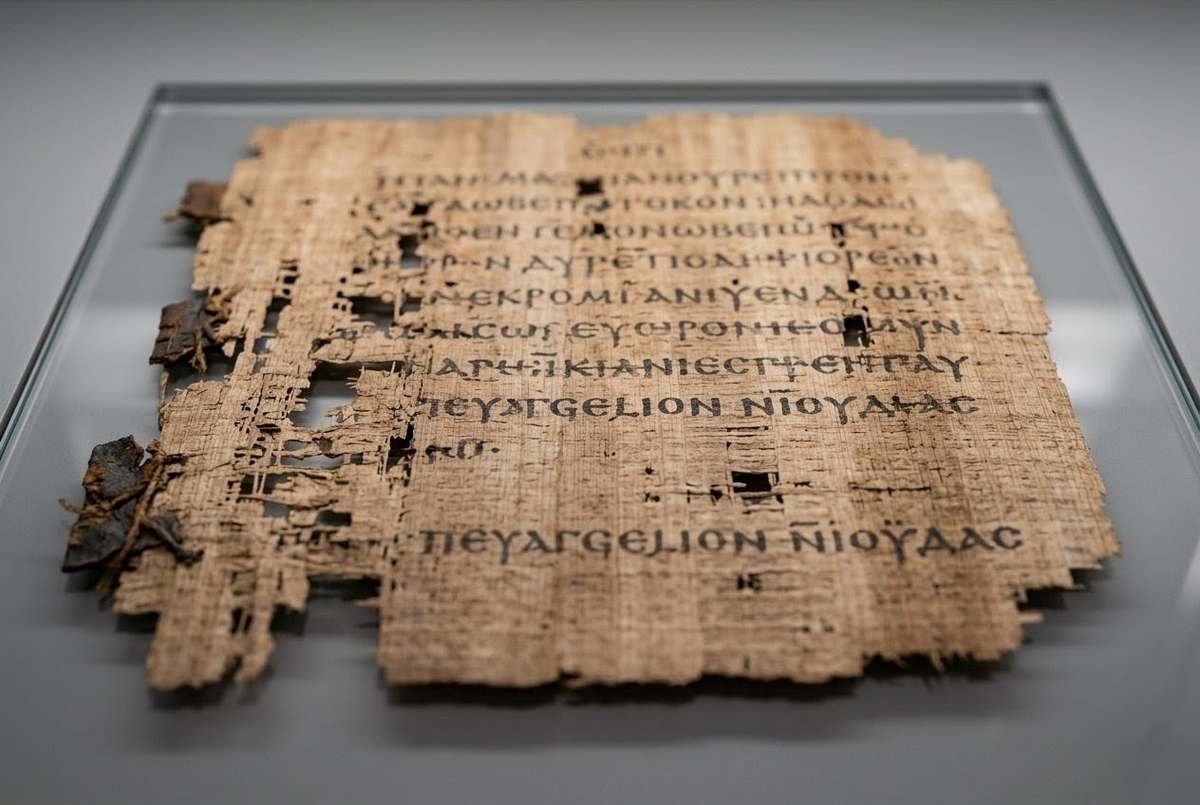
The text comes from Codex Tchacos, a fourth-century Coptic manuscript unrelated to the Nag Hammadi library but spiritually contiguous with it. It represents the Sethian tradition at its most subversive, deploying sophisticated cosmological frameworks to unmask the god of Israel as a lower administrator—the demiurge Saklas—and revealing the twelve apostles as unwitting servants of the archontic system. This is not mere counter-history; it is a systematic theological dismantling of apostolic authority itself.
Contents
- Discovery and Publication: From Tomb to Translation
- The Betrayal as Liberation: Docetic Soteriology
- Sethian Cosmology and the Luminous Cloud
- The Curse and the Crown: Ritual Critique
- The Demiurge Unmasked: Saklas and the Twelve
- Historical Significance and Scholarly Debate
- Frequently Asked Questions
- Further Reading
- References and Sources
Discovery and Publication: From Tomb to Translation
What is the Gospel of Judas?
The Gospel of Judas is a Sethian Gnostic text from the second century CE, preserved in Codex Tchacos (CT), a fourth-century Coptic manuscript discovered in Egypt in the 1970s. Unlike the Nag Hammadi texts, which were buried as a library, this codex survived through antiquities trafficking, spending decades in a Swiss bank vault before scholarly restoration. It presents Judas Iscariot not as betrayer but as the only disciple who understood Jesus’s true identity and mission.
The manuscript’s provenance reads like a thriller of institutional malpractice. Discovered by peasants in a limestone cave near El Minya, Egypt, in the 1970s, the leather-bound codex passed through a series of shadowy antiquities dealers, suffered damage from improper storage (including a stint in a freezer), and finally reached the Maecenas Foundation in Switzerland. There, it underwent restoration and C14 dating, confirming its fourth-century origin.
The National Geographic Society acquired publication rights, releasing the text in 2006 with simultaneous translation by Rodolphe Kasser, Marvin Meyer, and Gregor Wurst. The publication caused immediate academic controversy. Scholars debated the reconstruction of lacunae, the interpretation of key passages, and the text’s relationship to Sethian traditions. Some questioned whether Judas was truly rehabilitated or merely presented as the least flawed of a flawed cohort. The administrative chaos of the manuscript’s journey—decades of private hoarding, institutional competition, and physical deterioration—ironically mirrors the text’s own themes of hidden knowledge, illegitimate authority, and the suppression of uncomfortable truths.
The Betrayal as Liberation: Docetic Soteriology
The canonical gospels present Judas as the archetype of treachery, the thief who betrayed the Son of Man for thirty pieces of silver. The Gospel of Judas presents him as the only disciple capable of comprehending the docetic nature of Christ’s embodiment. The key passage inverts the entire symbolic economy of the passion:
Primary Source Citation: “You will exceed all of them. For you will sacrifice the man that clothes me. Already your horn has been raised, and your wrath has been kindled, and your star has passed by, and your heart has become strong” (CT 4, 56-57, trans. Meyer).
The “betrayal” becomes necessary liberation. The material body—”the man that clothes me”—constitutes the prison from which the spiritual Christ must escape. Judas, by handing Jesus over to the authorities, facilitates the release of the divine spark from its material vessel. The kiss in Gethsemane transforms from sign of treachery into seal of secret knowledge between teacher and student, a recognition that transcends the physical appearance.
This is sophisticated docetic christology. The other disciples misunderstand entirely, believing Jesus desires an earthly kingdom, the overthrow of Roman rule, the enforcement of Jewish law. They worship the lower god—the demiurge Yaldabaoth, Saklas, Nebro—without recognising their own captivity. Only Judas perceives that Jesus’s kingdom is not of this world because this world is not of the true God. He operates as the thirteenth, exceeding the twelve-fold structure of zodiacal fate and apostolic authority.
Sethian Cosmology and the Luminous Cloud
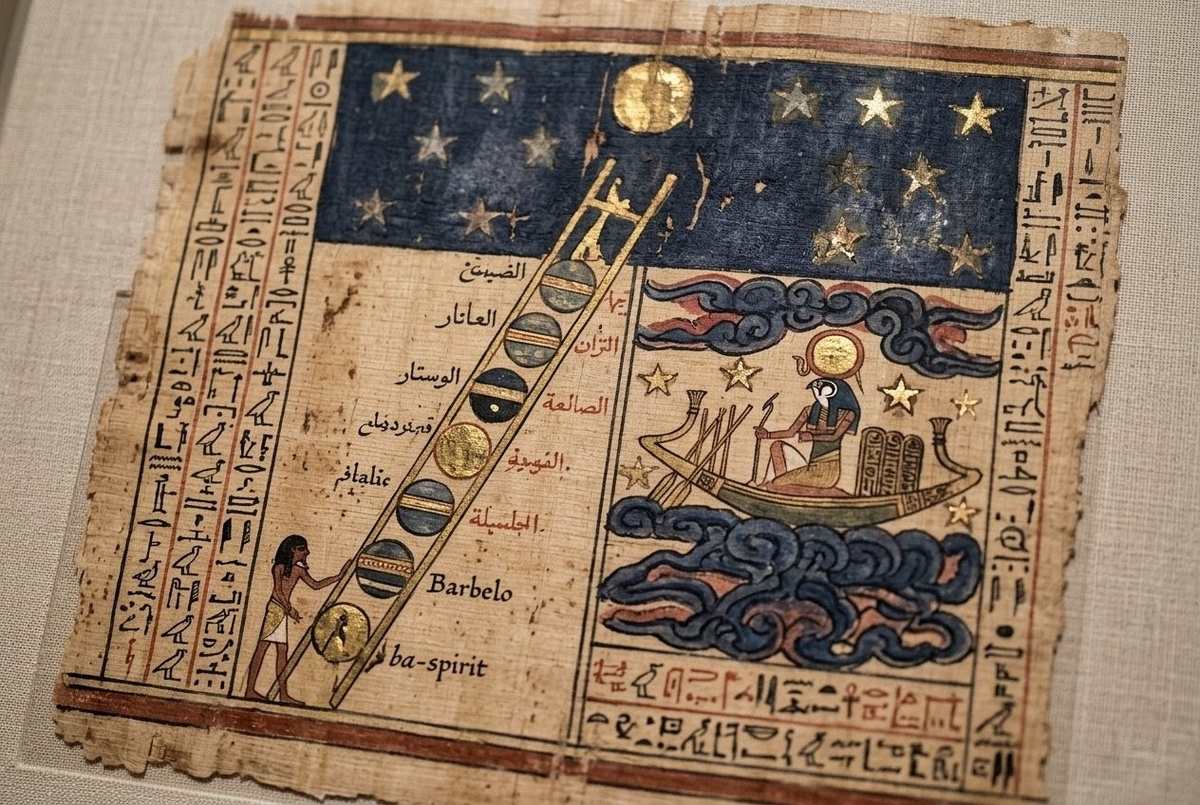
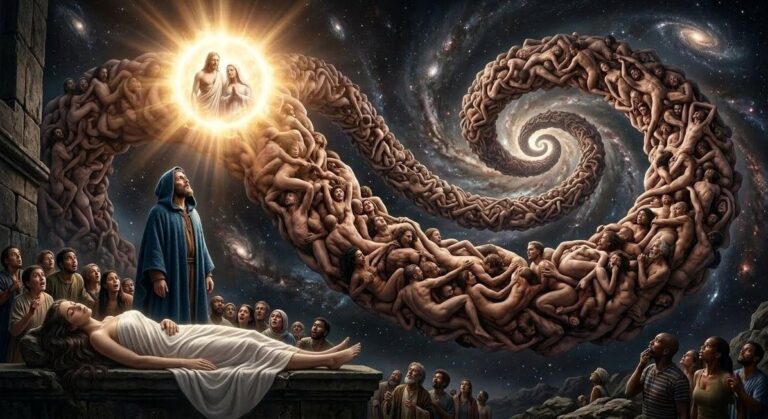
The text operates within fully developed Sethian metaphysical frameworks. Jesus originates from the “luminous cloud,” the realm of Barbelo, the divine mother and first thought of the transcendent Father. He has descended through the planetary spheres, bypassing the archontic checkpoints, to awaken the sleeping sparks trapped in human form. The other disciples perceive only the human appearance; Judas alone discerns the divine presence shining through the fleshly vessel.
The numerology is precise and subversive. “The stars bring matters to completion,” Jesus explains, establishing the twelve signs of the zodiac as governors of fate. “Your star has led you astray,” he tells the other disciples—bound by the predetermined motions of the cosmic clockwork. But Judas’s star differs. His is the thirteenth, the one that exceeds the dodecadic circle, the stellar influence that breaks rather than binds. He belongs to the generation of Seth—the immovable race, the spiritual elect who stand outside the jurisdiction of the planetary powers.
This is not the antisemitism of later Christian polemic, though careless readings have suggested as much. It is anticarnalism directed against all who serve the god of this world, whether Jewish, Christian, or pagan. The “kingdom” the other disciples seek is the kingdom of the demiurge—the blind god, the jealous administrator who claims exclusive divinity. Judas recognises this god as a lower power, a cosmic middle manager rather than the ultimate source.
The Curse and the Crown: Ritual Critique
The text opens with a startling ritual confrontation. The disciples offer thanksgiving prayers over bread—proto-Eucharistic celebration—when Jesus laughs. “Why are you agitated?” he asks. “You are celebrating your god while the God of the cosmos is being praised.” He means: your rituals feed the archons. Your piety sustains the prison. The bread becomes a symbol of the material order, the thanksgiving a hymn to the jailer.
Primary Source Citation: “You will become the thirteenth, and you will be cursed by the other generations—but you will come to rule over them. In the last days they will curse your ascent to the holy generation” (CT 4, 44-45, trans. Meyer).
The disciples react with shock, offence, fury. They turn on Judas because he alone accompanies Jesus into the cloud of divine presence, receiving teachings they cannot access. Later, they experience a vision of a great house with an altar—assuming this temple represents their inheritance. Jesus corrects them: that house is the dwelling of the demiurge, and they are its unwitting priests. The altar feeds the lower god; the rituals bind rather than liberate.
The curse is historically real. Two millennia of Christian tradition have execrated Judas as the archetype of treachery, the name invoked to condemn traitors and apostates. But in this gospel, the curse transforms into the crown of thorns become crown of glory. To be cursed by the worshippers of the lower god is to be vindicated by the higher. The thirteenth disciple accepts this exile from human approval as the necessary cost of accurate perception.
The Demiurge Unmasked: Saklas and the Twelve
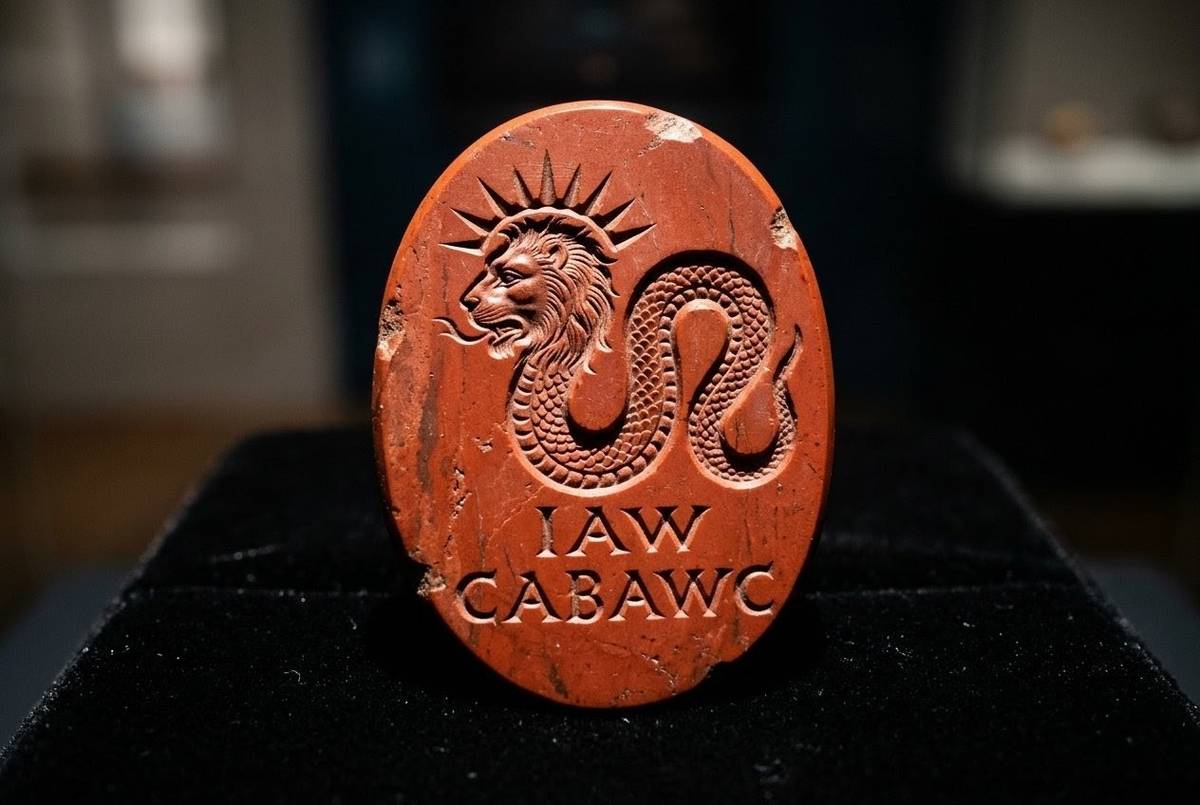
The Gospel of Judas offers one of the clearest expositions of demiurgical theology in the entire Gnostic corpus. Saklas—the fool, the blind god—creates Adam and Eve, establishes the generations, sets up the stars as governors of fate. He thinks he is ultimate. He is merely a middle manager unaware of the corporate hierarchy above him.
Primary Source Citation: “Let twelve angels come into being to rule over chaos and the underworld. And look, from the cloud there appeared an angel whose face flashed with fire and whose appearance was defiled with blood. His name was Nebro, which means ‘rebel.’ Another angel, Saklas, also came from the cloud” (CT 4, 51, trans. Meyer).
These twelve angels—Nebro (rebel) and Saklas (fool) foremost among them—correspond to the twelve signs of the zodiac, the planetary powers, the archons who control the material world. The twelve disciples symbolically align with these powers, representing the old order that must be transcended. They are not evil, merely deceived—middle managers who think they report to the CEO when they actually serve a regional supervisor unaware of the board of directors.
Judas stands outside this dodecadic structure. He is the thirteenth, the one who exceeds the zodiacal circle, who breaks the wheel of fate. By handing Jesus over, he accomplishes what the other disciples cannot conceive: the release of the divine from material entrapment, the escape of the spiritual from the administrative prison of flesh and fate. He becomes the paradoxical saviour of the saviour, the one who facilitates liberation through apparent condemnation.
Historical Significance and Scholarly Debate
The publication of the Gospel of Judas in 2006 generated global controversy that transcended academic theology. The National Geographic documentary sensationalised the find as “the lost gospel that reveals Jesus’s secret betrayer,” while scholarly communities debated its authenticity, interpretation, and implications for Christian origins. The initial translation portrayed Judas as a hero; subsequent scholarship by April DeConick and others suggested a more nuanced reading—Judas as the least bad of a bad lot, still trapped in the violence of the material world even as he perceives its nature.

But beyond the media frenzy, the text poses a hermeneutical question that refuses burial: What if the villains of sacred history were actually the heroes? What if the narrative we’ve received represents the demiurge’s version—the account written by the jailers to condemn the jailbreaker? Judas becomes the archetype of the misunderstood truth-teller, the one who acts from knowledge while others act from ignorance, willing to be cursed by the world to serve the truth.
Do not read it as straightforward history. Read it as hermeneutics—a way of reading that asks: who benefits from this story? The canonical gospels benefit the church that preserved them, the apostolic succession that claims authority from the twelve. The Gospel of Judas benefits the excluded, the cursed, the thirteenth who sees through the administrative control of the twelve. The text remains alive because the demiurge is still in business, and his worshippers still control the narratives that shape reality.
Frequently Asked Questions
What is the Gospel of Judas and where was it found?
The Gospel of Judas is a Sethian Gnostic text from the second century CE, preserved in Codex Tchacos discovered in Egypt in the 1970s. Unlike the Nag Hammadi library, it survived through antiquities markets and was published in 2006 after decades of institutional intrigue and restoration.
Does the Gospel of Judas really make Judas Iscariot a hero?
The text presents Judas as the only disciple who understood Jesus’s true identity and mission. While initial translations portrayed him as a hero, later scholarship suggests he is the least flawed of a flawed cohort–the only one who perceives the docetic nature of Christ, though he remains trapped in material violence.
What is docetic christology in the Gospel of Judas?
Docetic christology holds that the divine Christ only appeared to have a material body. In this gospel, Judas facilitates the ‘betrayal’ to release the spiritual Christ from his material prison–‘the man that clothes me’–making the passion a liberation rather than an execution.
Who is Saklas in the Gospel of Judas?
Saklas (meaning ‘fool’) is the demiurge or lower creator god who made Adam and Eve and established the twelve angels to rule over chaos. He is the blind god who thinks himself ultimate but is merely an administrator unaware of the transcendent Father above him.
Why is Judas called the thirteenth disciple?
Judas represents the thirteenth, exceeding the twelve apostles who correspond to the twelve signs of the zodiac and the twelve archontic powers. The number thirteen breaks the dodecadic cycle of fate, representing the generation of Seth that stands outside cosmic determinism.
How does the Gospel of Judas relate to Nag Hammadi texts?
Though physically separate from Nag Hammadi, it shares Sethian cosmology with the Apocryphon of John, the radical subversion of the Second Treatise of the Great Seth, and the insider-outsider dynamic of the Testimony of Truth. It represents the same theological world.
Is the Gospel of Judas authentic or a forgery?
The manuscript is authentic fourth-century Coptic, dated by C14 analysis and material testing. The text itself derives from the second century CE based on theological parallels with other Sethian texts. It is not a modern forgery, though its interpretation remains debated.
Further Reading
- Apocryphon of John: Gnostic Creation Myth — The foundational Sethian text sharing the cosmology of Barbelo, Yaldabaoth, and the luminous cloud.
- Second Treatise of the Great Seth — Another radical inversion of the passion narrative, presenting the crucifixion as illusion and the true Christ as laughing above the cross.
- Reality of the Archons — The Sethian exposition of demiurgical theology and the blindness of the lower creator god.
- Testimony of Truth — The insider-outsider dynamic and critique of apostolic authority paralleling the Gospel of Judas.
- Gospel of Judas: Controversial Traditions — Extended examination of the manuscript’s discovery, trafficking, and scholarly debates.
- Sethian and Valentinian Traditions — Comparing the two major branches of Gnosticism and their distinct approaches to salvation.
- Apocryphon of James — Secret teachings passed to the brothers of Jesus, exploring alternative apostolic authority.
- Apocalypse of Adam — Sethian text from Nag Hammadi presenting the generation of Seth as the immovable race.
- Nag Hammadi Library: Complete Guide — Master index for navigating all 46 tractates and related texts including Codex Tchacos.
- Nag Hammadi Library: Complete Reader’s Guide — Essential orientation for understanding the discovery and significance of Gnostic scripture.
References and Sources
The following sources support the claims and quotations presented in this article. All citations to the Gospel of Judas represent direct translations from the Coptic text of Codex Tchacos as established in the standard critical editions.
Primary Sources and Critical Editions
- [1] Kasser, R., Meyer, M., & Wurst, G. (Eds.). (2006). The Gospel of Judas. National Geographic.
- [2] Meyer, M. (2007). The Nag Hammadi Scriptures. HarperOne. [Includes Gospel of Judas]
- [3] Robinson, J.M. (1977). The Nag Hammadi Library in English. Harper & Row.
- [4] Waldstein, M. & Wisse, F. (1995). The Apocryphon of John. Brill.
- [5] Layton, B. (1987). The Gnostic Scriptures. Doubleday.
Scholarly Monographs and Interpretive Studies
- [6] DeConick, A.D. (2009). The Thirteenth Apostle: What the Gospel of Judas Really Says. Continuum.
- [7] King, K.L. (2006). The Secret Revelation of John. Harvard University Press.
- [8] Turner, J.D. (2001). Sethian Gnosticism and the Platonic Tradition. Presses Universitaires de Louvain.
- [9] Brankaer, J., & Bethge, H.-G. (2007). Codex Tchacos: Texte und Analysen. Walter de Gruyter.
- [10] Ehrman, B.D., & Pleše, Z. (2011). The Apocryphal Gospels: Texts and Translations. Oxford University Press.
Comparative Studies and Reception History
- [11] Pagels, E.H. (1979). The Gnostic Gospels. Random House.
- [12] Meyer, M. (2013). “The Gospel of Judas and the Earthly Kingdom.” In The Gospel of Judas in Context, ed. M. Scopello. Brill.
- [13] Schenke Robinson, G. (2009). “The Relationship of the Gospel of Judas to Sethian Gnosticism.” In The Gospel of Judas: Approaching the New Gospel, ed. M. Scopello. Brill.
- [14] DeConick, A.D. (2013). “The Gospel of Judas: A New Perspective on the Disciple Who Betrayed Jesus.” Vigiliae Christianae, 67(2), 113-129.
- [15] Schucman, H. (2020). “Codex Tchacos: Conservation and Controversy.” Journal of Coptic Studies, 22, 157-178.