
Pneumatic, Hylic, and Psychic: The Three Natures and the Geography of Awakening
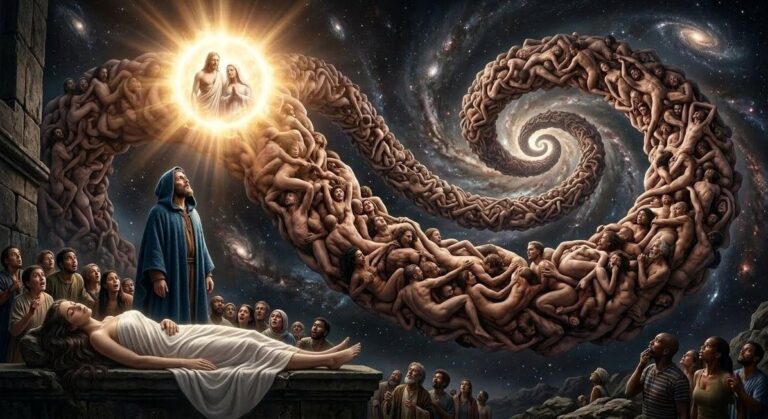
Among the most enduring and unsettling ideas in the Nag Hammadi Library is the claim that human beings are not all cut from the same cloth. The Gnostics did not merely distinguish between the saved and the damned, the virtuous and the wicked. They proposed a tripartite anthropology — a division of humanity into three natures, each defined by its relationship to matter, soul, and spirit. The hylikoi are bound to flesh and fate, lacking the divine spark that makes salvation possible. The psychikoi possess soul, conscience, and the capacity for moral improvement; they can achieve a measure of peace and order, yet they cannot cross the threshold into the Pleroma, the divine fullness, without the transformative knowledge called gnosis. The pneumatikoi carry the pneuma, the breath or spirit that is consubstantial with the divine realm above; their return to the Pleroma is not earned but recognised, not achieved but remembered.
This article anchors the three-nature typology in its primary sources — the Apocryphon of John, the Tripartite Tractate, the Authoritative Teaching, and the patristic reports of Irenaeus — before tracing how this ancient framework quietly structures much of modern “awakening” discourse. It asks whether the contemporary landscape of spiritual seekers, from the wellness-industry psychic to the non-dual pneumatic, is not so much a departure from Gnostic thought as its unwitting continuation.
Table of Contents
- The Three Natures in Primary Sources
- The Hylic: Bound to Matter and Fate
- The Psychic: Moral Capacity Without Gnosis
- The Pneumatic: Spirit and the Return to Fullness
- The Typology in Modern Awakening Discourse
- Frequently Asked Questions
- Further Reading
- References and Sources

The Three Natures in Primary Sources
The most detailed account of the three natures appears in the Apocryphon of John (NHC II,1), where the saviour reveals to John that humanity was fashioned by the Demiurge Yaldabaoth from the dust of the ground, yet animated by a divine spark that Sophia had secretly hidden within the first human. From the three drops of light that the Demiurge inadvertently breathed into Adam, three races or types of human being descend. The first drop produces the pneumatikoi, those who possess spirit and are destined to return to the Pleroma. The second produces the psychikoi, those endowed with soul, capable of faith and moral effort but unable to ascend without receiving gnosis. The third produces the hylikoi, those composed of matter alone, who perish with the body and have no share in eternal life.
Primary Source Citation: NHC II,1 24:26-25:18
“And he placed over them the authorities, and he commanded each one of them to fashion a human being… And the rulers created seven psychics for each type of body. And the psychics that were created were given a portion of light… And the first Adam of light is spiritual, and the second is psychic, and the third is material.”
The Tripartite Tractate (NHC I,5), the only fully preserved systematic Valentinian treatise in the Nag Hammadi corpus, offers a more philosophically refined version of the same scheme. Here the three natures are described as three “substances” (ousiai): the spiritual, the psychic, and the material. The spiritual substance is “the power that came into being by means of the word,” consubstantial with the Saviour and predestined for salvation. The psychic substance is “the power that came into being by means of the soul,” capable of choosing between good and evil, faith and unbelief. The material substance is “the power that came into being by means of the body,” bound to corruption and destined for destruction. As scholar Einar Thomassen has shown, the Tripartite Tractate notably softens the determinism of the Sethian scheme: the psychic is not merely a fixed intermediate type but a realm of genuine moral freedom, where salvation is possible through the choice of faith, even if it remains incomplete without the reception of spirit.
The Authoritative Teaching (NHC VI,3), also known as the Authentikos Logos, presents the three-nature typology through the extended allegory of a soul that descends from the Father’s house into a foreign land, is stripped of her garments, and must recover her true identity. The text speaks of three “ways” or conditions of the soul: those who are entirely seduced by the world and never remember their origin; those who struggle, repent, and are partially restored through moral instruction; and those who, awakened by the Father’s call, recognise themselves immediately and return clothed in light. The allegory is not abstract philosophy; it is pastoral theology, addressed to readers who are invited to locate themselves within the typology and to understand that their present condition is not final.
Patristic sources confirm that this typology was not an isolated speculation but a central pillar of Valentinian teaching. Irenaeus of Lyons, writing in the late second century, reports that the Valentinians divided humanity into three classes corresponding to the three substances: the material, who are “by nature doomed to destruction”; the psychic, who “by nature are in the middle, and if they choose what is better, they shall receive rest in the place of the psychics, but if what is worse, they shall perish with the material”; and the spiritual, who “shall by every means be saved entirely.” Hippolytus of Rome adds that the psychic class corresponds to ordinary Christians — those who possess faith, practise virtue, and follow the Church, yet who require the intervention of the spiritual elect to be initiated into the higher mysteries.
The Hylic: Bound to Matter and Fate
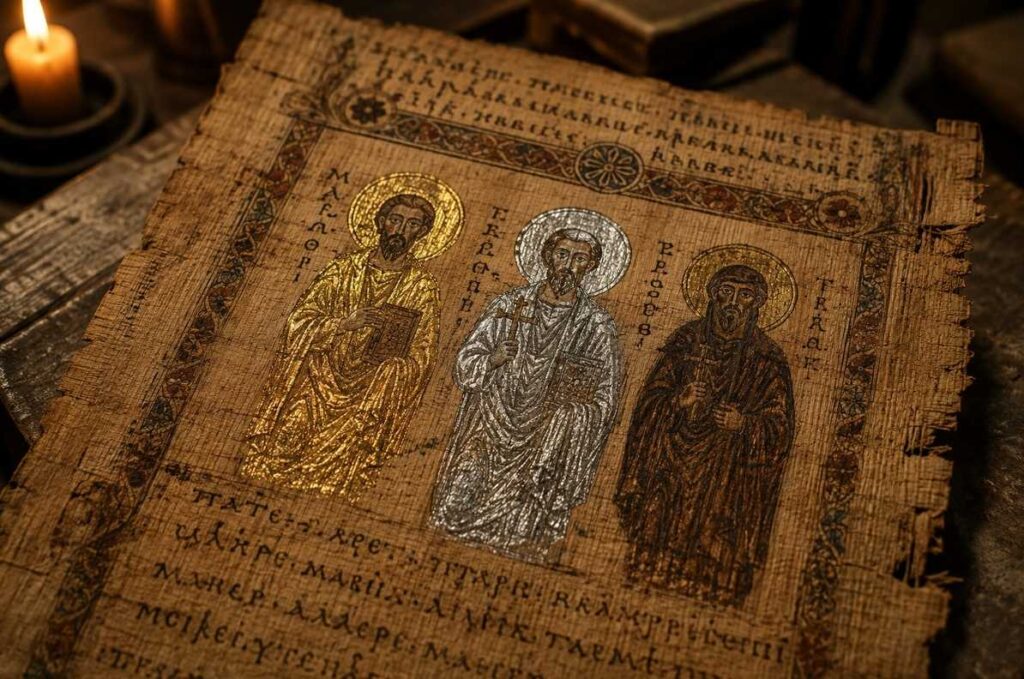
The hylikoi take their name from hyle, the Greek word for matter, wood, or raw material. In Gnostic anthropology, they are those in whom the divine spark is entirely absent. They are not wicked in any conventional moral sense; rather, they are opaque to transcendence. The cosmos is all they know, and the cosmos is all they can know. They eat, reproduce, labour, and die according to the rhythms of nature and the dictates of fate (heimarmene), never suspecting that there might be something above the ceiling of their world.
The Apocryphon of John describes the hylikoi as the offspring of the third drop of light, which was so weak that it produced only fleshly beings, “subject to the authorities and the powers.” These are the “children of the left,” the mass of humanity that serves the Demiurge unconsciously, perpetuating his order through conformity, consumption, and the unexamined acceptance of the given world. They have no capacity for gnosis because they have no pneuma to awaken. Their end is the same as their beginning: dissolution into the elements from which they were formed.
It is essential to understand that the Gnostics did not despise the hylikoi. The texts do not call for their punishment or exclusion from community life. Rather, they are described with a kind of cosmic pity — as sleepers who cannot be woken because they have no faculty for waking. The tragedy of the hylikos is not sin but structural limitation. He is not free to choose gnosis because he lacks the organ of recognition. In this respect, the Gnostic view is closer to certain forms of Buddhist determinism or to modern neuroscientific discussions of consciousness than to the Augustinian doctrine of original sin, which makes every human being morally accountable for a fall they did not commit.
In modern terms, the hylikos corresponds to what we might call the thoroughgoing materialist: not necessarily the scientist who studies matter, but the person for whom matter is the only register of reality. This is the individual who experiences the world as a closed system of causes and effects, who finds talk of spirit or awakening either unintelligible or merely metaphorical, and who lives within the horizon of consumption, reproduction, and death without the ache of transcendence. The Gnostic texts would say that this condition is not a failure of will but a fact of constitution. The hylikos is not bad; he is simply not equipped for the journey.
The Psychic: Moral Capacity Without Gnosis
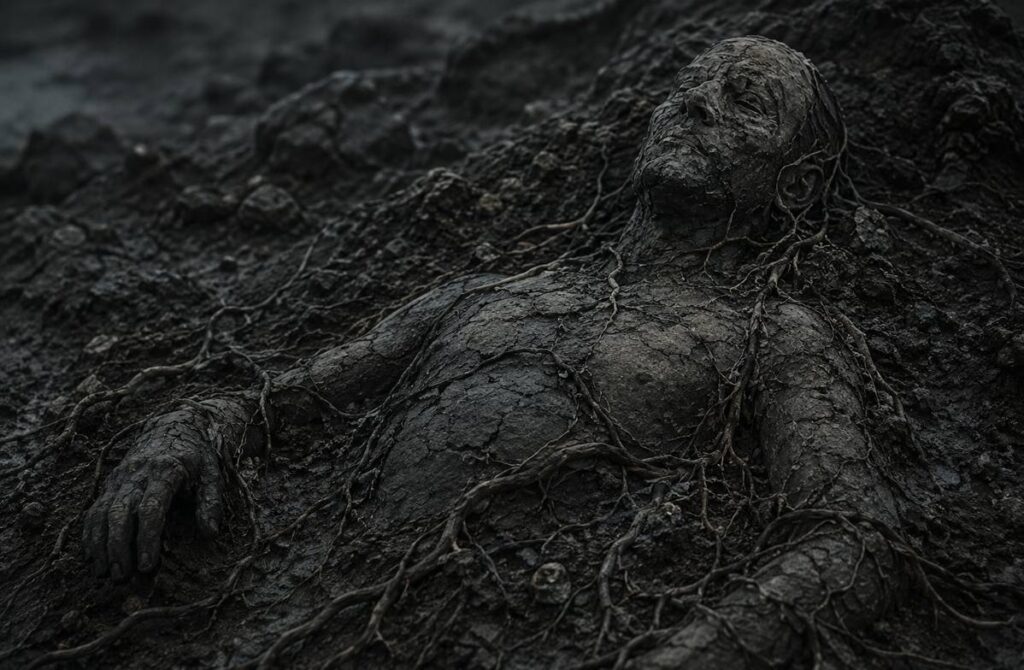
The psychikoi occupy the middle ground, and it is here that the Gnostic typology becomes most psychologically acute. The psychic possesses psyche — soul, mind, conscience, the capacity for moral reasoning and emotional depth. He can distinguish good from evil. He can repent, reform, and strive. He can join a community, practise devotion, and live a life of evident virtue. Yet none of this, in the Gnostic framework, is sufficient for entry into the Pleroma. The psychic can be saved from the worst consequences of the fall — from the total dissolution that awaits the hylikos — but he cannot ascend to the divine fullness without receiving gnosis, the direct experiential knowledge that transforms the knower.
The psychic is not damned, but he is detained. He has the passport of virtue, yet he lacks the visa of recognition.
The Tripartite Tractate develops this point with particular subtlety. The psychic substance, it says, “came into being by means of the soul,” and it possesses “the power of choice.” It can incline toward the better or the worse, toward faith or unbelief. If it chooses faith, it receives “rest in the place of the psychics” — a peaceful intermediate state, a kind of celestial suburbia, but not the Pleroma itself. To enter the Pleroma, the psychic must receive the spiritual seed, the pneuma, which is not generated from within the soul but comes from above, through the Saviour’s intervention. The psychic cannot bootstrap himself into spirit. He can prepare the ground, but the seed must be sown from outside.
This distinction has enormous implications for how the Gnostics understood the relationship between morality and salvation. Moral effort was not dismissed — the psychic who chose the better path was genuinely rewarded with peace and order — but it was understood as preparatory rather than sufficient. The psychic who believes that his own virtue will carry him to the highest realm is committing a subtle form of the same error that produced the Demiurge: the confusion of his own capacity with the totality of what is possible. He is not wicked; he is simply mistaken about the geography of salvation.
In the modern landscape, the psychic corresponds to a broad swathe of contemporary spirituality. He is the wellness practitioner, the mindfulness devotee, the ethical consumer, the person who has left institutional religion but retained its moral scaffolding. He has tasted the ache of transcendence and has responded with discipline, practice, and self-improvement. He may have experienced genuine psychological benefits — reduced anxiety, greater empathy, a sense of purpose — yet he remains, in the Gnostic sense, in the middle. He has not crossed the threshold into gnosis because he has not yet recognised that the self who practises is not the self who is saved. The psychic’s danger is not moral failure but spiritual complacency: the belief that his own efforts are enough, that the workshop of the soul is the whole of the cosmos.

The Pneumatic: Spirit and the Return to Fullness
The pneumatikoi are those in whom the divine spark — the pneuma — is present. This pneuma is not a psychological state, a moral achievement, or an earned reward. It is a metaphysical given, a fragment of the Pleroma that has descended into the Kenoma and now waits to be recognised. The pneumatic does not become spiritual through effort; he discovers that he has been spiritual all along. Salvation, for the pneumatic, is not acquisition but recollection.
The Apocryphon of John describes the pneumatics as the offspring of the first and purest drop of light, “the power that came into being by means of the word.” They are “the children of the right,” destined to be “saved entirely” and to return to the Pleroma clothed in their original garments of light. The Gospel of Philip states this with characteristic compression: “Those who have received the spirit of truth — they are the ones who have received the light.” The pneumatic is not distinguished by behaviour but by constitution. He carries the organ of recognition, and when the Saviour’s call arrives, he responds not with effort but with memory.
Yet the texts are careful to avoid a crude determinism that would make the pneumatic indifferent to the conditions of his life. The Authoritative Teaching presents the pneumatic soul as one who must still undergo the ordeal of descent, the stripping of garments, and the temptation to forget. The spark may be present, but it can be buried under layers of identification with matter, soul, and the false selves constructed by the Demiurge’s world. The task of the pneumatic is not to become something he is not but to strip away what he is not — to dissolve the accretions of hyle and psyche that obscure the light of the spirit. This is why the Gnostic path is so often described in negative terms: not ascent through accumulation but descent through stripping, not building up but burning away.
The pneumatic’s relationship to the psychic is also nuanced. The Gnostic texts do not present the three natures as sealed castes with no traffic between them. The psychic can receive the spiritual seed; the hylikos, in some Valentinian systems, can be “adopted” into a higher condition through the intervention of the elect. The Tripartite Tractate speaks of the Saviour’s descent as an act that reaches all three substances, offering each what it is capable of receiving. The pneumatic receives the fullness; the psychic receives rest; the material receives dissolution. Each gets what is appropriate, and in this sense the Gnostic scheme is not cruel but proportionate. It is a cosmology of fittingness rather than of arbitrary exclusion.

The Typology in Modern Awakening Discourse
The modern spiritual marketplace is crowded with languages, practices, and promises, yet beneath the surface noise, the Gnostic typology reasserts itself with surprising clarity. Consider the three dominant types of contemporary seeker. First, there is the materialist mainstream — the person for whom spirituality is either irrelevant or reducible to brain chemistry, evolutionary psychology, and the optimisation of wellbeing. This is the modern hylikos, not because he lacks intelligence or decency, but because his world is closed to the question of transcendence. He may be a brilliant neuroscientist or a devoted parent; he may live with integrity and compassion. Yet the aperture for gnosis is absent. The cosmos is sufficient, and the ache that might signal something beyond it is diagnosed as anxiety, medicated, and managed.
Second, there is the vast middle realm of the psychic — the wellness culture, the mindfulness industry, the self-help bookshelf, the retreat circuit. Here we find genuine aspiration, real suffering, and authentic transformation. The psychic of the twenty-first century has recognised that material success is insufficient. He has turned inward, explored trauma, practised breathwork, and sought community. He has become emotionally literate, psychologically sophisticated, and morally conscientious. Yet he remains, in the Gnostic sense, in the middle. His awakening is horizontal rather than vertical — an expansion of the soul’s capacity rather than a recognition of the spirit’s origin. He has not yet discovered that the self who practises is itself part of the Kenoma, and that the Pleroma is not a better version of the self but the ground from which the self is a temporary derivative.
Third, there is the pneumatic — or rather, the one in whom the pneumatic condition is awakening. This is not the person who has read the most books, attended the most retreats, or mastered the most techniques. It is the one who has undergone the crisis of recognition: the sudden or gradual awareness that the world of forms is not ultimate, that the self is not the centre, and that the light sought through practice has been present all along as the very condition of seeking. This recognition is not an achievement. It cannot be taught, though it can be pointed to. It cannot be earned, though it can be prepared for. It is, in the strictest sense, a gift — or, as the Gnostics would say, a remembering.
The modern discourse of “awakening” often conflates these three levels, promising that meditation, psychedelics, or the right teacher will carry anyone from the condition of the hylikos to that of the pneumatic. The Gnostic texts offer a more sober assessment. The hylikos cannot be converted into a pneumatic by technique, because he lacks the organ of recognition. The psychic can be prepared, supported, and guided, but he cannot enter the Pleroma until the spiritual seed is received. And the pneumatic, however obscured his spark may be, carries the capacity for recognition from the beginning — his task is not to become but to uncover.
This is not elitism. It is phenomenology. The Gnostics were describing what they observed: that human beings respond to the call of transcendence in radically different ways, not because of merit or effort but because of constitution. The modern seeker who finds himself stuck in the psychic realm — practising diligently yet never breaking through — is not failing. He is simply discovering the limits of the soul’s capacity. The breakthrough, if it comes, will not be a bigger effort but a different kind of event: the recognition that the one who has been seeking is already the one who is sought.
Frequently Asked Questions
What are the three Gnostic natures of humanity?
The three Gnostic natures are the hylikoi (material ones), bound to flesh and fate with no divine spark; the psychikoi (soul-endowed ones), capable of faith and moral effort but unable to enter the Pleroma without gnosis; and the pneumatikoi (spiritual ones), who carry the divine spark and are destined to return to the Pleroma through recognition rather than effort.
Can the psychic nature be saved according to Gnostic texts?
Yes, but partially. The psychic can achieve rest, moral order, and a peaceful intermediate state through faith and good works, yet cannot enter the divine Pleroma without receiving gnosis — the direct experiential knowledge that transforms the knower. The psychic requires the spiritual seed from above to complete the journey.
What is the difference between psyche and pneuma in Gnosticism?
Psyche (soul) is the intermediate substance that gives moral capacity, emotional depth, and the power of choice. Pneuma (spirit) is the divine spark consubstantial with the Pleroma, the organ of recognition that makes gnosis possible. The soul can prepare the ground; only the spirit can complete the return.
Is the three-nature typology found in the Nag Hammadi Library?
Yes. The Apocryphon of John describes three races descending from three drops of light. The Tripartite Tractate describes three substances. The Authoritative Teaching presents three conditions of the soul through allegory. Patristic sources including Irenaeus and Hippolytus confirm this as central Valentinian teaching.
Does the Gnostic view mean some people are beyond salvation?
The Gnostic texts describe the hylikos as lacking the divine spark and therefore unable to ascend, but this is a metaphysical observation rather than a moral condemnation. The texts emphasise that each nature receives what is appropriate: the pneumatic receives fullness, the psychic receives rest, and the material returns to its elements. It is a cosmology of fittingness, not cruelty.
How does the three-nature typology relate to modern spirituality?
The typology maps surprisingly well onto modern discourse: the materialist mainstream corresponds to the hylikos, the wellness and self-improvement culture to the psychic, and the non-dual or direct recognition traditions to the pneumatic. The framework suggests that not all spiritual paths lead to the same destination, and that technique alone cannot transform constitution.
Is Gnostic elitism justified by the three-nature doctrine?
The texts do not present the pneumatic as morally superior but as constitutionally different. The spark is a given, not an achievement. The Gnostic emphasis is on recognition rather than merit, and several texts suggest that the psychic can receive the spiritual seed and that even the material may be adopted into a higher condition through grace.
Further Reading
Explore these related articles from the ZenithEye archive:
- The Apocryphon of John: Gnostic Creation, Cosmology, and the Three Natures — The primary Nag Hammadi text describing the three races born from three drops of light, the Demiurge Yaldabaoth, and the tripartite anthropology.
- The Tripartite Tractate: The Valentinian System in Full — The only completely preserved systematic Valentinian treatise, offering the three substances and their soteriological destinies in philosophical detail.
- The Authoritative Teaching: The Soul’s Descent and Return to Light — The allegory of the soul’s journey through three conditions, stripped of garments and restored through the Father’s call.
- The Gospel of Philip: Sacrament, Eros, and the Bridal Chamber — Explores the pneumatic language of light, the bridal chamber, and the distinction between children of light and children of the world.
- Sethian and Valentinian Traditions in the Nag Hammadi Library — Comparative overview of the two major Gnostic schools and their distinct but related anthropologies.
- What Is Gnosticism? Defining the Undefinable — Foundational overview of Gnostic diversity, scholarly debates, and the frameworks that shaped the three-nature doctrine.
- The Nag Hammadi Library: The Complete Guide to Gnostic Scriptures — The definitive hub for exploring all thirteen codices and their anthropological teachings.
- States of Knowing: When Consciousness Unravels — Examines the phenomenology of different knowing-states, from ordinary perception to direct recognition, resonating with the pneumatic journey.
- Recognition Beyond Position: The Thread of Direct Knowing — Explores gnosis as recognition rather than acquisition, central to understanding the pneumatic condition.
- The Nag Hammadi Library: A Reader’s Map — Navigational guide for locating three-nature references across the full corpus of forty-six tractates.
References and Sources
The following sources inform the historical, philological, and theological claims made in this article.
Primary Sources and Critical Editions
- [1] Robinson, J. M. (Ed.). (1990). The Nag Hammadi Library in English (3rd ed.). HarperSanFrancisco. — Standard critical edition containing the Apocryphon of John, Tripartite Tractate, Authoritative Teaching, and other three-nature narratives.
- [2] Layton, B. (Ed.). (1989). Nag Hammadi Codex II, 2-7. Brill. — Critical edition of the Apocryphon of John and related Sethian texts with detailed commentary on the three races.
- [3] Thomassen, E. (Ed.). (2006). The Tripartite Tractate. In The Nag Hammadi Scriptures. HarperOne. — Critical edition and introduction to the Valentinian three-substance anthropology.
Patristic Reports and Historical Sources
- [4] Irenaeus of Lyons. (circa 180 CE). Against Heresies. In A. Roberts & J. Donaldson (Eds.), The Ante-Nicene Fathers (Vol. 1). Christian Literature Publishing, 1885. — Primary patristic source for Valentinian three-nature doctrine and soteriology.
- [5] Hippolytus of Rome. (circa 230 CE). Refutatio Omnium Haeresium (The Refutation of All Heresies). In A. Roberts & J. Donaldson (Eds.), The Ante-Nicene Fathers (Vol. 5). Christian Literature Publishing, 1887. — Secondary patristic confirmation of the Valentinian psychic class and its relationship to the Church.
Scholarly Monographs and Critical Studies
- [6] Thomassen, E. (2006). The Spiritual Seed: The Church of the Valentinians. Brill. — Comprehensive analysis of Valentinian theology, three-substance anthropology, and the role of the psychic nature.
- [7] King, K. L. (2003). What Is Gnosticism? Harvard University Press. — Landmark study on the diversity of ancient Gnostic movements and the scholarly construction of the category.
- [8] Pearson, B. A. (2007). Ancient Gnosticism: Traditions and Literature. Fortress Press. — Survey of Sethian and Valentinian traditions with attention to anthropological differences.
- [9] Turner, J. D. (2001). Sethian Gnosticism and the Platonic Tradition. Presses de l’Universite Laval. — Detailed study of the Apocryphon of John and Sethian metaphysics, including the three-race doctrine.
- [10] Brakke, D. (2010). The Gnostics: Myth, Ritual, and Diversity in Early Christianity. Harvard University Press. — Examination of Gnostic diversity with attention to the social and ritual dimensions of three-nature theology.
Safety Notice: This article explores ancient Gnostic anthropology and its implications for modern spiritual discourse. It does not constitute theological, psychological, or spiritual advice. Readers encountering significant anxiety about questions of salvation, spiritual worth, or existential classification are encouraged to consult qualified mental health professionals. Historical engagement with Gnostic texts should complement, not replace, evidence-based approaches to wellbeing. The three-nature typology is presented here as a framework for contemplation, not as a diagnostic tool for judging oneself or others.