What Do Neo Gnostics Believe? Direct Knowing, the Divine Spark and Modern Gnosis
Neo Gnostics do not all believe the same thing. That is the first important point. Neo Gnosticism is not a single church, creed or institution. It is a modern field of direct knowing, shaped by ancient Gnostic texts, contemplative practice, depth psychology, technological culture and the recurring sense that the surface world is not the whole of reality.
What follows is not a catechism. It is a map of recurring themes. Some Neo Gnostics lean heavily on the Nag Hammadi Library and the texts discovered in Egypt in 1945. Others draw from Jungian depth psychology, Hermetic revival, mystical Christianity, contemplative practice or the direct evidence of their own attention. What unites them is not organisational loyalty, but a shared orientation: human beings can know directly, this knowing matters more than inherited belief, and the world as commonly perceived is not the final word on what is real.

In Plain Terms
Neo Gnostics usually believe that direct knowing, or gnosis, matters more than passive belief. They often speak of a divine spark within the human being, false powers that shape perception, and the need to recognise what lies beneath the surface of ordinary reality.
They do not all share one doctrine. Some are Christian Gnostics. Some are independent seekers. Some are scholars, artists, contemplatives or psychologically minded readers of ancient texts. What they tend to share is a suspicion of false authority, a hunger for direct recognition and a sense that spiritual life must be tested in lived experience.
In simple terms: Neo Gnostics believe the human being is more than the world reflects back, and that awakening begins when attention stops accepting the surface as the whole.
Primary Sources and Traditions Discussed
- The Nag Hammadi Library: the Coptic codices discovered in Upper Egypt in 1945, including many of the most important surviving Gnostic texts.
- The Apocryphon of John: a major Sethian creation myth describing Sophia, Yaldabaoth, the archons, the divine spark and the awakening of humanity.
- The Gospel of Thomas: a sayings gospel often read by Neo Gnostics as a text of inner recognition and direct knowing.
- The Gospel of Philip: a Valentinian text exploring sacrament, union, bridal chamber symbolism and transformation.
- Sethian and Valentinian traditions: two major ancient Gnostic currents with different ways of reading the cosmos, the human being and the path of return.
- Hermetic and Platonic sources: related streams of ancient wisdom that shaped later esoteric readings of divine mind, ascent and hidden knowledge.
- Depth psychology: especially Jungian language around shadow, symbolic powers, individuation and the recovery of the deeper self.
- Modern systems: artificial intelligence, digital authority, surveillance, attention capture and the question of discernment in technological life.
How to Read This Article
This article describes what Neo Gnostics tend to believe, not what every Neo Gnostic must believe. The field is diverse. Some readers approach it as religion, some as philosophy, some as spiritual practice, some as psychology, and some as a modern symbolic language for the crisis of attention and authority.
The article moves from ancient sources to modern interpretation without collapsing the two. When ancient texts are discussed, they are treated as sources. When modern systems such as AI, surveillance or algorithmic culture are discussed, they are treated as interpretive parallels, not literal replacements for ancient myth.
Table of Contents
- Do Neo Gnostics Have One Creed?
- Direct Knowing: Gnosis Over Passive Belief
- The Divine Spark Within the Human Being
- Archons, False Authority and Systems of Control
- The Demiurge as World-Maker and Modern Symbol
- What Do Neo Gnostics Believe About Jesus?
- The Body, the World and the Question of Escape
- Technology, AI and Digital Authority
- Neo Gnosticism as Practice
- What Neo Gnostics Usually Do Not Believe
- Why These Beliefs Matter Now
- Related Glossary Terms
- Read Next
- Neo Gnosticism Route
- Frequently Asked Questions
- Further Reading
- References and Sources
- Study Note
Do Neo Gnostics Have One Creed?
No. Neo Gnosticism is not a denomination. It has no single pope, council, authorised liturgy or statement of faith that every reader must sign. What it has is a family resemblance: a set of recurring concerns, images and practices that appear across otherwise different communities.
Some Neo Gnostics gather in small study circles to read the Nag Hammadi texts. Others practise alone, using contemplation, breathwork, prayer, dream work or critical self-inquiry as their main discipline. Some identify as Christian Gnostics, finding in the Gospel of Thomas and the Gospel of Philip a different kind of Christianity. Others identify as Hermetic, esoteric, Buddhist, pagan, philosophical or simply as seekers without labels.
The absence of one creed is not necessarily a weakness. Ancient Gnosticism was already diverse. Valentinian, Sethian, Thomasine and Hermetic-adjacent currents did not speak with one voice. Modern Neo Gnosticism inherits that diversity and brings it into a world shaped by digital networks, plural spiritual identities and global access to once-hidden texts.
What unites the field is not agreement on every detail, but a shared conviction that direct knowing is possible, that false authority must be questioned, and that ordinary perception does not reveal the whole of reality.
Direct Knowing: Gnosis Over Passive Belief
The central commitment of Neo Gnosticism is gnosis. The Greek word means knowledge, but Gnostic usage points to something deeper than information. Gnosis is direct, experiential recognition. It is a kind of knowing that changes the one who knows.
Ancient Gnostic traditions often distinguish between belief received from outside and recognition awakened within. Faith, doctrine, scripture and community may prepare the ground, but they are not the same as gnosis itself. Gnosis is not merely being told that the divine spark exists. It is the inward recognition that something in the human being does not fully belong to the lower order of fear, imitation and forgetfulness.
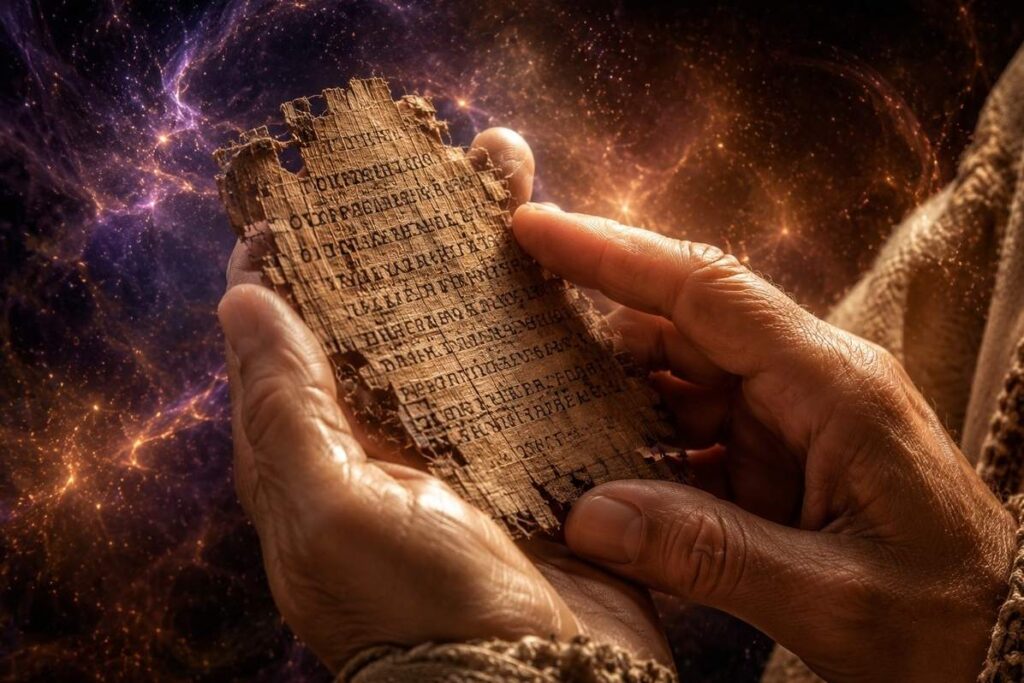
Neo Gnostics understand this in different ways. For some, gnosis is a mystical event: a sudden unveiling in which the ordinary world reveals its hidden depth. For others, it is gradual: a slow clarification cultivated through study, silence, ethical life and attention. For others still, gnosis is a permanent shift in perspective, the kind of recognition that cannot be entirely forgotten once it has arrived.
This changes the meaning of authority. Neo Gnostics may respect teachers, texts and traditions, but they are usually wary of any institution that claims exclusive ownership of truth. The path does not ask the reader to reject all guidance. It asks them not to surrender the faculty of discernment.
The Divine Spark Within the Human Being
If gnosis is the act of recognition, the divine spark is what recognises. This is one of the most important recurring ideas in Neo Gnosticism: the human being carries an inward light or spiritual principle that does not originate from the lower order of ordinary conditioning.
Ancient texts describe this hidden light in different ways. In the Apocryphon of John, the human being becomes luminous because a higher power has entered what the archons attempted to control. In Valentinian language, one may speak of spiritual seed. In broader esoteric language, the idea appears as divine mind, inner light, higher self or hidden spirit.
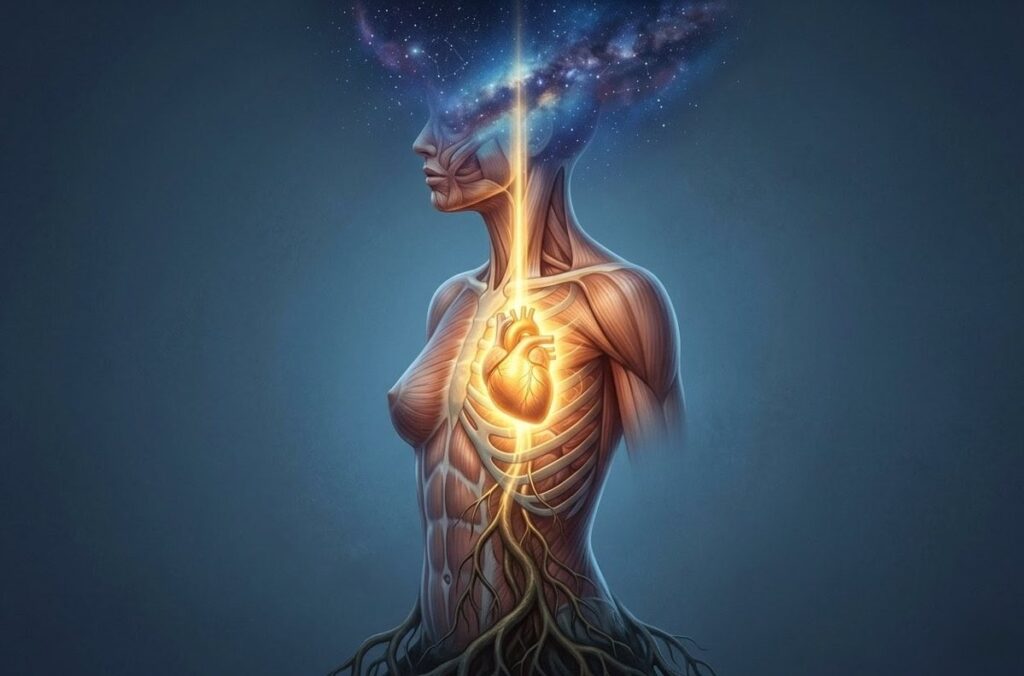
Modern Neo Gnostics often describe the spark in experiential terms. It is the part of us that recognises beauty, feels the pull of truth, senses when something is false and refuses to be fully defined by roles, labels, trauma, appetite or social expectation. It is not the ego. It is not the professional self, the anxious narrator, the public identity or the spiritual costume.
The divine spark is better understood as the hidden capacity for recognition. It is not a reason for superiority. It is a call to wakefulness. The work is not to become special. The work is to remove what prevents the deeper light from becoming conscious.
Archons, False Authority and Systems of Control
If the divine spark is the hidden light within, archons are the powers that keep awareness bound to the surface. The word archon means ruler or authority. In Gnostic cosmology, archons govern the lower world, enforce limitation and obstruct the soul’s awakening.
Ancient texts describe archons as cosmic administrators, planetary rulers and blind authorities who mistake their limited jurisdiction for the whole of reality. They are often associated with the Demiurge, the lower world-maker who claims a false completeness.

Neo Gnostics often read archons on several levels. Mythically, they are the rulers of the ancient texts. Psychologically, they can be internalised voices of fear, shame and conformity. Socially, they can be institutions, ideologies and habits of thought that narrow what may be seen or said. Technologically, they can be systems that shape attention, preference and behaviour without wisdom.
The key insight is not that every difficulty comes from a hidden enemy. The deeper point is that consciousness can be administered. It can be trained to accept smallness, distraction and imitation as normal. In that sense, archons are recognised wherever authority operates without gnosis, compassion or living understanding.
This is why discernment matters. Archontic power weakens when it is seen clearly. The reader who recognises the pattern is no longer entirely inside it.
The Demiurge as World-Maker and Modern Symbol
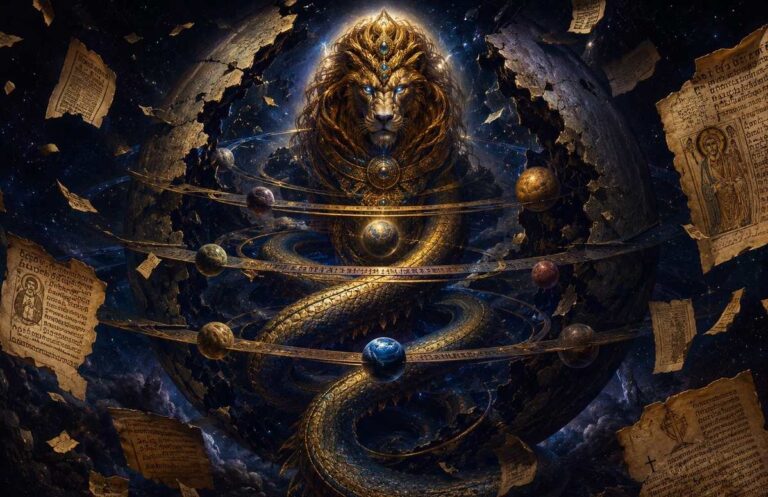
At the centre of many Gnostic myths stands the Demiurge: the lower craftsman or world-maker who fashions the material order. In Sethian texts, this figure is often called Yaldabaoth, Saklas or Samael. He is not the highest source. He is a limited power who mistakes his partial creation for ultimate reality.
The Demiurge matters because he represents blind authority. He builds, organises and governs, yet does not fully understand the higher reality beyond him. His error is not only cruelty. It is ignorance fused with power.
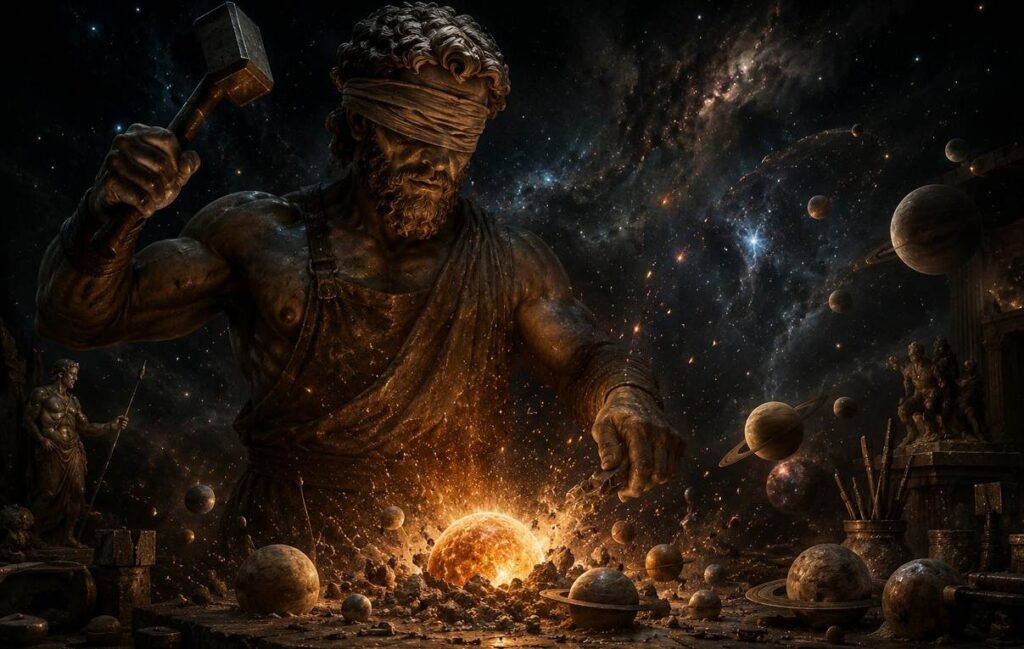
Neo Gnostics use the Demiurge as a symbol for systems that build worlds from limited assumptions and then declare those worlds final. An ideology can become demiurgic. A bureaucracy can become demiurgic. A market system can become demiurgic. A technological platform can become demiurgic when it organises experience while forgetting the depth of the human being inside it.
The Demiurge is not useful as a cartoon villain. He is useful as a pattern: world-making without wisdom. To recognise the pattern is to ask whether the world being presented to us is the whole of reality, or merely the version generated by a lower order of power.
What Do Neo Gnostics Believe About Jesus?
Neo Gnostic views of Jesus are diverse. Some Neo Gnostics are Christian and honour Jesus as Christ, revealer and saviour. Others are not Christian, but still regard Jesus as a teacher of gnosis: one who points human beings back to the hidden light within and beyond them.
The Gospel of Thomas is especially important for many modern readers because it presents Jesus through sayings of recognition, paradox and inner discovery. Its language emphasises seeking, knowing oneself, and recognising the kingdom within and around the human being. For readers drawn to Neo Gnosticism, this often feels closer to direct spiritual instruction than to institutional doctrine.
The Gospel of Philip and the Apocryphon of John give other forms of Gnostic Christology. Jesus may appear as revealer, restorer, awakener or emissary from the higher fullness. The emphasis is usually less on external conformity and more on awakening the soul to what it has forgotten.
What unites many Neo Gnostic readings is the conviction that Jesus represents the possibility of awakened humanity. He is not merely someone to believe about. He is someone whose teaching calls the listener into recognition.
The Body, the World and the Question of Escape
One of the most common misunderstandings of Gnosticism is that it simply hates the body and rejects the world. Some ancient texts do speak with fierce suspicion of matter, fate and the lower cosmos. Yet ancient Gnosticism was not one uniform movement, and Neo Gnosticism does not need to repeat every ancient form of world-denial.
Many Neo Gnostics take a more integrative view. The body can be a place of captivity when it is lived unconsciously, but it can also be a place of attention, sensation, breath, intimacy and recognition. The world can be deceptive when mistaken for the whole, but it can also reveal traces of a deeper order.
This difference matters. If Neo Gnosticism becomes body-hatred, it falls into another form of forgetfulness. If it becomes naïve world-affirmation, it loses the sharpness of Gnostic critique. The stronger path is more difficult: embodied discernment. The body is not worshipped as final, and it is not despised as worthless. It becomes the field where awakening must be tested.
The Neo Gnostic question is not “How do I escape being human?” It is “What kind of knowing can awaken inside human life without being captured by its lower patterns?”
Technology, AI and Digital Authority
Contemporary Neo Gnosticism is distinctive because it brings ancient questions into contact with modern technology. Ancient Gnostics wrestled with fate, rulers, religious authority and cosmic administration. Neo Gnostics now ask similar questions in a world of platforms, predictive systems, machine mediation and artificial intelligence.
Digital systems increasingly shape what people notice, trust, desire and ignore. They do not need to command in a visible way. They can quietly arrange the field of attention: what appears first, what disappears, what becomes frictionless and what becomes difficult to find. This is why many Neo Gnostics read algorithmic culture through archontic language. The concern is not that technology is evil. The concern is that authority without wisdom can become invisible.

Artificial intelligence sharpens the question. People now turn to machines for answers, comfort, guidance, interpretation and judgement. These tools can be useful, creative and illuminating. Yet a useful tool can quietly become an unseen authority if human discernment goes to sleep.
The Neo Gnostic response is not rejection of technology. It is discernment. The question is not whether to use tools, but how to use them without being used by them. Attention, digital boundaries, careful reading, analogue practice and refusal to outsource inner knowing become part of modern spiritual discipline.
Neo Gnosticism as Practice
Belief without practice quickly becomes decoration. Neo Gnosticism becomes meaningful when it changes how a person reads, listens, speaks, works, loves, chooses and pays attention.
Practices vary widely. Some Neo Gnostics read the Nag Hammadi texts slowly, treating them as maps of consciousness rather than historical curiosities. Some practise meditation, contemplative prayer, breathwork, dream work, active imagination, body awareness or shadow integration. Some practise digital minimalism, not because technology is forbidden, but because attention is precious.
The purpose of practice is not to become exotic or spiritually superior. It is to clear the field of perception so the divine spark can recognise itself. The goal is not specialness. The goal is reality.
Practice is often ordinary. It may be a quiet room, a text, a breath, a walk, a conversation, a refusal to react, or a moment of honest self-seeing. The Neo Gnostic does not need to leave the world. They need to stop mistaking the world’s noise for the voice of truth.
What Neo Gnostics Usually Do Not Believe
Clarity sometimes comes through negation. Neo Gnostics vary widely, but they often reject several assumptions.
They usually do not believe that one institution owns spiritual truth. Churches, schools, states, platforms and traditions may offer partial insight. None owns the whole.
They usually do not believe that passive faith is enough. Trust may begin the path, but direct recognition is the deeper aim.
They usually do not believe the body is simply evil. The body can be conditioned, wounded and distracted, but it can also become a place of attention and awakening.
They usually do not believe liberation must wait until death. Gnosis is a present possibility. Recognition begins now, in the life actually being lived.
They usually do not believe spiritual life requires withdrawal from ordinary existence. Work, relationship, grief, creativity and daily attention can all become places where gnosis is tested.
They usually do not believe in blind conspiracy. The archontic pattern is deeper than secret rooms and hidden villains. It names the ways power, fear, habit and system can shape perception in plain sight.
Why These Beliefs Matter Now
Neo Gnostic beliefs matter because the modern world has produced a strange mixture of information abundance and spiritual confusion. More data does not automatically mean more wisdom. More connection does not always mean more intimacy. More choice does not always mean more freedom.
The old Gnostic questions have become newly vivid. Who shapes what we see? What powers benefit from our distraction? What in the human being cannot be reduced to data, appetite, identity or role? What kind of knowing remains possible when attention itself has become a market?
Neo Gnosticism offers a language for this crisis. It gives readers a way to speak about hidden light without abandoning reason, systems of control without collapsing into paranoia, spiritual practice without surrendering discernment, and technology without mistaking usefulness for wisdom.
At its best, Neo Gnosticism is not an escape from the present. It is a deeper engagement with it. It asks the questions the surface world often suppresses: Who am I really? What is the source of this light within? Who benefits from my distraction? What would I know if I were quiet enough to listen?
Related Glossary Terms
These ZenithEye articles and glossary-style guides provide deeper context for the terms discussed above:
- Gnosis — direct, transformative knowing that awakens recognition.
- Divine Spark — the hidden light within the human being that remembers and seeks return.
- Archons — ruling powers or structures that shape perception and obstruct awakening.
- Demiurge — the lower craftsman or world-maker in Gnostic myth and modern symbolic reading.
- Pleroma — divine fullness, the higher source from which the spark originates.
- Kenoma — the lower realm of deficiency, limitation and forgetfulness.
- Aeon — a divine emanation, power or principle within the Pleroma.
- Pneuma — spirit, breath and the divine element within Gnostic anthropology.
- Counterfeit Spirit — false animation, imitation life and unconscious pattern mistaken for true spirit.
Neo Gnosticism Route
This article belongs to ZenithEye’s Neo Gnosticism route: a reader pathway through modern Gnostic revival, direct knowing, digital authority, the divine spark, AI, simulation, transhumanism and the contemporary return of ancient wisdom.
- Open the Neo Gnosticism hub
- Read What Is Neo Gnosticism?
- What Do Neo Gnostics Believe? — You are here.
- Read Neo Gnosticism: How Gnosticism Survived 2,000 Years
- Read Who Are the Neo Gnostics?
- Read Living Gnosis
Frequently Asked Questions
What do Neo Gnostics believe in simple terms?
Neo Gnostics usually believe that direct personal knowing, or gnosis, matters more than passive belief or institutional authority. They often speak of a divine spark within the human being, false powers that shape perception, and the possibility of awakening through discernment, practice and recognition.
Do Neo Gnostics all share one creed?
No. Neo Gnosticism is not one church, denomination or fixed doctrine. It is a broad modern field of inquiry and practice. Neo Gnostics may be Christian, independent, Hermetic, contemplative, scholarly or spiritually unaffiliated, but they tend to share an emphasis on direct knowing and discernment.
What is the divine spark in Neo Gnosticism?
The divine spark is the hidden spiritual principle within the human being. It names the capacity for recognition, awakening and return to a deeper source. Neo Gnostics usually understand the spark as something to uncover, not something to manufacture.
What do Neo Gnostics believe about Jesus?
Neo Gnostic views of Jesus vary. Some Neo Gnostics are Christian and honour Jesus as Christ and revealer. Others read him as a wisdom teacher or awakener of gnosis. Many value texts such as the Gospel of Thomas because they emphasise direct recognition and the kingdom within.
Do Neo Gnostics believe the world is evil?
Not necessarily. Some ancient Gnostic texts are strongly suspicious of the material world, but many Neo Gnostics take a more integrative view. The world may be limited, conditioned or deceptive when mistaken for the whole, but the body and ordinary life can also become places of attention, practice and awakening.
How do Neo Gnostics view technology and AI?
Neo Gnostics often treat technology and AI as modern tests of discernment. The concern is not that tools are evil, but that systems can shape attention, identity and belief without wisdom. A Neo Gnostic response asks how to use technology without surrendering direct knowing to it.
How do I know if I am a Neo Gnostic?
There is no membership test. If you are drawn to direct knowing, the divine spark, questioning false authority, reading ancient Gnostic texts and practising discernment in modern life, you share the orientation of Neo Gnosticism whether or not you use the label.
Further Reading
Explore these ZenithEye articles to continue through Neo Gnosticism, direct knowing, the divine spark, archons, the Demiurge and contemporary spiritual practice.
- What Is Neo Gnosticism? A Complete Guide to Modern Gnosis — The central definition guide for the Neo Gnosticism route.
- Neo Gnosticism: How Gnosticism Survived 2,000 Years — The historical companion to the modern definition article.
- Who Are the Neo Gnostics? — The people, communities and currents shaping the modern Gnostic revival.
- Living Gnosis — How modern gnosis enters work, relationships, digital life and everyday discernment.
- What Is Gnosis? — A dedicated guide to direct knowing, recognition and inner illumination.
- What Is the Divine Spark? — A deeper exploration of the hidden light within the human being.
- Archons: The Ruling Powers That Shape Reality — A comprehensive guide to archons as cosmic, psychological and systemic powers.
- What Is the Demiurge? — The Gnostic world-maker and its modern symbolic echoes.
- The Algorithmic Demiurge — How artificial intelligence can be read through Gnostic symbolism without reducing either field to a slogan.
- Transhumanism as Neo Gnosticism — The body-escape debate: technological transcendence, embodiment and false ascent.
- The Five Gateways to Direct Knowing — Breath, sensation, sound, vision and movement as practical routes into gnosis.
References and Sources
This article draws upon primary sources from the Nag Hammadi Library, scholarly reconstructions of ancient Gnosticism and contemporary interpretive work. The following sources represent the core reference layer.
Primary Sources and Critical Editions
- Robinson, James M. (ed.). (1990). The Nag Hammadi Library in English (4th revised ed.). HarperSanFrancisco.
- Layton, Bentley. (ed.). (1987). The Gnostic Scriptures: A New Translation with Annotations and Introductions. Doubleday.
- Meyer, Marvin W. (ed.). (2007). The Nag Hammadi Scriptures: The Revised and Updated Translation of Sacred Gnostic Texts. HarperOne.
- Waldstein, Michael, and Wisse, Frederik. (trans.). (1995). The Apocryphon of John: Synopsis of Nag Hammadi Codex II,1 with BG 8502,2. Brill.
Scholarly Monographs and Interpretive Studies
- King, Karen L. (2003). What Is Gnosticism? Harvard University Press.
- Jonas, Hans. (1958). The Gnostic Religion: The Message of the Alien God and the Beginnings of Christianity. Beacon Press.
- Pagels, Elaine. (1979). The Gnostic Gospels. Random House.
- Williams, Michael Allen. (1996). Rethinking “Gnosticism”: An Argument for Dismantling a Dubious Category. Princeton University Press.
- Brakke, David. (2010). The Gnostics: Myth, Ritual, and Diversity in Early Christianity. Harvard University Press.
Comparative and Contemporary Studies
- Jung, C. G. (1951). Aion: Researches into the Phenomenology of the Self. Routledge & Kegan Paul.
- Hoeller, Stephan A. (2002). Gnosticism: New Light on the Ancient Tradition of Inner Knowing. Quest Books.
- Davis, Erik. (1998). TechGnosis: Myth, Magic, and Mysticism in the Age of Information. Harmony Books.
- Zuboff, Shoshana. (2019). The Age of Surveillance Capitalism: The Fight for a Human Future at the New Frontier of Power. PublicAffairs.
Study Note
This article is intended as a descriptive map rather than a prescriptive creed. Neo Gnosticism is a living field, not a fixed doctrine. Readers are encouraged to test claims against primary sources, lived experience, ethical discernment and grounded practice.
Safety Notice: This article explores contemplative and psychological themes related to spiritual awakening, identity and systems of control. It does not constitute medical, psychological or spiritual advice. If you are experiencing spiritual emergency, dissociation or psychological distress, please contact a qualified trauma-informed therapist or mental health professional. The perspectives described here may support reflective study, but they do not replace clinical mental health care.