
The Invisible Thread: How Gnosticism Survived 2,000 Years to Become Neo Gnosticism
There is a peculiar quality to forbidden knowledge: it rarely dies in the way its enemies expect. It changes address, learns new languages, hides in footnotes, travels through ritual, waits inside manuscripts, and returns when a later age has the tools to recognise it.
The Gnostic current was not preserved as one neat, unbroken institution. It survived more like an underground river: visible in some places, disputed in others, lost for long stretches, then suddenly audible again beneath the stone. Ancient Gnostic texts were condemned, copied, buried and misrepresented. Medieval dualist movements echoed some of their themes. Renaissance Hermeticists revived the language of ascent and divine mind. Victorian esoteric circles reopened the question of hidden wisdom. C. G. Jung gave modern seekers a psychological vocabulary for inner recognition. Then, in 1945, a buried library near Nag Hammadi returned the ancient voices themselves.
This article follows that invisible thread: how Gnosticism survived two millennia of suppression, reinterpretation and rediscovery, and how those older patterns helped shape what is now called Neo Gnosticism.
In Plain Terms
Neo Gnosticism is the modern revival and reinterpretation of ancient Gnostic themes. It draws on the Nag Hammadi texts, early Christian diversity, Hermeticism, medieval dualism, Jungian psychology, occult revival currents and contemporary questions about technology, authority, identity and direct inner knowledge.
It is not a single church, doctrine or organisation. It is a wide modern field of study, practice and interpretation centred on an old question: what if human beings carry a deeper knowing that can awaken beyond inherited systems of control?
Primary Sources and Traditions Discussed
- Nag Hammadi Library: the Coptic codices discovered near Nag Hammadi in 1945, including the Gospel of Thomas, Apocryphon of John, Gospel of Philip and Gospel of Truth.
- Ancient Gnostic traditions: especially Sethian, Valentinian and related early Christian currents centred on gnosis, divine origin, archons, aeons and liberation.
- Medieval dualist movements: Bogomils, Cathars and related forms of Christian dualism, treated carefully as echoes and parallels rather than simple proof of one uninterrupted chain.
- Renaissance Hermeticism: Ficino, Pico, Bruno and the revival of Hermetic and Platonic language around divine mind, ascent and inner transformation.
- Modern esoteric revival: Theosophy, occult publishing, independent Gnostic churches, and twentieth-century rediscovery of suppressed religious alternatives.
- Jungian psychology: active imagination, individuation, shadow, Self and the psychological afterlife of Gnostic imagery.
How to Read This Article
This is a historical and interpretive map, not a claim that every movement discussed here was secretly identical. Some connections are textual and well documented. Others are thematic, symbolic or disputed. The useful question is not whether every later movement was “really Gnostic” in a strict academic sense. The deeper question is why the same pattern keeps returning: hidden knowledge, false authority, exile in the world, remembrance of origin, and liberation through direct recognition.
Table of Contents
- The Burial at Jabal al-Tarif
- The Underground Centuries: Medieval Dualism and Secret Continuity
- The Hermetic Renaissance: Gnosis Reappears in Plain Sight
- The Victorian Underground: Theosophy and the Occult Revival
- Jung and the Inner Return of Gnostic Language
- The 1945 Return: Nag Hammadi and the Recovery of the Texts
- The Digital Dispersal: From Hidden Library to Global Network
- What This Lineage Means for the Modern Seeker
- Related Glossary Terms
- Read Next
- Frequently Asked Questions
The Burial at Jabal al-Tarif
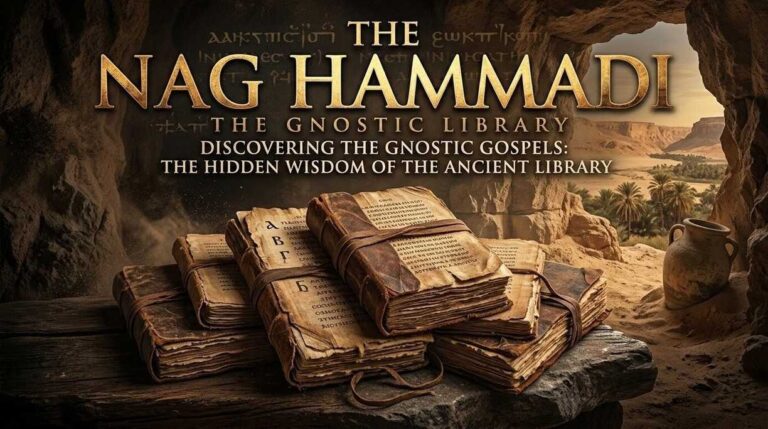
The modern recovery of Gnosticism begins, in the popular imagination, with a broken jar. In December 1945, near the limestone cliffs of Jabal al-Tarif in Upper Egypt, the widely repeated discovery story tells of Muhammad Ali al-Samman and his brothers digging for sabakh, a soft soil used as fertiliser. Their tools struck a red earthenware jar. Fear, curiosity and hope collided: perhaps a spirit lived inside; perhaps gold did.
When the jar was broken, it held neither treasure nor demon. It held leather-bound papyrus books. These would become known as the Nag Hammadi Library: Coptic codices containing texts copied in late antiquity, many of them translations from earlier Greek works composed in the second and third centuries CE. Among them were the Gospel of Thomas, the Apocryphon of John, the Gospel of Philip, the Gospel of Truth and many works previously unknown or known only through hostile summaries by church heresiologists.
The burial itself is usually placed in the fourth century. One common scholarly suggestion is that the books may have been hidden by monks connected with the nearby Pachomian monastic world after Athanasius of Alexandria’s Festal Letter of 367 CE, which rejected non-canonical writings. The precise details remain debated, but the symbolic force is undeniable: a library condemned by the official stream of Christianity had survived in the earth.
Yet the story of Gnosticism’s survival does not begin in 1945. Nag Hammadi gave modern readers the buried texts. The thread itself had already been moving for centuries through fragments, accusations, rituals, myths, symbols, memory and reinterpretation.

The Underground Centuries: Medieval Dualism and Secret Continuity
By late antiquity, the many movements now gathered under the umbrella term “Gnosticism” had been condemned, marginalised or absorbed into other religious currents. Their writings were attacked by figures such as Irenaeus, Hippolytus and Epiphanius. For centuries, much of what was known about them came through their opponents. This created a strange historical situation: the enemies of Gnosis became accidental archivists of the thing they tried to bury.
But ideas do not always survive by preserving their original names. The deeper Gnostic pattern proved portable: a transcendent source beyond the visible order, a flawed or lesser creator, the human soul as a stranger in the world, and liberation through direct knowledge rather than simple obedience. In the medieval Balkans, Bogomilism emerged in Bulgaria and spread through surrounding regions. It rejected the visible world as the work of a fallen or inferior power, criticised ecclesiastical wealth, and developed forms of ascetic practice and spiritual distinction that recall older dualist and Gnostic patterns.
From the Balkans, dualist Christian currents travelled westward into regions including northern Italy and southern France. There, the Cathars became the most visible medieval expression of this anti-material, anti-clerical and spiritually rigorous current. They developed their own structures, bishops, rituals and initiatory forms, most famously the consolamentum, a spiritual baptism associated with the Cathar perfecti.
It would be too simple to call the Cathars “ancient Gnostics in medieval clothing.” Scholars continue to debate the degree of direct transmission from earlier Gnostic communities to later dualist movements. But the thematic kinship is clear enough to matter: the suspicion of the world’s creator, the distinction between spirit and matter, the emphasis on liberation, and the refusal to identify institutional authority with divine truth.
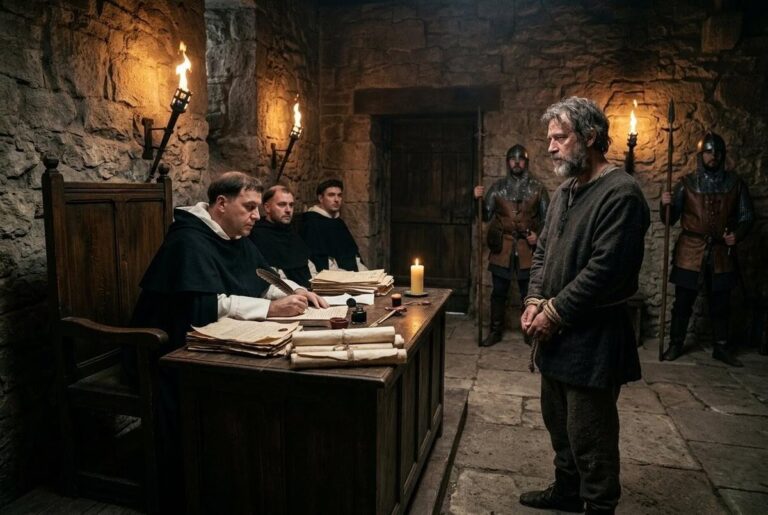
The Albigensian Crusade, launched in 1209, attempted to destroy the Cathar movement by military and inquisitorial force. The fall of Montségur in 1244 became one of the defining images of medieval heresy crushed beneath empire and church. Yet even after the visible institutions were broken, memories, rumours and practices endured in villages, family lines and local resistance. Once again, the thread vanished from the surface but did not wholly disappear.

The Hermetic Renaissance: Gnosis Reappears in Plain Sight
While medieval dualism was being hunted in the west, another stream of Gnostic-adjacent thought was preparing to re-enter European intellectual life through the Renaissance. In fifteenth-century Florence, Marsilio Ficino translated the Corpus Hermeticum into Latin under the patronage of Cosimo de’ Medici. These Hermetic writings were not Gnostic texts in the narrow sense, but they carried a recognisable family resemblance: divine mind, inward illumination, the fall of the soul, ascent beyond the lower powers, and salvation through transformative knowledge.
For Renaissance thinkers such as Ficino, Pico della Mirandola and later Giordano Bruno, ancient wisdom did not belong only to biblical chronology or church dogma. It could be sought through Plato, Hermes, Kabbalah, astrology, magic, contemplation and the disciplined study of correspondences. The world became a text; the human being became a microcosm; knowledge became a way of transformation rather than mere information.
The Corpus Hermeticum was later shown by Isaac Casaubon to be a Hellenistic text rather than a work of primordial Egyptian antiquity. This damaged its claimed age, but not its imaginative power. Hermeticism continued to move through alchemy, Rosicrucian writing, Christian Kabbalah and the esoteric fringes of European spirituality. The Gnostic impulse learned another survival strategy: it could live inside adjacent languages, clothed in Hermetic, Platonic, alchemical or symbolic dress.
This matters for Neo Gnosticism because modern revival rarely begins with a pure return to the past. It begins with fragments, bridges and hybrid vocabularies. Renaissance Hermeticism did not preserve ancient Gnosticism intact. It preserved a compatible grammar of ascent, illumination and hidden divine origin, keeping part of the imaginative field alive until the original texts could return.

The Victorian Underground: Theosophy and the Occult Revival
By the nineteenth century, the industrial age had produced a new spiritual fracture. Traditional religious authority had weakened for many educated readers, while materialist accounts of reality often left the soul homeless. Into this vacuum stepped the modern occult revival: Theosophy, Rosicrucian orders, magical societies, comparative religion, esoteric publishing and renewed fascination with ancient wisdom.
The Theosophical Society, founded in 1875 by Helena Blavatsky and Henry Steel Olcott, was not Gnostic in a strict historical sense. But it helped create the conditions for Gnosticism’s modern return. It rehabilitated language around hidden wisdom, emanation, initiation, ancient sources and direct spiritual knowledge. It also built networks of lodges, journals, publishers and reading communities that allowed esoteric material to circulate outside traditional church control.
At the same time, scholars and independent readers began to approach the early heresiologists differently. Irenaeus and other anti-Gnostic writers were no longer read only as guardians of orthodoxy. They became sources for reconstructing suppressed alternatives in early Christianity. Even hostile summaries became clues. The very accusations once used to destroy Gnostic movements were reread as maps to what had been lost.
This is one reason the modern revival did not have to wait passively for Nag Hammadi. By the time the codices were discovered, Western esoteric culture had already prepared a set of questions: What if orthodoxy was not the whole story? What if hidden traditions had preserved something real? What if direct knowledge mattered more than inherited belief? When the texts finally appeared, a readership was already waiting.
Jung and the Inner Return of Gnostic Language
Carl Gustav Jung gave the modern Gnostic revival one of its most influential bridges: psychology. After his break with Freud, Jung entered a prolonged confrontation with the unconscious, later documented in the Red Book. He developed active imagination, studied dreams and visionary images, and treated symbolic figures not as meaningless fantasies but as expressions of a deeper psychic order.
Jung did not simply convert ancient Gnosticism into modern psychology, and he did not identify as a Gnostic in a conventional religious sense. But he recognised that Gnostic myths described psychological realities with unusual force. The archons could be read as powers that bind consciousness. The Demiurge could be read as a limited creator-image mistaken for the highest God. The divine spark could be read as the hidden centre of the self seeking recognition beyond ego and social conditioning.
In Jungian terms, the ego is not the whole person. The psyche contains shadow, anima, animus, archetypes and the deeper ordering principle Jung called the Self. Individuation is the difficult path of becoming whole, not by rejecting darkness but by recognising, integrating and transforming it. This resonated strongly with modern readers of Gnostic texts, who saw in Jung a language for inner descent, symbolic confrontation and return to a hidden centre.
Jung’s relationship with the Nag Hammadi materials became literal as well as symbolic. In 1952, a portion of Nag Hammadi Codex I was acquired by the C. G. Jung Institute and became known as the Jung Codex. For many Neo-Gnostic readers, Jung’s work became the hinge between ancient myth and modern inner experience: not a replacement for the texts, but a psychological lantern for walking through them.

The 1945 Return: Nag Hammadi and the Recovery of the Texts
The discovery near Nag Hammadi changed the field because it shifted Gnosticism from rumour to direct reading. Before the codices, much of ancient Gnosticism had to be reconstructed through opponents, fragments and later echoes. After Nag Hammadi, readers could encounter Gnostic and Gnostic-adjacent writings in their own voices.
The publication process was slow, complex and politically tangled. James M. Robinson played a major role in bringing the codices into wider scholarly and public access. In the 1970s, the facsimile editions and English translations made the library increasingly available. The 1977 publication of The Nag Hammadi Library in English placed a major body of ancient Gnostic literature within reach of students, seekers, scholars and independent readers.
Elaine Pagels’ The Gnostic Gospels, published in 1979, then carried the conversation into mainstream culture. The early Christian world suddenly appeared less uniform, less settled and less tidy than inherited church history had suggested. Gnosticism was no longer merely a defeated heresy. It became evidence of a contested spiritual landscape in which questions of authority, gender, body, salvation, knowledge and institutional power were still alive.
For Neo Gnosticism, this was decisive. The revival no longer had to depend only on medieval echoes, Hermetic parallels, Theosophical speculation or Jungian psychology. It had scriptures, myths, prayers, dialogues, revelations and cosmologies. The buried library became a source layer for the modern movement.
Yet the return of the texts also complicated the story. Nag Hammadi revealed not one simple Gnostic church, but a diverse field: Sethian myth, Valentinian theology, Thomasine sayings, Hermetic material, ascetic teaching, apocalypses, creation myths and philosophical dialogues. Neo Gnosticism therefore inherits diversity, not uniformity. Its strength is not a single creed, but a repeated invitation: read, discern, recognise, and test the map inwardly.
The Digital Dispersal: From Hidden Library to Global Network
Once the Nag Hammadi texts entered print, the next stage of their revival came through networks. Gnostic churches, study groups, independent publishers, occult journals and university courses all helped circulate the material. Stephan A. Hoeller and the Ecclesia Gnostica became especially important in the public sacramental and teaching life of modern Gnosticism in the United States. Hoeller’s lectures, writings and liturgical work gave many seekers a living point of contact with a modern Gnostic tradition shaped by both ancient texts and Jungian psychology.
Then the internet changed the scale. Websites, online archives, digitised translations, forums, podcasts and independent essays made Gnostic material available to readers who would never have entered a lodge, church or university seminar. The ancient experience of “finding the other” took a new form: the isolated reader discovering, through a screen, that their strange questions had a lineage.
This digital dispersal created both gift and danger. The gift is access. Texts that once vanished into the ground are now available to anyone with a connection. The danger is flattening. Online culture can turn complex traditions into slogans, aesthetics, conspiracies or identity badges. Neo Gnosticism must therefore practise discernment more carefully than ever. The point is not to turn Gnosis into content. The point is to keep attention alive while moving through systems designed to harvest it.
In that sense, modern conditions have made Gnosticism newly legible. The ancient language of archons, counterfeit spirit, false worlds and hidden authority now meets platforms, algorithms, machine mirrors, surveillance capitalism, artificial intimacy, digital afterlives and synthetic reality. Neo Gnosticism becomes not merely a revival of old myths, but a way of asking whether those myths still diagnose the architecture of the present.

What This Lineage Means for the Modern Seeker
The invisible thread is not a simple church history. It is a study in resilience. A tradition can be condemned and still leave traces. A text can be buried and still return. A symbol can pass through hostile hands and still carry a charge. A question can survive long after the institution that first asked it has disappeared.
Neo Gnosticism matters because it does not treat ancient Gnosis as a museum object. It asks what these old maps reveal now. What is the Demiurge when authority becomes systemic rather than personal? What are archons when power moves through bureaucracy, finance, media, code and social conditioning? What is the counterfeit spirit when imitation becomes indistinguishable from presence? What is the divine spark in an age of attention capture, machine persuasion and synthetic identity?
The best Neo-Gnostic reading does not collapse into paranoia. It does not turn every institution into a demon or every technology into a prison. It asks sharper questions. Does this system deepen attention or scatter it? Does it awaken responsibility or encourage passivity? Does it help the soul remember its depth, or does it train the person to become predictable, anxious and easy to govern?
The older Gnostic traditions insist that liberation begins with recognition. Not recognition as mere opinion, but as a shift in being: the moment the soul sees the structure clearly enough to stop serving it unconsciously. Neo Gnosticism carries that same impulse into the modern world. It looks backward for orientation, then forward for the path that must be walked now.
The thread is invisible because it does not depend entirely on monuments, councils, official permission or cultural approval. It depends on readers, practitioners, witnesses and moments of recognition. It survives wherever the question remains alive: what in us belongs to the real, and what in the world teaches us to forget?
Related Glossary Terms
- Gnosis — direct knowing, recognition and inner illumination.
- Archons — ruling powers, cosmic or psychological, that bind awareness to lesser structures.
- Demiurge — the lesser craftsman or world-maker in many Gnostic myths.
- Divine Spark — the hidden element of divine origin within the human being.
- Counterfeit Spirit — false animation, imitation life or unconscious pattern mistaken for true spirit.
- Pleroma — fullness, divine depth or the realm of completion beyond deficiency.
Modern Gnosis Route
This article belongs to ZenithEye’s Neo Gnosticism and Modern Gnosis pathway: the route where ancient Gnostic patterns meet digital systems, artificial intelligence, simulation theory, attention capture, transhumanism, machine authority and modern spiritual searching.
Frequently Asked Questions
What is Neo Gnosticism?
Neo Gnosticism is the modern revival, reinterpretation and practice of Gnostic ideas. It draws on ancient Gnostic texts, especially the Nag Hammadi Library, while also engaging psychology, Hermeticism, modern spirituality, technology, digital culture and contemporary questions about authority, identity and liberation.
How did Gnosticism survive for 2,000 years?
Gnosticism survived through a mixture of buried texts, hostile summaries, medieval dualist echoes, Hermetic and esoteric traditions, occult revival movements, Jungian psychology, modern Gnostic churches, scholarship and digital access. It did not survive as one simple institution, but as a recurring pattern of hidden knowledge, spiritual exile and direct recognition.
Was the Nag Hammadi Library important for Neo Gnosticism?
Yes. The Nag Hammadi Library gave modern readers direct access to ancient Gnostic and Gnostic-adjacent texts, including the Gospel of Thomas, the Apocryphon of John, the Gospel of Philip and the Gospel of Truth. Its publication helped transform Gnosticism from a topic known mostly through opponents into a living source tradition for modern seekers.
Are the Cathars the same as ancient Gnostics?
No. The Cathars should not be treated as identical to ancient Gnostic groups. However, they shared important dualist themes, including suspicion of the material order, critique of ecclesiastical authority, ascetic discipline and liberation from a fallen world. Their relationship to ancient Gnosticism remains debated, but their thematic kinship is significant.
Why is Jung important to modern Gnosticism?
C. G. Jung gave modern readers a psychological language for many Gnostic themes: inner descent, shadow, symbolic powers, the Self, active imagination and the recovery of hidden wholeness. Jung did not simply become a Gnostic teacher, but his work helped make ancient Gnostic imagery meaningful for modern inner life.
Is Neo Gnosticism anti-technology?
Not necessarily. A careful Neo-Gnostic reading does not reject technology automatically. It asks how technology shapes attention, authority, identity, desire and spiritual memory. The question is whether a system deepens awareness or traps consciousness in imitation, distraction and dependency.
Where should I begin studying Neo Gnosticism?
Begin with the Nag Hammadi Library, the Apocryphon of John, the Gospel of Thomas, introductory scholarship on early Gnosticism, and modern guides that distinguish careful interpretation from fantasy. On ZenithEye, the Neo Gnosticism hub, Modern Gnosis route and glossary offer a structured path into the material.
Further Reading
These ZenithEye articles continue the themes of survival, revival, hidden transmission and modern Gnostic interpretation:
- Who Are the Neo Gnostics? The Complete Guide to the Modern Gnostic Revival — A detailed map of the contemporary Neo-Gnostic landscape.
- Contemporary Gnosticism: Ancient Patterns in Modern Realities — How Gnostic themes reappear in the modern world.
- The Living Thread: How Forbidden Knowing Survives — The broader pattern of suppressed knowledge, transmission and return.
- Transmission and Lineage: How the Gnosis Travels — How spiritual knowledge moves through people, texts and practice.
- The Discovery of the Nag Hammadi Library — The buried codices and their modern recovery.
- The Nag Hammadi Library: A Complete Guide to the Gnostic Scriptures — A reader’s map to the thirteen codices and their major texts.
- Catharism and the Albigensian Crusade: A Gnostic Revival Burned — Medieval dualism, persecution and the memory of Montségur.
- Hermeticism and Gnosticism: Where They Meet and Where They Diverge — Similarities and differences between Hermetic and Gnostic currents.
- Jung, Shadow Work, and Gnostic Pneuma — How depth psychology reopened Gnostic inner language.
- Rosicrucianism and Gnosticism: The Hidden Inheritance — Esoteric continuity through Rosicrucian and alchemical imagination.
References and Sources
The following sources informed the historical narrative and interpretive framing of this article. They are listed so readers can distinguish primary texts, modern scholarship and contextual studies.
Primary Sources and Critical Editions
- Robinson, James M. (ed.). (1977). The Nag Hammadi Library in English. San Francisco: Harper & Row.
- Meyer, Marvin W. (ed.). (2007). The Nag Hammadi Scriptures. New York: HarperOne.
- Ficino, Marsilio. (1471). Pimander, Latin translation of the Corpus Hermeticum.
- Jung, C. G. (2009). The Red Book: Liber Novus. New York: W. W. Norton.
Scholarly Monographs and Studies
- Pagels, Elaine. (1979). The Gnostic Gospels. New York: Random House.
- King, Karen L. (2003). What Is Gnosticism? Cambridge, MA: Harvard University Press.
- Williams, Michael Allen. (1996). Rethinking “Gnosticism”: An Argument for Dismantling a Dubious Category. Princeton: Princeton University Press.
- Markschies, Christoph. (2003). Gnosis: An Introduction. London: T & T Clark.
- Jonas, Hans. (1958). The Gnostic Religion: The Message of the Alien God and the Beginnings of Christianity. Boston: Beacon Press.
- Leroy-Ladurie, Emmanuel. (1978). Montaillou: Cathars and Catholics in a French Village, 1294–1324. London: Scolar Press.
- Lambert, Malcolm. (1998). The Cathars. Oxford: Blackwell.
- Hanegraaff, Wouter J. (2012). Esotericism and the Academy: Rejected Knowledge in Western Culture. Cambridge: Cambridge University Press.
- Hoeller, Stephan A. (2002). Gnosticism: New Light on the Ancient Tradition of Inner Knowing. Wheaton, IL: Quest Books.
Contextual Studies
- Robinson, James M. (2014). The Nag Hammadi Story: From the Discovery to the Publication. Leiden: Brill.
- Goodrick-Clarke, Nicholas. (2008). The Western Esoteric Traditions: A Historical Introduction. Oxford: Oxford University Press.
- Faivre, Antoine. (1994). Access to Western Esotericism. Albany: SUNY Press.
- Segal, Robert A. (1992). The Gnostic Jung. Princeton: Princeton University Press.
Study Note: This article discusses Gnosticism, Neo Gnosticism, religious suppression, medieval persecution, esoteric transmission and psychological interpretation. It is intended for historical, comparative and reflective study. It does not offer theological, psychological or spiritual instruction. Readers engaging difficult material around trauma, religious harm or altered states should seek appropriate support from qualified professionals or trusted practitioners.