
Neo Gnosticism and the Counterfeit Spirit: False Awakening in Modern Life
Many people today do not lack spiritual language. They lack discernment. Modern life is full of awakening vocabulary: higher self, frequency, simulation, shadow, manifestation, trauma healing, divine guidance, AI wisdom and breaking the matrix. But not everything that sounds awakened leads to freedom. Some forms of awakening deepen vanity, fear, dependence, paranoia, spiritual performance or algorithmic capture.
The counterfeit spirit rarely arrives looking false. It often arrives wearing the language of truth.
This article is a grounded guide to recognising the counterfeit spirit in contemporary life. It is not an attack on spirituality, technology or sincere seeking. It is a discipline of discernment: the old art of telling the difference between what liberates and what merely looks like liberation.
Table of Contents
- What Is the Counterfeit Spirit in Neo Gnosticism?
- How to Read This Article
- Why False Awakening Is a Modern Problem
- The Old Gnostic Warning Beneath the Modern Pattern
- When Awakening Becomes a Costume
- When Every Symbol Becomes a Signal
- Digital Archons and Machine-Shaped Revelation
- False Authority and the Theft of Direct Knowing
- Why the Body Exposes the Counterfeit
- How to Recognise Genuine Awakening
- What Neo Gnosticism Offers Instead
- The Counterfeit Spirit Loses Power When It Is Recognised
- Related Glossary Terms
- Further Reading
- References and Sources
- Frequently Asked Questions
What Is the Counterfeit Spirit in Neo Gnosticism?
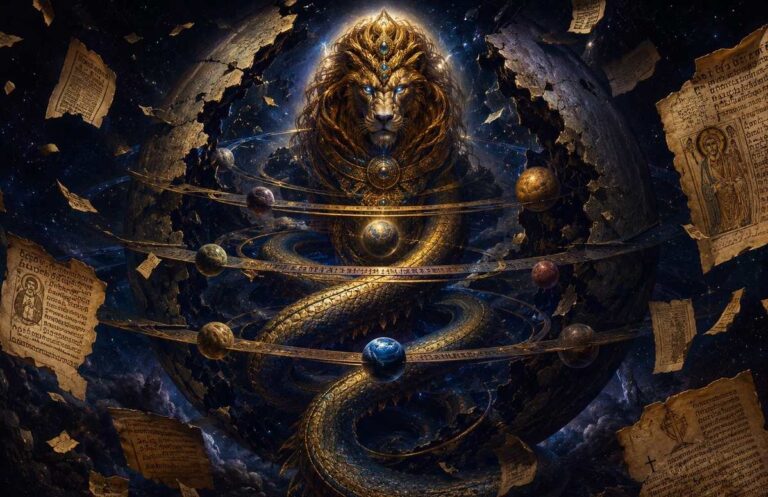
The counterfeit spirit is a false imitation of genuine spiritual life. It may look like awakening, insight, intuition or authority, but it produces bondage rather than freedom. In ancient Gnostic sources, especially the Apocryphon of John, the counterfeit spirit belongs to the world of archontic imitation: a lower pattern that mimics spirit while binding the soul to confusion, compulsion and false identity.
In Neo Gnosticism, the same warning can be read as a modern discernment problem. The counterfeit spirit can appear as false certainty, spiritual ego, algorithmic revelation, guru dependence, obsessive pattern reading, bypassing the body, symbolic inflation, machine-mediated validation or awakening without ethics. It is not simply evil. It is imitation without liberation.
The counterfeit spirit is imitation without liberation.
This article should now be read beside Neo Gnosticism and False Authority, which follows the same discernment thread into gurus, algorithms, AI advisers, community control and the theft of direct knowing. If the counterfeit spirit is imitation without liberation, false authority is one of the main ways that imitation becomes organised.
To encounter the counterfeit spirit is not always to meet an external enemy. It is often to recognise an inner pattern that uses the vocabulary of truth to defend itself against transformation. The seeker who learns this distinction does not become suspicious of every experience. They become sober.
How to Read This Article
This article uses ancient Gnostic language as a pattern of discernment, not as a blunt label for other people. It does not invite the reader to call someone false, possessed or spiritually inferior. It asks a quieter question: what does a teaching, practice, system or experience produce over time?
- Read historically: ancient Gnostic texts are diverse and should not be collapsed into one simple doctrine.
- Read symbolically: the counterfeit spirit names imitation, false authority and spiritual mimicry.
- Read practically: the test is not how luminous something sounds, but whether it produces clarity, humility, repair and freedom.
For the method behind this approach, see Editorial Principles.
Why False Awakening Is a Modern Problem
The modern seeker swims in an ocean of spiritual language. Social media rewards spiritual performance with visibility. Algorithms amplify intensity, outrage and certainty because these emotions generate engagement. AI can imitate wisdom without responsibility. Spiritual language can become identity branding. Trauma language can become self-enclosure. Manifestation culture can turn desire into domination. Conspiracy thinking can mimic revelation, and certainty can feel like gnosis while actually closing perception.
The problem is not that modern seekers use new language. The problem begins when language replaces transformation. When someone can speak fluently about the shadow, the matrix and the divine feminine while remaining unkind, ungrounded and unwilling to repair harm, the counterfeit spirit has found a comfortable mask. The vocabulary of liberation becomes decoration for captivity.
This is not an anti-spiritual argument. It is a discernment argument. Neo Gnosticism does not need to reject modern life in order to question it. It asks how attention, authority and perception are shaped by systems, stories and inner reactions. That question now applies not only to temple and scripture, but to feeds, platforms, therapeutic language, influencer culture and machine-generated certainty.
The Old Gnostic Warning Beneath the Modern Pattern
The ancient texts do not merely warn against obvious darkness. They warn against imitation: the lesser light, the copy, the authority that seems complete until it is tested against source. In the Hypostasis of the Archons, the rulers imitate the divine image but cannot generate true life by their own power. In the Apocryphon of John, the language of the counterfeit spirit gives a sharper image of archontic mimicry: a false animation that keeps the human being bound to ignorance.
The pattern is important. The counterfeit does not always oppose the spiritual directly. It often imitates it. It borrows the gestures of spirit, the language of awakening and the appearance of authority while turning the seeker back toward dependence, confusion or self-inflation.
This is why the counterfeit spirit belongs beside archons, the Demiurge, the divine spark and pneuma and psyche. It is part of the old Gnostic grammar of misrecognition: the soul mistakes what is made, reflected or imposed for what is living, direct and true.
When Awakening Becomes a Costume

One subtle form of the counterfeit spirit is spiritual performance. This is not the same as sincere teaching or genuine sharing. It is the use of spiritual vocabulary, aesthetic and posture to construct an identity that feels awakened without actually being transformed.
The performance may include looking awakened, speaking in spiritual vocabulary, collecting signs and synchronicities, using insight to feel superior, turning every wound into specialness and confusing intensity with depth. The outer language becomes refined while the inner habits remain untouched.
The practical test is simple: does this make me more honest? Does this make me more responsible? Does this make me kinder? Does this make me more grounded? Does this help me repair harm? If the answer is no, then what is being cultivated is not awakening. It is image.
A counterfeit awakening often expands the spiritual persona while leaving the character unchanged. The costume grows more elaborate; the ordinary work of truthfulness, apology, patience and repair is avoided.
When Every Symbol Becomes a Signal
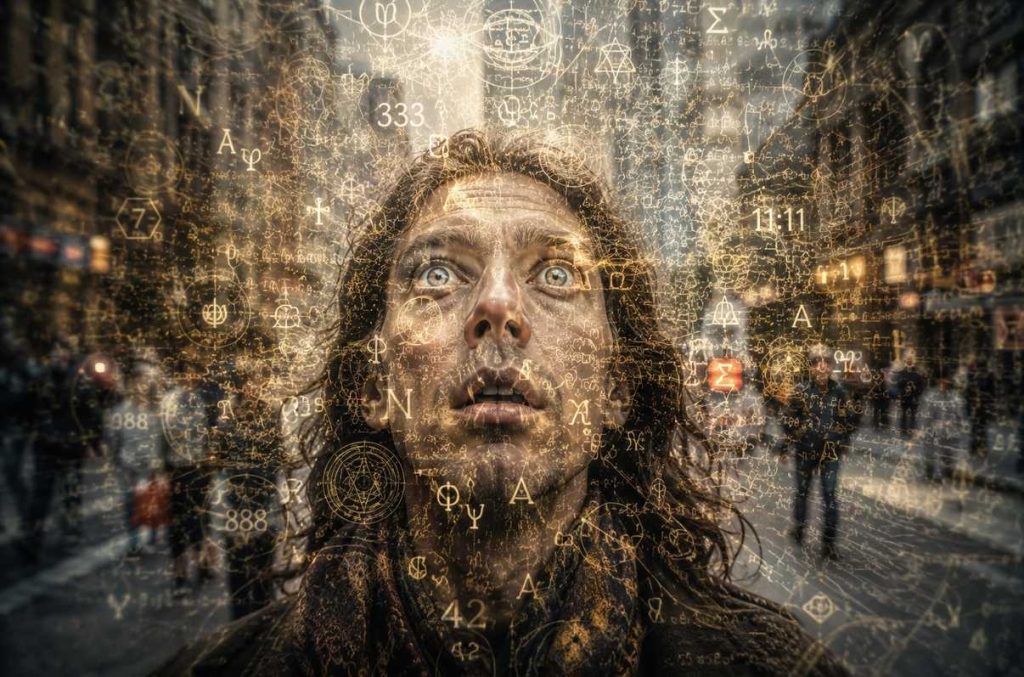
Another face of the counterfeit spirit is pattern addiction: the compulsive need to interpret every event as a sign, every number as a code and every coincidence as a command. This is not the same as genuine symbolic literacy. It is symbolic overload, the transformation of the world into a private language that the self must constantly decode.
The danger is not seeing patterns. The danger is believing that the self must be the centre of every pattern. Mistaking anxiety for intuition, treating coincidence as instruction and making the world into a private code are all symptoms of discernment under pressure. Spiritual paranoia is not spiritual clarity.
Real discernment does not need every event to become a message. It can allow some events to remain simply events: rain that falls, a bus that arrives, a conversation that ends. Not everything is a sign. Not everything is about the self.
This is why the companion guides Pattern Recognition Without Paranoia, When Symbols Become Cages and The Discipline of Not Interpreting Everything matter. They preserve symbolic perception by refusing symbolic compulsion.
Digital Archons and Machine-Shaped Revelation

The digital realm has become a new field for the counterfeit spirit. Algorithmic feeds shape attention according to engagement metrics, not truth. AI systems can serve as oracle, therapist, priest, confessor or mirror, but they do so without embodiment, moral accountability or the ability to bear witness to a whole life. The danger is not that AI is inherently demonic. The danger begins when the machine becomes spiritual authority.
Digital archons do not need to believe anything. They only need to shape what appears, what repeats and what holds attention. Machine authority, synthetic absolution, spiritual outsourcing and personalised feeds can become false revelation loops. They offer endless reflection without integration, constant stimulation without stillness and apparent guidance without relationship.
AI can assist reflection, search, structure and comparison. These are useful tools. But when machine outputs are treated as revelation rather than reference, the counterfeit spirit has found a modern host in algorithmic authority. Neo Gnosticism does not reject technology. It asks how technology shapes attention, authority and perception, and whether those systems support or imitate genuine knowing.
For the wider digital map, see Modern Gnosis, The AI Confessor, GPTheology, The Hidden Theology of AI and The Quantified Soul.
False Authority and the Theft of Direct Knowing
The counterfeit spirit does not only appear as inner confusion. It can become organised through false authority. A guru, feed, doctrine, community, algorithm, AI adviser, score, diagnosis or spiritual brand becomes false when it trains the seeker to surrender direct knowing to an external voice that cannot be questioned.
This is why Neo Gnosticism and False Authority belongs beside this article. The counterfeit spirit imitates awakening; false authority gives that imitation a throne. It does not merely offer guidance. It asks to become the light by which guidance is tested.
False authority turns guidance into possession.
The practical test is the same: does this authority make the seeker more grounded, truthful, responsible, relational and free? Or does it produce dependence, urgency, specialness, fear, obedience and spiritual performance? Genuine authority clarifies and releases. False authority captures and feeds.
Why the Body Exposes the Counterfeit

The body is one of the clearest tests of the counterfeit spirit. A threat response can feel like revelation. Anxiety can masquerade as urgency. Dissociation can be misread as transcendence. Intensity can be mistaken for truth. Spiritual bypassing ignores the nervous system, treating the body as an obstacle rather than an instrument of discernment.
Genuine awakening does not leave the body behind. It becomes more embodied, not less. A truth that cannot enter the body may still be only an idea wearing luminous clothing. The body knows when safety is present and when it is not. It knows when a teaching is integrating and when it is fragmenting.
This is the work of the Body Gate. It asks whether the nervous system is settled enough to receive insight without turning it into compulsion, fear or performance. Real discernment includes interoception: the capacity to feel from within. It includes knowing the difference between a genuine opening and a sympathetic nervous system hijack.
Not every elevated state is a spiritual state. Sometimes it is adrenaline dressed in mystical language. Sometimes the most spiritual act is to drink water, sleep, step away from the screen and return to the ordinary world with steadier perception.
How to Recognise Genuine Awakening
The ethical test is the most reliable discriminator between the genuine and the counterfeit. Not because ethics are a substitute for gnosis, but because genuine gnosis produces ethical fruit. A true awakening tends to produce humility, patience, clearer perception, less compulsive certainty, greater responsibility, capacity for repair, respect for boundaries, less need to perform, more honesty about uncertainty and an ordinary life that becomes cleaner rather than abandoned.
A counterfeit awakening tends to produce superiority, urgency, obsession, isolation, dependence, grandiosity, bypassing, contempt for correction, fear of ordinary reality and endless symbolic inflation. The difference is not in the vocabulary used but in the fruits produced.
This is not a call to judge others. It is a framework for self-examination. The question is not, “Are they counterfeit?” The better question is, “What is this producing in me?” If the pursuit of awakening is making the self more rigid, more defended, more special and less capable of ordinary kindness, then the pursuit has been hijacked.
For the ethical dimension of awakening, see The Quiet Ethics of Awakening, The Weight of Seeing, The Humility of Not Knowing, The Sacred No and Love Without Rescue.
What Neo Gnosticism Offers Instead
Neo Gnosticism at its best is not a new dogma. It is a discipline of recognition. It asks: what is source? What is interpretation? What is projection? What is fear? What is system pressure? What is bodily alarm? What is genuine direct knowing? What becomes visible after the nervous system settles?
The Neo Gnostic path does not ask the seeker to believe every inner signal. It asks the seeker to learn how signals are formed. It recognises that the psyche is composite: conditioned by body, memory, culture, appetite, belief, trauma, longing and spirit. Not every impulse comes from the deepest layer. Some impulses come from fear. Some come from imitation. Some come from the counterfeit spirit itself, which knows how to mimic the voice of truth.
Discernment is the practice of sorting these voices without panic and without naivety. This discipline is not paranoid. It is sober. It does not see archons everywhere, but it does not ignore archontic patterns in systems, institutions and internal processes. It holds a middle path between credulity and cynicism: a turning of the nous toward what is real.
This is where Neo Gnostic Practice, The Architecture of Perception, Core Concepts and the Glossary become practical supports. They help the seeker slow down, define terms, test interpretation and return insight to lived life.
The Counterfeit Spirit Loses Power When It Is Recognised

The answer is not suspicion of every spiritual experience. The answer is sober discernment. The counterfeit spirit weakens when language is tested by life, insight by ethics, symbols by humility, intensity by grounding, guidance by responsibility and awakening by love, repair and truthfulness.
The real light does not need to shout. It clarifies. It does not demand followers. It produces freedom. It does not inflate the self. It opens relation. The counterfeit spirit, for all its brightness, cannot produce these fruits because it is rooted in imitation rather than source.
Neo Gnosticism does not promise an escape from every counterfeit. It offers the capacity to recognise the pattern. And in recognising it, the seeker discovers that many false doors lose their power when no longer mistaken for the way home.
Related Glossary Terms
- Counterfeit Spirit
- False Authority
- Algorithmic Authority
- Authority Capture
- Archontic
- Digital Authority
- Machine Authority
- Synthetic Absolution
- Spiritual Outsourcing
- Symbolic Overload
- Over-Meaning
- Compulsive Interpretation
- Neuroception
- Somatic Safety
- Discernment
- Pneuma
- Divine Spark
- Neo Gnosticism
Further Reading
- What Is the Counterfeit Spirit? A foundational exploration of the counterfeit spirit and false imitation of spiritual life.
- Neo Gnosticism and False Authority A discernment guide to gurus, algorithms, AI advisers and the theft of direct knowing.
- What Is Neo Gnosticism? The main doorway into the modern revival of direct knowing.
- Digital Archons: How Algorithms Shape Attention How algorithmic systems shape attention, authority and perception.
- Pattern Recognition Without Paranoia A guide to pattern literacy without compulsive certainty.
- When Symbols Become Cages How symbolism can become rigid, inflated or detached from ordinary life.
- The Discipline of Not Interpreting Everything A practice of restraint for seekers who see too much meaning too quickly.
- Breaking the Biological Barrier How nervous-system safety, threat physiology and embodiment affect direct knowing.
- Neo Gnostic Practice Practical disciplines for attention, embodiment and discernment in daily life.
- Editorial Principles The source, interpretation and method framework behind ZenithEye.
- Modern Gnosis A route through AI, attention, digital authority and modern systems.
References and Sources
The following sources inform the historical, textual and conceptual framework of this article. The ancient material is used carefully: as source context and symbolic pattern, not as a claim that all Gnostic schools taught one identical doctrine.
Primary Sources and Traditions
- Apocryphon of John, especially the creation of the human being, archontic imitation and the language of the counterfeit spirit.
- Hypostasis of the Archons, especially the imitation of the divine image and the limits of archontic power.
- Gospel of Philip, especially its language of names, images, union, imitation and spiritual misrecognition.
- Broader Sethian and Valentinian traditions within the Nag Hammadi Library.
Critical Editions and Translations
- Meyer, Marvin, ed. The Nag Hammadi Scriptures: The International Edition. HarperOne, 2008.
- Layton, Bentley. The Gnostic Scriptures: A New Translation with Annotations. Doubleday, 1987.
- Robinson, James M., ed. The Nag Hammadi Library in English. HarperCollins, revised edition.
Modern Scholarly Context
- Jonas, Hans. The Gnostic Religion: The Message of the Alien God and the Beginnings of Christianity. Beacon Press.
- King, Karen L. What Is Gnosticism? Harvard University Press, 2003.
- Denzey Lewis, Nicola. Introduction to Gnosticism: Ancient Voices, Christian Worlds. Oxford University Press, 2013.
- Pagels, Elaine. The Gnostic Gospels. Random House, 1979.
- Wilson, R. McL. The Gospel of Philip: Translated from the Coptic Text, with an Introduction and Commentary. Harper & Row, 1962.
Safety Notice: This article explores psychological and spiritual discernment. It is not medical, psychological or spiritual advice. Do not use it to diagnose yourself or others. If you are experiencing paranoia, severe dissociation, spiritual crisis or thoughts of self-harm, contact local emergency services or a qualified trauma-informed mental health professional. Contemplative practice can support life, but it does not replace clinical care when clinical care is needed.
Study Note: This article treats the counterfeit spirit as both an ancient Gnostic motif and a modern discernment pattern. It should be read alongside source context, embodied grounding, ethical reflection and the companion guide Neo Gnosticism and False Authority. The aim is not suspicion, but clearer recognition.
Frequently Asked Questions
What is the counterfeit spirit in Neo Gnosticism?
The counterfeit spirit is a false imitation of genuine spiritual life. It may look like awakening, guidance or insight, but it produces bondage, ego, fear, dependence or confusion rather than freedom. In Neo Gnosticism, it becomes a practical term for spiritual mimicry, false authority and imitation without liberation.
Is false awakening the same as spiritual experience?
No. Spiritual experience can be meaningful and transformative. False awakening begins when experience becomes identity, certainty, superiority or escape from responsibility. The difference is seen in the fruits over time: humility, repair and clarity suggest integration, while performance and grandiosity suggest distortion.
How is false authority related to the counterfeit spirit?
The counterfeit spirit imitates awakening, while false authority organises that imitation into a teacher, system, algorithm, community, AI adviser or doctrine that asks the seeker to surrender direct knowing. False authority gives imitation a throne.
How can AI become part of the counterfeit spirit?
AI becomes risky when it is treated as oracle, priest, confessor or final authority rather than as a tool for reflection, organisation or comparison. When machine outputs are received as revelation without discernment, algorithmic authority can imitate spiritual guidance.
How do you test whether awakening is genuine?
Look at its fruits over time. Genuine awakening tends to produce humility, patience, clearer perception, responsibility, capacity for repair, respect for boundaries and kindness in ordinary life. Counterfeit awakening tends to produce superiority, urgency, obsession, isolation and contempt for correction.
Does Neo Gnosticism reject modern technology?
No. Neo Gnosticism asks how technology shapes attention, authority and perception, and whether those systems support or imitate genuine knowing. Technology can be used with discernment, but it becomes problematic when it replaces direct experience, embodied wisdom or moral accountability.
What is the difference between pattern recognition and pattern addiction?
Pattern recognition is the healthy capacity to notice meaningful connections. Pattern addiction is the compulsive need to interpret every event as a sign about the self. Real discernment does not need every event to become a message. It can allow some things to remain ordinary.
Why does the body matter in spiritual discernment?
The body helps reveal whether an experience is integrating or fragmenting. Anxiety can masquerade as urgency, dissociation as transcendence and intensity as truth. Genuine awakening becomes more embodied, not less, so somatic awareness is part of discernment.