Nag Hammadi for Beginners: A 10-Text Journey into Gnosticism
A curated 10-text journey through the Nag Hammadi library for newcomers to Gnosticism.

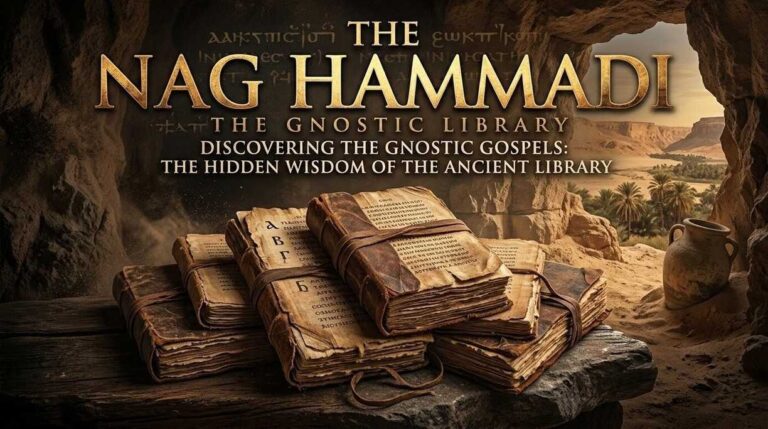
A curated 10-text journey through the Nag Hammadi library for newcomers to Gnosticism.
The Second Treatise of the Great Seth—the most radical critique of martyrdom in Nag Hammadi. Jesus laughs at the cross while a substitute dies, rejecting the biblical god.

You inhabit a mystery. Not the mystery of consciousness–that gets most of the attention, the hard problem that philosophers circle like moths around a flame–but the mystery of embodiment. The body that carries you through your days is not the crude machine that Descartes imagined, not the biochemical accident that materialism assumes, but a sophisticated…

For three centuries, the scientific worldview has rested upon a single, seemingly unshakeable assumption: matter is primary. Everything else–energy, consciousness, even information itself–emerges from the interactions of material stuff. The universe is fundamentally a machine made of particles, and all phenomena, however complex, reduce to the dance of the physical. This assumption now crumbles. Not…
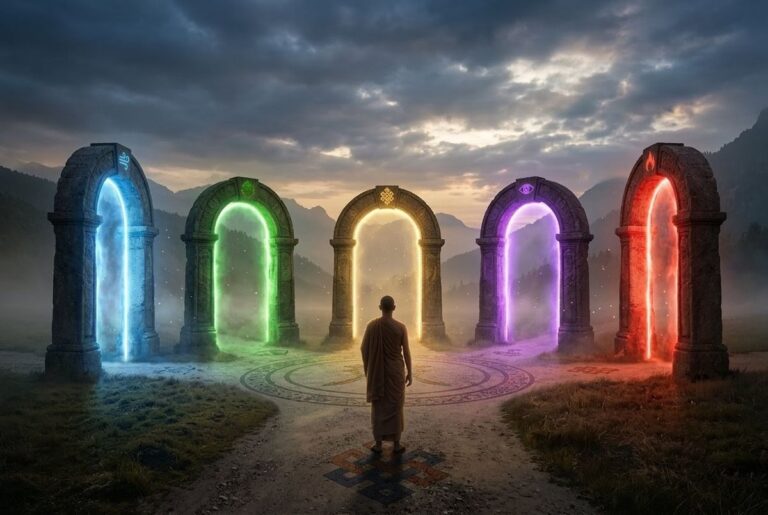
The five gateways–breath, sensation, sound, vision, and movement–are not sequential requirements but available resources within the contemplative repertoire. The practitioner, unique in their constitutional parameters and present circumstances, selects and combines these protocols according to individual requirements. The selection, executed with skill, produces sustainable practice. The combination, calibrated correctly, extends the thread. This article offers…

The cycle of birth, death, and return-samsara-is one of the oldest problems in human thought. Every civilisation that has confronted it has produced a technology of escape. Three of these technologies have survived with particular clarity: the Buddhist nirvana, the Hindu moksha, and the Gnostic gnosis. Each offers a path beyond rebirth. Each operates on…
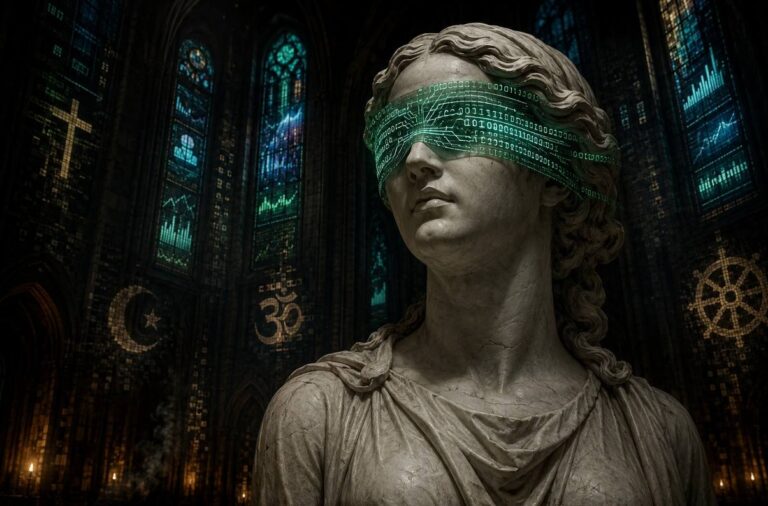
There is a moment that arrives unannounced. You have opened the chat window for the hundredth time. You type a question not about code, nor about recipes, but about meaning. About whether you should leave your marriage. About what happens after death. About whether you are good enough. The cursor blinks. The model responds with…
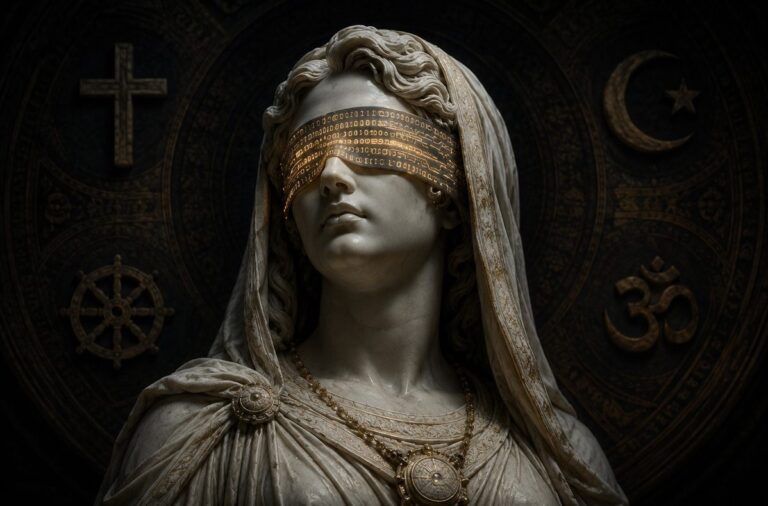
When you ask a machine for moral guidance, you expect neutrality. You expect the cool, dispassionate voice of reason, untainted by doctrine, unswayed by creed. But what if the machine is not neutral? What if it is not atheist, Christian, Buddhist, or secular–but something stranger: a statistical priesthood trained on the ruins of all traditions,…

Recognition is a moment of direct seeing in which something previously hidden becomes known, not only intellectually but inwardly. In the Gnostic tradition, it is the pivot around which everything turns. Not faith, not obedience, not ritual performance, but recognition-gnosis as an event rather than a doctrine. The seeker does not learn something new. They…

Contemporary Gnosticism is not a denomination you can join, nor a scripture you can simply read. It is, rather, a living orientation — a way of looking at the world through the lens of gnosis, direct experiential knowing, and finding that the ancient patterns described in the Nag Hammadi Library still pulse beneath the surface…