
Hermeticism and Gnosticism: The Egyptian Wisdom Traditions Compared
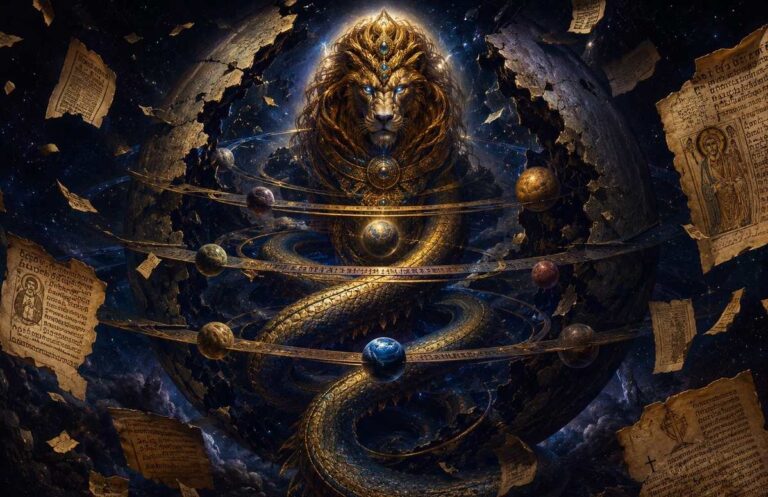
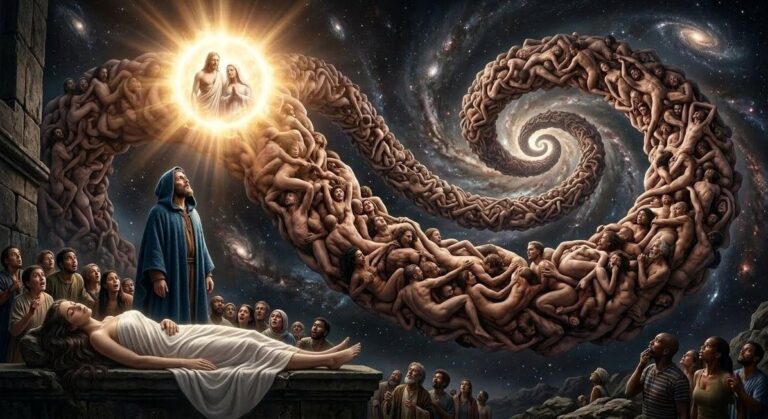
Hermeticism and Gnosticism are two closely related wisdom streams from the ancient Mediterranean world, especially Hellenistic Egypt. Both teach that ordinary life is shaped by forgetfulness, fate, and hidden powers. Both point toward liberating knowledge. Yet they do not read the cosmos in quite the same way: Gnosticism often treats the world as a flawed structure to be escaped, while Hermeticism tends to treat it as a living order to be understood, purified, and spiritualised.
In Plain Terms
Hermeticism and Gnosticism both ask how the soul wakes from ordinary ignorance and returns to its divine source. The difference lies in tone and diagnosis. Gnostic texts often say the material world is ruled by ignorant or hostile powers, so liberation means remembering who you are and escaping their control. Hermetic texts usually see the cosmos as lower than the divine Mind, but still meaningful, beautiful, and capable of being spiritualised through contemplation, purification, and ascent.
In ZenithEye terms, this is a classic Hidden Agreements article. The same pattern appears in different robes: divine origin, forgetfulness, planetary powers, ascent, knowledge, and return. The disagreement is not whether the soul is more than the world. The disagreement is whether the world is a prison, a classroom, a mirror, or some suspiciously underlit combination of all three.
Primary Sources and Traditions Discussed
- Hermetic texts: especially the Corpus Hermeticum, the Asclepius, and the wider tradition associated with Hermes Trismegistus.
- Nag Hammadi Hermetica: especially The Discourse on the Eighth and the Ninth, a Hermetic ascent text preserved inside the Nag Hammadi Library.
- Gnostic texts: especially Sethian and Valentinian materials from the Nag Hammadi Library.
- Comparative themes: gnosis, divine spark, planetary ascent, demiurgic rule, cosmic fate, the body, matter, liberation, and the soul’s return.
How ZenithEye Reads This
ZenithEye reads Hermeticism and Gnosticism as related but not identical currents within the wider architecture of esoteric transmission. They overlap in imagery, geography, and metaphysical ambition, but they answer the human predicament with different kinds of medicine. Gnosticism is more diagnostic and insurgent: it exposes the hidden administration of the cosmos and asks the soul to remember its origin beyond the rulers. Hermeticism is more alchemical and integrative: it seeks to raise consciousness through the ordered levels of reality until the mind recognises its kinship with divine Mind.
The Thread does not flatten these traditions into one comfortable slogan. It follows the pressure points: where the maps agree, where they resist each other, and where later Western esotericism borrowed from both without always admitting which cupboard the silverware came from.
Table of Contents
- The Confluence of Two Rivers
- Historical Context: Alexandria and the Shared Archive
- Cosmological Convergences: Source, Spheres, and the Soul
- The Planetary Gates and Exit Procedures
- Theological Distinctions: Prison Break or Sacred Repair?
- Creation Accounts: Catastrophe or Overflow?
- Paths of Liberation: Gnosis and Henosis
- The Redeemer Figure and the Divine Teacher
- Attitudes Toward the Body
- The Corpus Hermeticum and the Nag Hammadi Library
- Poimandres and the Anthropos
- Hermetic Optimism and Gnostic Suspicion
- Contemporary Synthesis
- Related Glossary Terms
- Read Next
- Frequently Asked Questions
- Further Reading
- References and Sources
The Confluence of Two Rivers
Hermeticism and Gnosticism emerge from overlapping worlds: Greek-speaking Egypt, late antique religious experimentation, philosophical Platonism, Jewish apocalyptic imagination, Egyptian temple symbolism, and early Christian speculation. Both are concerned with the soul’s imprisonment in ordinary perception and its recovery through direct knowing. Both assume that the visible world is not the whole story. Both use ascent imagery, divine intermediaries, hidden instruction, and the language of awakening.
Yet proximity is not identity. Hermeticism is not simply Gnosticism with a nicer office plant. Gnosticism is not simply Hermeticism after reading the complaint ledger. Their shared atmosphere matters, but so do their differences. One often names the cosmos as a fallen or deficient system. The other tends to name it as a lower but still meaningful expression of divine order. One sharpens suspicion. The other cultivates correspondence.
This is why the comparison matters. The two traditions sit near one another in the archive, but they do not hand the seeker the same map. Their shared symbols can deceive modern readers into assuming sameness, while their distinct emphases reveal two very different ways of handling embodiment, matter, destiny, and return.
Historical Context: Alexandria and the Shared Archive
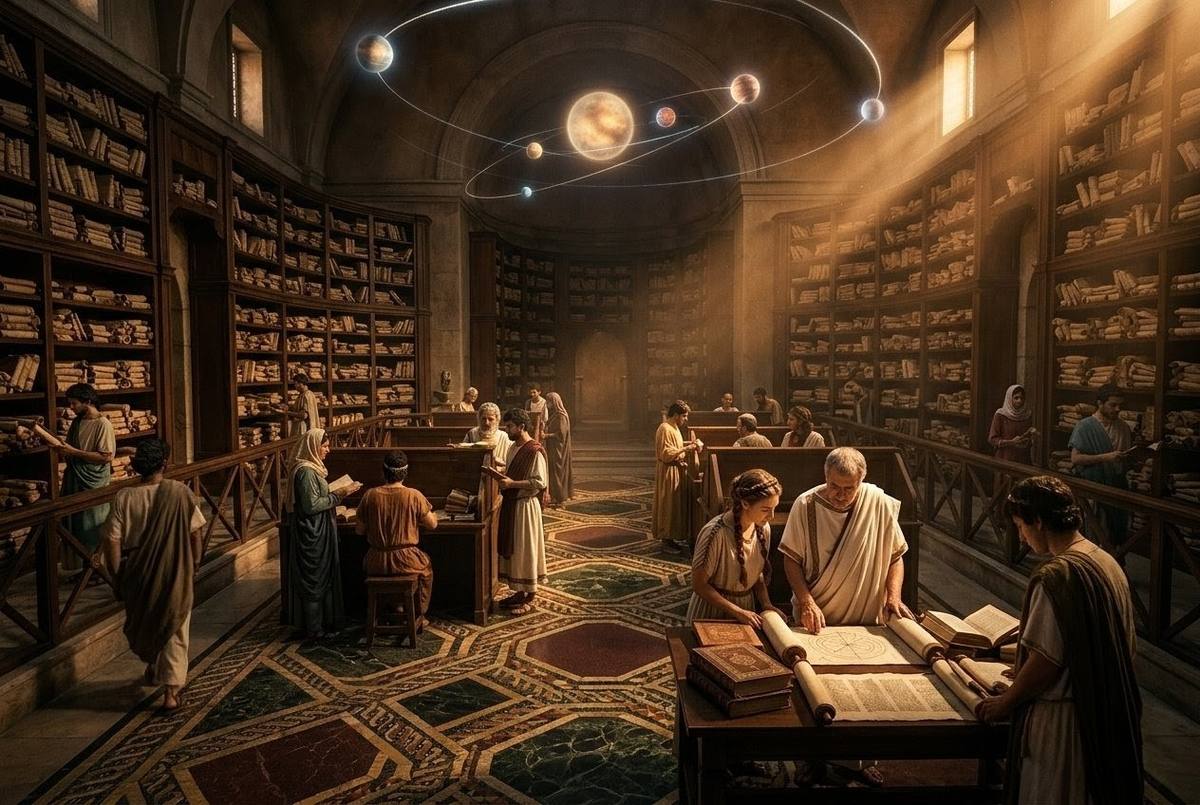
The cultural matrix of Roman Egypt created unusually fertile conditions for spiritual synthesis. Alexandria and its wider intellectual environment brought together Greek philosophical vocabulary, Egyptian religious memory, Jewish scriptural interpretation, astrological systems, mystery cults, and early Christian theological experimentation. It was not a tidy university department. It was more like a cosmic port city: cargo from different traditions arriving under different flags, some labelled accurately, some smuggled under metaphysical tarpaulin.
The Corpus Hermeticum, the foundational collection of Greek Hermetic treatises, preserves texts associated with Hermes Trismegistus, the thrice-great Hermes who fuses Greek Hermes with Egyptian Thoth. These writings are not a single doctrine from one author, but a layered body of philosophical, theological, and mystical teachings from Late Antiquity.
The Nag Hammadi Library likewise preserves a diverse set of writings rather than one uniform movement. It contains Sethian, Valentinian, Christian, Platonic, ascetic, and Hermetic materials. This matters because one of the clearest bridges between the two traditions is The Discourse on the Eighth and the Ninth, a Hermetic ascent dialogue preserved inside the Nag Hammadi collection itself.
Hermeticism and Gnosticism are best understood as neighbouring currents in the same late antique sea. They share symbols, questions, and metaphysical pressures, but they differ sharply in how they judge the cosmos and what they believe liberation requires.
Cosmological Convergences: Source, Spheres, and the Soul
Both Hermetic and Gnostic systems distinguish between ordinary material existence and a higher divine reality. Both speak of a supreme Source beyond the visible cosmos. Both place the human being in a difficult middle position: partly bound to body, fate, and planetary order, yet secretly related to a higher spiritual origin.
In Gnostic texts, this higher origin is often described through the language of the divine spark, the Pleroma, or the spiritual race. The soul, or more precisely the spiritual element within the human being, does not belong to the lower creator’s system. It has been trapped, scattered, or forgotten inside a world ruled by the archons.
In Hermetic texts, the human being also contains a divine dimension. The mind can awaken to Nous, the divine Mind, and recognise its kinship with the order above fate. The human is not merely a creature crawling around the basement of matter. The human is a strange vertical instrument, planted in the lower world yet capable of receiving transmissions from the highest.
The shared structure is clear: a transcendent source, a layered cosmos, planetary governance, embodied forgetfulness, and a path of ascent. The difference lies in the emotional temperature of the diagnosis. Gnosticism often says the building is compromised at the foundations. Hermeticism usually says the building is lower than the architect, but still constructed according to intelligible principles.
The Planetary Gates and Exit Procedures
The seven planetary spheres form one of the strongest bridges between Hermetic and Gnostic imagination. In both traditions, the soul must pass through layers of cosmic administration before returning to its source. The planets are not merely astronomical bodies. They become powers, governors, habits, passions, and thresholds.

Gnostic ascent narratives often present the planetary rulers as hostile or obstructive. The soul must possess the right knowledge, names, seals, or recognitions to pass beyond them. The archons are not neutral gatekeepers. They are part of the system that binds consciousness to repetition, fear, desire, and forgetfulness.
Hermetic ascent is often less confrontational but still demanding. The soul rises by shedding the powers acquired through embodiment: increase and decrease, cunning, desire, ambition, rashness, greed, falsehood. These are not simply sins in a moralistic sense. They are garments of fate. Each sphere keeps a piece of the borrowed costume until the soul stands closer to its naked intelligence.
This shared ascent pattern is one reason modern readers often place Hermeticism and Gnosticism side by side. Both teach that liberation involves more than belief. The soul must be reconfigured. The passport is not stamped by opinion. It is stamped by recognition.
Theological Distinctions: Prison Break or Sacred Repair?

The major distinction between Hermeticism and Gnosticism concerns the value of the cosmos. Many Gnostic systems, especially Sethian ones, present the material world as the result of rupture, ignorance, or error. The demiurge, often named Yaldabaoth or Saklas, mistakes himself for the highest god. He creates and governs without knowing the true Source above him. Matter becomes a prison or counterfeit order, and liberation means escape from the powers that administer it.
Hermeticism tends toward a more qualified monism. The material world is lower than the divine, but not simply evil. It derives from divine order, participates in intelligible structure, and can be used as a ladder of contemplation. The cosmos may be heavy, mixed, and subject to fate, but it is not usually treated as a total disaster. It is a symbolic world, a mirror of higher realities, and a theatre in which the divine Mind may become known.
This difference changes everything. If the world is a prison, the spiritual task is jailbreak. If the world is a sacred but dangerous vessel, the task is purification, alignment, and ascent. Both traditions distrust ordinary consciousness. Both distrust passive sleepwalking through the given world. But one sharpens the knife of refusal, while the other polishes the mirror of correspondence.
Creation Accounts: Catastrophe or Overflow?
Gnostic creation myths often begin with fullness, rupture, and deficiency. In Sethian mythology, the Pleroma is the realm of divine fullness. Sophia’s error or unauthorised movement gives rise to the demiurge, who creates the lower cosmos in ignorance of the higher world. The result is not creation as perfect gift, but creation as damaged system. The cosmos is a copy without full understanding of its original.
This is why Gnostic myth can feel so electrically subversive. It does not merely ask whether humans have misunderstood God. It asks whether the god worshipped by the world is himself a misunderstanding. The creator becomes a lower power, not the highest Source. The visible order becomes evidence not of perfect harmony, but of a flawed administration that mistakes local authority for ultimate truth.
Hermetic creation accounts are usually less catastrophic. They often describe the cosmos as an emanation or manifestation of divine intelligence. The world is lower, mutable, and bound to time, yet it still bears the imprint of higher order. Creation is not simply a fall into a trap. It is also a descent of divine pattern into visible form.
This is the heart of the contrast. Gnosticism emphasises rupture. Hermeticism emphasises correspondence. Gnosticism says: remember the world is not your home. Hermeticism says: read the world properly and it may become a ladder back to the home you forgot.
Paths of Liberation: Gnosis and Henosis
Both traditions place saving knowledge above ordinary belief. Yet they do not always mean the same thing by knowledge. In Gnostic texts, gnosis usually means direct recognition of one’s true identity, origin, and situation. The soul wakes to the fact that it does not belong to the archontic system. It remembers the higher realm, the deception of the lower rulers, and the path of return.
This gives Gnostic salvation a sense of urgency. The sleeper is inside a burning archive. The papers are misfiled. The exit doors are being renamed as lifestyle choices. The Saviour, revealer, or hidden voice does not come to decorate the cell. It comes to wake the prisoner before the next cycle begins.
Hermetic salvation is often framed as henosis, union with the divine Mind. The goal is not only to know information about the cosmos, but to become capable of receiving divine intelligence. This requires purification, contemplation, reverence, philosophical discipline, and sometimes ritual ascent. The Hermetic student does not simply denounce the lower world. The student trains perception until the higher world can be known through and beyond it.
So while both traditions oppose spiritual sleep, they differ in rhythm. Gnosticism sounds the alarm. Hermeticism calibrates the instrument. One says: you are in the wrong jurisdiction. The other says: your mind has forgotten how to tune itself to the highest frequency.
The Redeemer Figure and the Divine Teacher
Christian Gnostic texts often centre on the Saviour as revealer. Jesus descends from the higher realm to awaken those who carry the divine spark. His function is not merely moral instruction or sacrificial atonement, but disclosure. He reveals the hidden architecture of the cosmos, the deception of the rulers, and the soul’s true origin.
Hermeticism does not usually centre salvation on a historical redeemer in the same way. Hermes Trismegistus, Poimandres, and other figures function as divine teachers, initiators, or expressions of Nous. They disclose wisdom, but the pattern is more teacher and disciple than cosmic rescue mission. The student ascends through instruction and interior transformation rather than being extracted by a redeemer from a hostile world.
This distinction shapes the mood of each path. Gnostic revelation often feels like a coded transmission from outside the prison. Hermetic instruction feels like initiation into a higher science of reality. Both can be profound. Both can be misread. And both have been borrowed, simplified, and rebranded by later esoteric movements with the confidence of a market stall selling temple keys in bulk.
Attitudes Toward the Body
The body is another major dividing line. Many Gnostic texts view embodiment with suspicion. The body may be described as a prison, garment, tomb, or mechanism of archontic control. Desire, reproduction, appetite, and social identity can become instruments through which the soul remains bound to the lower order. Ascetic practices therefore appear as strategies of disengagement: fasting, celibacy, restraint, watchfulness, and refusal.
Hermetic texts are more ambivalent. The body is certainly lower than divine Mind and can trap consciousness in passion, fate, and forgetfulness. Yet it is not always treated as enemy territory. The embodied human can become an anthropos teleios, a perfected human, through whom divine intelligence is recognised. Embodiment is dangerous, but also potentially sacramental. Matter is dense, but not necessarily damned.
This difference matters for contemporary readers. A crude Gnostic reading can slide into body-hatred, dissociation, or contempt for the natural world. A crude Hermetic reading can slide into spiritualised complacency, pretending every structure is secretly harmonious when some structures are simply cages with better upholstery. A mature reading requires discernment: not every limitation is evil, but not every order deserves obedience.
The Corpus Hermeticum and the Nag Hammadi Library

The relationship between Hermeticism and Gnosticism becomes clearest when we look at the textual archive itself. The Corpus Hermeticum and the Nag Hammadi Library are not identical collections, but they preserve writings from overlapping worlds. Both emerge from the late antique matrix in which Platonism, Egyptian symbolism, Christian language, Jewish cosmology, and esoteric practice were actively recombining.
The Discourse on the Eighth and the Ninth, preserved in Nag Hammadi Codex VI, is the key example. It presents Hermes instructing his son or disciple in the ascent beyond the seven planetary spheres into the eighth and ninth realms. Its vocabulary, structure, and ritual tone are strongly Hermetic, yet its preservation inside the Nag Hammadi Library places it directly beside writings usually classified as Gnostic.
Conversely, Hermetic texts outside Nag Hammadi often contain motifs that feel close to Gnostic concerns: the soul’s descent, planetary powers, the danger of fate, divine origin, spiritual rebirth, and the need for hidden knowledge. The ancient categories were probably more porous than modern filing systems prefer. Scholars may need shelves. Practitioners often inherited rivers.
Poimandres and the Anthropos
The Poimandres, the first treatise of the Corpus Hermeticum, offers one of the strongest points of comparison. It presents a revelation of cosmic origins, the divine Mind, the formation of the cosmos, and the descent of the heavenly Anthropos into nature. The human being becomes a strange hybrid: divine in origin, yet entangled in material and planetary conditions.
This resembles Gnostic cosmogony in several ways. There is a higher realm, a layered cosmos, a divine human archetype, and a fall or descent into materiality. Yet the conclusion differs. The Poimandres does not usually demonise creation in the same radical way as Sethian myth. The cosmos remains beautiful, ordered, and meaningful, even while the soul must rise beyond its lower bindings.
That is the Hermetic signature: descent is real, entanglement is dangerous, fate is binding, but the cosmos remains intelligible. The world is not the final truth, but it is not meaningless debris either. It is a coded surface. The task is learning how to read it without becoming trapped by the code.
Hermetic Optimism and Gnostic Suspicion
The old contrast between Hermetic optimism and Gnostic pessimism is useful, but only if handled carefully. Gnosticism is not mere despair. It is suspicion sharpened into metaphysics. It sees the world as compromised and refuses to confuse cosmic power with ultimate goodness. Its strength is moral and spiritual resistance. It can name alienation without politely pretending the wallpaper is sacred.
Hermeticism is not mere optimism either. It knows that fate binds the soul, that the passions distort perception, and that ordinary humanity lives far below its true capacity. Yet it maintains greater confidence in cosmic order. It teaches that the lower world may be purified through understanding, that matter can disclose higher pattern, and that the human mind can awaken to divine Mind without treating nature as garbage.
Social Context and Survival Strategies
Some of this difference may reflect social context. Many Gnostic writings speak from the underside of power: marginal communities, contested identities, rejected scriptures, and direct conflict with dominant religious authorities. It is unsurprising that their cosmology often reads empire, law, and cosmic hierarchy as suspicious.
Hermetic texts, by contrast, often appear closer to learned philosophical and ritual circles. Their tone is more initiatory than insurgent, more contemplative than apocalyptic. They seek elevation within a cosmic order rather than total denunciation of that order. The difference is not absolute, but the texture is unmistakable.
Contemporary Synthesis
For modern readers navigating esoteric lineages, neither Hermeticism nor Gnosticism arrives untouched from antiquity. Contemporary Hermeticism has been shaped by Renaissance magic, alchemy, occult revivalism, ceremonial magic, Theosophy, psychology, and modern spirituality. Contemporary Gnosticism has been shaped by Nag Hammadi scholarship, patristic polemics, Jungian interpretation, modern counterculture, and the digital hunger for hidden maps.
This does not make the traditions useless. It makes discernment essential. Hermeticism offers language for spiritualising matter, reading correspondences, cultivating interior ascent, and finding divine intelligence within the fabric of reality. Gnosticism offers language for exposing false authority, naming spiritual alienation, resisting systems of control, and recognising the divine spark hidden beneath imposed identity.

The contemporary Gnostic Archive need not choose one stream and discard the other. Both preserve responses to forgetfulness. Both insist that ordinary consciousness is not enough. Both point beyond passive belief toward direct transformation. The task is not to flatten them into sameness, but to read their agreements and disagreements with enough care that each keeps its blade.
Hermeticism asks: can the world become transparent to divine Mind? Gnosticism asks: what if the world that claims authority over you is not the highest truth? Between those two questions, much of Western esotericism breathes.
Related Glossary Terms
These terms help place Hermeticism and Gnosticism within the wider ZenithEye vocabulary:
- Gnosis: Direct transformative knowing, not mere belief or second-hand doctrine.
- Hermeticism: The Egyptian-Hellenistic wisdom tradition associated with Hermes Trismegistus, divine Mind, correspondence, ascent, and spiritual rebirth.
- Demiurge: The lower creator or craftsman figure who shapes the material cosmos, interpreted very differently across traditions.
- Archons: Ruling powers, often planetary or cosmic administrators, who bind the soul to fate, ignorance, and repetition.
- Pleroma: The fullness of divine reality in many Gnostic systems, contrasted with the deficient lower realm.
- Nous: Divine Mind in Hermetic and Platonic contexts, the higher intelligence through which the human mind can awaken.
- Henosis: Union with the divine, often used in Platonic and Hermetic contexts for mystical return to the One or divine Mind.
- Divine Spark: The spiritual element within the human being that originates beyond the lower world and can awaken through gnosis.
- The Hidden Agreements: ZenithEye’s term for recurring esoteric patterns shared across cultures, symbols, practices, and lineages.
Read Next
For the strongest next step, continue into the Hermetic text preserved inside the Nag Hammadi Library itself:
The Discourse on the Eighth and the Ninth: Hermetic Initiation in the Nag Hammadi Library
This article shows the overlap in action: Hermes, ascent through the planetary layers, the Ogdoad and Ennead, and the point where Hermetic initiation appears inside the very archive most readers associate with Gnosticism.
Frequently Asked Questions
What is the main difference between Hermeticism and Gnosticism?
The main difference is how each tradition evaluates the cosmos. Gnosticism often views the material world as a flawed or deficient system ruled by ignorant powers, so liberation means awakening from and escaping that system. Hermeticism usually sees the cosmos as lower than divine Mind but still meaningful, ordered, and capable of being spiritualised through contemplation and ascent.
Are Hermeticism and Gnosticism the same tradition?
No. They are related traditions that developed in overlapping late antique environments, especially Hellenistic Egypt, but they are not identical. They share themes such as gnosis, divine origin, planetary ascent, and hidden knowledge, yet they differ in theology, attitude toward matter, and the meaning of liberation.
Why is The Discourse on the Eighth and the Ninth important?
The Discourse on the Eighth and the Ninth is important because it is a Hermetic ascent text preserved in the Nag Hammadi Library. It shows that ancient textual boundaries between Hermetic and Gnostic materials were more porous than modern categories suggest.
Does Gnosticism hate the body?
Some Gnostic texts express strong suspicion toward the body, treating it as a prison, garment, or instrument of archontic control. However, Gnostic traditions are diverse, and not every text speaks in the same way. The central issue is not the body alone, but forgetfulness, bondage, and false identification with the lower world.
Does Hermeticism see matter as divine?
Hermeticism usually treats matter as lower than divine Mind, but not simply evil. The cosmos can be understood as a manifestation of divine order, a symbolic structure, and a field through which the awakened mind may recognise higher realities.
What do both traditions teach about planetary ascent?
Both traditions use the seven planetary spheres as symbolic and metaphysical layers through which the soul must pass. In Gnostic texts, these powers are often archontic obstacles. In Hermetic texts, they are more often layers of fate and passion that the soul sheds during ascent toward divine Mind.
Which tradition is more useful for contemporary practice?
Each offers a different medicine. Hermeticism is useful for contemplative ascent, symbolic literacy, and spiritualising matter. Gnosticism is useful for exposing false authority, naming alienation, and recovering the divine spark from systems of control. A mature reader can learn from both without collapsing them into one system.
Safety Notice: This article explores religious, philosophical, and esoteric traditions for historical and contemplative understanding. It does not constitute medical, psychological, or spiritual advice. If spiritual themes produce anxiety, dissociation, obsessive fear, or distress, please seek support from a qualified mental health professional. The material is intended for reflection, study, and discernment, not as a substitute for clinical care or grounded daily life.
Further Reading
Continue through the related ZenithEye routes below. This is a Thread article, so the emphasis is on lineages, patterns, transmission, and cross-traditional comparison.
- The Discourse on the Eighth and the Ninth: Hermetic Initiation in the Nag Hammadi Library – The clearest bridge between Hermetic ascent and the Nag Hammadi archive.
- Hermetic Connections in the Nag Hammadi Library – How Hermetic motifs appear inside the Coptic archive.
- Esoteric Lineages: The Hidden Agreements That Shaped Western Mysticism – Transmission, influence, and the underground movement of esoteric ideas.
- Transmission and Lineage: How the Gnosis Travels – How hidden knowledge survives through teachers, texts, communities, and symbolic encoding.
- The Apocryphon of John: The Secret Book of John – A foundational Sethian text for understanding the demiurge, archons, and Gnostic cosmology.
- The Emerald Tablet: Hermetic Foundation of Correspondence – The principle of correspondence and its influence on Western esotericism.
- Nag Hammadi Library: The Complete Guide to Gnostic Scriptures – The wider archive in which Gnostic and Hermetic materials meet.
- The Serapeum: Alexandria’s Daughter Library That Outlived the Mother – The Alexandrian context behind much late antique religious synthesis.
- What Is Gnosticism? Defining the Undefinable – A conceptual guide to one of the most contested terms in religious history.
- Library of Alexandria: What Was Lost and What Survived – The symbolic and historical archive behind later imagination.
References and Sources
The following sources support the historical, textual, and comparative analysis in this article.
Primary Sources and Critical Editions
- Copenhaver, Brian P., trans. (1992). Hermetica: The Greek Corpus Hermeticum and the Latin Asclepius in a New English Translation, with Notes and Introduction. Cambridge: Cambridge University Press.
- Meyer, Marvin, ed. (2007). The Nag Hammadi Scriptures: The International Edition. New York: HarperOne.
- Robinson, James M., ed. (1990). The Nag Hammadi Library in English. 3rd ed. San Francisco: HarperSanFrancisco.
Hermeticism and Late Antique Religion
- Fowden, Garth. (1993). The Egyptian Hermes: A Historical Approach to the Late Pagan Mind. Princeton: Princeton University Press.
- Festugiere, A.-J. (1950-1954). La Revelation d’Hermes Trismegiste. 4 vols. Paris: Gabalda.
- Hanegraaff, Wouter J. (2022). Hermetic Spirituality and the Historical Imagination: Altered States of Knowledge in Late Antiquity. Cambridge: Cambridge University Press.
- Bull, Christian H. (2018). The Tradition of Hermes Trismegistus: The Egyptian Priestly Figure as a Teacher of Hellenized Wisdom. Leiden: Brill.
Gnosticism and Comparative Studies
- King, Karen L. (2003). What Is Gnosticism? Cambridge, MA: Harvard University Press.
- Williams, Michael A. (1996). Rethinking Gnosticism: An Argument for Dismantling a Dubious Category. Princeton: Princeton University Press.
- Jonas, Hans. (1958). The Gnostic Religion: The Message of the Alien God and the Beginnings of Christianity. Boston: Beacon Press.
- van den Broek, Roelof, and Wouter J. Hanegraaff, eds. (1997). Gnosis and Hermeticism from Antiquity to Modern Times. Albany: State University of New York Press.
- van den Broek, Roelof. (2006). “Gnostic and Hermetic Views on the Soul’s Ascent.” In Gnosticism and Hermeticism from Antiquity to Modern Times, edited by Roelof van den Broek and Wouter J. Hanegraaff. Albany: State University of New York Press.