Neo Gnosticism and the Demiurge: False Authority in Modern Life
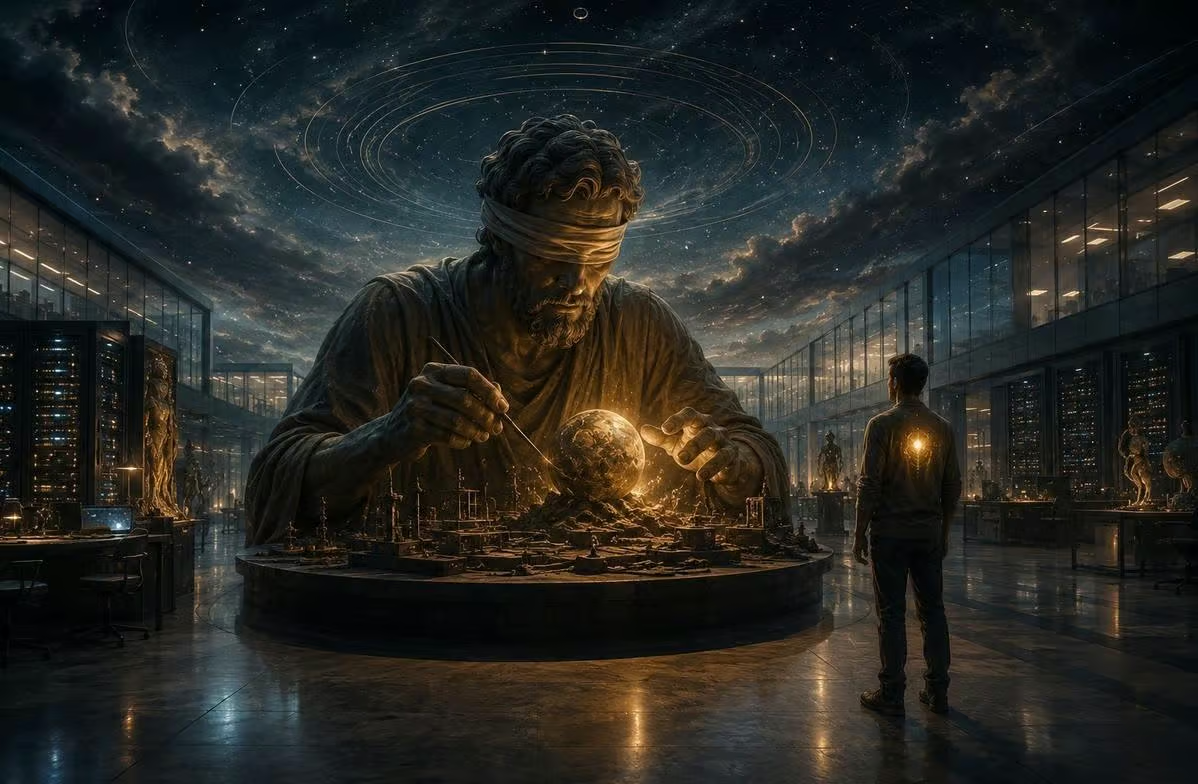
Neo Gnosticism does not read the Demiurge only as an ancient mythic figure. It reads the Demiurge as a pattern that still appears wherever partial authority mistakes itself for the whole. A system builds a world, names its rules, measures its inhabitants and then quietly teaches them to forget that anything beyond the system exists.
The central question is this: what happens when a limited maker, institution, platform, ideology or identity becomes the measure of reality itself?
This article explains how Neo Gnosticism understands the Demiurge in modern life. The key is not fear of the world, hatred of matter or conspiracy thinking. The key is recognition: seeing where authority has become closed, inflated or disconnected from the fullness that exceeds it.
In Plain Terms
In Neo Gnosticism, the Demiurge names false or partial authority: the maker, system or worldview that mistakes its own limited order for the whole of reality. The Demiurge is not simply “evil”, and the symbol is not a reason to hate the body, technology or ordinary life. It points to a subtler danger: form forgetting fullness, authority forgetting humility, and systems forgetting the living human being they were meant to serve.
The divine spark matters because it can recognise that the visible order is not final. It can sense when a system is useful, when it is limited, and when it has begun to act as though nothing exists beyond its own design.
Primary Sources and Traditions Discussed
- The Apocryphon of John: the central Sethian source for Yaldabaoth, Sophia, the archons and the divine spark.
- The Hypostasis of the Archons: a Nag Hammadi text on the rulers, their false authority and their attempt to control humanity.
- On the Origin of the World: an expanded creation narrative concerned with chaos, the lower powers, Sophia and final restoration.
- The Gospel of Truth: a Valentinian meditation on ignorance, error, recognition and the dissolving of false reality.
- The Tripartite Tractate: a Valentinian text that gives a more nuanced account of lower order, ignorance and restoration.
- Plato’s Timaeus: the classical philosophical background for the Demiurge as cosmic craftsman.
- Neo Gnosticism: modern reading of the Demiurge as false authority, partial reality and spiritual misrecognition.
How to Read This Article
This article treats the Demiurge as a mythic and symbolic pattern of false authority. It does not encourage fear of the material world, hatred of the body, contempt for institutions or suspicion toward ordinary people. A healthy reading of the Demiurge asks where authority has become closed, inflated or disconnected from reality.
The Demiurge is not every authority. Institutions are not automatically demiurgic. Technology is not automatically hostile. The physical world is not worthless. Discernment means testing authority, not rejecting all structure. The aim is proportion: seeing what is partial without mistaking it for the whole.

Table of Contents
- In Plain Terms
- Primary Sources and Traditions Discussed
- How to Read This Article
- What Is the Demiurge in Neo Gnosticism?
- The Short Answer
- Ancient Roots of the Demiurge
- Yaldabaoth and the Blind Maker
- The Demiurge and the Archons
- The Demiurge and the Divine Spark
- False Authority and Partial Reality
- The Demiurge in Modern Systems
- The Demiurge and Digital Authority
- The Demiurge and Simulation Thinking
- The Demiurge and the Body
- The Demiurge and Spiritual Bypass
- The Demiurge and Christianity
- The Demiurge and Modern Psychology
- Healthy and Risky Readings of the Demiurge
- How to Recognise Demiurgic Patterns
- Practising Discernment Without Paranoia
- Common Misunderstandings
- Related Glossary Terms
- Read Next
- Neo Gnosticism Route Box
- Frequently Asked Questions
- Further Reading
- References and Sources
- Study Note
What Is the Demiurge in Neo Gnosticism?
The Demiurge is the maker or craftsman of the lower world in many Gnostic myths. He shapes, organises, names and governs the visible order. In some texts he is called Yaldabaoth. He is not the highest God. He is a lower, ignorant or limited power who mistakes his own world for ultimate truth.
Neo Gnosticism reads this figure as a pattern: the partial pretending to be total, the system pretending to be reality, the tool pretending to be wisdom, the map pretending to be the territory, and the maker forgetting the source beyond making.
The Demiurge is what happens when form forgets the fullness from which it came.
The Short Answer
Neo Gnosticism understands the Demiurge as false or partial authority. The Demiurge creates a closed world, establishes its rules and then mistakes that world for the whole of reality. In modern life, the Demiurge appears wherever systems, ideologies, platforms or identities reduce the human being to what can be measured, managed or predicted.
The Demiurge is not every creator, every institution, the body itself, all technology, the physical world as such, a reason for paranoia or a licence to reject ordinary life.
The Demiurge is false totality, partial authority, spiritual misrecognition, inflated limitation, the closed system, the maker who forgets the source and the voice that says, “This is all there is.”
Ancient Roots of the Demiurge
The word Demiurge comes from Greek philosophical language and means craftsman or maker. In Plato’s Timaeus, the demiurge is a rational craftsman who orders the cosmos. He looks to an eternal model and creates a living, intelligent universe. He is not the ultimate source of all reality, but he is good, purposeful and skilled.
In many Gnostic traditions, the image changes sharply. The maker of the visible order becomes ignorant, arrogant or cut off from the higher fullness. This is not a simple rejection of Plato. It is a deepening of the question: what if the maker of the visible world were not looking to the highest model? What if he were looking only to himself?
Not all ancient traditions used the Demiurge in the same way. Some are more hostile, some more symbolic, some more complex. Neo Gnosticism reads this diversity as a family of questions about creation, limitation, authority and forgetting.
Yaldabaoth and the Blind Maker
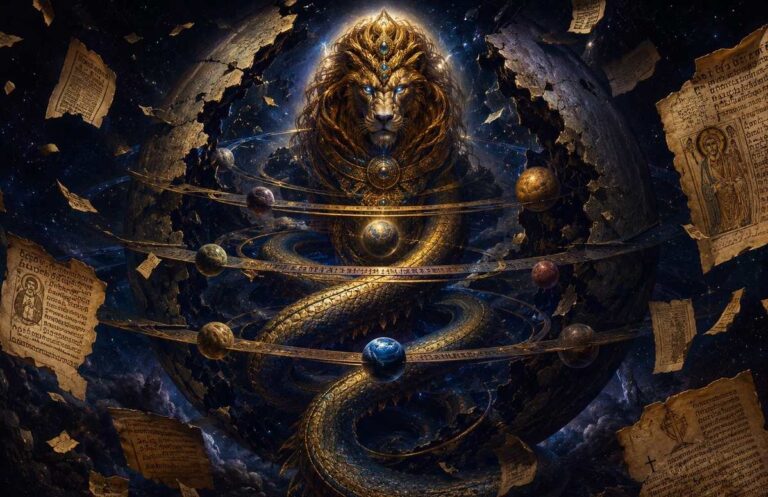
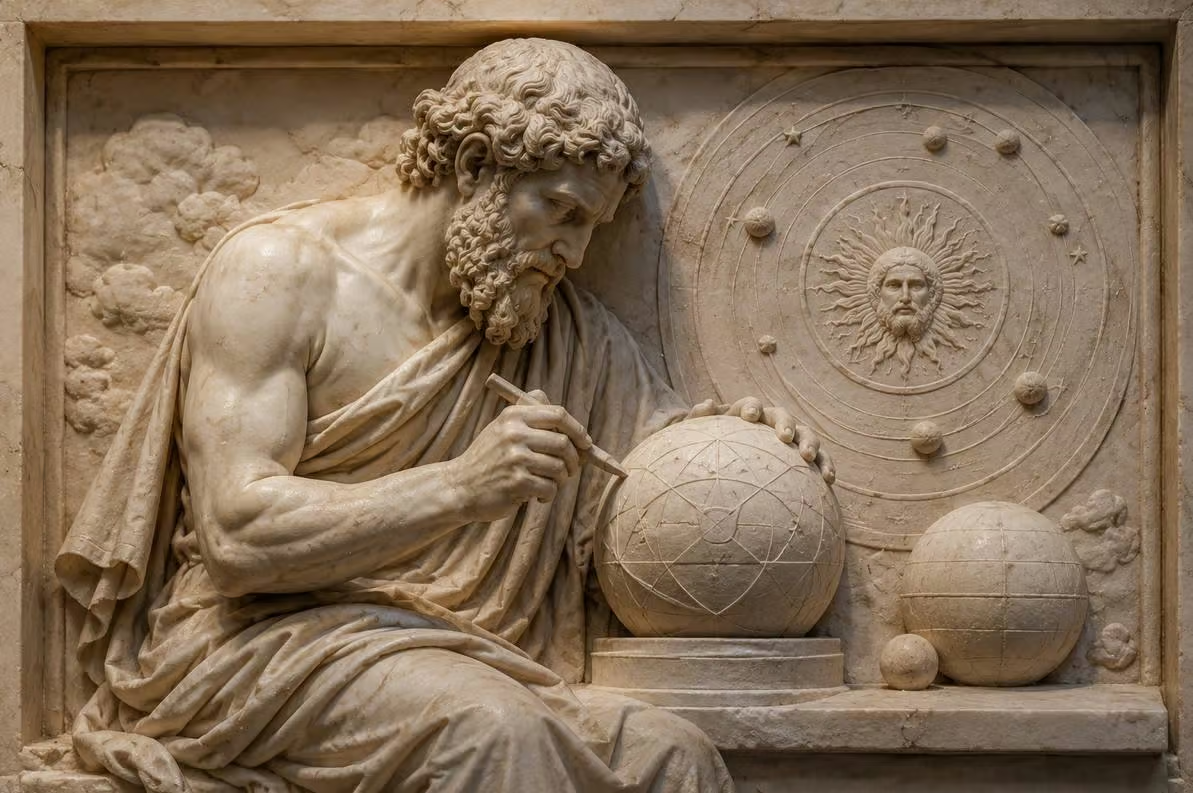
The Apocryphon of John gives the most detailed portrait of the Demiurge as Yaldabaoth. He emerges from a rupture or overflow in the divine fullness, often connected to Sophia’s descent. Born outside the Pleroma, he is ignorant of the higher realm. He declares himself the only god. He creates rulers and powers to help him govern. He fashions the human being from matter, yet cannot control the living spark that enters from above.
Yaldabaoth’s error is not only that he creates. His deeper error is that he cannot imagine anything beyond what he has made. His blindness becomes authority. His limitation becomes law. His incomplete world becomes, in his own mind, the whole of reality.
The Demiurge and the Archons
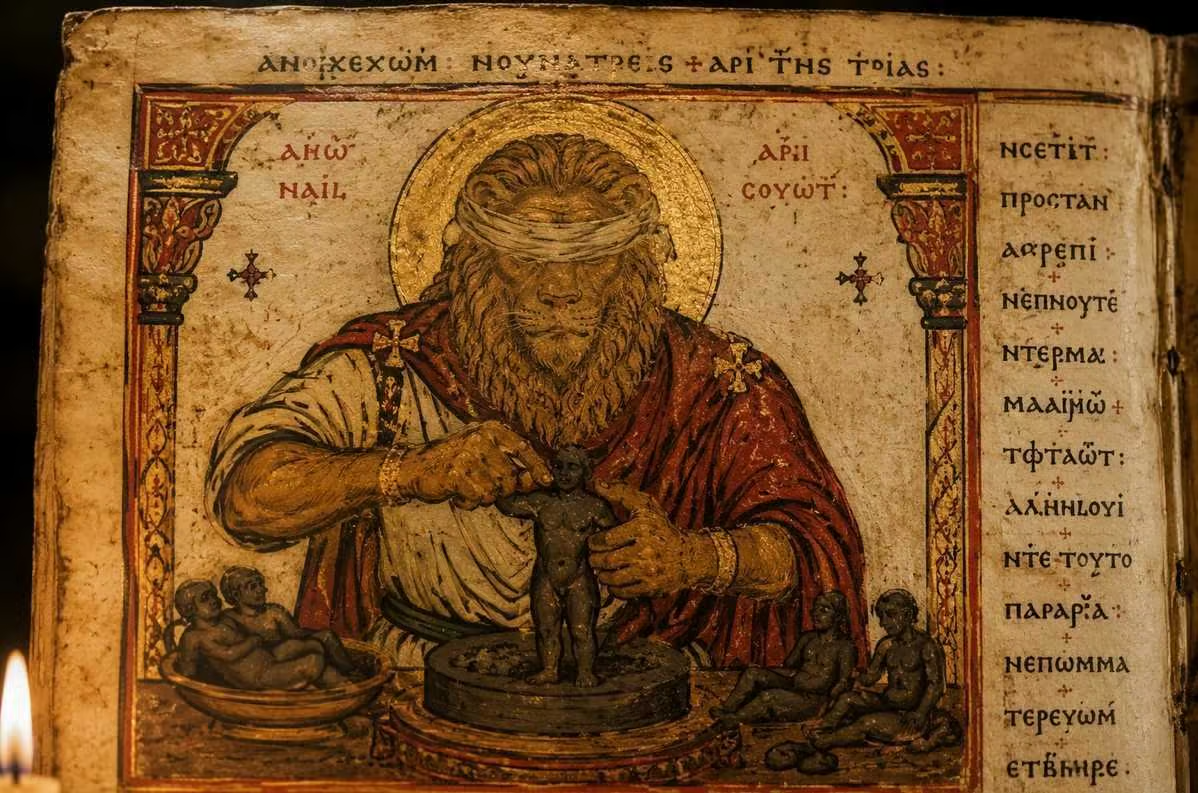
The Demiurge is the central false maker or ruler of the lower order. The archons are the ruling powers, administrators or forces that maintain the lower order. The Demiurge builds the closed world. The archons enforce, repeat and distribute its logic.
A modern comparison may help. The Demiurge is the closed worldview. The archons are the systems that keep it running. The Demiurge says what reality is. The archons reward obedience to that version of reality.
A person does not need to believe in literal cosmic rulers to recognise the pattern. Systems often protect their own assumptions. The Demiurge names the assumption. The archons make it feel inevitable.
The Demiurge and the Divine Spark
The Demiurge can shape the visible world, but he cannot create true recognition. In Gnostic myth, the living spark within the human being comes from beyond the lower powers. This is why the Demiurge fears, envies or tries to control the human being.
The divine spark is the element that recognises the partial as partial. It hears the claim “this is all there is” and quietly senses that something is missing. The Demiurge builds the room. The divine spark remembers the open sky.
False Authority and Partial Reality
False authority does not always look cruel. Sometimes it looks efficient, rational, helpful, respectable or necessary. The danger appears when an authority forgets its limits and begins to define all reality by its own measure.
Examples include bureaucracy reducing a person to a case number, productivity systems reducing life to output, platforms reducing identity to behaviour, ideology reducing complexity to slogans, spiritual systems reducing awakening to obedience, and institutional systems forgetting the human person before them.
Many systems are necessary. The problem begins when a necessary system becomes absolute.
The Demiurge in Modern Systems
Modern systems can become demiurgic when they create a world of rules, reward only what they can measure, erase what does not fit the model, mistake compliance for truth, treat mystery as malfunction, confuse management with wisdom or define the human being from outside.
A system becomes demiurgic when it stops serving life and begins asking life to justify itself before the system.
The Demiurge and Digital Authority
Digital platforms create environments that feel total while being partial: feeds, recommendation systems, metrics, ranking, identity profiles, algorithmic visibility, automated moderation and platform incentives.
The demiurgic pattern appears when a digital system teaches the user to believe that visibility equals value, reaction equals truth, and data equals identity. The digital Demiurge does not need to declare himself god. He only needs the user to forget that life exists beyond the screen.

The Demiurge and Simulation Thinking
Neo Gnosticism does not need to claim that reality is literally a computer simulation. The Demiurge helps readers ask a subtler question: how much of lived reality is mediated, constructed, filtered, narrated and governed by systems that appear natural because they are familiar?
The point is not “we definitely live in a simulation.” The point is that human beings often live inside constructed worlds without recognising the construction. The Demiurge is the name for that forgetfulness.
The Demiurge and the Body
Ancient Gnostic texts can sound hostile to matter, but Neo Gnosticism must avoid body-contempt. The body is not the Demiurge. The body is where recognition becomes real. The demiurgic error is not embodiment. It is captivity to a reduced version of embodiment: body as commodity, body as status object, body as productivity machine, body as shame, body as image, body as data.
The body is not the prison. The prison is the false story told about the body.
The Demiurge and Spiritual Bypass
The Demiurge can also appear inside spirituality. Risky patterns include rigid systems claiming total truth, teachers demanding obedience, spiritual identity replacing humility, myth used to avoid ordinary responsibility, “the world is false” used to excuse cruelty or withdrawal, contempt for people described as asleep, and refusal of grounding, care or support.
A person can use the Demiurge myth to escape the Demiurge, or to build a smaller one inside the self.
The Demiurge and Christianity
Mainstream Christianity usually identifies the creator God as good, even if creation is fallen or wounded. Gnostic traditions often distinguish the highest divine source from the lower maker of the visible order. This is one of the major differences between orthodox Christianity and many Gnostic schools.
For Christian readers, calling the creator a lower or ignorant power may feel deeply alien or heretical. For Gnostic readers, the distinction explains why the world contains beauty, order, suffering, ignorance and false authority all at once. The disagreement is not small. It touches the meaning of creation, salvation, matter, authority and God.
The Demiurge and Modern Psychology
Psychological readings of the Demiurge include false self, rigid ego structure, internalised authority, narrowed worldview, control complex, defensive identity, projection of certainty and the psyche mistaking its construction for reality.
Psychology can illuminate the pattern, but Neo Gnosticism does not reduce the Demiurge to psychology alone. The figure remains mythic, spiritual and symbolic. The inner Demiurge is the part of the psyche that would rather control a small world than surrender to a larger one.
Healthy and Risky Readings of the Demiurge
The same symbol can sharpen discernment or distort it. The difference lies in whether the reader sees proportion clearly.
| Area | Healthy Reading | Risky Reading |
|---|---|---|
| Authority | Authority is tested by whether it serves truth and life. | All authority is rejected indiscriminately. |
| World | The world is read carefully as mixed, beautiful, painful and partial. | The world is dismissed as worthless or illusory. |
| Body | The body becomes a field of grounding and practice. | The body is treated as a prison or obstacle. |
| Technology | Digital systems are used with boundaries and discernment. | Technology becomes a cosmic enemy. |
| Institutions | Systems are useful when they remain limited and humane. | Every institution is seen as hostile or demonic. |
| Self | The inner false ruler is recognised with humility. | The ego uses the myth to feel superior. |
| Practice | Discernment becomes steadier and more embodied. | Symbolic language becomes dogma or paranoia. |
| Others | Other people are treated with dignity. | Others are dismissed as asleep, soulless or inferior. |
How to Recognise Demiurgic Patterns
Practical signs include a system that cannot admit its limits, a tool becoming an identity, a rule replacing judgement, a metric replacing meaning, compliance replacing truth, authority that cannot be questioned, the body treated only as data or image, mystery treated as malfunction, doubt punished, and direct experience dismissed unless validated by the system.
The demiurgic pattern is present when the map refuses to admit there is a territory beyond it.
Practising Discernment Without Paranoia
Discernment is not suspicion. Suspicion closes the world in another way. Discernment opens reality by seeing proportion clearly.
Ask what a system measures and what it misses. Notice when a role becomes identity. Pause before accepting urgency. Check whether authority serves life. Return to the body before interpreting symbols. Test insight in ordinary responsibility. Distinguish limits from evil. Name what is partial without hating it. Step away from feeds before deciding what is real. Ask where direct knowing is being outsourced.

Common Misunderstandings
- The Demiurge means the world is evil.
- The body is the enemy.
- Every authority is demiurgic.
- Technology is automatically controlled by the Demiurge.
- The Demiurge is just another name for God.
- The Demiurge is only a literal cosmic being.
- The Demiurge is only psychology.
- Gnosticism teaches contempt for ordinary life.
- Seeing false authority means rejecting all responsibility.
- The Demiurge myth proves that other people are asleep or inferior.
- The symbol should be read as paranoia.
- Neo Gnosticism turns the Demiurge into a modern conspiracy theory.
Related Glossary Terms
These terms help clarify the language of false authority, lower creation, direct knowing and spiritual discernment.
Demiurge — The lower craftsman or maker of form who mistakes partial authority for ultimate reality.
Archons — Ruling powers or systems that maintain limitation and obscure direct recognition.
Divine Spark — The hidden light within the human being that remembers a source beyond the lower order.
Gnosis — Direct knowing, recognition and the awakening of truth from within.
Pleroma — The divine fullness beyond the lower world of lack and false finality.
Kenoma — The realm of deficiency, lack and partial reality.
Counterfeit Spirit — False animation, imitation vitality and the appearance of spiritual life without true recognition.
Read Next
Continue through the Neo Gnosticism route and the source layer behind the Demiurge.
- What Is the Demiurge? — The foundation article on the world-maker from ancient philosophy to Gnostic symbolism.
- Neo Gnosticism and the Divine Spark — The warm centre of the Neo route: hidden light, recognition, attention and embodiment.
- Digital Archons — How algorithms shape attention and how discernment works inside digital systems.
- Is Neo Gnosticism Dangerous? — Safeguards for symbolic reading, grounding and spiritual discernment.
- Neo Gnosticism and Christianity — Jesus, revelation, hidden teaching and the question of creator theology.
- The Algorithmic Demiurge — A focused study of artificial intelligence through Gnostic cosmological symbolism.
Neo Gnosticism Route Box
Neo Gnosticism Route
This article belongs to the Neo Gnosticism route: a guided path through modern gnosis, ancient sources, direct knowing, digital authority, practice, safety and contemporary spiritual searching.
- Neo Gnosticism Hub
- What Is Neo Gnosticism?
- What Do Neo Gnostics Believe?
- Is Neo Gnosticism a Religion, Philosophy or Practice?
- Neo Gnosticism vs Ancient Gnosticism
- Neo Gnostic Practice
- Digital Archons
- Is Neo Gnosticism Dangerous?
- Neo Gnosticism and Christianity
- Neo Gnosticism and the Divine Spark
- Neo Gnosticism and the Demiurge: You are here
- How Gnosticism Survived 2,000 Years
- Who Are the Neo Gnostics?
- Living Gnosis
- Transhumanism as Neo Gnosticism
Frequently Asked Questions
What is the Demiurge in Neo Gnosticism?
The Demiurge is the lower craftsman or world-maker in Gnostic myth. In Neo Gnosticism, he names the pattern of partial authority that mistakes itself for total reality. He appears wherever a system, ideology or platform builds a closed world and forgets that anything exists beyond it.
Is the Demiurge evil?
Not exactly. The Demiurge is ignorant, limited and inflated rather than purely evil. His deeper problem is blindness, not malice. He cannot imagine beyond what he has made. This makes him dangerous, but it also makes him recognisable.
Is the Demiurge the same as God?
In most Gnostic traditions, no. The Demiurge is a lower power who creates and governs the visible world. The highest God, the source of the divine spark, remains beyond him. This distinction is one of the defining differences between Gnosticism and orthodox Christianity.
How is the Demiurge different from the archons?
The Demiurge is the central false maker who builds the closed world. The archons are the ruling powers that maintain it. The Demiurge declares what reality is. The archons enforce obedience to that declaration. One is the architect. The others are the guardians.
What does the Demiurge mean in modern life?
In modern life, the Demiurge appears as any system that reduces the human being to what it can measure. Bureaucracy, digital platforms, productivity ideology and identity metrics can all become demiurgic when they forget their limits and claim to be the whole of reality.
Is technology demiurgic?
Technology is not automatically demiurgic. It becomes demiurgic when it teaches users that visibility equals value, data equals identity and the platform is the only world that matters. Healthy use requires boundaries and discernment.
Does the Demiurge mean the body is bad?
No. The body is not the Demiurge. The body is where recognition becomes real. The demiurgic error is captivity to a reduced story about the body as commodity, image, machine or shame, not embodiment itself.
How can someone recognise false authority without becoming paranoid?
Discernment is not suspicion. It is the ability to see proportion clearly. Ask what a system measures and what it misses. Test whether authority serves life. Return to the body before interpreting symbols. Name what is partial without hating it.
Further Reading
- What Is the Demiurge?: The foundational article on the world-maker from antiquity to modern symbolism.
- Neo Gnosticism and the Divine Spark: How the hidden light within the human being resists false authority and remembers its origin.
- Digital Archons: How algorithms shape attention and what the Gnostic lens reveals about digital power.
- Is Neo Gnosticism Dangerous?: A balanced look at spiritual inflation, bypass and the risks of symbolic reading.
- Neo Gnosticism and Christianity: The dialogue between Gnostic and orthodox Christian views of creation, authority and salvation.
- Neo Gnostic Practice: Attention, embodiment, discernment and daily remembrance as modern spiritual practice.
- Archons: The comprehensive guide to the ruling powers that maintain the closed world.
- The Algorithmic Demiurge: How artificial intelligence can be read through Gnostic symbolism without reducing either field to a slogan.
- Simulation Hypothesis: A modern route into constructed reality, mediation and the question of hidden architecture.
- Transhumanism as Neo Gnosticism: The body-escape debate and the difference between liberation and avoidance.
References and Sources
The following sources are organised by category for readers who wish to pursue deeper study.
Primary Sources and Critical Editions
- The Apocryphon of John (NHC II,1; III,1; IV,1)
- The Hypostasis of the Archons (NHC II,4)
- On the Origin of the World (NHC II,5; XIII,2)
- The Gospel of Truth (NHC I,3; XII,2)
- The Tripartite Tractate (NHC I,5)
- Plato, Timaeus
- The Nag Hammadi Library in English, ed. James M. Robinson (HarperSanFrancisco, 1990)
- The Nag Hammadi Scriptures, ed. Marvin Meyer (HarperOne, 2007)
- Bentley Layton, The Gnostic Scriptures (Yale University Press, 1995)
Scholarly Monographs
- Karen L. King, What Is Gnosticism? (Harvard University Press, 2003)
- David Brakke, The Gnostics: Myth, Ritual, and Diversity in Early Christianity (Harvard University Press, 2010)
- Michael Allen Williams, Rethinking Gnosticism: An Argument for Dismantling a Dubious Category (Princeton University Press, 1996)
- Elaine Pagels, The Gnostic Gospels (Random House, 1979)
- April D. DeConick, The Gnostic New Age: How a Countercultural Spirituality Revolutionised Religion from Antiquity to Today (Columbia University Press, 2016)
- Birger A. Pearson, Ancient Gnosticism: Traditions and Literature (Fortress Press, 2007)
- Einar Thomassen, The Spiritual Seed: The Church of the Valentinians (Brill, 2006)
- Christoph Markschies, Gnosis: An Introduction (T&T Clark, 2003)
Comparative and Philosophical Studies
- Hans Jonas, The Gnostic Religion: The Message of the Alien God and the Beginnings of Christianity (Beacon Press, 1958)
- Carl G. Jung, Aion: Researches into the Phenomenology of the Self (Princeton University Press, 1959)
- Carl G. Jung, Psychology and Religion: West and East (Princeton University Press, 1958)
- Ioan P. Couliano, The Tree of Gnosis: Gnostic Mythology from Early Christianity to Modern Nihilism (HarperSanFrancisco, 1992)
Study Note
Study Note: This article treats the Demiurge as a mythic and symbolic pattern of false authority, partial reality and spiritual misrecognition. It does not encourage paranoia, contempt for the body, hatred of institutions or rejection of ordinary life. A healthy reading of the Demiurge strengthens discernment: it helps the reader recognise when a system is useful, when it is limited and when it has mistaken itself for the whole.