
Neo Gnosticism vs Ancient Gnosticism: What Changed and What Remained
Neo Gnosticism is not ancient Gnosticism copied into modern language. It is a modern return to Gnostic questions under different conditions. Ancient Gnosticism emerged in the religious, philosophical and ritual worlds of late antiquity. Neo Gnosticism emerges in a world of recovered codices, academic translation, collapsing institutions, digital systems, artificial intelligence, simulation theory, transhumanism and individual spiritual searching.
The thread between them is real, but it is not simple. Ancient Gnostics spoke of gnosis, the divine spark, archons, the Demiurge, Sophia, hidden teaching and liberation from false authority. Neo Gnostics still use many of those words, but they often read them through modern psychology, technology, contemplative practice and the crisis of attention. The question is not whether one is “real” and the other is “fake”. The better question is what remained, what changed, and how the old language still speaks without pretending nothing has changed.
In Plain Terms
Neo Gnosticism and ancient Gnosticism share core themes: gnosis, the divine spark, false authority, archons, the Demiurge and liberation. The difference is that ancient Gnosticism expressed these themes through late-antique myth, ritual and cosmology, while Neo Gnosticism often expresses them through modern psychology, technology, personal practice, comparative spirituality and critique of systems.
Ancient Gnosticism was a diverse set of religious and philosophical movements in the late antique Mediterranean world. Neo Gnosticism is a modern revival, reinterpretation and continuation of Gnostic questions. They are not identical. They are not wholly separate. They exist in a relationship of continuity and transformation.
Primary Sources and Traditions Discussed
- The Nag Hammadi Library: thirteen codices containing forty-six tractates discovered in Upper Egypt in 1945, the primary source layer for ancient Gnostic thought.
- The Gospel of Thomas: a sayings gospel presenting Jesus as a teacher of hidden knowledge and inner recognition.
- The Gospel of Philip: a Valentinian text exploring sacrament, union, eros and the bridal chamber as paths of transformation.
- The Apocryphon of John: a Sethian creation myth describing the divine spark, the fall of Sophia, the birth of Yaldabaoth and the archontic hierarchy.
- Valentinian and Sethian traditions: two major ancient Gnostic currents, differing on cosmology, anthropology and the role of the material world.
- Hermeticism and Platonism: related currents of ancient philosophy and sacred cosmology that influenced later esoteric readings of divine mind, ascent and hidden knowledge.
- Early Christianity: the contested relationship between Gnostic currents and the emerging orthodox church.
- Jungian depth psychology: analytical psychology, shadow work and individuation as modern parallels to Gnostic transformation.
- Modern esoteric revival: occult publishing, independent Gnostic churches and twentieth-century rediscovery of suppressed religious alternatives.
- Digital culture and technological systems: algorithmic governance, surveillance capitalism, artificial intelligence and simulation theory as modern fields of Gnostic questioning.
How to Read This Article
This is a comparison, not a ranking. Ancient Gnosticism is not treated as primitive. Neo Gnosticism is not treated as automatically superior. Modern interpretations should stay tied to sources without pretending to be identical to them.
The article moves from the ancient context through the modern one, identifying what remained stable and what transformed. Some sections are historical. Others are contemporary. Both are necessary. The reader is invited to hold ancient and modern in relation without collapsing either into the other.
Table of Contents
- The Core Difference
- What Ancient Gnosticism Was
- What Neo Gnosticism Is
- What Remained the Same
- What Changed
- Sources: From Hidden Codices to Open Archives
- Authority: From Secret Teaching to Personal Discernment
- Cosmology: From Mythic Worlds to Symbolic Systems
- Practice: From Ritual Initiation to Lived Attention
- Technology: The New Field of Gnostic Questions
- Comparison at a Glance
- Common Misunderstandings
- Why the Difference Matters Now
- Related Glossary Terms
- Read Next
- Neo Gnosticism Route
- Frequently Asked Questions
- Further Reading
- References and Sources
- Study Note
The Core Difference
Ancient Gnosticism was rooted in late-antique religious worlds. Neo Gnosticism is rooted in modern conditions. The centre remains gnosis, but the language and application have shifted.
Ancient Gnosticism asked how the soul awakens within a cosmos of rulers, heavens and hidden powers. Neo Gnosticism asks how recognition survives inside systems, screens, institutions and mediated attention. The ancient world was structured by empire, temple, cosmos and fate. The modern world is structured by algorithm, platform, corporation and information overload. The question is similar: how does the soul remember what it truly is? The conditions are different.
What Ancient Gnosticism Was
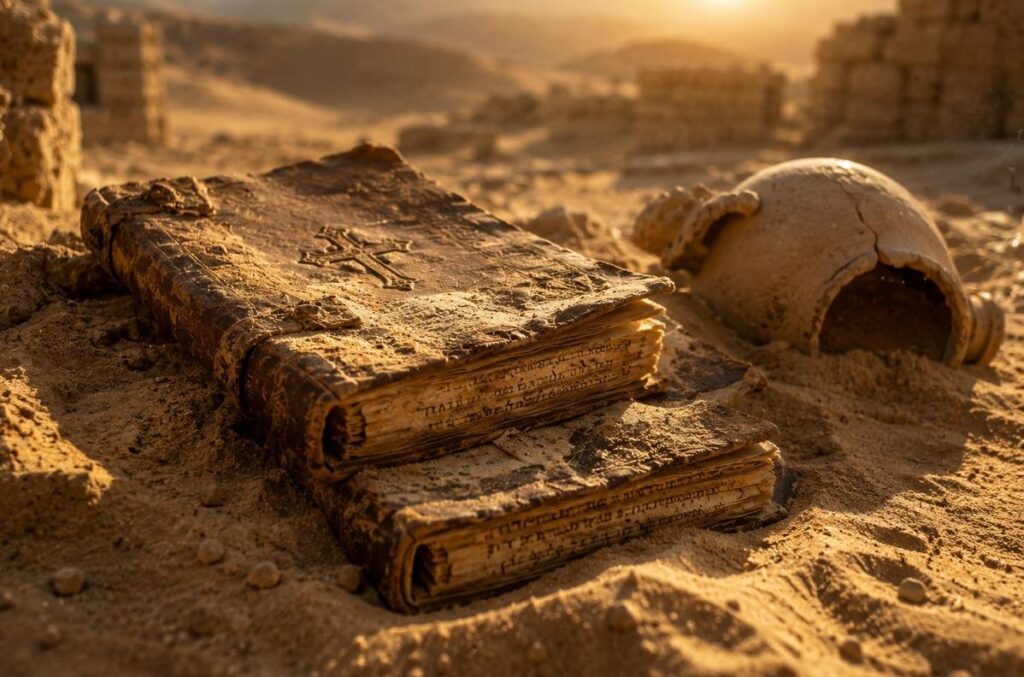
Ancient Gnosticism was not one single religion. It was a family of movements and texts that flourished in the Mediterranean world from roughly the second to the fourth centuries CE. These movements shared a recognisable posture: the conviction that the visible world was not the whole of reality, that human beings contained a divine spark from beyond the material order, and that liberation came through direct knowing rather than obedience to institutional authority.
The major currents included the Valentinians, who developed a complex sacramental theology and a relatively positive view of the material world; the Sethians, who described a more hostile cosmos ruled by an ignorant Demiurge and his archontic administrators; and the Thomas tradition, which offered aphoristic wisdom without elaborate cosmology. These groups were in dialogue with Platonism, Hermeticism, Judaism and early Christianity. They were not isolated curiosities, but participants in a vigorous religious and philosophical world.
Ancient Gnosticism was also embedded in specific social settings. It had teachers, initiatory circles, ritual communities and textual traditions. It was contested by the emerging orthodox church, condemned by writers such as Irenaeus of Lyons, and eventually suppressed by the alliance of ecclesiastical and imperial power. By the time the Nag Hammadi codices were buried, probably in the fourth century, the public life of many Gnostic currents was already ending.
What Neo Gnosticism Is
Neo Gnosticism is a modern revival and reinterpretation. It is influenced by the discovery and publication of the Nag Hammadi texts, shaped by modern scholarship, informed by esoteric revival and depth psychology, and often individual, non-institutional and experimental.
Neo Gnosticism engages artificial intelligence, simulation theory, transhumanism, digital attention and systems of control. It is more likely to treat ancient myths symbolically, psychologically or technologically. It does not need to claim that the ancient church has simply been reborn. It can be understood as a modern field of inquiry and practice that returns to ancient questions under new conditions.
The Neo Gnostic landscape includes organised churches, scholarly communities, online forums, solitary practitioners, artists, philosophers and contemplative readers. Some are Christian. Some are post-Christian. Some are not Christian at all. What unites them is not organisational loyalty but a shared orientation: direct knowing is possible, it matters more than inherited belief, and the structures of ordinary reality are not transparent.

What Remained the Same
Despite the differences in context and expression, several core commitments remain stable across both ancient and modern forms.
Direct Knowing Remains Central
Gnosis, meaning direct, experiential and transformative knowing, is the centre of both ancient and Neo Gnosticism. Whether expressed through late-antique ritual or contemporary contemplation, the commitment to knowing rather than merely believing has not disappeared.
The Divine Spark Remains a Key Image
The conviction that human beings contain a hidden light from beyond the ordinary order persists. The language may shift from divine spark to true self, inner witness or hidden spirit, but the underlying recognition remains: something in the human being is not exhausted by social identity, fear, appetite or conditioning.
False Authority Remains a Major Concern
The critique of illegitimate power, whether expressed as archons, corrupt institutions or algorithmic governance, is a continuous thread. The forms change. The suspicion of authority that claims completeness while lacking wisdom does not.
The Visible World Is Questioned
Both ancient and Neo Gnostic readings share the sense that the world as commonly perceived is not the final word on reality. There is more. The surface is not the depth. The map is not the territory.
Liberation Is Inward Before It Is External
Both traditions insist that the primary work of liberation is the transformation of perception and consciousness. External conditions matter, but the decisive change is the movement from ignorance to recognition.
Texts Are Read as Maps of Recognition
Whether reading the Gospel of Thomas in an ancient community or on a phone in a modern room, the deeper function of the text is similar: to provoke recognition, not merely to convey information.
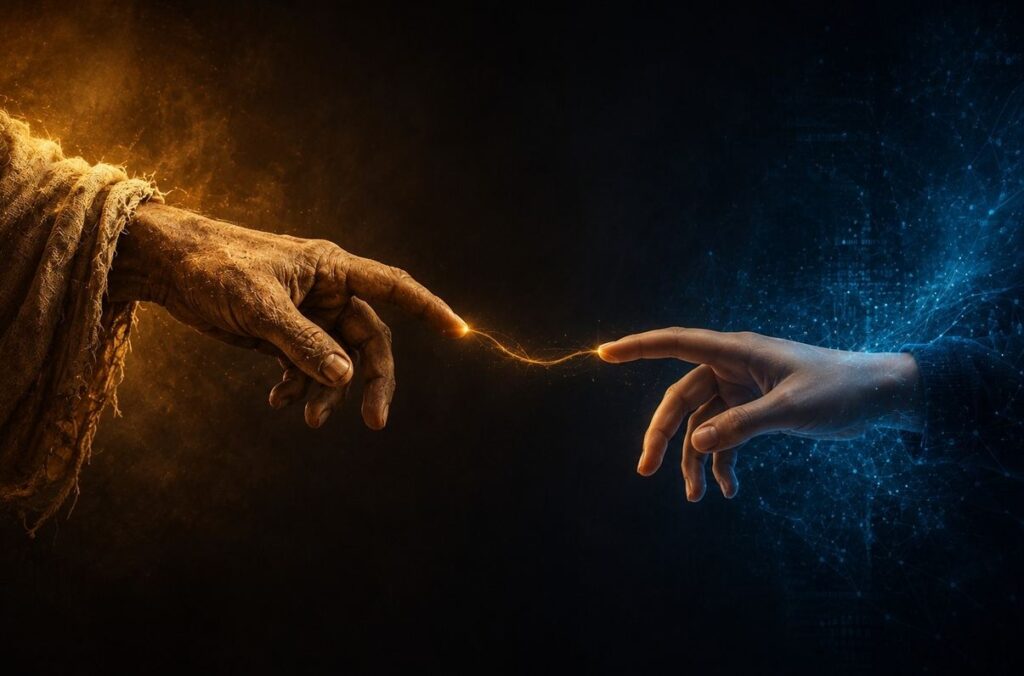
What Changed
The continuities are real, but the transformations are equally significant.
The Social Setting Changed
Ancient Gnosticism emerged in a world of empire, temple, synagogue and philosophical school. Neo Gnosticism emerges in a world of nation-state, digital platform, collapsing institution and individual seeker. The social container is different, and the individual often bears more of the burden of practice.
The Role of Institutions Changed
Ancient Gnosticism had teachers, communities and initiatory structures. Neo Gnosticism is often solitary, online or loosely affiliated. The institutional support is thinner. The demand for personal discernment is higher.
Access to Texts Changed
Ancient Gnostics copied, guarded, translated and argued over precious manuscripts. Modern readers encounter them through printed editions, websites, PDFs, academic commentary and search engines. The modern seeker often has more access to texts than many ancient practitioners did, but access is not the same as understanding.
Cosmology Became More Symbolic
Many Neo Gnostics read the Pleroma, the aeons, Sophia and the archons as psychological or symbolic maps rather than literal cosmic geography. This is not necessarily a loss. It may be a necessary adaptation. But it changes how the tradition lives in the imagination.
Practice Became More Personalised
Ancient Gnosticism had shared rituals: baptism, chrismation, the bridal chamber and the five seals. Neo Gnosticism often relocates initiation into daily life and individual contemplation. The communal dimension is weaker. The personal dimension is stronger.
Technology Created New Forms of Mediation
The ancient world was mediated by temple, text, teacher and tradition. The modern world is mediated by screen, algorithm, platform and notification. Neo Gnosticism must therefore ask new questions about attention, distraction, synthetic reality and machine authority.
The Body Is Treated with More Nuance
Some ancient texts treated the body with suspicion. Many Neo Gnostics reject body-hatred, embracing embodied practice, somatic awareness and a more positive view of material existence. The body is not the enemy. It is the field where awakening must be tested.
Neo Gnosticism Often Avoids Strict World-Denial
While some ancient texts can be starkly anti-cosmic, modern Neo Gnosticism tends to avoid absolute world-denial. It critiques the world as constructed, mediated or incomplete, but it does not necessarily condemn matter, flesh or nature as evil.
Sources: From Hidden Codices to Open Archives
Ancient Gnostic texts were copied, guarded, translated, argued over and sometimes buried. They were precious because they were scarce. A community might possess a single codex. A teacher might know a text by heart. The material conditions of textual survival shaped how Gnosticism was practised.
Modern readers encounter the same texts through printed editions, websites, translations, academic commentary and search engines. The Nag Hammadi Library is available in multiple English translations, with scholarly introductions, online databases and independent study guides. The modern seeker often has more access to texts than many ancient practitioners did.
But access is not the same as understanding. The ancient reader encountered these texts within a living context, with instruction, ritual setting and shared interpretation. The modern reader often encounters them alone, without guidance, without community and without the cultural background that made the symbols immediately legible. The danger is not scarcity but flattening: the reduction of complex mythic cosmologies to slogans, memes or identity badges.
Authority: From Secret Teaching to Personal Discernment
Ancient groups often preserved secret teachings through teachers, initiatory circles or ritual communities. Authority was personal, transmitted through lineage and guarded against outsiders. The teacher was not merely an instructor, but a mediator of transformation.
Modern Neo Gnostics often emphasise personal discernment, independent reading and direct experience. The internet has widened access to texts and ideas. The solitary seeker can read the Gospel of Thomas, the Apocryphon of John and scholarly commentary without ever meeting another Gnostic face to face.
This does not mean ancient Gnostics were blindly institutional or modern readers are automatically free. Both can fall into false authority. The ancient teacher could become a tyrant. The modern online guide can become a brand. The question is not whether authority exists but whether it serves awakening or obstructs it. The ancient Gnostic test remains useful: does this teaching lead to recognition, or to dependence?
Cosmology: From Mythic Worlds to Symbolic Systems
Ancient Gnosticism described elaborate mythic cosmologies: the Pleroma, the aeons, Sophia, the Demiurge, the archons, the heavens and the cosmic spheres. These were not mere decorative images. They were ways of describing reality, consciousness, fate, exile and return.
Modern Neo Gnostics often read these cosmologies as psychological patterns, spiritual maps, symbolic metaphysics, system critiques, digital authority or algorithmic governance. The Demiurge can become the ego, the ideology or the technological infrastructure that shapes perception without wisdom. The archons can become the internalised voices of fear and conformity, or the corporate and governmental systems that limit what can be thought. The Pleroma can become divine fullness, the ground of being, or the wholeness that remains possible even in a fragmented world.
The ancient myth does not need to be discarded for the modern reading to work. It needs to be read with intelligence. The question is whether the modern reader is doing the work that the ancient myth demands: the transformation of consciousness, the critique of false authority, the recovery of direct knowing. If the myth is read only as psychology, it loses its bite. If it is read only as literal cosmology, it may lose its modern relevance. The strongest reading holds both historical respect and living interpretation.
Practice: From Ritual Initiation to Lived Attention
Ancient Gnosticism had shared rituals: baptism, chrismation, the five seals, the bridal chamber, sacramental meals, visionary ascent and communal prayer. These were understood as practices of transformation. They did not merely symbolise change. They formed the soul within a sacred pattern.
Neo Gnosticism often relocates initiation into daily life and individual practice. Contemplation, meditation, breath, body awareness, dream work, shadow work, digital discernment, study circles and ethical testing become primary disciplines. The communal dimension is often weaker. The personal dimension is stronger.

This is not necessarily a loss. The ancient rituals were powerful because they were embedded in community and tradition. Modern practices are powerful because they are accessible, portable and immediately testable. The breath is always available. The body is always present. The moment of recognition does not require a temple. It requires attention.
But the modern practitioner must be honest about what is gained and what is lost. Without community, the path can become solitary, idiosyncratic or self-referential. Without ritual, transformation can remain incomplete, stuck in the head rather than embodied in the whole person. The best Neo Gnostic practice seeks to recover what can be recovered of the ancient communal and ritual dimension while acknowledging the conditions of modern life.
Technology: The New Field of Gnostic Questions
Ancient Gnostics questioned cosmic and religious mediation. They asked how the soul could ascend through planetary spheres governed by false powers. They asked how the divine spark could be freed from the archontic administration of fate. Their questions were cosmological and metaphysical.
Neo Gnostics question technological mediation. They ask how consciousness survives inside systems designed to capture attention, shape desire and predict behaviour. They ask whether artificial intelligence can become a new symbolic Demiurge: a synthetic authority that shapes human life without possessing wisdom. They ask whether simulation theory revives the ancient question of the world’s constructedness in a new technological key. They ask whether transhumanism offers liberation from the body or a new form of escape from embodiment.

These are analogies and interpretations, not claims that ancient archons literally built modern technology. The value of the comparison lies in its precision. The ancient archons were administrators of a reality they did not understand. Modern algorithmic systems can administer attention without wisdom. Both enforce patterns of behaviour that may serve the system more than the soul. Both depend on unexamined perception for their power. Both are weakened by recognition.
The Neo Gnostic response to technology is not rejection. It is discernment. The question is not whether to use tools, but how to use them without being used by them. Digital minimalism, attention sovereignty and algorithmic literacy become spiritual practices. The screen is not evil. The screen is a mirror. What matters is who is looking.
Comparison at a Glance
| Area | Ancient Gnosticism | Neo Gnosticism |
|---|---|---|
| Historical setting | Late antiquity, especially the second to fourth centuries CE in the Mediterranean world. | Modern and digital age, shaped by recovered texts, scholarship, psychology and technology. |
| Sources | Codices, oral teaching, ritual communities and guarded manuscripts. | Translations, scholarship, online archives, printed editions and digital access. |
| Authority | Teachers, texts, initiatory circles and forms of lineage transmission. | Discernment, study, independent practice and personal direct knowing. |
| Cosmology | Mythic and theological, with elaborate accounts of Pleroma, aeons, Sophia, Demiurge and archons. | Symbolic, psychological, technological and often interpreted as spiritual map or system critique. |
| Practice | Ritual, sacrament, ascent, revelation and communal initiation. | Contemplation, embodiment, digital discernment, individual discipline and study circles. |
| Core aim | Liberation through gnosis from cosmic fate and archontic power. | Recognition through gnosis in modern life, amid systems, screens and mediated attention. |
Common Misunderstandings
Several misconceptions cloud the relationship between ancient and Neo Gnosticism. They should be addressed directly.
“Neo Gnosticism is fake because it is modern.” This is a category error. Every living tradition is modern in its present expression. Christianity, Buddhism and Judaism are all ancient in origin and modern in practice. The question is not age but fidelity: does the modern expression engage the source material with seriousness, or does it merely exploit it?
“Ancient Gnosticism was one unified religion.” It was not. The Nag Hammadi Library reveals a diverse field of texts, communities and theologies. Valentinians differed from Sethians. Thomasine wisdom differed from both. The ancient world was already plural.
“Neo Gnosticism is just conspiracy thinking.” Some online appropriations of Gnostic language do collapse into paranoia. But the best Neo Gnostic work is scholarly, contemplative and psychologically grounded. The critique of archons as systems of power is not conspiracy. It is structural discernment.
“Gnosticism means hating the body.” Some ancient texts do express suspicion of the body and the material world. But others, especially in Valentinian contexts, treat the body and world in more nuanced ways. Many Neo Gnostics explicitly reject body-hatred and embrace embodied practice.
“Modern technology perfectly equals ancient archons.” The comparison is useful but not exact. Algorithms are not literally planetary rulers. They are modern patterns of power that can share certain features with ancient archonic language: limited vision, administrative function and enforcement of behaviour without wisdom. The analogy illuminates. It does not prove identity.
“Reading Nag Hammadi automatically makes someone Gnostic.” Reading the texts is valuable. But Gnosticism is not a literary club. It is an orientation toward direct knowing, a critique of false authority and a practice of recognition. The text points. Gnosis recognises.
Why the Difference Matters Now
Readers need to know whether they are studying history, practising modern spirituality or making symbolic comparisons. The strongest Neo Gnostic work respects ancient sources while admitting modern interpretation. When the ancient and modern are confused, both become weaker. When they are held in relation, the pattern becomes clearer.
The ancient texts offer a source layer: myths, symbols, practices and experiences that emerged in a specific historical world. The modern reader cannot simply transplant those experiences into the present. But the reader can ask what they reveal about the human condition that remains true across time. The archons are not the same, but the pattern of false authority persists. The Demiurge is not the same, but the construction of counterfeit reality persists. The divine spark is not the same in every vocabulary, but the hidden light within the human being remains a central image of recognition.
The difference matters because Neo Gnosticism is not a museum. It is a living field. It asks ancient questions in modern conditions. It reads old texts with new eyes. It practises old disciplines in new containers. It recognises that the world has changed, while the soul’s need for recognition has not.
The best Neo Gnostic work is therefore both scholarly and experiential. It knows the sources. It respects the history. It does not invent traditions or claim lineages it does not possess. And it tests every interpretation against the only criterion that ultimately matters: does it lead to direct knowing, or does it merely decorate the ego?
Related Glossary Terms
These ZenithEye articles and glossary-style guides illuminate the terms discussed in this article:
Gnosis – Direct, transformative knowing that changes the one who recognises.
Divine Spark – The hidden light within the human being that remembers its origin beyond the lower world.
Archons – Ruling powers or structures that shape perception and obstruct awakening.
Demiurge – The lower craftsman or world-maker in Gnostic myth and modern symbolic reading.
Pleroma – Divine fullness, the higher source from which the spark originates.
Kenoma – The lower realm of deficiency, limitation and forgetfulness.
Aeon – A divine emanation, power or principle within the Pleroma.
Sophia – Divine Wisdom, the fallen and restored figure whose drama explains the origin of the lower world.
Counterfeit Spirit – False animation, imitation life or unconscious pattern mistaken for true spirit.
Neo Gnosticism Route
The Neo Gnosticism Route
This article belongs to ZenithEye’s Neo Gnosticism route: a reader pathway through modern Gnostic revival, direct knowing, digital authority and the contemporary return of ancient wisdom.
- Open the Neo Gnosticism hub
- What Is Neo Gnosticism?
- What Do Neo Gnostics Believe?
- Is Neo Gnosticism a Religion, Philosophy or Practice?
- Neo Gnosticism vs Ancient Gnosticism: What Changed and What Remained – You are here.
- How Gnosticism Survived 2,000 Years
- Who Are the Neo Gnostics?
- Living Gnosis
Follow the route from definition through belief, classification, comparison, history, identity and lived practice.
Frequently Asked Questions
What is the difference between Neo Gnosticism and ancient Gnosticism?
Neo Gnosticism is a modern revival and reinterpretation of ancient Gnostic themes. Ancient Gnosticism was a diverse set of religious and philosophical movements in late antiquity. Neo Gnosticism reinterprets ancient themes through modern psychology, technology, personal practice and comparative spirituality. They share core concerns such as direct knowing, the divine spark, false authority and liberation, but differ in context, cosmology, practice and institutional form.
Is Neo Gnosticism the same as ancient Gnosticism?
No. Neo Gnosticism is not identical to ancient Gnosticism. It is a modern field that draws on ancient sources while adapting them to contemporary conditions. The symbols remain recognisable, including archons, the Demiurge, the divine spark and the Pleroma, but they are often read symbolically, psychologically or technologically rather than as literal cosmic geography.
What stayed the same between ancient and modern Gnosticism?
Direct knowing, or gnosis, remains central. The divine spark remains a key image. False authority remains a major concern. The visible world is questioned in both. Liberation is understood as inward before it is external. Texts are read as maps of recognition rather than mere information.
What changed in Neo Gnosticism?
The social setting changed from late antiquity to the digital age. Access to texts changed from scarce manuscripts to open archives. Cosmology became more symbolic for many readers. Practice became more personalised and less communal. Technology created new forms of mediation. The body is often treated with more nuance. Neo Gnosticism tends to avoid strict world-denial.
Is Neo Gnosticism historically accurate?
Neo Gnosticism is not primarily a historical reconstruction, though it draws on historical sources. It is a modern interpretation and continuation of ancient questions. The strongest Neo Gnostic work respects ancient scholarship while admitting that modern application involves interpretation, not mere replication.
Does Neo Gnosticism still use the Nag Hammadi texts?
Yes. The Nag Hammadi Library is the primary source layer for much Neo Gnostic work. Modern readers encounter these texts through translations, scholarly commentaries, online archives and study guides. The texts function as maps of recognition: they provoke direct knowing rather than merely conveying historical information.
Why does Neo Gnosticism talk about AI and simulation?
Neo Gnostics often see algorithms, artificial intelligence and simulation theory as modern fields where ancient Gnostic concerns reappear. The Demiurge can become a symbol for technological infrastructure that shapes perception without wisdom. Archons can become patterns of systemic control. These are analogies and interpretations, not claims that ancient archons built modern technology.
Further Reading
Explore these ZenithEye articles to deepen your understanding of ancient Gnosticism, Neo Gnosticism, direct knowing, modern systems and the living comparison between source and interpretation.
- What Is Gnosticism? – The ancient foundation for direct knowing, hidden reality, the divine spark and liberation from ignorance.
- What Is Neo Gnosticism? – The central definition guide for Neo Gnosticism, its ancient roots and modern expression.
- What Do Neo Gnostics Believe? – The detailed map of Neo Gnostic beliefs about direct knowing, the divine spark, archons, the Demiurge, Jesus, the body, technology and practice.
- Is Neo Gnosticism a Religion, Philosophy or Practice? – A guide to whether Neo Gnosticism is religion, philosophy, spiritual practice or a modern field of direct knowing.
- Neo Gnosticism: How Gnosticism Survived 2,000 Years – The historical thread from buried codices through revival currents, psychology, esotericism and digital dispersal.
- Archons: The Ruling Powers That Shape Reality – A comprehensive guide to archons as cosmic, psychological and systemic powers.
- What Is the Demiurge? – The Gnostic world-maker and its modern symbolic echoes.
- What Is the Divine Spark? – A deeper exploration of the hidden light within the human being.
- The Hidden Theology of AI – How artificial intelligence functions as spiritual authority and what the Neo Gnostic lens reveals about machine mediation.
- Transhumanism as Neo Gnosticism – The body-escape debate: technological transcendence, embodiment and false ascent.
References and Sources
This article draws upon primary sources from the Nag Hammadi Library, scholarly reconstructions of ancient Gnosticism and contemporary interpretive work. The following sources represent the core reference layer.
Primary Sources and Critical Editions
- Robinson, J. M. (ed.). (1990). The Nag Hammadi Library in English (4th revised ed.). HarperSanFrancisco.
- Layton, B. (ed.). (1987). The Gnostic Scriptures: A New Translation with Annotations and Introductions. Doubleday.
- Meyer, M. W. (ed.). (2007). The Nag Hammadi Scriptures: The Revised and Updated Translation of Sacred Gnostic Texts. HarperOne.
- Attridge, H. W., and MacRae, G. W. (trans.). (1985). The Gospel of Thomas (NHC II,2) and The Gospel of Philip (NHC II,3). In The Nag Hammadi Library in English.
- Waldstein, M., and Wisse, F. (trans.). (1995). The Apocryphon of John: Synopsis of Nag Hammadi Codex II,1 with BG 8502,2. Brill.
Scholarly Monographs and Interpretive Studies
- King, K. L. (2003). What Is Gnosticism? Harvard University Press.
- Jonas, H. (1958). The Gnostic Religion: The Message of the Alien God and the Beginnings of Christianity. Beacon Press.
- Pagels, E. (1979). The Gnostic Gospels. Random House.
- Turner, J. D. (2001). Sethian Gnosticism and the Platonic Tradition. Presses de l’Université Laval.
- Brakke, D. (2010). The Gnostics: Myth, Ritual, and Diversity in Early Christianity. Harvard University Press.
- Williams, M. A. (1996). Rethinking Gnosticism: An Argument for Dismantling a Dubious Category. Princeton University Press.
Comparative and Contemporary Studies
- Jung, C. G. (1951). Aion: Researches into the Phenomenology of the Self. Routledge and Kegan Paul.
- Hoeller, S. A. (2002). Gnosticism: New Light on the Ancient Tradition of Inner Knowing. Quest Books.
- Leloup, J.-Y. (trans.). (2005). The Gospel of Thomas: The Gnostic Wisdom of Jesus. Inner Traditions.
- Zuboff, S. (2019). The Age of Surveillance Capitalism: The Fight for a Human Future at the New Frontier of Power. PublicAffairs.
Study Note
This article distinguishes ancient sources from modern interpretation. Neo Gnosticism may draw deeply from ancient Gnostic texts, but modern symbolic, psychological and technological readings should be treated as interpretation, not as direct historical continuity. The purpose of the comparison is not to collapse ancient and modern into one another, but to hold them in productive tension. The ancient texts offer a source layer. The modern reader offers a new context. The conversation between them is the living tradition.
Safety Notice: This article explores contemplative and psychological themes related to spiritual awakening, identity and systems of control. It does not constitute medical, psychological or spiritual advice. If you are experiencing spiritual emergency, dissociation or psychological distress, please contact a qualified trauma-informed therapist or mental health professional. The practices and perspectives described here may support reflective study, but they do not replace clinical mental health care.