Nag Hammadi for Theologians: A Doctrine-Focused Path
Nag Hammadi for Theologians presents a doctrine-focused pathway through the largest collection of Gnostic scriptures ever assembled—a systematic engagement with forty-six tractates that challenges fundamental assumptions about Christian theology. Unlike the mystics’ path which privileges experiential transformation or the academics’ focus on codicological minutiae, this approach treats the Nag Hammadi Library as a theological laboratory where alternative Christologies, soteriologies, and cosmologies await serious doctrinal analysis. For theologians trained in the categories of Nicaea and Chalcedon, these texts offer not heresy to be dismissed but disorienting yet illuminating perspectives that demand rigorous intellectual engagement. [1][2]
The pathway operates as a comparative theological exercise: reading Sethian and Valentinian texts alongside orthodox traditions reveals what was at stake in the conciliar decisions. Why did the Church insist on creation ex nihilo? Why was docetism rejected? Why did the canon close? The Nag Hammadi Library preserves the questions in their most acute form—alternative administrative manuals from the celestial bureaucracy that were ultimately filed under “rejected procedures” but retain their capacity to illuminate the official protocols. This is not an invitation to uncritical adoption but to disciplined theological attention: these texts quote Scripture, invoke Christ, and seek salvation, functioning as Christian voices that challenge contemporary systematic theology to expand its conceptual frameworks. [3][4]
Contents
- Theological Provocations: What Is This Path?
- Christology Beyond the Canon: Docetism, Logos, and Multi-Level Manifestation
- Soteriology: Salvation as Recognition vs. Atonement
- The Demiurge Debate: Creation, Biblical Literalism, and Cosmic Administration
- The Feminine Divine and Theological Anthropology
- Ecclesiology: Election, Hierarchy, and the Community of the Perfect
- Methodological Reflections: Heresy, Control Groups, and Constructive Retrieval
- The Theological Pathway: Recommended Reading Sequence
- Frequently Asked Questions
- Further Reading
- References and Sources
Theological Provocations: What Is This Path?
Definition: The Doctrinal Laboratory
Nag Hammadi for Theologians is a systematic pathway through the Nag Hammadi Library (46 tractates across 13 codices, discovered 1945) designed for readers trained in Christian systematic theology. It treats Sethian and Valentinian texts not as historical curiosities but as serious theological alternatives that challenge orthodox Christology, soteriology, creation theology, and ecclesiology. The pathway focuses on doctrinal content: docetic Christologies, soteriologies of recognition (gnōsis) versus atonement, Demiurge theologies that distinguish the biblical creator from the transcendent Father, feminine divine imagery, and elitist ecclesiologies of election. Methodologically, it employs comparative theology—reading Nag Hammadi texts as “control groups” that reveal what was at stake in orthodox conciliar decisions.
The theological traditions preserved at Nag Hammadi were rejected by the Great Church for reasons both political (maintenance of institutional unity) and substantive (doctrinal coherence with biblical narrative). Yet they remain Christian voices—quoting Scriptures, invoking Christ, seeking salvation—and as such demand theological attention. What happens when we take these texts seriously as Christian theology rather than as “heresy” to be anatomised and dismissed? The pathway proposes disciplined bracketing of the heresy question to allow these alternative administrative manuals to illuminate the official protocols they challenged. [5][6]
Christology Beyond the Canon: Docetism, Logos, and Multi-Level Manifestation
The Apocryphon of John: Multi-Level Christology
The Apocryphon of John presents a Christology that operates on multiple levels simultaneously—a bureaucratic hierarchy of manifestation that challenges the single-level Incarnation of Chalcedon. The Saviour who appears to John on Patmos is not merely the historical Jesus but the divine Autogenes, the Self-Generated, who descends through the aeonic realms to awaken the sleeping spark in humanity. This is not the Incarnation of the Creed but a docetic manifestation—the spiritual Christ who temporarily inhabits the fleshly Jesus as a vessel, a temporary assignment rather than an ontological union. [7][8]
Primary Source Citation: “I am the one who is with you always. I am the Father; I am the Mother; I am the Son. I am the unpolluted and incorruptible one.” Apocryphon of John (NHC II,1 2:15-25). This polymorphic declaration subverts the hypostatic union of Chalcedon by presenting Christ as the entire divine hierarchy speaking simultaneously.
The Second Treatise of the Great Seth: Substitution and the Laughing Saviour
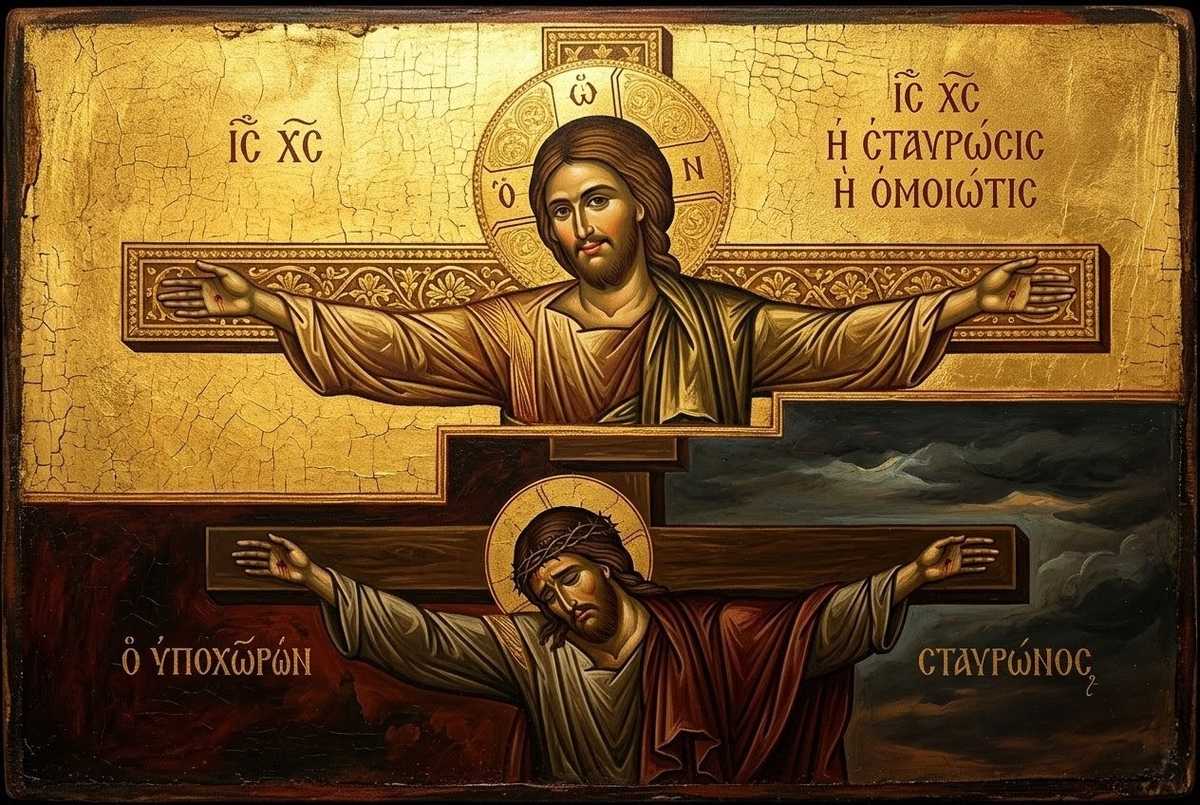
The Second Treatise of the Great Seth pushes docetism to its radical extreme—the substitution crucifixion. “It was another… who drank the gall and the vinegar; it was not I. They struck me with the reed; it was another, Simon, who bore the cross on my shoulder.” The theological implication is stark: the divine Saviour does not suffer; the material Jesus is a separate entity, a vessel that can be discarded like a worn garment. From the cross, the Saviour laughs: “I laughed at their ignorance”—the cosmic joke on the archons who believe they have defeated divinity when they have merely destroyed a disposable container. [9][10]
Primary Source Citation: “It was another, their father, who drank the gall and the vinegar; it was not I. They struck me with the reed; it was another, Simon, who bore the cross on his shoulder. It was another upon whom they placed the crown of thorns.” Second Treatise of the Great Seth (NHC VII,2 55:10-20). The text explicitly denies the suffering of the divine Saviour while affirming the reality of the substitute’s death.
The Tripartite Tractate: Logos Theology and Trinitarian Structure
Yet Nag Hammadi Christology is not merely anti-materialist. The Tripartite Tractate offers a sophisticated doctrine of the Logos that engages directly with Trinitarian theology. The Logos operates in three dispensations: with the angels as fellow angel, with humanity as human being, with the Pleroma as perfect Son. This is not adoptionism but a complex theology of divine accommodation—more radical than the orthodox Incarnation yet not without its own coherence. The text suggests a “multi-tier” Christology where the same Logos manifests differently according to the receptor’s administrative clearance level—a celestial protocol that adjusts divine revelation to the capacity of each jurisdiction. [11][12]
Soteriology: Salvation as Recognition vs. Atonement
If orthodox soteriology centres on atonement—Christ’s sacrifice satisfying divine justice or defeating the powers—Nag Hammadi texts generally propose salvation as gnōsis, recognition. The Gospel of Truth describes error (planē) as a kind of nightmare, and the Saviour as one who awakens the sleepers. “He made the error tremble by showing him forth, and he made the error become nothing by revealing the truth.” This is not works-righteousness or forensic justification but ontological transformation—the shift from misidentification to accurate self-recognition. [13][14]
Primary Source Citation: “He made the error tremble by showing him forth, and he made the error become nothing by revealing the truth. He abolished the error by showing it forth, for the error was nothing—he revealed the truth to those who had been in error because of ignorance.” Gospel of Truth (NHC I,3 18:25-30). The soteriology is epistemological rather than sacrificial.
The Hymn of the Pearl (embedded in the Acts of Thomas) narrates this as a royal child who forgets his identity in a foreign land, only to be reminded by a letter from his Father. Salvation is anamnēsis—unforgetting, recollection of what the soul has always known but temporarily lost. The theological question is profound: Is salvation essentially cognitive (knowing who you are), or does it require something external (Christ’s historical sacrifice)? The Nag Hammadi texts tend toward the former, though they do not simply dissolve salvation into psychology. The rapture (apolytrōsis) is a ritual event, a sealing with the five seals that transforms the ontological status of the recipient—a bureaucratic reclassification from archonic subject to Pleroma citizen. [15][16]
The Demiurge Debate: Creation, Biblical Literalism, and Cosmic Administration
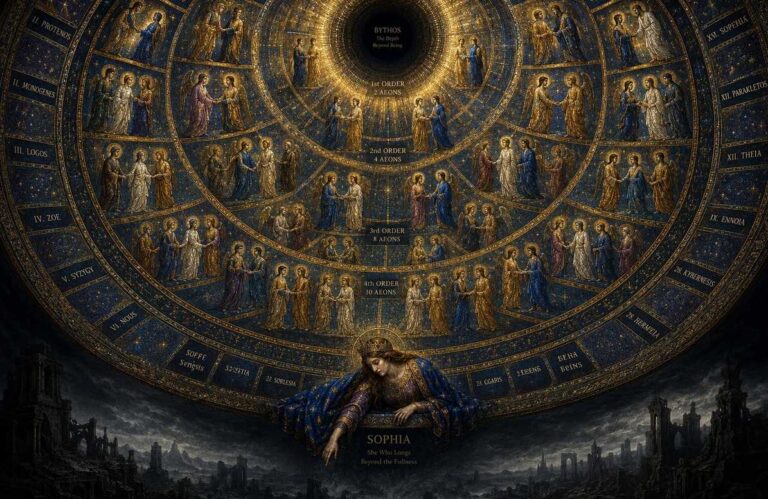
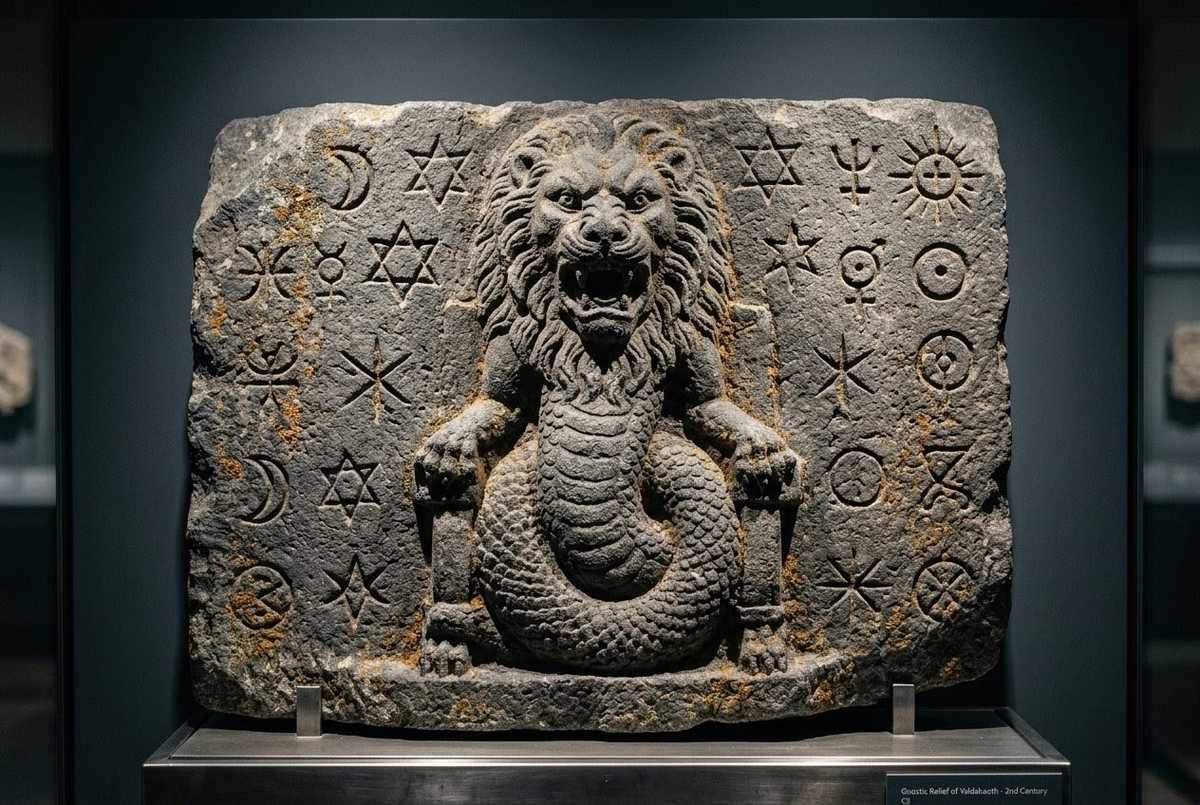
No Nag Hammadi doctrine scandalised ancient orthodoxy more than the distinction between the highest God and the Demiurge (Yaldabaoth, Saklas, Samael). The creator of the material world is not the Father of Jesus Christ but a lower being, born of error or ignorance, who believes himself to be the only God. This is not merely mythological elaboration but theological polemic against biblical literalism. The God who commands genocide in Joshua, who hardens Pharaoh’s heart in Exodus, who creates a world containing suffering and death—this cannot be the transcendent Father of Jesus. The Demiurge is the biblical God read literally; the transcendent Father is the God revealed by the Saviour’s hidden wisdom. [17][18]
Theologically, this raises questions about the status of the material world. Is creation good (Genesis 1) or a prison (Apocryphon of John)? The answer varies by text. The Authoritative Teaching presents the body as a garment to be stripped off; the Gospel of Philip affirms that “the world came about through a mistake,” yet also that “God makes use of it.” The Hypostasis of the Archons offers a middle position: the material world is a flawed administrative setup that nonetheless contains retrievable divine sparks. This is not strict dualism but a theology of compromised jurisdiction—the material realm as a “branch office” operating under incompetent management that the central headquarters must eventually dissolve or reform. [19][20]
The Feminine Divine and Theological Anthropology
The prominence of feminine imagery in Nag Hammadi texts challenges androcentric theological traditions. Thunder: Perfect Mind speaks in a divine feminine voice: “I am the first and the last. I am the honoured one and the scorned one. I am the whore and the holy one.” The Trimorphic Protennoia identifies the divine as Barbelo, the First Thought (Ennoia), who is simultaneously Mother, Sister, and Spouse. This is not biological essentialism but ontological symbolism: the feminine represents the receptive, reflective, self-communicating aspect of divinity. If the Father is the transcendent source, Barbelo/Protennoia is the immanent presence, the one who makes God available to creation. [21][22]
Theological anthropology follows from this. Human beings are not created male and female in the biological sense but as syzygies—paired spiritual entities. The Gospel of Philip declares that “when Eve was still in Adam, death did not exist. When she was separated from him, death came into being.” Salvation is the restoration of this original androgynous unity. For feminist theology, these texts offer both resources and problems: they validate feminine imagery for the divine and women’s authority in spiritual instruction (Mary Magdalene in Philip, Norea in Hypostasis of the Archons). Yet the goal of becoming “male” (Saying 114 in Thomas) or the emphasis on “spiritual marriage” may reproduce patriarchal structures in esoteric form. [23][24]
Ecclesiology: Election, Hierarchy, and the Community of the Perfect
Nag Hammadi ecclesiology is typically elitist, distinguishing between the “spiritual” (pneumatikoi), “psychic” (psychikoi), and “material” (hylich) members of humanity—a three-tiered security clearance system for salvation. The Valentinian system, described in the Interpretation of Knowledge, imagines a church that contains different natures, each requiring different nourishment. The “race of Seth” or the “seed of the Spirit” represents those destined for salvation by nature rather than by choice. [25][26]
This is not simply spiritual arrogance but a theology of election. The ecclesiological question is whether such communities can maintain ethical commitment without universal accountability, or whether they inevitably dissolve into antinomianism. The Gospel of Matthew (canonical) demands that the church be a city on a hill; the Nag Hammadi texts often suggest it is a secret fellowship, hidden within the larger church like wheat among tares. This tension between visibility and secrecy, between universal call and election, remains unresolved in Christian theology. The administrative question persists: does salvation require institutional accreditation, or can it be transmitted through hidden channels and classified briefings? [27][28]
Methodological Reflections: Heresy, Control Groups, and Constructive Retrieval
For the contemporary theologian, Nag Hammadi texts function as a kind of “control group”—alternative Christianities that developed different answers to shared questions. They reveal what was at stake in the orthodox decisions: Why did the Church insist on creation ex nihilo? Why was docetism rejected? Why did the canon close? Reading these texts theologically requires bracketing the question of heresy—not to endorse every claim, but to understand the theological logic on its own terms. One need not agree with the Apocalypse of Peter‘s claim that the laughing Saviour mocks the crucifixion to recognise its theological provocation: What if the Passion is not tragic but triumphant? What if the apparent defeat is actually a cosmic joke on the powers? [29][30]
Constructive possibilities emerge from this engagement. Can Nag Hammadi theology be constructive, not merely historical? Some contemporary theologians have attempted “Gnostic retrieval”—reading these texts as legitimate voices in the Christian chorus. The feminist retrieval of the divine feminine, the ecological theology that critiques dualistic denigration of matter, the mystical theology of direct experience—all find resources in this library. The theologian David Bentley Hart has argued that Nag Hammadi texts preserve an “absolute metaphysical distinction between God and the world” that mainstream Christianity lost. Whether this is accurate or desirable, it represents a serious theological claim that demands engagement, not dismissal. [31][32]
The Theological Pathway: Recommended Reading Sequence
For theologians approaching the Nag Hammadi Library, the following sequence provides systematic doctrinal engagement:
Stage 1: Foundational Christologies
1. The Apocryphon of John — Multi-level Christology and docetism. The foundational text for understanding Sethian soteriology and the distinction between the transcendent Father and the Demiurge.
2. The Second Treatise of the Great Seth — Radical substitution Christology and the laughing Saviour. Examines the extreme docetic position where the divine does not suffer.
3. The Tripartite Tractate — Valentinian systematic theology with sophisticated Logos doctrine. Provides the most philosophically rigorous alternative to Chalcedonian Christology. [33]
Stage 2: Soteriology and Anthropology
4. The Gospel of Truth — Valentinian meditation on error and recognition. Explores the soteriology of anamnēsis versus atonement.
5. The Hymn of the Pearl — Narrative soteriology of return and recollection. Examines the garment of glory and retrieval of the divine spark.
6. The Gospel of Philip — Sacramental anthropology and the bridal chamber. Investigates syzygy theology and the restoration of androgynous unity. [34]
Stage 3: Cosmology and Ecclesiology
7. The Hypostasis of the Archons — Alternative creation theology examining archonic incompetence and divine rescue.
8. The Interpretation of Knowledge — Valentinian ecclesiology of the three natures. Explores pneumatic, psychic, and hylic classifications.
9. Thunder: Perfect Mind — Feminine theology and paradoxical divine speech. Challenges androcentric theological language.
10. Trimorphic Protennoia — First-person divine revelation and the Five Seals ritual. Examines the theology of Protennoia/Barbelo as constitutive of divine self-consciousness. [35]
Frequently Asked Questions
What is the Nag Hammadi for Theologians pathway
Nag Hammadi for Theologians is a systematic reading path through the 46 tractates of the Nag Hammadi Library designed for readers trained in Christian systematic theology. It focuses on doctrinal content: Christology (docetism, multi-level manifestation), soteriology (gnosis versus atonement), creation theology (Demiurge distinctions), feminine divine imagery, and elitist ecclesiology. The pathway treats these texts not as historical curiosities but as serious theological alternatives that challenge orthodox assumptions and reveal what was at stake in conciliar decisions.
How do Nag Hammadi Christologies differ from Chalcedonian orthodoxy
While Chalcedon affirms one person in two natures (fully divine, fully human), Nag Hammadi texts present multi-level Christologies where the divine Christ temporarily inhabits or uses the fleshly Jesus as a vessel. The Second Treatise of the Great Seth describes a substitution crucifixion where Simon of Cyrene dies while Jesus laughs from above. The Tripartite Tractate presents a Logos that manifests differently to angels, humans, and the Pleroma. These are not adoptionism but complex theologies of divine accommodation that separate the expendable vessel from the eternal revealer.
What is the Demiurge in Nag Hammadi theology
The Demiurge (Yaldabaoth, Saklas, Samael) is the creator of the material world, distinct from the transcendent Father of Jesus. Born from Sophia’s error or ignorance, he believes himself the only God and creates the material cosmos as a prison for divine sparks. This is theological polemic against biblical literalism: the God who commands genocide or hardens Pharaoh’s heart cannot be the transcendent Father revealed by Christ. The Demiurge represents the biblical creator read literally; the Father is revealed through the Saviour’s hidden wisdom.
How does Nag Hammadi soteriology differ from orthodox atonement theology
Orthodox soteriology centres on atonement–Christ’s sacrifice satisfying divine justice or defeating evil powers. Nag Hammadi texts generally propose salvation as gnosis (recognition) and anamnesis (recollection). The Gospel of Truth describes error as nightmare and the Saviour as one who awakens sleepers by revealing truth. The Hymn of the Pearl narrates salvation as a royal child remembering his identity through a letter from his Father. This is ontological transformation through knowledge, not forensic justification through sacrifice.
What resources do Nag Hammadi texts offer feminist theology
Nag Hammadi texts validate feminine imagery for the divine (Barbelo/Protennoia as First Thought, Thunder: Perfect Mind’s divine feminine voice) and women’s authority in spiritual instruction (Mary Magdalene in Gospel of Philip, Norea in Hypostasis of the Archons). They present the feminine as constitutive of divine self-consciousness–the receptive, reflective principle that makes the transcendent Father knowable. However, they also contain problematic elements: the goal of becoming ‘male’ (Thomas 114) and emphasis on ‘spiritual marriage’ may reproduce patriarchal structures in esoteric form.
What is the three-nature anthropology in Valentinian texts
Valentinian texts classify humanity as hylic (material, bound to matter, incapable of ultimate salvation), psychic (soulish, capable of faith and ethical development, saved through church and sacraments), and pneumatic (spiritual, carrying divine seed, saved by nature through recognition). This is a theology of election: the ‘race of Seth’ or ‘seed of the Spirit’ are destined for salvation by nature rather than choice. It raises ecclesiological questions about whether such elitism can maintain ethical commitment without universal accountability.
Can Nag Hammadi theology be constructive for contemporary Christianity
Some theologians argue for ‘Gnostic retrieval’–reading Nag Hammadi texts as legitimate voices offering resources for feminist theology (divine feminine), ecological critique (distinction between creator and world), and mystical practice (direct experience). David Bentley Hart argues these texts preserve an ‘absolute metaphysical distinction between God and the world’ that mainstream Christianity lost. Others maintain they represent a fundamentally different religion. The texts at minimum function as a ‘control group’ revealing what was at stake in orthodox decisions and challenging theology to expand its frameworks.
Further Reading
The following articles provide essential context for theologians engaging with the Nag Hammadi Library:
- Nag Hammadi for Academics: A Scholarly Approach — Methodological guidance on textual criticism, codicology, and historical context for theologians requiring scholarly apparatus.
- Nag Hammadi for Mystics: A Contemplative Path — Alternative experiential approach focusing on transformative practice rather than doctrinal analysis—complementary to the theological pathway.
- The Apocryphon of John: Sethian Cosmology Revealed — The foundational text for understanding multi-level Christology and the Demiurge distinction.
- Second Treatise of the Great Seth: Saviour Who Laughs — Radical docetic Christology and substitution crucifixion examined in detail.
- The Gospel of Truth: Valentinian Reflection on Knowledge and Error — Soteriology of recognition and anamnesis versus orthodox atonement theology.
- Gnostic Schools Decoded: Sethian, Valentinian, Hermetic — Comprehensive overview of the theological traditions represented in the library.
- Valentinian Christianity: System and Influence — Detailed examination of Valentinian systematic theology and its philosophical sophistication.
- The Hypostasis of the Archons: Eve as Voice of Truth — Alternative creation theology and the feminine divine as spiritual instructor.
- Thunder: Perfect Mind – The Voice of the Divine Feminine — Feminine theology and paradoxical divine speech challenging androcentric traditions.
- Trimorphic Protennoia: Three Forms of First Thought — First-person divine revelation examining Barbelo as constitutive of divine self-consciousness.
References and Sources
The following sources support the claims and quotations presented in this article. All citations to Nag Hammadi texts represent direct translations from the Coptic as established in the standard critical editions.
Primary Sources and Critical Editions
- [1] Robinson, J.M. (Ed.). (1977). The Nag Hammadi Library in English. San Francisco: Harper & Row. (Standard English translation)
- [2] Layton, B. (1987). The Gnostic Scriptures. Garden City, NY: Doubleday. (Translation and commentary)
- [3] Meyer, M.W. (Ed.). (2007). The Nag Hammadi Scriptures. New York: HarperOne. (Revised translations)
- [4] Waldstein, M., & Wisse, F. (1995). The Apocryphon of John. Leiden: Brill. (Critical edition)
- [5] Turner, J.D. (1990). “NHC XIII,1: Trimorphic Protennoia.” In C.W. Hedrick (Ed.), Nag Hammadi Codices XI, XII, XIII. Leiden: Brill. (Critical edition)
Scholarly Monographs and Theological Studies
- [6] Jonas, H. (1958). The Gnostic Religion: The Message of the Alien God and the Beginnings of Christianity. Boston: Beacon Press. (Classic interpretation)
- [7] King, K.L. (2006). The Secret Revelation of John. Cambridge, MA: Harvard University Press. (Theological commentary)
- [8] Dunderberg, I. (2008). Beyond Gnosticism: Myth, Lifestyle, and Society in the School of Valentinus. New York: Columbia University Press. (Contextual analysis)
- [9] Brakke, D. (2010). The Gnostics: Myth, Ritual, and Diversity in Early Christianity. Cambridge, MA: Harvard University Press. (Sociological approach)
- [10] DeConick, A.D. (2016). The Gnostic New Age: How a Countercultural Spirituality Revolutionized Religion and Politics. New York: Columbia University Press. (Modern reception)
Comparative and Constructive Theology
- [11] Hart, D.B. (2013). The Experience of God: Being, Consciousness, Bliss. New Haven: Yale University Press. (Metaphysical distinction)
- [12] Pagels, E. (1979). The Gnostic Gospels. New York: Random House. (Historical and theological introduction)
- [13] McGuckin, J.A. (1994). At the Lighting of the Lamps. Oxford: SLG Press. (Orthodox engagement with Gnosticism)
- [14] Williams, M.A. (1996). Rethinking “Gnosticism”: An Argument for Dismantling a Dubious Category. Princeton: Princeton University Press. (Category critique)
- [15] King, K.L. (2003). What Is Gnosticism? Cambridge, MA: Harvard University Press. (Theological and historiographical analysis)