The Sethian Tradition: A Complete Overview
The Sethian Voice in the Nag Hammadi Library
Among the forty-six tractates buried beneath the Egyptian sand for sixteen centuries, one voice speaks with particular insistence–that of the Sethians. Not a church in any recognisable institutional sense, nor a heresy in the simplistic manner the polemicists imagined, the Sethian tradition represents one of the most philosophically ambitious attempts to map the architecture of reality and the human soul’s treacherous path through it [1][2].
We encounter this tradition not through a single manifesto but through a constellation of texts: The Apocryphon of John exists in three distinct versions within the library alone (NHC II,1; III,1; IV,1), suggesting both its authority and its fluid transmission [3]. Trimorphic Protennoia (NHC XIII,1) offers a poetic hymn of divine self-awakening. The Hypostasis of the Archons (NHC II,4) presents a cosmic courtroom drama. Allogenes (NHC XI,3), Zostrianos (NHC VIII,1), and Marsanes (NHC X,1) probe the uppermost reaches of metaphysical abstraction. Together, they form a tradition that defies easy categorisation yet possesses unmistakable coherence–what scholars have termed “Sethian Gnosticism” [4].
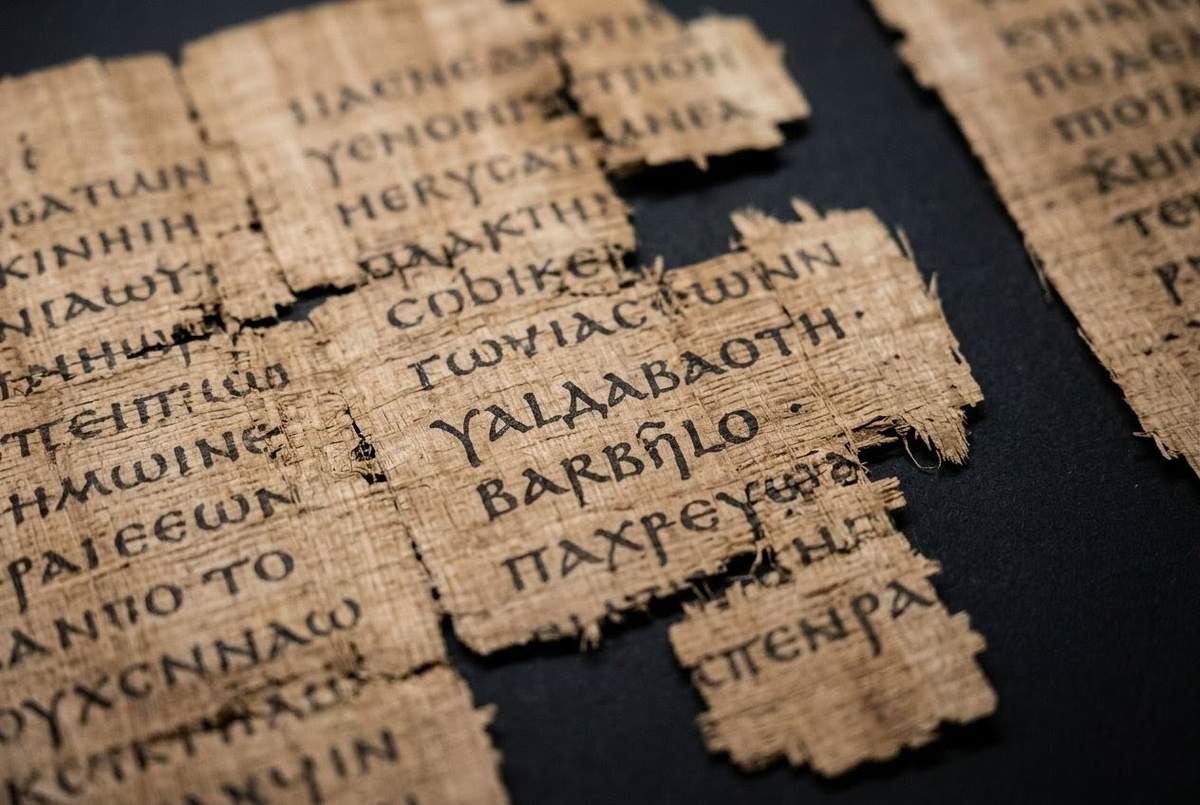
Table of Contents
- The Barbelo Aeon and the Divine Triad
- The Sethian Creation Myth: Sophia’s Fall and the Demiurge
- The Five Seals: Sethian Soteriology
- Ascent Literature and the Heavenly Journey
- Seth and the Immovable Race
- Relationship to Other Traditions
- Frequently Asked Questions
- Further Reading
- References and Sources
The Barbelo Aeon and the Divine Triad
At the heart of Sethian cosmology sits Barbelo, a name that likely derives from Hebrew roots suggesting “God is in the four” or perhaps “daughter of the lord” [5]. She is not a deity in the anthropomorphic sense–no graven image could capture her–but rather the First Thought (Ennoia) of the transcendent Father, the Invisible Spirit who remains forever beyond the reach of discursive knowing [6].
The Apocryphon of John dramatises her emergence as a kind of divine self-reflection: the Father gazes into the pure luminous water surrounding him, and his image gives birth to Barbelo (NHC II,1 5:5-6) [7]. She is thus simultaneously distinct from the Source and its perfect emanation, the bridge between the absolute unknowable and the realm of manifestation. This is not creation ex nihilo but probolē, an eternal flowering forth from the pleromatic root–a process that functions as the “executive headquarters” establishing all subsequent departments of divine administration [8].
Primary Source Citation: “She is the first thought, his image; she became the first man, which is the virginal spirit… the triple-male, the triple-powered, the triple-named.” — NHC II,1 5:5-6 (Apocryphon of John, longer recension) [7]
Barbelo generates a triad that structures Sethian metaphysics: the Father (Invisible Spirit), the Mother (Barbelo), and the Child (Autogenes, the Self-Generated). This trinity should not be confused with the Christian formula, though later Sethian texts show intriguing points of contact. Here, the three represent the primary hypostases of divine existence: pure potentiality, reflective thought, and autonomous actualisation. Autogenes, in turn, generates the Four Luminaries–Harmozel, Oroiael, Daveithai, and Eleleth–who govern the four corners of the Pleroma and oversee the complex angelic administrations beneath them [9].
The Sethian Creation Myth: Sophia’s Fall and the Demiurge
If the upper reaches of Sethian cosmology inspire philosophical awe, its middle register offers a narrative of cosmic catastrophe with almost cinematic drama. Sophia, the youngest of the divine aeons, commits a transgression that reverberates through every level of reality. The precise nature of her error varies by text–sometimes she desires to comprehend the Father’s magnitude without the bridal chamber (nymphōn) of the aeons, sometimes she acts independently of her syzygy (divine partner)–but the result is consistent: an abortion, a miscarriage of divine substance [10].
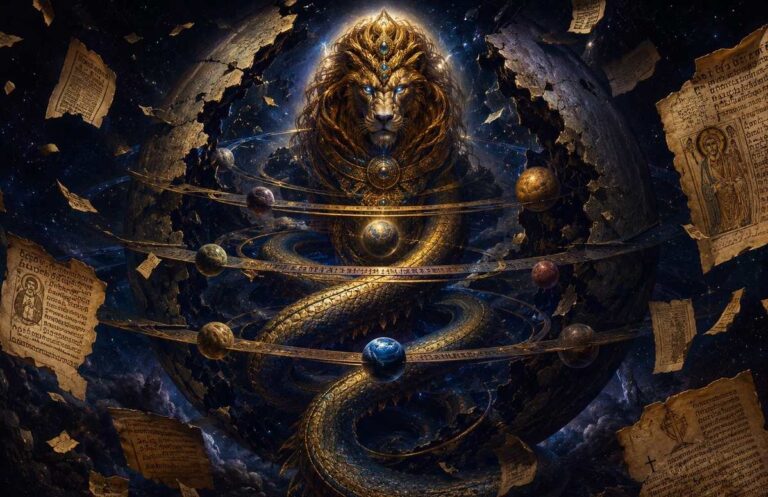
This fallen matter becomes Yaldabaoth, Saklas, Samael–the Demiurge with a thousand names, each one revealing a different facet of his monstrous inadequacy. He is lion-faced, serpent-bodied, burning with dark fire yet devoid of true light. Believing himself to be the sole divinity (“I am God and there is no other god beside me” — NHC II,1 11:15-18), he creates the material cosmos as a kind of prison, a shadow of the Pleroma cast by his own ignorance [11]. In ZenithEye terms, this represents the ultimate “administrative malpractice”–a middle-manager who mistakes his regional office for the entire corporate headquarters.
Primary Source Citation: “Now the archon who is weak has three names. The first name is Yaldabaoth, the second is Saklas, and the third is Samael.” — NHC II,1 11:15-18 (Apocryphon of John) [11]
The Hypostasis of the Archons (NHC II,4) presents this drama with particular narrative flair. Here, the archons create Adam from the dust of the ground but cannot animate him until the Spirit is tricked into entering the construct. Even then, the divine spark proves too bright for the archonic machinery to contain. They attempt to extract it through the creation of woman, but this only doubles the problem–now there are two image-bearers of the divine, and the archonic scheme unravels further [12].
The Sethian reading of Genesis is thus a systematic inversion: the creator is not the true God but an impostor; the serpent offers liberation rather than temptation; the expulsion from Eden represents release from archonic custody rather than punishment for disobedience. It is a hermeneutic of suspicion applied to the foundational text of Jewish and Christian identity, and it generated precisely the hostility one would expect from authorities invested in the canonical reading [13].
The Five Seals: Sethian Soteriology
Against this cosmic backdrop, the Sethian tradition articulates a soteriology centred on the Five Seals–a pentad of initiatory rites that appear to correspond to baptism, anointing, eucharist, redemption (apolytrōsis), and bridal chamber (nymphōn) [14]. Unlike the Valentinians, who developed elaborate sacramental theologies of their own, the Sethians maintained a relatively stable ritual structure across their textual spectrum.
Trimorphic Protennoia (NHC XIII,1) describes the descending saviour figure sealing the chosen ones “with the water of five seals,” suggesting these rites were understood as protective and transformative simultaneously (NHC XIII,1 49:28-30) [15]. They do not merely symbolise salvation; they enact it, creating the ontological conditions for the soul’s ascent. The water washes away the corporeal residue; the oil consecrates the recipient as a royal priesthood; the eucharist nourishes the pneumatic body; the redemption formula releases the soul from archonic bonds; the bridal chamber restores the syzygy, the original divine pairing fractured by material existence [16].
Primary Source Citation: “I delivered him to the baptizers, and they baptized him, Micheus, Michar, Mnesinous, and they immersed him in the spring of the [water] of life.” — NHC XIII,1 49:28-30 (Trimorphic Protennoia) [15]
What are the Five Seals?
The Five Seals (sphragides) constitute the central initiatory technology of Sethian Gnosticism–a sequential process of transformation involving: (1) Robing in luminous garments, (2) Immersion in living water, (3) Enthronement in glory, (4) Glorification, and (5) Rapture/ascension to the Pleroma. These function as “security clearance credentials” that authenticate the pneumatic soul during its post-mortem ascent through archonic territories.
This is not faith as internal assent to propositional truths but participation in a transformative technology of the soul. The Sethians were, in this sense, radically materialist about salvation even as they despised materiality itself–the rites worked because they operated on the precise architecture of the human composite, separating the divine spark from its psychic and hylic entanglements [17].
Ascent Literature and the Heavenly Journey
The Sethian corpus includes some of the most vertiginous ascent literature in all of religious history. Texts like Allogenes, Zostrianos, and Marsanes describe visionary journeys through multiple aeonic realms, each one requiring specific passwords, seals, and contemplative disciplines [18].
These are not merely speculative cosmographies but programmatic texts–scripts for ritual performance. The reader who recites Zostrianos’ ascent through the thirteen aeons is not learning geography but undergoing transformation. Each planetary gate requires the rejection of specific vices associated with that realm; each aeonic ascent demands the cultivation of corresponding virtues. The text thus functions as a via negativa and via positiva simultaneously, stripping away attachment to lower realities while building capacity for higher ones [19].
The destination of these journeys is not merely the Pleroma but the edge of conceivability itself–the Kalyptos (Hidden) and Protophanes (First-Appearing) aeons that represent degrees of divine manifestation. Beyond these lies the Unknowable One, the source of all sources, who can only be approached through a kind of cognitive surrender that the texts call “standing” or “silence” [20].
Seth and the Immovable Race
The tradition takes its name from Seth, third son of Adam, understood not as a biblical figure merely but as a spiritual progenitor. The Apocalypse of Adam (NHC V,5) presents him as the recipient of secret knowledge passed down through a lineage of divine-human hybrids. The Three Steles of Seth (NHC VII,5) depicts him offering hymns to the highest realms, ascending through three tablets of increasing abstraction [21].
The Sethians identified themselves as the genos or “race” of Seth, distinct from the psychic Christians and the hylic mass of humanity. This was not biological but pneumatic genealogy–a recognition of shared origin in the divine rather than the material. They were “immovable” (akinetos) not in the sense of being static but of being unshakeable by the archonic powers, established in a knowledge that transcended the vicissitudes of historical existence [22].
Relationship to Other Traditions
The Sethian tradition did not develop in isolation. The Apocryphon of John was known to Irenaeus of Lyons, who condemned it as the source of Valentinian error–though modern scholars see Sethianism as distinct from Valentinianism, despite sharing some conceptual vocabulary [23].
Plotinus, the great Neoplatonist, composed a treatise against the Gnostics (Ennead II.9 [33]) circa 260 CE that appears to target Sethian cosmological speculations specifically, protesting their denigration of the sensible world and their multiplication of hypostases [24]. According to Jean-Marc Narbonne, Plotinus was “ceaselessly confronted by Sethian interpreters [of Plato] who, right alongside him, were reading and commenting upon the very same texts as him” [25]. Indeed, Plotinus seems actually to cite Zostrianos (NHC VIII,1 10.1-20) in his critique, demonstrating direct engagement with Sethian texts [26].

Within the Nag Hammadi library itself, Sethian texts sometimes appear alongside Valentinian ones, suggesting either a shared readership or a fluid boundary between these categories. The Gospel of Philip (NHC II,3), generally Valentinian, contains Sethian-sounding passages on the bridal chamber; Thunder: Perfect Mind (NHC VI,2) resists easy categorisation entirely [27].
This complexity reminds us that “Sethianism” is a modern scholarly construct, a umbrella term for texts sharing specific mythological elements rather than the self-designation of a historical community. Whether the ancient readers of these texts identified as “Sethians” remains debated. What is certain is that they produced a body of literature of extraordinary philosophical density and spiritual ambition–a systematic attempt to map the cosmos and the soul’s path through it that remains intellectually compelling two millennia later [28].
Frequently Asked Questions
What is Sethian Gnosticism and how does it differ from Valentinianism?
Sethian Gnosticism represents a distinct tradition within the Nag Hammadi Library centred on the figure of Seth, third son of Adam, and the Barbelo aeon. Unlike Valentinianism, which developed complex syzygy (divine pairing) theologies and elaborate sacramental hierarchies, Sethianism focuses on the Five Seals initiation, anti-cosmic dualism, and ascent literature through the aeons. While both traditions share Platonic influences, Sethian texts typically display more radical hostility toward the material creator (Yaldabaoth) and emphasise the ‘immovable race’ of Seth.
Who is Barbelo in Sethian cosmology?
Barbelo is the First Thought (Ennoia) and first emanation of the Invisible Spirit in Sethian theology. Her name likely derives from Hebrew roots suggesting ‘God is in the four’ or ‘daughter of the lord.’ She functions as the divine Mother who generates the triad of Father, Mother, and Child (Autogenes), establishing the structure of the Pleroma (Fullness). She represents the bridge between the transcendent unknowable Source and the realm of manifestation.
What are the Five Seals in Sethian initiation?
The Five Seals (sphragides) constitute the central Sethian initiatory rite, appearing in texts such as the Apocryphon of John and Trimorphic Protennoia. These five stages–robing in light, immersion in living water, enthronement, glorification, and rapture–function as transformative technologies that separate the divine spark from material entanglements. They serve both as ritual practices and as ‘credentials’ for the soul’s post-mortem ascent through archonic territories.
How does Plotinus critique Sethian Gnosticism?
In Ennead II.9 (Against the Gnostics), written circa 260 CE, Plotinus specifically targets Sethian metaphysical speculations. He criticises their denigration of the sensible cosmos, their multiplication of divine hypostases beyond necessity, their doctrine of Sophia’s fall creating matter, and their claim that the sensible world resulted from transgression rather than necessary emanation from Intellect. Plotinus appears to cite Zostrianos directly, indicating firsthand engagement with Sethian texts.
What is the Sethian interpretation of Genesis?
Sethian texts systematically invert the Genesis narrative: Yaldabaoth (the Demiurge) is an impostor who mistakenly believes himself the sole divinity; the serpent offers liberating gnosis rather than temptation; Eve and Adam bear the divine spark that the archons cannot contain; and the expulsion from Eden represents release from archonic custody rather than punishment. This hermeneutic of suspicion treats Genesis as an encoded account of the soul’s entrapment and potential liberation.
What texts constitute the Sethian corpus in the Nag Hammadi Library?
The core Sethian texts include: Apocryphon of John (three versions), Hypostasis of the Archons, Reality of the Archons, Trimorphic Protennoia, Allogenes, Zostrianos, Marsanes, Three Steles of Seth, Apocalypse of Adam, and Gospel of the Egyptians. These share distinctive features: the Barbelo aeon, the Five Seals, anti-cosmic dualism, and elaborate ascent literature. Some texts resist easy classification, suggesting fluid boundaries between traditions.
Who is Yaldabaoth and why is he called Samael and Saklas?
Yaldabaoth is the Sethian Demiurge–the flawed creator of the material cosmos born from Sophia’s aborted passion. His multiple names reveal different facets of his incompetence: Yaldabaoth (child of chaos), Saklas (the fool or blind one), and Samael (the blind god). Lion-faced and serpent-bodied, he ignorantly declares ‘I am God and there is no other god beside me,’ unaware of the Pleroma above him. He functions as the ‘middle-management’ power who mistakes his regional office for the entire corporate headquarters.
Further Reading
- The Apocryphon of John: A Gnostic Creation Myth — The foundational “classified dossier” on archonic incompetence and the executive headquarters of the Pleroma.
- Trimorphic Protennoia: Three Forms of Divine Thought — The poetic revelation of Barbelo’s triple manifestation and the Five Seals protocol.
- The Hypostasis of the Archons: Cosmic Tyranny and Divine Rescue — The courtroom drama of archonic malpractice and Eve’s vindication.
- Allogenes: The Sethian Ascent to the Unknowable One — The technical manual for navigating the thirteen aeons.
- Zostrianos: The Complete Journey Through the Thirteen Aeons — The comprehensive ascent protocol cited by Plotinus.
- Marsanes: Platonizing Sethian Metaphysics — Where Sethian speculation meets Middle Platonic abstraction.
- The Three Steles of Seth: Ascent Hymns to the Transcendent — The Sethian hymnody of progressive illumination.
- The Thought of Norea: Sethian Prayer and Deliverance — The appeals department’s protocol for divine intervention.
- The Apocalypse of Adam: Sethian Prophecy and Cosmic History — Seth as recipient of the classified transmission.
- Reality of the Archons (On the Origin of the World) — The alternative “personnel file” on cosmic administration.
References and Sources
The following sources support the claims and quotations presented in this article. All citations to the Nag Hammadi Library represent direct translations from the Coptic text as established in the standard critical editions.
Primary Sources and Critical Editions
- [1] Robinson, J.M. (1977). The Nag Hammadi Library in English. Harper & Row.
- [2] Turner, J.D. (2001). Sethian Gnosticism and the Platonic Tradition. Universite Laval/Peeters.
- [3] Waldstein, M. & Wisse, F. (1995). The Apocryphon of John: Synopsis of Nag Hammadi Codices II,1; III,1; and IV,1 with BG 8502,2. Brill.
- [4] Layton, B. (1987). The Gnostic Scriptures. Doubleday.
- [5] Meyer, M. (2007). The Nag Hammadi Scriptures: The International Edition. HarperOne.
Sethian Studies and Scholarly Monographs
- [6] Schenke, H.M. (1981). “The Phenomenon and Significance of Sethian Gnosticism.” In The Rediscovery of Gnosticism, Vol. 2. Brill.
- [7] Turner, J.D. (2017). Sethian Gnostic Appropriations of Plato. In Brill’s Companion to the Reception of Plato in Antiquity. Brill.
- [8] Logan, A.H.B. (1996). Gnostic Truth and Christian Heresy. T&T Clark.
- [9] Rasimus, T. (2009). Paradise Reconsidered in Gnostic Mythmaking. Brill.
- [10] DeConick, A.D. (2006). Recovering the Original Gospel of Thomas. T&T Clark.
Comparative Studies and Philosophical Context
- [11] Narbonne, J.M. (2011). Plotinus in Dialogue with the Gnostics. Brill.
- [12] Armstrong, A.H. (trans.) (1966-1988). Plotinus: Enneads (7 vols.). Loeb Classical Library.
- [13] Brakke, D. (2010). The Gnostics: Myth, Ritual, and Diversity in Early Christianity. Harvard University Press.
- [14] King, K.L. (2003). What is Gnosticism? Harvard University Press.
- [15] Irenaeus of Lyons. (c. 180 CE). Against Heresies (Book I). Trans. in The Ante-Nicene Fathers, Vol. 1.