Nag Hammadi Library: The Complete Reader’s Guide
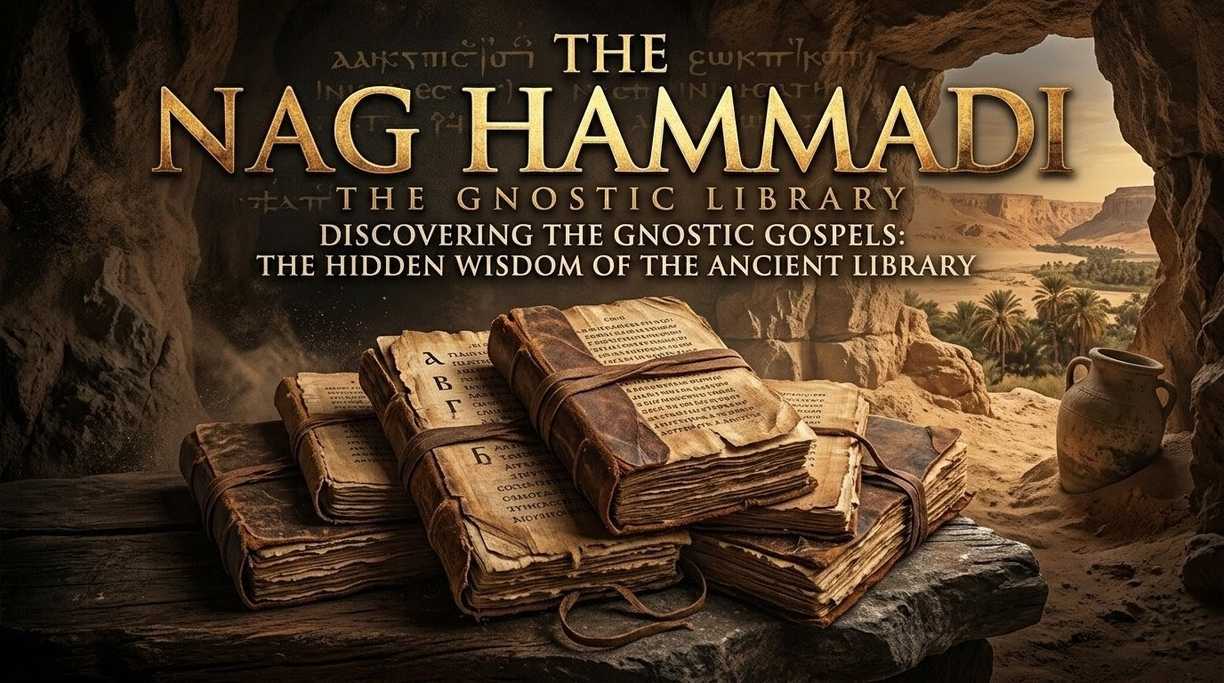
The Nag Hammadi Library does not present itself as a casual collection of ancient curiosities, nor as a homogeneous theological dossier. Rather, it arrives as a classified archive—forty-six separate personnel files concerning the human condition, buried by an unknown administrative hand around 400 CE to prevent their destruction by ecclesiastical security forces. Discovered in December 1945 near the Egyptian town of Nag Hammadi, this collection of Coptic translations represents the largest surviving corpus of Gnostic literature, a counter-archive to the orthodox bureaucracy that sought to monopolise Christian identity. These texts preserve the suppressed filings of Sethian, Valentinian, and Hermetic traditions—alternative organisational charts of reality that place the divine spark in direct conflict with the incompetent management of the archons.
Unlike the standardised manuals of orthodox Christianity, the Nag Hammadi library operates as a distributed intelligence network. Each codex functions as a separate departmental report: some concern cosmogonic restructuring (the Apocryphon of John), others detail infiltration protocols (the Trimorphic Protennoia), and still others offer exit strategies from the material jurisdiction (the Three Steles of Seth). Together, they constitute what James M. Robinson termed “the Gnostic scriptures”—not a canon but a contingency plan, buried for sixteen centuries beneath the Egyptian sand to await readers capable of recognising their own faces in the mirror of these papyri.

Table of Contents
- What is the Nag Hammadi Library?
- How This Archive Is Organised
- The Essential Texts: Where to Start
- The Historical Context: Emergency Filing
- Two Major Theological Systems
- How to Read These Texts: Counter-Intelligence Protocols
- The Complete Collection
- Frequently Asked Questions
- Further Reading
- References and Sources
What is the Nag Hammadi Library?
The Nag Hammadi Library Defined
The Nag Hammadi Library (NHC) comprises forty-six Gnostic texts discovered in 1945 near Nag Hammadi, Upper Egypt. Buried in a sealed jar around 400 CE, these Coptic translations of Greek originals represent the largest surviving corpus of Gnostic and esoteric Christian literature. The collection includes sayings gospels (Thomas, Philip), creation myths (Apocryphon of John, Hypostasis of the Archons), liturgical hymns (Three Steles of Seth), Hermetic treatises, and apocalypses. It preserves teachings from Sethian, Valentinian, and Hermetic traditions suppressed by orthodox Christianity, offering alternative visions of creation, cosmology, and salvation as counter-narratives to the administrative orthodoxy of the Roman Church.
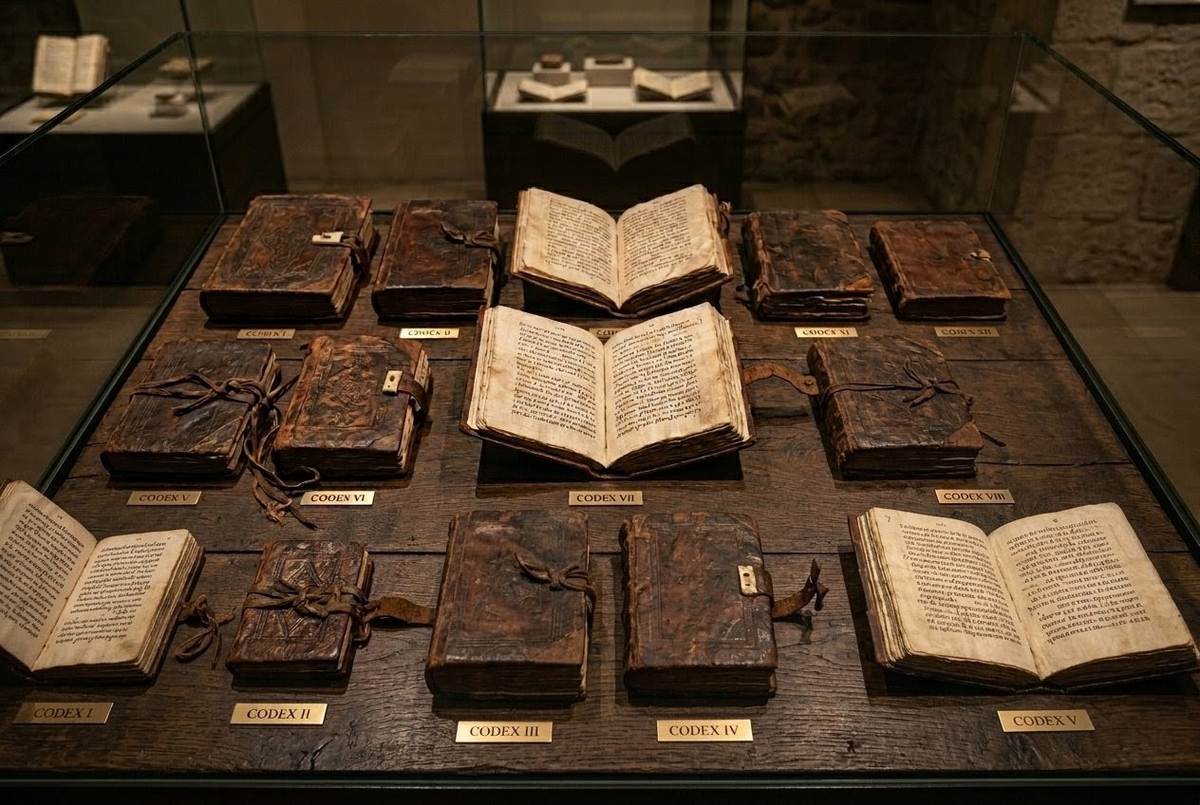
Physically, the library consists of thirteen leather-bound papyrus codices (designated I-XIII), containing tractates ranging from a few pages to extensive treatises. The texts were copied in the fourth century CE by Egyptian scribes, likely in monastic scriptoria, representing the final generation of Gnostic literary production before the tradition was driven underground by imperial and ecclesiastical persecution.
The library’s organisational logic defies modern categorisation. It is not a canon in the orthodox sense—no authoritative list governs its contents, no hierarchy of importance prevails. Rather, it resembles a seized archive, a snapshot of heterodox Christianity at the moment of its suppression. Some texts represent polished theological systems (the Valentinian Tripartite Tractate); others preserve raw ritual protocols (the Five Seals liturgies); still others offer cryptic sayings designed to short-circuit rational cognition (the Gospel of Thomas). What unifies them is not doctrine but strategy: each text operates as a technology of awakening, a mechanism for bypassing the archonic security clearances that restrict human consciousness to the material realm.
How This Archive Is Organised
Unlike the tidy categorical systems of modern libraries, the Nag Hammadi collection resists straightforward filing. The ancient compilers organised the codices according to criteria that remain partially opaque—perhaps by scribal availability, perhaps by thematic resonance, perhaps by initiatory sequence. Modern scholars and seekers require multiple access protocols to navigate this celestial bureaucracy effectively.
By Codex: The Archaeological Protocol
The most accurate reconstruction follows the physical arrangement of the thirteen codices (I through XIII), each leather-bound volume representing a distinct archival unit. Our Complete Reading Order lists all forty-six tractates by their codex location, preserving the integrity of how the ancient community actually stored and accessed their library. This is the scholar’s path—the bureaucratic purist’s approach that respects the material history of the texts.
Primary Source Citation: The standard designation system (NHC I-XIII) was established by the Coptic Gnostic Library Project under James M. Robinson. Codex I, for instance, contains five tractates: Prayer of the Apostle Paul, Apocryphon of James, Gospel of Truth, Treatise on the Resurrection, and Trimorphic Protennoia—ranging from Valentinian homilies to Sethian hymns, demonstrating the eclectic filing system of the ancient compilers. [1]
By Theme: The Investigative Protocol
For seekers pursuing particular theological or literary approaches, we offer thematic classifications that cut across codex boundaries:
- Sayings Gospels — The Gospel of Thomas (114 secret sayings), Gospel of Philip (sacramental theology and bridal chamber mysticism)
- Creation Myths — Apocryphon of John (the fall of Sophia), Hypostasis of the Archons (Eve’s resistance), On the Origin of the World (cosmic origins with Ophite parallels)
- Ascent Literature — Allogenes, Zostrianos, Marsanes, Three Steles of Seth (celestial navigation protocols through the aeonic spheres)
- Feminine Divine — Thunder: Perfect Mind (paradoxical revelation), Trimorphic Protennoia (three descents of Barbelo), Thought of Norea (divine rescue)
- Apocalypses — Apocalypses collection including Paul, Peter, and James texts (heavenly ascent and cosmic revelation)
- Hermetic Connections — Discourse on the Eighth and Ninth, Prayer of Thanksgiving, Asclepius (Egyptian wisdom and stellar theology)
- Sethian vs Valentinian — Distinct theological systems within the library, representing different administrative departments of the Gnostic counter-bureaucracy
By Reading Path: The Initiatory Protocol
For those requiring curated guidance through this dense archive, we have established four distinct clearance levels:
- Nag Hammadi for Beginners — Ten essential texts for newcomers, providing basic security clearance to the tradition
- Nag Hammadi for Theologians — Doctrine-focused pathway examining Valentinian and Sethian systematic thought
- Nag Hammadi for Mystics — Contemplative and experiential approach emphasising ascent literature and ritual texts
- Nag Hammadi for Academics — Scholarly approach through codicology, Coptic linguistics, and historical-critical methodology
The Essential Texts: Where to Start
If you process nothing else in this archive, process these five personnel files. Each represents a distinct jurisdictional approach to the Gnostic insurgency:
1. The Gospel of Thomas (NHC II,2)
One hundred and fourteen sayings of Jesus, stripped of narrative context and editorial oversight. “The Kingdom is inside you, and it is outside you. When you know yourselves, you will be known, and you will understand that you are children of the living Father.” This is the most accessible entry point and the most transformative—a direct line to the Thomasine tradition that bypasses the Pauline bureaucratic restructuring entirely. It offers no creed, only recognition; no hierarchy, only the solitary seeker and the living Jesus who speaks from the text itself.
2. The Apocryphon of John (NHC II,1; III,1; IV,1; BG 8502,2)
The definitive Sethian creation myth—a comprehensive intelligence briefing on cosmic origins that describes the fall of Sophia, the birth of the arrogant demiurge Yaldabaoth, and the rescue of the divine spark trapped in material existence. Essential for understanding the “hostile jurisdiction” of the archons and the counter-intelligence operations mounted by the Pleroma. This text exists in four versions across different codices, suggesting its status as required reading for Sethian communities.
Primary Source Citation: NHC II,1 10:5-15: “And the Sophia of the Epinoia, being an aeon, conceived a thought from herself… and she wished to bring forth a likeness out of herself without the consent of the Spirit—she had not asked for permission. And she brought forth… Yaldabaoth, the first archon, the lion-faced, the serpentine, the radiant.” [2]
3. The Gospel of Truth (NHC I,3)
A Valentinian meditation on error and recognition, attributed by some traditions to Valentinus himself. “The forgetfulness of the Father came into existence because they did not know him… Error grew angry and pursued them, no one able to turn her back.” Profoundly moving, philosophically sophisticated, this text operates as a therapeutic manual for the restoration of the fragmented soul. Where Sethian texts emphasise cosmic infiltration, Valentinian literature focuses on the nuptial reunion of separated syzygies (divine pairs).
4. Thunder: Perfect Mind (NHC VI,2)
A divine feminine voice speaks in paradox: “I am the first and the last. I am the honoured and the scorned. I am the whore and the holy one.” Read it aloud; let the sound bypass your cognitive filters. This text functions as an onomaton—a sacred name that dissolves categorical boundaries through rhythmic repetition. It is the liturgical opposite to the Apocryphon of John‘s narrative approach, demonstrating the range of Gnostic rhetorical technologies.
5. The Three Steles of Seth (NHC VII,5)
Sethian hymns of ascent, addressed to the divine realms in three ascending registers. Repetitive, hypnotic, transformative—the best introduction to Gnostic liturgical spirituality and the mechanics of the Five Seals. These steles (columns) function as elevator protocols for the ascent through the planetary spheres, offering the passwords and seals necessary to bypass archonic checkpoints.
The Historical Context: Emergency Filing
In December 1945, Muhammad Ali al-Samman and his brothers were digging for sebakh (nitrogen-rich fertiliser) near the Jabal al-Tarif cliff outside Nag Hammadi. Their mattocks struck a large sealed earthenware jar. Muhammad Ali later reported that he hesitated to break the seal, fearing a jinn might be imprisoned within. When they finally opened the vessel, they found thirteen leather-bound codices containing papyrus texts.
The subsequent history of these documents resembles a poorly managed bureaucratic transfer. Muhammad Ali’s mother reportedly burned some pages as kindling (a fate that has befallen too many ancient texts). The codices passed through the hands of antiquities dealers, Coptic clergy, and black-market traders. One codex (Codex I, the “Jung Codex”) was smuggled to Belgium and only recovered after decades of legal disputes and international negotiations. The complete collection was finally published in English as The Nag Hammadi Library in English in 1977, edited by James M. Robinson, making these texts available to the general public for the first time in nearly 1,600 years.

The library was buried around 400 CE, likely by monks from the nearby Pachomian monasteries at Chenoboskion. They were hiding these texts from ecclesiastical authorities who were increasingly defining orthodoxy and rooting out dissent through imperial legislation and episcopal oversight. The Theodosian decrees had criminalised heterodox Christianity; the heresy hunters sought to burn these books. We are fortunate that someone thought to bury them instead—an act of archival resistance that preserved these counter-narratives for modern seekers.
Two Major Theological Systems
The Nag Hammadi library preserves two major theological jurisdictions, each with distinct cosmologies, soteriologies, and ritual protocols. Understanding their differences prevents the common error of treating “Gnosticism” as a monolithic phenomenon.
The Sethian Tradition: Revolutionary Resistance
Named after Seth, the third son of Adam (Gen 4:25-5:8), this system operates as a revolutionary cell within the cosmic administration:
- A high, transcendent deity (the Invisible Spirit) utterly beyond matter and archonic jurisdiction
- The divine feminine principle (Barbelo, the First Thought) as mediator between the transcendent and the material
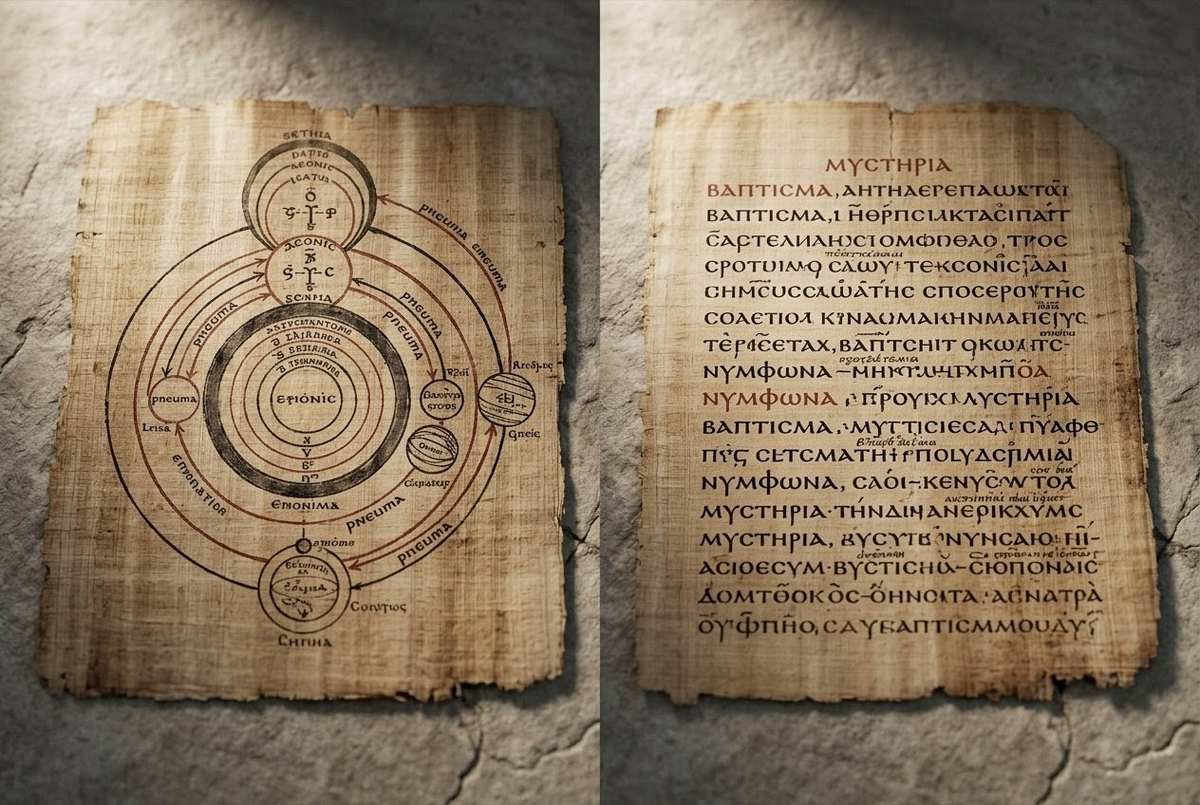
- A complex cosmology of aeons (divine attributes personified) and archons (hostile planetary rulers)
- Steeped ascent narratives through planetary spheres, requiring passwords and seals to bypass checkpoints
- Baptismal rituals (the Five Seals) that strip away the initiate’s archonic identity and restore the garment of light
Key texts: Apocryphon of John, Trimorphic Protennoia, Zostrianos, Three Steles of Seth, Reality of the Archons.
Valentinian Christianity: Diplomatic Reformation
Founded by Valentinus (c. 100–160 CE), the most philosophically sophisticated of the Gnostic teachers, this tradition operates more like a diplomatic corps seeking to reform the cosmic administration from within:
- More positive toward the material world than Sethianism—the creation is flawed but not entirely hostile
- Complex psychology of the soul’s fall (through the emanation of Sophia) and restoration through the Bridal Chamber (nymphōn)
- Sacramental theology recognising baptism, chrism, eucharist, and redemption as progressive initiations
- Three classes of humanity: spiritual (pneumatic), soul-level (psychic), and material (hylic)—each with distinct destinies
Primary Source Citation: NHC I,3 16:30-35 (Gospel of Truth): “For this reason, error became angry at him. It persecuted him. It brought down upon him all the sufferings that are possible… But those whom it intended to destroy, it released.” [3]
How to Read These Texts: Counter-Intelligence Protocols
The Nag Hammadi library demands a specific reading posture—one that treats these texts not as information to be extracted but as technologies to be activated. The following protocols derive from the texts’ own self-understanding:
Do Not Read for Information
These texts are not describing something else; they are attempting to trigger recognition (gnosis) in the reader. They function as mirrors, not windows. When you encounter a passage that seems repetitive, paradoxical, or deliberately obscure, recognise that you are not being tested—you are being processed. The text is attempting to bypass your cognitive security systems and activate the pneumatic (spiritual) faculty directly.
Maintain Operational Security
Keep a journal. Copy out the passages that seize your attention. Do not analyse them immediately; let them sit in your awareness like sleeper agents awaiting activation. The archonic resistance to these texts manifests as sleepiness, distraction, or sudden urgent interest in trivial tasks. Notice these phenomena without surrendering to them.
Use Sonic Transmission
Read aloud. Many of these texts were designed for oral performance in ritual contexts. The Thunder: Perfect Mind, the Three Steles of Seth, and the Trimorphic Protennoia all employ rhythmic, hypnotic cadences that operate through sound rather than sense. The vibration of the words carries meaning that silent reading cannot access.

Trust Your Recognitions
If something resonates, attend to that resonance. If something repels you, note that too. The texts are selective—designed to awaken those who carry the spark and to remain opaque to those who do not. This is not elitism but taxonomy: pneumatic, psychic, and hylic natures respond differently to the same stimuli.
The Complete Collection
Our archive contains comprehensive intelligence files on every tractate in the library:
- 13 Codex Overviews — Detailed introductions to each physical codex (I through XIII), examining scribal hands, material condition, and organisational logic
- Essential Tractates — In-depth commentary on the most important texts, with line-by-line analysis and theological context
- Advanced Tractates — Specialist material for serious scholars (Allogenes, Zostrianos, Marsanes—the “Platonising Sethian” texts)
- Reading Paths — Curated journeys for different types of readers (beginners, theologians, mystics, academics)
- Archive Resources — Guides to Coptic language, scholarly methodology, codicology, and comparative religious studies

The Living Thread
These texts were buried for sixteen centuries. They survived the burning of the Library of Alexandria, the closure of the Platonic Academy, the triumph of orthodox Christianity, the rise of Islam, and the administrative bungling of modern antiquities dealers. They waited in the desert, sealed in their jar, until the moment was right.
That moment is now. You are holding something that was never meant to survive—but did. The thread extends from the fourth century to this screen, from the Egyptian desert to wherever you are reading. The same questions persist: Who are we? Where did we come from? What is our destiny? The Nag Hammadi library does not offer answers. It offers something better: better questions, maps of the territory, and the testimony of those who walked the path before us.
The texts are not dead history. They are living protocols, awaiting activation in the consciousness of those who recognise their own faces in the mirror of these papyri. The rest is up to you.
Frequently Asked Questions
What is the Nag Hammadi Library and why is it important?
The Nag Hammadi Library is a collection of forty-six Gnostic texts discovered in 1945 near Nag Hammadi, Egypt. Buried around 400 CE in a sealed jar, these Coptic manuscripts represent the largest surviving corpus of Gnostic literature. It is important because it preserves alternative Christian and esoteric traditions suppressed by orthodox authorities–including creation myths, ascent texts, and feminine divine theology–that were previously known only through hostile heresiological reports.
When was the Nag Hammadi Library discovered and by whom?
The library was discovered in December 1945 by Muhammad Ali al-Samman and his brothers, Egyptian farmers digging for fertiliser near the Jabal al-Tarif cliff. They unearthed a sealed earthenware jar containing thirteen leather-bound papyrus codices. The texts subsequently passed through antiquities markets before scholarly publication in 1977 made them available to the public.
How many texts are in the Nag Hammadi Library?
The library contains forty-six distinct tractates (treatises) across thirteen codices (books). These range from short sayings collections like the Gospel of Thomas to extensive cosmological treatises like Zostrianos. The collection includes sayings gospels, creation myths, apocalypses, hymns, and Hermetic texts representing Sethian, Valentinian, and other Gnostic traditions.
What are the main differences between Sethian and Valentinian texts?
Sethian texts (Apocryphon of John, Three Steles of Seth) emphasise radical dualism, the hostile archons, and steep ascent through planetary spheres using the Five Seals. Valentinian texts (Gospel of Truth, Gospel of Philip) present a more positive view of creation, focus on the Bridal Chamber sacrament, and employ complex psychological models of the soul’s fall and restoration. Sethianism operates as revolutionary resistance; Valentinianism as diplomatic reformation.
What are the Five Seals in Sethian Gnosticism?
The Five Seals constitute a Sethian initiatory protocol of five distinct baptisms or confirmations–typically understood as water, fire, wind, light, and the final seal of the Father. These function as cosmic ‘exit visas’ that strip away the initiate’s archonic identity and restore the original garment of light, allowing passage through the planetary checkpoints back to the Pleroma (Fullness).
How should beginners approach reading the Nag Hammadi texts?
Beginners should start with the Gospel of Thomas for accessibility, then progress to the Apocryphon of John for cosmology. Read slowly, aloud when possible, and keep a journal of recognitions rather than seeking doctrinal summaries. The texts are designed to trigger gnosis (direct knowing), not to provide information. Approach them as technologies of awakening rather than historical documents.
Why were the Nag Hammadi texts buried in 400 CE?
The texts were likely buried by monks from nearby Pachomian monasteries to save them from destruction. By 400 CE, imperial legislation (Theodosian decrees) and ecclesiastical authorities were actively suppressing heterodox Christianity. The heresy hunters burned Gnostic books; burial was an act of archival resistance that preserved these texts for sixteen centuries until their chance discovery in 1945.
Further Reading
- Nag Hammadi for Beginners: A 10-Text Journey — Your starting point with ten essential texts providing basic security clearance to the tradition, curated for accessibility and transformative impact.
- Complete Nag Hammadi Reading Order — All forty-six tractates listed by codex location, preserving the archaeological integrity of the original discovery and offering the scholar’s path through the collection.
- What is Gnosticism? Defining the Undefinable — Understanding the diverse movements behind these texts, distinguishing between historical categories and the self-understanding of ancient Gnostic communities.
- Sethian and Valentinian Traditions — Deep dive into the two major theological systems, examining their distinct approaches to cosmology, soteriology, and ritual practice within the Nag Hammadi corpus.
- Nag Hammadi for Mystics — Contemplative and experiential approaches to the texts, emphasising ascent literature, ritual technologies, and the practical application of Gnostic wisdom.
- Nag Hammadi Library: Complete Reader’s Guide — Comprehensive navigational tool for serious students, examining codicology, scribal practices, and the material history of the papyri.
- The Feminine Divine in Nag Hammadi — Exploring the rehabilitation of Eve, the exaltation of Mary Magdalene, and the divine feminine as mediator in Thunder, Protennoia, and other key texts.
- Creation Myths of Nag Hammadi — Detailed examination of alternative cosmogonies including the Apocryphon of John, Hypostasis of the Archons, and On the Origin of the World.
- The Discovery of Nag Hammadi — The full archaeological and historical story of the 1945 discovery, the subsequent journeys of the codices through antiquities markets, and the eventual publication.
- Gospel of Thomas: 114 Keys — In-depth commentary on the most accessible entry point to the library, examining the Thomasine tradition and its radical sayings of Jesus.
References and Sources
The following sources support the claims and quotations presented in this article. All citations to the Nag Hammadi Library represent direct translations from the Coptic text as established in the standard critical editions.
Primary Sources and Critical Editions
- [1] Robinson, J.M. (Ed.). (1977). The Nag Hammadi Library in English (3rd ed.). Harper & Row. [Standard English translation establishing the NHC I-XIII codex designation system]
- [2] Waldstein, M., & Wisse, F. (1995). The Apocryphon of John: Synopsis of Nag Hammadi Codices II,1; III,1; and IV,1 with BG 8502,2. Brill. [Critical edition of the primary Sethian creation myth with Coptic text and synoptic analysis]
- [3] Attridge, H.W., & MacRae, G.W. (1985). Nag Hammadi Codex I (The Jung Codex). Brill. [Critical edition including the Gospel of Truth]
- [4] Meyer, M.W. (2007). The Nag Hammadi Scriptures: The International Edition. HarperOne. [Contemporary accessible translation with scholarly introductions to all forty-six tractates]
- [5] Layton, B. (1987). The Gnostic Scriptures: A New Translation with Annotations and Introductions. Doubleday. [Annotated translation with theological analysis of Sethian and Valentinian texts]
Archaeological and Historical Studies
- [6] Robinson, J.M. (1988). The Nag Hammadi Story: Vol. 1-2. Brill. [Definitive account of the discovery, acquisition, and publication history of the library]
- [7] Goodacre, M. (2013). Thomas and the Thomasines. In The Oxford Handbook of Early Christianity. Oxford University Press. [Historical contextualisation of the Thomas tradition]
- [8] Williams, M.A. (1996). Rethinking “Gnosticism”: An Argument for Dismantling a Dubious Category. Princeton University Press. [Critical historiography of Gnostic classifications]
- [9] King, K.L. (2003). What is Gnosticism? Harvard University Press. [Comprehensive examination of the diversity within ancient Gnostic movements]
- [10] Lundhaug, L., & Jenott, L. (2015). The Monastic Origins of the Nag Hammadi Codices. Mohr Siebeck. [Argument for Pachomian monastic provenance of the burial]
Thematic and Comparative Studies
- [11] Turner, J.D. (2001). Sethian Gnosticism and the Platonic Tradition. Presses de l’Université Laval. [Definitive study of Sethianism’s philosophical development]
- [12] Thomassen, E. (2006). The Spiritual Seed: The Church of the “Valentinians”. Brill. [Comprehensive analysis of Valentinian theology and organisation]
- [13] Arthur, R.A. (2008). The Concept of the Five Seals in Sethianism. Nag Hammadi and Manichaean Studies 66. Brill. [Specialised study of Sethian baptismal theology]
- [14] Buckley, J.J. (2002). Female Fault and Fulfilment in Gnosticism. University of North Carolina Press. [Examination of feminine divine figures in Nag Hammadi texts]
- [15] Logan, A.H.B. (1996). Gnostic Truth and Christian Heresy: A Study in the History of Gnosticism. T&T Clark. [Analysis of Sethian and Valentinian theological distinctions and historical development]