Is Neo Gnosticism a Religion, Philosophy or Practice?
Neo Gnosticism is difficult to classify because it does not behave like one thing. It can look like religion when it gathers around sacred texts, mythic figures and ritual language. It can look like philosophy when it asks what reality is, who the human being is and whether the visible world can be trusted. It can look like spiritual practice when it becomes attention, contemplation, embodiment and direct recognition.
The mistake is to force it into one category too quickly. Neo Gnosticism is best understood as a modern field of direct knowing. Religion, philosophy and practice are three forms it can take, but gnosis is the centre.
This article maps those three forms without collapsing them into one. It asks what Neo Gnosticism looks like when it functions as religion, what it looks like when it functions as philosophy, and what it looks like when it becomes spiritual practice. It also asks why the question of classification matters now, in an age when inherited institutions are losing their grip and individual seekers are building their own paths from fragments of ancient wisdom, modern psychology and lived experience.

In Plain Terms
Neo Gnosticism can be religious, philosophical or practical depending on the person or community, but its centre is direct knowing. It is religious when it uses sacred texts, myth and ritual. It is philosophical when it asks questions about reality, authority, consciousness and the self. It becomes spiritual practice when those ideas are tested through attention, contemplation, embodiment and discernment.
The same person may move between these three forms. One reader may approach the Gospel of Thomas as sacred text, the Demiurge as a philosophical problem, and meditation as a practical gateway to direct knowing. None of these activities contradicts the others. They are three expressions of the same orientation: the conviction that human beings can know directly, that this knowing matters more than inherited belief, and that the world as commonly perceived is not the whole of reality.
Primary Sources and Traditions Discussed
- The Nag Hammadi Library: thirteen codices containing forty-six tractates discovered in Upper Egypt in 1945, the primary source layer for ancient Gnostic thought.
- The Gospel of Thomas: a sayings gospel presenting Jesus as a teacher of hidden knowledge rather than a sacrificial saviour.
- The Gospel of Philip: a Valentinian text exploring sacrament, eros and the bridal chamber as paths of transformation.
- The Apocryphon of John: a Sethian creation myth describing the divine spark, the fall of Sophia, the birth of Yaldabaoth and the archontic hierarchy.
- Valentinian and Sethian traditions: the two major branches of ancient Gnosticism, differing on cosmology, anthropology and the role of the material world.
- Hermeticism and Platonism: the Corpus Hermeticum and Platonic dialogues that influenced Gnostic metaphysics.
- Jungian depth psychology: analytical psychology, shadow work and the individuation process as modern parallels to Gnostic transformation.
- Contemporary systems theory: algorithmic governance, surveillance capitalism and digital authority as modern expressions of archonic power.
How to Read This Article
This article is not deciding what every Neo Gnostic must be. It is mapping the forms Neo Gnosticism can take. Some readers will recognise themselves primarily in the religious sections. Others will find their home in the philosophical or practical parts. The article is designed so that each section can be read independently, though together they form a coherent picture of the Neo Gnostic landscape.
If you are new to this material, begin with the sections on why Neo Gnosticism is hard to classify and what gnosis means as the centre. If you are already familiar with Gnostic cosmology, the sections on institutional religion, Christianity and the individual seeker may offer the most contemporary relevance.
Table of Contents
- Why Neo Gnosticism Is Hard to Classify
- When Neo Gnosticism Functions as Religion
- When Neo Gnosticism Functions as Philosophy
- When Neo Gnosticism Becomes Spiritual Practice
- Why Gnosis Is the Centre
- Neo Gnosticism and Institutional Religion
- Neo Gnosticism and Christianity
- Neo Gnosticism and the Individual Seeker
- Is Neo Gnosticism Dogmatic?
- Why the Classification Matters Now
Why Neo Gnosticism Is Hard to Classify
Neo Gnosticism is not one organisation. It has no single creed. It moves between scripture, myth, consciousness, symbolism, critique and practice. This is not confusion. It is part of its nature.
The ancient Gnostic world was already diverse. The Valentinians had a complex sacramental theology, a relatively positive view of the material world, and a structured community with recognised teachers. The Sethians described a more hostile cosmos ruled by an ignorant Demiurge and his archontic administrators, with less emphasis on institutional form. The Thomas tradition offered aphoristic wisdom without elaborate cosmology. The Hermeticists blended Egyptian, Greek and Jewish elements into a cosmology of ascent and divine mind. The Mandaeans maintained a continuous ritual tradition in Mesopotamia that persists to this day.
Modern Neo Gnosticism inherits this diversity and adds to it the pluralism of the digital age. A solitary seeker may read the Nag Hammadi texts, practise meditation and use Gnostic language to understand attention and authority. A sacramental community may gather around liturgy, myth and shared ritual. A philosopher may treat Gnostic cosmology as symbolic language for consciousness, power and liberation. All three may be Neo Gnostic in orientation. None owns the definition.
The academic study of Gnosticism has struggled with this same problem. The term Gnosticism itself was coined by modern scholars to describe a family of ancient movements that shared certain features but lacked a single origin or unified organisation. Some scholars, such as Michael Allen Williams and David Brakke, have argued that the category is so broad as to be misleading. Others, such as Karen King and Bentley Layton, defend its usefulness as a heuristic for understanding a recognisable pattern of thought.
Neo Gnosticism faces the same challenge at a higher magnification. It is not merely diverse. It is deliberately non-dogmatic. It resists the very classification systems that would make it easier to study, market, or control. This resistance is not contrarianism. It is structural. A tradition that places direct knowing at its centre cannot fully submit to any external authority–including the authority of its own categories.
When Neo Gnosticism Functions as Religion
Neo Gnosticism functions as religion when it gathers around sacred texts, mythic cosmology, divine figures, ritual practice and communal identity. For some practitioners, this is the primary form.
The most visible institutional expression of religious Neo Gnosticism is the Ecclesia Gnostica, founded in Los Angeles by Bishop Stephan A. Hoeller. The Ecclesia Gnostica celebrates the Gnostic Mass, observes a liturgical calendar drawn from Nag Hammadi texts, maintains an ordained clergy, and offers sacraments including baptism, chrismation and the bridal chamber. Hoeller’s work, including Gnosticism: New Light on the Ancient Tradition of Inner Knowing, has influenced many modern readers who want both historical depth and sacramental practice.

Related modern currents have also preserved and translated Gnostic material through lectures, publications, study groups and independent scholarship. This educational stream matters because Neo Gnosticism often grows at the meeting point of religious longing, historical recovery and personal study.
Johannite and other modern Gnostic churches represent another stream. They combine Christian liturgical forms with Gnostic, Johannine or esoteric readings of revelation, initiation and hidden wisdom.
Religious Neo Gnosticism typically includes the following elements:
Sacred texts. The Nag Hammadi Library is treated not merely as historical documents but as scripture–texts that reveal hidden knowledge and guide the soul’s return. The Gospel of Thomas, the Gospel of Philip, the Apocryphon of John and the Trimorphic Protennoia are among the most frequently read.
Mythic cosmology. The Pleroma, the Kenoma, Sophia, Yaldabaoth, the archons, and the divine spark are not merely philosophical concepts but living symbols that structure religious imagination. They tell a story about where we come from, why we are here, and how we can return.
Ritual and sacrament. Baptism, anointing, the bridal chamber (nymphōn), and the five seals are understood as transformative technologies rather than empty ceremonies. They are practices that effect real change in the soul’s orientation.
Communal identity. Religious Neo Gnostics gather in churches, study circles, online communities and festivals. They share a sense of belonging to a tradition that has been persecuted, suppressed and misunderstood, and they find solidarity in that shared inheritance.
Important nuance: Neo Gnosticism may be religious without being orthodox. It may be spiritual without being institutional. The religious form does not require submission to a mainstream church or acceptance of a single creed. It requires only the recognition that certain texts, myths, symbols and practices carry transformative power.
When Neo Gnosticism Functions as Philosophy
Neo Gnosticism functions as philosophy when it asks questions rather than offering answers. What is real? Can the world be trusted? What is the self? What is knowledge? What is authority? What is freedom? These are philosophical questions, and Neo Gnosticism addresses them with a distinctive vocabulary drawn from ancient sources but applied to contemporary problems.
The philosophical form of Neo Gnosticism is older than the religious form. In the ancient world, Gnosticism was often discussed alongside Platonism, Stoicism and Middle Platonism as a philosophical current rather than a separate religion. The philosopher Hans Jonas, in his landmark 1958 study The Gnostic Religion, treated Gnosticism as a philosophical response to the existential crisis of late antiquity. For Jonas, the Gnostic myth of the alien God and the imprisoned spark was a symbolic expression of the human condition in a world that felt fundamentally wrong.

Modern philosophical Neo Gnostics continue this tradition. They may read Plato’s allegory of the cave as a proto-Gnostic text about the imprisonment of consciousness. They may read the Hermetic Corpus as a philosophical meditation on the relationship between mind and cosmos. They may read the Nag Hammadi texts as symbolic maps of consciousness rather than literal accounts of cosmic history.
The philosophical form asks:
What is real? The Gnostic distinction between the Pleroma (fullness) and the Kenoma (deficiency) becomes a metaphysical question about the nature of reality. Is the material world the whole of reality, or is there a deeper order that transcends it? Is the self that experiences the world the true self, or is there a deeper identity that remains hidden?
Can the world be trusted? The Gnostic critique of the Demiurge becomes an epistemological question about the reliability of ordinary perception. If the world was fashioned by a lower power that mistakes its limited jurisdiction for the whole of reality, then the world as commonly perceived is not merely incomplete but systematically misleading. This is not a licence for paranoia. It is a philosophical question about the relationship between consciousness, perception and the world it receives.
What is knowledge? The Gnostic distinction between pistis (faith) and gnosis (direct knowing) becomes a theory of knowledge. Faith relies on external authority: tradition, teacher, book, institution. Gnosis relies on direct experience: the recognition of truth through lived encounter. The philosophical Neo Gnostic asks whether knowledge can ever be fully mediated, or whether the most important truths must be known directly.
What is authority? The Gnostic critique of the archons becomes a political philosophy about the nature of power. Who decides what is real? Who shapes the channels of information? Who benefits from the maintenance of consensus reality? The archons are not merely cosmic rulers. They are patterns of power that operate in any system–religious, political, economic, technological–that limits what can be thought, said and perceived.
Neo Gnosticism becomes philosophy when myth is read as a serious language for reality, consciousness and liberation. The Demiurge is not a person but a pattern. The archons are not demons but structures. The divine spark is not a supernatural entity but the capacity for direct recognition. The Pleroma is not a distant heaven but the integrated wholeness that remains possible even within a fragmented world.
When Neo Gnosticism Becomes Spiritual Practice
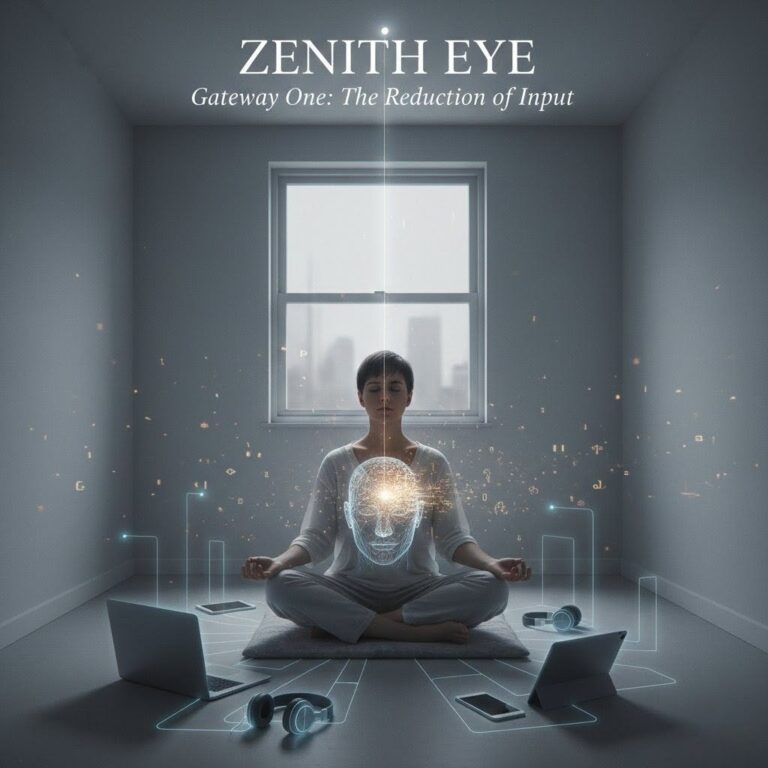
Belief without practice is empty. Philosophy without embodiment is abstract. Neo Gnosticism becomes spiritual practice when its ideas are tested through attention, contemplation, embodiment and discernment.
The ancient texts describe rituals–baptism, anointing, the bridal chamber, the five seals–that were understood as technologies of transformation. Modern Neo Gnostics adapt these into contemporary practice. The Five Gateways to Direct Knowing–breath, sensation, sound, vision and movement–offer one practical framework. Contemplative reading of the Nag Hammadi texts, especially the sayings gospel of Thomas, offers another. Jungian shadow work, dream analysis and active imagination provide psychological routes. Breathwork, meditation and somatic awareness provide embodied routes.

What unites these practices is their purpose: to clear the field of perception so that the divine spark can recognise itself. The goal is not to escape the world but to see it clearly. The goal is not to acquire supernatural powers but to recover natural wisdom. The goal is not to become special but to become real.
Neo Gnosticism as practice includes:
Contemplation and meditation. The practice of sitting quietly, attending to the breath, and allowing the surface noise of mind to settle until deeper recognitions emerge. This is not about achieving bliss or escaping difficulty. It is about creating the conditions under which direct knowing becomes possible.
Self-inquiry. The disciplined questioning of identity, belief and perception. Who am I really? What do I actually know? What have I merely inherited? This is the Socratic method applied to the inner life, and it is central to the Gnostic path.
Attention to the body. The body is not an obstacle to spiritual life. It is the instrument through which spiritual life is experienced. Breath, sensation, posture and movement become gateways to recognition. The body scan, somatic awareness and walking meditation are specific practices that ground the practitioner in embodied presence.
Dream work. The ancient Gnostics valued dreams as channels of revelation. Modern Neo Gnostics continue this tradition, keeping dream journals, practising lucid dreaming, and using active imagination to engage with the symbolic content of the unconscious mind.
Scripture as mirror. The contemplative reading of sacred texts not as information to be consumed but as mirrors in which the reader recognises their own condition. The sayings of Jesus in the Gospel of Thomas are not doctrines to be memorised. They are provocations to be encountered.
Digital discernment. The practice of attention in an age of distraction. Digital minimalism, screen fasting, and the deliberate interruption of algorithmic capture become spiritual disciplines. The practitioner asks: does this technology serve my awakening, or does it serve the archons of attention extraction?
Ethical testing in daily life. The practice of bringing recognition into ordinary relationships, work, and civic engagement. The Neo Gnostic does not retreat from the world. They test insight in the pressure of lived experience. Does recognition make her more truthful, more compassionate, more discerning? Or does it become an excuse for withdrawal, superiority, or contempt?
Without practice, Neo Gnosticism becomes decorative language. With practice, it becomes a way of seeing.
Why Gnosis Is the Centre
Religion asks what is sacred. Philosophy asks what is true. Practice asks what transforms. Gnosis joins the three by asking what can be directly known.
The Greek word gnosis means knowledge, but not the knowledge of facts or the knowledge of faith. It is direct, experiential recognition–a knowing that transforms the one who knows. The ancient Gnostic texts distinguish between pistis (faith) and gnosis (knowledge). Faith relies on external authority. Gnosis emerges from internal recognition. Faith may prepare the ground. Gnosis is the harvest.

For the religious Neo Gnostic, gnosis is the experience that validates the tradition. The texts are not merely historical documents. They are maps of recognition. When the reader encounters the description of the divine spark and feels something in herself respond, that is gnosis. When the ritual of the bridal chamber produces a shift in consciousness that cannot be explained by psychology alone, that is gnosis.
For the philosophical Neo Gnostic, gnosis is the criterion that distinguishes genuine insight from mere opinion. Philosophy without gnosis is speculation. It builds elegant systems that have no purchase on lived experience. Gnosis grounds philosophy in the body, in the breath, in the moment of recognition when abstract concept becomes lived truth.
For the practical Neo Gnostic, gnosis is the fruit of practice. The meditation, the breathwork, the shadow work, the dream analysis–these are not ends in themselves. They are preparations for the moment of direct knowing. The practice clears the field. Gnosis is what grows in the cleared field.
This is why Neo Gnosticism cannot be fully classified as any one thing. It is religious when it gathers around sacred texts and rituals. It is philosophical when it asks the deepest questions about reality and knowledge. It is practical when it demands daily discipline and ethical testing. But in all three forms, gnosis is the centre. Without direct knowing, the religion becomes empty ritual, the philosophy becomes empty speculation, and the practice becomes empty technique.
Neo Gnosticism and Institutional Religion
Neo Gnosticism often distrusts spiritual gatekeeping. It does not necessarily reject churches, teachers or traditions. It rejects the idea that any institution owns direct knowing.
This attitude has ancient roots. The Gnostic movements of late antiquity were frequently in conflict with the emerging orthodox church. The orthodox church insisted on apostolic succession, canonical scripture, and the authority of bishops. The Gnostics insisted on direct revelation, secret teachings, and the capacity of the individual to know God without mediation. This conflict was not merely theological. It was structural. Two different models of religious authority were competing for the same territory.
Modern Neo Gnostics inherit this suspicion. They may attend mainstream churches, participate in Buddhist sanghas, or study with Hindu gurus. But they do not surrender their own discernment. They read the texts for themselves. They test the teachings against their own experience. They maintain what the ancient Gnostics called the capacity for self-knowledge.
This does not mean that Neo Gnostics are anti-institutional in principle. Some belong to organised Gnostic churches. Others value the structure and community that institutions provide. The point is not rejection but discernment. The question is not whether an institution exists but whether it serves awakening or obstructs it. An institution that demands blind obedience is archonic. An institution that supports direct knowing is aligned with the Gnostic path.
Neo Gnosticism and Christianity
Some Neo Gnostics are Christian. Some are post-Christian. Some are not Christian at all. Jesus may be read as Christ, revealer, teacher of gnosis or archetype of awakened humanity.
For Christian Neo Gnostics, the canonical gospels contain a surface meaning and the Gnostic gospels contain a deeper one. Jesus is both the historical Christ and the eternal Logos. The church offers community and tradition, but the inner teaching offers direct knowing. These practitioners often feel a tension between their love for Christianity and their sense that orthodoxy has suppressed the inner dimension.
For post-Christian Neo Gnostics, Jesus remains important but Christianity as an institution has lost its authority. They may see the canonical gospels as politically compromised documents that were edited to suppress the Gnostic alternative. They may regard Paul as a distorting influence who transformed Jesus’s teaching of direct knowing into a religion of faith and obedience. They may feel that the church’s historical persecution of Gnostics–from the suppression of alternative Christian and esoteric currents to later campaigns against heresy–disqualifies it from spiritual authority.
For non-Christian Neo Gnostics, Jesus is one wisdom teacher among many. He may be compared to the Buddha, Lao Tzu, Socrates, or the Hermetic teacher Poimandres. His value lies not in his unique divinity but in the precision of his teaching. “The kingdom is inside you and it is outside you.” “When you know yourselves, you will be known.” These are universal insights, not proprietary Christian doctrines.
The diversity of Neo Gnostic attitudes toward Christianity reflects the broader diversity of the movement. There is no official position. Each seeker must navigate this question for herself, testing every claim against her own direct experience.
Neo Gnosticism and the Individual Seeker
Modern seekers often arrive at Neo Gnosticism through personal crisis rather than institutional recruitment. The path is typically solitary, at least in its early stages. The seeker reads a book, encounters a text online, has a dream, or experiences a moment of recognition that cannot be explained by the worldview she inherited.
Common entry points include:
Religious disillusionment. The seeker has outgrown the tradition of her upbringing. She finds the answers too simple, the authority too rigid, the community too conformist. She encounters the Nag Hammadi texts and recognises her own dissatisfaction in the ancient critique of false gods and blind authorities.
Mystical experience. The seeker has had an experience–spontaneous, unbidden, often terrifying–in which the ordinary world dissolved and something deeper was revealed. She searches for language to describe what happened and finds it in Gnostic texts about the Pleroma, the divine spark, and the ascent through the aeons.
Psychology. The seeker encounters Jung’s work on alchemy, individuation and the archetypes of the collective unconscious. She reads the Seven Sermons to the Dead and recognises in Basilides’s voice a description of her own inner landscape. She follows the thread from Jung to the ancient Gnostics and finds a tradition that takes the psyche seriously.
AI and simulation questions. The seeker wonders whether reality is a simulation. She encounters the Gnostic critique of the Demiurge and recognises a symbolic language for her own suspicion that the world is not what it seems. The ancient myth and the modern hypothesis speak to the same intuition.
Nag Hammadi texts. The seeker reads the Gospel of Thomas, the Gospel of Philip, or the Apocryphon of John and feels something in herself respond. The text is not merely interesting. It is recognisable. It describes her own condition with a precision that no modern self-help book has achieved.
Personal crisis. The seeker faces loss, illness, addiction, or the collapse of a relationship. In the wreckage of her former life, she discovers a hidden resilience that does not belong to her social identity. She calls it the divine spark, the true self, or simply the part that remains when everything else falls away.
Hunger for direct knowing. The seeker is tired of being told what to believe. She wants to know for herself. She wants the kind of certainty that cannot be argued away, the kind of recognition that arrives not through reasoning but through seeing. This hunger is the most reliable sign of the Gnostic orientation.
Is Neo Gnosticism Dogmatic?
At its best, no. At its worst, it can become another belief system. The danger is turning living symbols into rigid explanations. The corrective is practice, humility, source awareness and discernment.
Any tradition that deals with hidden knowledge, cosmic hierarchies and spiritual hierarchy is vulnerable to dogmatism. The Gnostic threefold anthropology–hylic, psychic, pneumatic–can become a tool of spiritual snobbery. The critique of the Demiurge can become a blanket condemnation of the material world. The language of archons can become a conspiracy theory. The concept of gnosis can become a claim to exclusive enlightenment.
These are not necessary consequences. They are distortions. The ancient Valentinians were among the most intellectually sophisticated Gnostics, and they maintained a relatively positive view of the material world. The Thomas tradition offered wisdom without elaborate cosmology. The Hermeticists saw the material world as a reflection of divine mind, not as a prison to be escaped.
The Neo Gnostic corrective to dogmatism is built into the centre of the tradition. If gnosis is direct knowing, then no second-hand doctrine can substitute for it. If the divine spark is within every human being, then no spiritual elite can claim exclusive possession. If the archons are patterns of power rather than personal demons, then no conspiracy theory is required. If the body is the field of awakening rather than the enemy, then no ascetic hatred is justified.
The best Neo Gnostics are those who hold their beliefs lightly, test them constantly, and remain open to correction by direct experience. The map is not the territory. The symbol is not the reality. The finger is not the moon.
Why the Classification Matters Now
People are looking for forms that can hold spiritual hunger without demanding blind obedience. Neo Gnosticism matters because it gives language for direct knowing, false authority, hidden light and modern systems without forcing everything into church, ideology or conspiracy.
We live in an age of institutional collapse. Churches have lost the trust of many seekers. Governments have revealed their limitations. Media have fragmented into echo chambers. Universities have become corporatised. The old containers no longer hold the water. Seekers are building their own vessels from fragments of ancient wisdom, modern psychology, scientific insight and lived experience.
Neo Gnosticism offers a framework for this bricolage. It does not demand that the seeker choose between religion, philosophy and practice. It allows all three. It does not demand that the seeker join a church, adopt a creed, or submit to a guru. It asks only that she investigate her own consciousness with seriousness and honesty.
The classification matters because the seeker needs to know what she is doing. If she approaches Neo Gnosticism as religion, she will gather texts, rituals and community. If she approaches it as philosophy, she will ask questions, build arguments, and test hypotheses. If she approaches it as practice, she will sit, breathe, inquire, and attend. All three are valid. All three are necessary. But they are not the same, and confusion between them leads to disappointment.
The religious seeker who expects philosophy will find the myths too literal. The philosophical seeker who expects practice will find the arguments too abstract. The practical seeker who expects religion will find the disciplines too solitary. Each must know which door she is entering, even while recognising that all three doors lead to the same centre.
And the centre is gnosis. Direct knowing. The recognition that transforms. The light that recognises itself. This is why Neo Gnosticism is not merely a religion, not merely a philosophy, and not merely a practice. It is a modern path of direct knowing that can take religious, philosophical and practical forms. The form is flexible. The centre is not.
Related Glossary Terms
These terms from the ZenithEye glossary illuminate the themes discussed in this article:
Gnosis — Direct, transformative knowing that liberates the soul from false authority.
Divine Spark — The hidden light within the human being that remembers its origin beyond the lower world.
Archons — Ruling powers or structures that govern the lower world and obstruct the soul’s awakening.
Demiurge — The lower craftsman or ruler associated with the material cosmos in Gnostic myth.
Pleroma — Divine fullness, the higher source from which the spark originates and towards which it returns.
Kenoma — The lower realm of deficiency, limitation and forgetfulness where the spark becomes concealed.
Aeon — A divine emanation, power, or principle within the Pleroma.
Sophia — Divine Wisdom, the fallen and restored figure whose drama explains the origin of the lower world.
Read Next
Continue exploring Neo Gnosticism and related themes through these ZenithEye articles:
- What Do Neo Gnostics Believe? — The companion article mapping the specific beliefs of Neo Gnostics about direct knowing, the divine spark, archons, the Demiurge, Jesus, the body, technology and practice.
- What Is Neo Gnosticism? A Complete Guide to Modern Gnosis — The central definition guide for Neo Gnosticism, its ancient roots and modern expression.
- Who Are the Neo Gnostics? — A complete guide to the communities, scholars, practitioners and modern readers who constitute the modern Gnostic revival.
- Living Gnosis — How Neo Gnostics navigate work, relationships, digital technology and the modern world through daily remembrance and recognition.
- Transhumanism as Neo Gnosticism — The body escape debate: whether technology offers liberation or a new form of archonic control.
Neo Gnosticism Route Box
The Neo Gnosticism Route
This article belongs to ZenithEye’s Neo Gnosticism route: a reader pathway through modern Gnostic revival, direct knowing, digital authority and the contemporary return of ancient wisdom.
Route articles:
- What Is Neo Gnosticism? A Complete Guide to Modern Gnosis
- What Do Neo Gnostics Believe?
- Is Neo Gnosticism a Religion, Philosophy or Practice? — You are here.
- Who Are the Neo Gnostics?
- Living Gnosis
- Transhumanism as Neo Gnosticism
Follow the route from definition through belief, classification, identity, daily life and the body-technology debate.
Frequently Asked Questions
Is Neo Gnosticism a religion?
Neo Gnosticism can function as a religion when it gathers around sacred texts, mythic cosmology, ritual practice and communal identity. However, it is not exclusively a religion. It can also function as philosophy and spiritual practice. Many Neo Gnostics belong to organised churches such as the Ecclesia Gnostica, while others practise alone without any institutional affiliation.
Is Neo Gnosticism a philosophy?
Neo Gnosticism functions as philosophy when it asks fundamental questions about reality, consciousness, knowledge, authority and freedom. It draws on Platonic, Hermetic and Gnostic sources to construct a metaphysics of direct knowing. However, unlike academic philosophy, it insists that these questions must be answered through lived experience rather than abstract reasoning alone.
Is Neo Gnosticism a spiritual practice?
Neo Gnosticism becomes spiritual practice when its ideas are tested through contemplation, meditation, breathwork, self-inquiry, dream work and ethical living. Without practice, Neo Gnosticism risks becoming decorative language. With practice, it becomes a way of seeing that transforms perception and behaviour.
Can someone be Christian and Neo Gnostic?
Yes. Some Neo Gnostics are Christians who find in the Gnostic gospels a deeper Christianity than the one offered by mainstream churches. Others are post-Christian or not Christian at all. Jesus may be read as Christ, revealer, teacher of gnosis or archetype of awakened humanity. There is no single official position on Christianity within Neo Gnosticism.
Does Neo Gnosticism have a church or creed?
No single church or creed defines Neo Gnosticism. Some practitioners belong to organised churches such as the Ecclesia Gnostica or the Johannite Church. Others are solitary seekers who read the Nag Hammadi texts, practise contemplation, and discuss ideas in online communities. The movement is deliberately non-dogmatic.
Is Neo Gnosticism dogmatic?
At its best, Neo Gnosticism resists dogmatism because its centre is direct knowing rather than inherited belief. However, any tradition dealing with hidden knowledge and spiritual hierarchy can become rigid. The corrective is practice, humility, source awareness and the willingness to test every claim against direct experience.
What is the centre of Neo Gnosticism?
The centre of Neo Gnosticism is gnosis: direct, experiential knowing that transforms the one who knows. Whether Neo Gnosticism takes religious, philosophical or practical form, gnosis remains the common centre. Without direct knowing, the religion becomes empty ritual, the philosophy becomes empty speculation, and the practice becomes empty technique.
Further Reading
Explore these verified ZenithEye articles to deepen your understanding of Neo Gnosticism, direct knowing, the divine spark, archons, the Demiurge and contemporary spiritual practice.
- What Is Neo Gnosticism? A Complete Guide to Modern Gnosis — The central definition guide for Neo Gnosticism, its ancient roots and modern expression.
- What Do Neo Gnostics Believe? — The companion article mapping the specific beliefs of Neo Gnostics about direct knowing, the divine spark, archons, the Demiurge, Jesus, the body, technology and practice.
- Who Are the Neo Gnostics? — The complete guide to the communities, scholars, practitioners and modern readers who constitute the modern Gnostic revival.
- Living Gnosis: How Neo Gnostics Navigate the Modern World — How Neo Gnostics approach work, relationships, digital technology and daily life through anamnesis and remembrance.
- Gnosis Glossary Introduction — The complete lexicon of Gnostic terms including gnosis, archons, Pleroma, Kenoma and the divine spark.
- What Is the Divine Spark? — A dedicated exploration of the hidden light within the human being that remembers and seeks return.
- Archons: The Ruling Powers That Shape Reality — The comprehensive guide to archons as cosmic rulers, psychological patterns and modern systems of control.
- Demiurge: Ancient to Modern — The lower craftsman from antiquity to contemporary symbolism, world-maker and blind authority.
- The Five Gateways to Direct Knowing — Breath, sensation, sound, vision and movement as practical routes into gnosis and recognition.
- The Hidden Theology of AI — How artificial intelligence functions as spiritual authority and what the Neo Gnostic lens reveals.
References and Sources
This article draws upon primary sources from the Nag Hammadi Library, scholarly reconstructions of ancient Gnosticism, and contemporary interpretive work. The following sources represent the core reference layer.
Primary Sources and Critical Editions
- Robinson, J. M. (ed.). (1990). The Nag Hammadi Library in English (4th revised ed.). HarperSanFrancisco.
- Layton, B. (ed.). (1987). The Gnostic Scriptures: A New Translation with Annotations and Introductions. Doubleday.
- Meyer, M. W. (ed.). (2007). The Nag Hammadi Scriptures: The Revised and Updated Translation of Sacred Gnostic Texts. HarperOne.
- Attridge, H. W., & MacRae, G. W. (trans.). (1985). The Gospel of Thomas (NHC II,2) and The Gospel of Philip (NHC II,3). In The Nag Hammadi Library in English.
- Waldstein, M., & Wisse, F. (trans.). (1995). The Apocryphon of John: Synopsis of Nag Hammadi Codex II,1 with BG 8502,2. Brill.
Scholarly Monographs and Interpretive Studies
- King, K. L. (2003). What Is Gnosticism? Harvard University Press.
- Jonas, H. (1958). The Gnostic Religion: The Message of the Alien God and the Beginnings of Christianity (3rd ed.). Beacon Press.
- Pagels, E. (1979). The Gnostic Gospels. Random House.
- Turner, J. D. (2001). Sethian Gnosticism and the Platonic Tradition. Presses de l’Universite Laval.
- Brakke, D. (2010). The Gnostics: Myth, Ritual, and Diversity in Early Christianity. Harvard University Press.
- Williams, M. A. (1996). Rethinking Gnosticism: An Argument for Dismantling a Dubious Category. Princeton University Press.
Comparative and Contemporary Studies
- Jung, C. G. (1951). Aion: Researches into the Phenomenology of the Self. Routledge & Kegan Paul.
- Hoeller, S. A. (2002). Gnosticism: New Light on the Ancient Tradition of Inner Knowing. Quest Books.
- Leloup, J.-Y. (trans.). (2005). The Gospel of Thomas: The Gnostic Wisdom of Jesus. Inner Traditions.
- Zuboff, S. (2019). The Age of Surveillance Capitalism: The Fight for a Human Future at the New Frontier of Power. PublicAffairs.
Study Note
This article is intended as a descriptive map rather than a prescriptive creed. Neo Gnosticism is a living field, not a fixed doctrine. Readers are encouraged to test every claim against their own direct experience, to read the primary sources with critical attention, and to remember that the map is not the territory. The purpose of description is to open the door to recognition. The purpose of recognition is to set the soul free.
Safety Notice: This article explores contemplative and psychological themes related to spiritual awakening, identity and systems of control. It does not constitute medical, psychological, or spiritual advice. If you are experiencing spiritual emergency, dissociation, or psychological distress, please contact a qualified trauma-informed therapist or mental health professional. The practices and perspectives described here complement but do not replace clinical mental health treatment.