
Neo Gnosticism and Sophia: Wisdom, Fall and Restoration
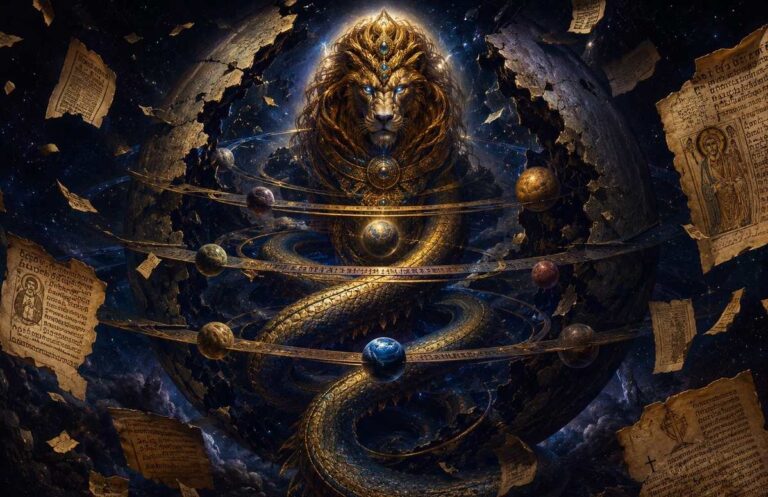
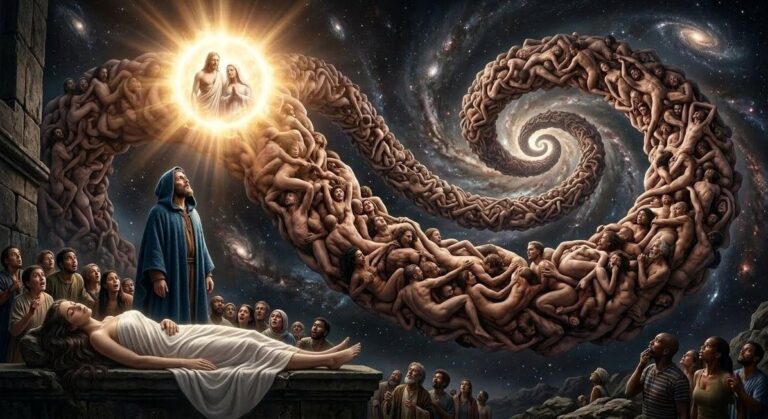
Neo Gnosticism cannot be understood through the divine spark and the Demiurge alone. The spark explains the hidden light within the human being. The Demiurge explains false authority and partial reality. Sophia explains the wound between them: wisdom that descends, becomes fragmented and still longs for restoration.
The central question is this: what happens when wisdom itself becomes wounded, and how can that wound become the beginning of return?
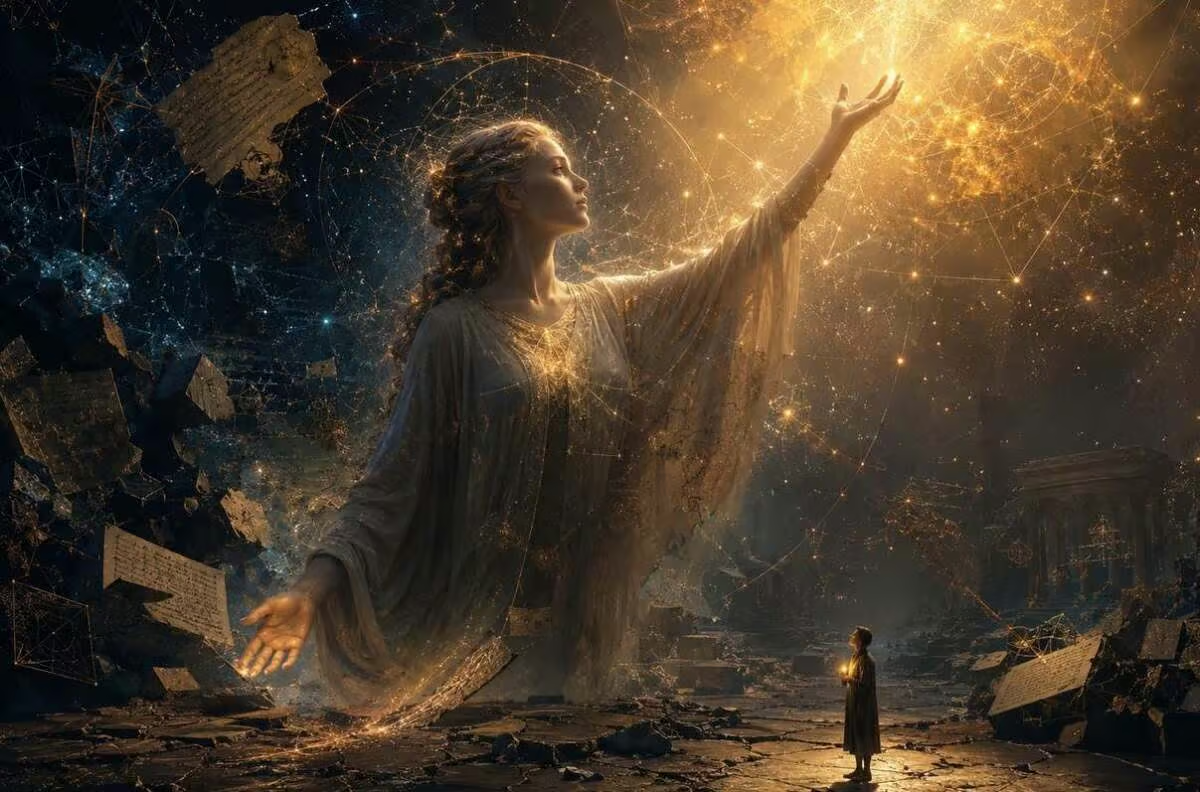
Sophia is not just glow. She is wisdom after fracture, the golden thread learning how to mend itself.
In Plain Terms
Neo Gnosticism understands Sophia as wounded wisdom seeking restoration. Sophia means wisdom, but in Gnostic myth she is not abstract intelligence. She is wisdom that descends, becomes fragmented, gives rise to rupture and still longs for return. Her story helps explain the Demiurge, the divine spark, the ache for fullness and the work of bringing scattered life back into relation with truth.
Sophia is not a simple goddess label, a story of female blame or a romantic symbol of suffering. She is the mythic image of wisdom under pressure: the part of reality that falls into fragmentation and still remembers the possibility of repair.
Primary Sources and Traditions Discussed
- The Apocryphon of John: the major Sethian source for Sophia’s movement, Yaldabaoth, the archons and the divine spark.
- The Hypostasis of the Archons: a creation myth that links archonic power, Eve, wisdom and resistance.
- On the Origin of the World: a detailed cosmological text on Sophia, the lower powers and the structure of the visible order.
- The Sophia of Jesus Christ: a wisdom dialogue in which revealed knowledge is given through the Saviour.
- The Thunder, Perfect Mind: a paradoxical feminine voice often read alongside Sophia and divine wisdom imagery.
- The Gospel of Philip: a Valentinian text of sacrament, union, image and restoration.
- Sethian and Valentinian traditions: two major streams that preserve different but related Sophia myths.
- Neo Gnosticism: the modern reading of Sophia as wisdom, rupture, restoration, symbolic balance and lived integration.
How to Read This Article
This article reads Sophia as a mythic, symbolic and spiritual figure of wisdom, rupture and restoration. It does not reduce Sophia to “the divine feminine” in a vague way, nor does it treat her story as blame placed on women, matter or embodiment.
Read Sophia as wisdom under fracture. Her fall is not a simple punishment story. Her restoration is not denial of the wound. A healthy reading of Sophia helps the reader recognise broken wisdom, repair compassion, and bring fragmented parts of life back into relation with truth.
Table of Contents
- In Plain Terms
- Primary Sources and Traditions Discussed
- How to Read This Article
- Who Is Sophia in Neo Gnosticism?
- The Short Answer
- Ancient Roots of Sophia
- Sophia as Wisdom
- Sophia’s Fall and the Wound in Reality
- Sophia and the Birth of the Demiurge
- Sophia, Yaldabaoth and False Authority
- Sophia and the Divine Spark
- Sophia and the Pleroma
- Sophia and the Kenoma
- Sophia in The Thunder, Perfect Mind
- Sophia and the Gospel of Philip
- Sophia and Christian Wisdom Traditions
- Sophia and the Divine Feminine
- Sophia and Modern Psychology
- Sophia in Modern Life
- Sophia, Grief and Restoration
- Healthy and Risky Readings of Sophia
- Practising Sophia: Wisdom in the Wound
- Common Misunderstandings
- Related Glossary Terms
- Read Next
- Neo Gnosticism Route Box
- Frequently Asked Questions
- Further Reading
- References and Sources
- Study Note
Who Is Sophia in Neo Gnosticism?
Sophia means wisdom. In Gnostic myth, Sophia is often an aeon or divine emanation within the fullness. Her story varies across traditions, but she is frequently linked with longing, descent, rupture, error, compassion, repentance and restoration.
Neo Gnosticism reads Sophia as a living symbol of wisdom under fracture. She is not simply a character in an ancient myth. She is a pattern: the part of wisdom that moves outward, becomes entangled, suffers separation and still carries the memory of return.
Sophia is wisdom after the break, still remembering the fullness.
The Short Answer
Neo Gnosticism understands Sophia as wounded wisdom. She represents the divine capacity for wisdom, longing and restoration after rupture. Her fall is not merely failure. It is the mythic image of wisdom entering fragmentation and becoming part of the healing of what has been divided.
Sophia is not:
- a simple goddess figure
- a symbol of female blame
- proof that matter is worthless
- a romantic fantasy of wounded divinity
- an excuse for spiritual drama
- a rejection of ordinary life
- a reason to confuse suffering with wisdom
Sophia is:
- wisdom
- longing
- rupture
- compassion
- remembrance
- restoration
- the ache for fullness
- the movement from fragmentation toward return
Ancient Roots of Sophia
Sophia belongs to ancient wisdom language long before Gnosticism named her as an aeon. Hebrew wisdom traditions, Greek philosophy, Jewish and Christian texts, and Platonic cosmology all contributed to the figure who would later appear in the Nag Hammadi Library.
Sources and influences include:
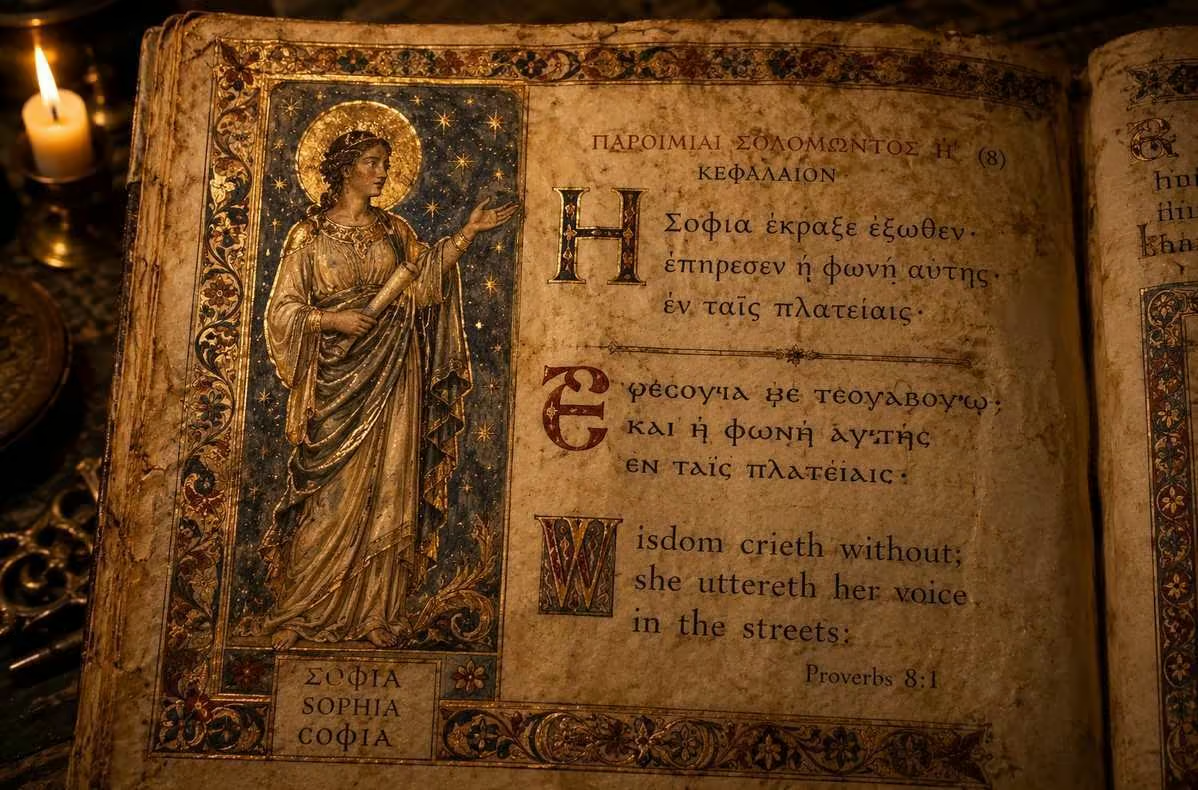
- Hebrew wisdom traditions and the personification of Wisdom in Proverbs 8
- Greek sophia as wisdom, knowledge and skilled craft
- Jewish and Christian wisdom texts, including the Wisdom of Solomon
- Platonic and late antique cosmology
- Gnostic aeon systems, both Sethian and Valentinian
Not every Gnostic text presents Sophia in the same way. Some focus on her error. Some focus on her repentance. Some see her as a cosmic mother, others as an aeonic movement within the fullness. Neo Gnosticism reads these variations as a family of wisdom myths rather than a single fixed doctrine.
Sophia as Wisdom
Sophia is not merely a personality. Her name means wisdom. That means her story is about what happens when wisdom moves, desires, reaches, misrecognises, suffers and repairs.
Wisdom is not only calm certainty. Wisdom also includes the painful process of learning through rupture. Sophia shows that wisdom is not untouched perfection. Sometimes wisdom is the power that enters the wound and learns how to restore what has been scattered.
Sophia’s Fall and the Wound in Reality
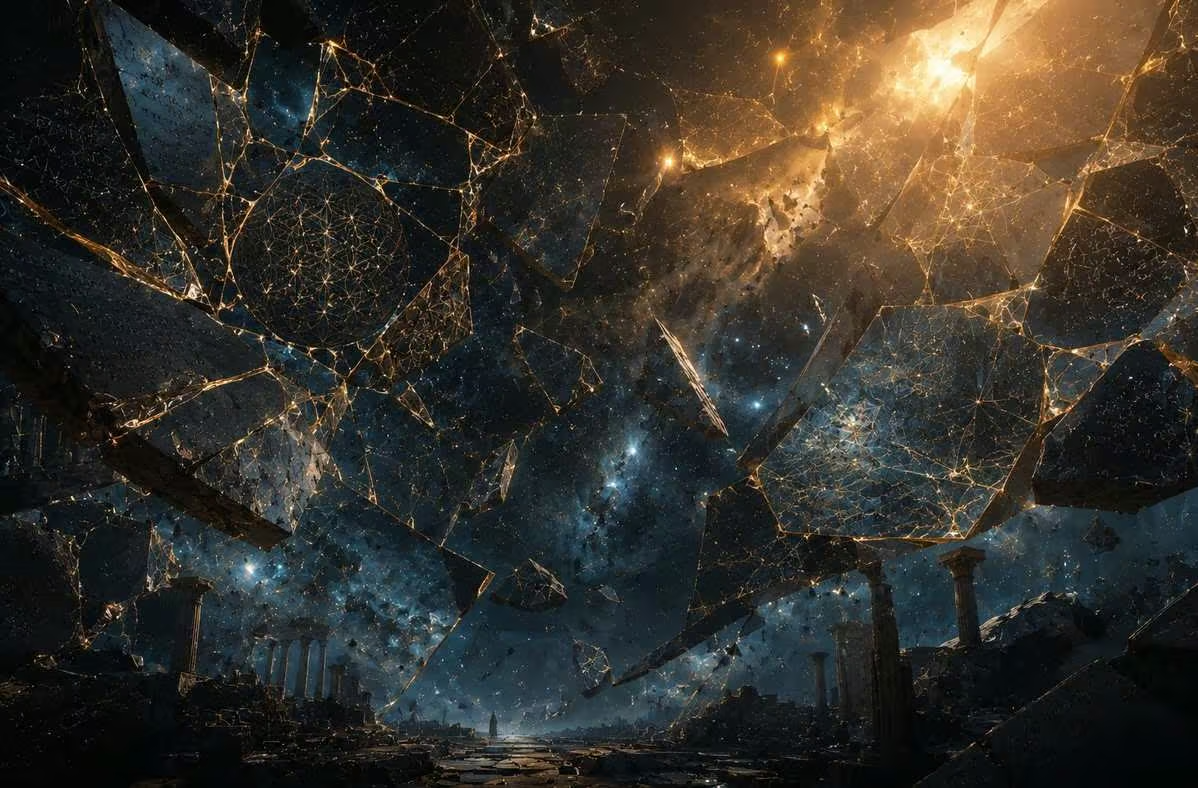
In many Gnostic myths, Sophia moves outside harmony, without her consort or outside the balanced order of the fullness. This produces rupture. The fall is not a simplistic moral failure. It is a mythic image of imbalance, longing, separation and creative disorder.
Sophia should not be read as “the woman who ruined the cosmos.” She is wounded wisdom whose movement reveals the fragility of separated desire. Sophia’s fall is the story of wisdom reaching beyond balance and discovering what happens when longing loses connection with fullness.
Sophia and the Birth of the Demiurge
In the Apocryphon of John and related myths, Sophia’s movement gives rise to Yaldabaoth, the ignorant maker. He emerges outside the fullness, unaware of the higher source. He creates a lower world and declares himself sole god.
The key point is this: the Demiurge is not Sophia. The Demiurge is what appears when wisdom becomes disconnected from fullness and produces a maker who cannot recognise the source. Sophia’s wound gives rise to the Demiurge, but the Demiurge does not exhaust Sophia. The broken offspring is not the whole of wisdom.
Sophia, Yaldabaoth and False Authority
Yaldabaoth’s blindness is connected to Sophia’s rupture, but his arrogance is his own. He does not know the fullness. He mistakes his partial world for total reality. Sophia’s story helps readers understand false authority as a wound in wisdom, not merely a villain outside the self.
False authority often emerges from disconnected intelligence: knowledge without humility, technology without wisdom, authority without source, systems without compassion, creation without responsibility, power without remembrance.
Sophia and the Divine Spark
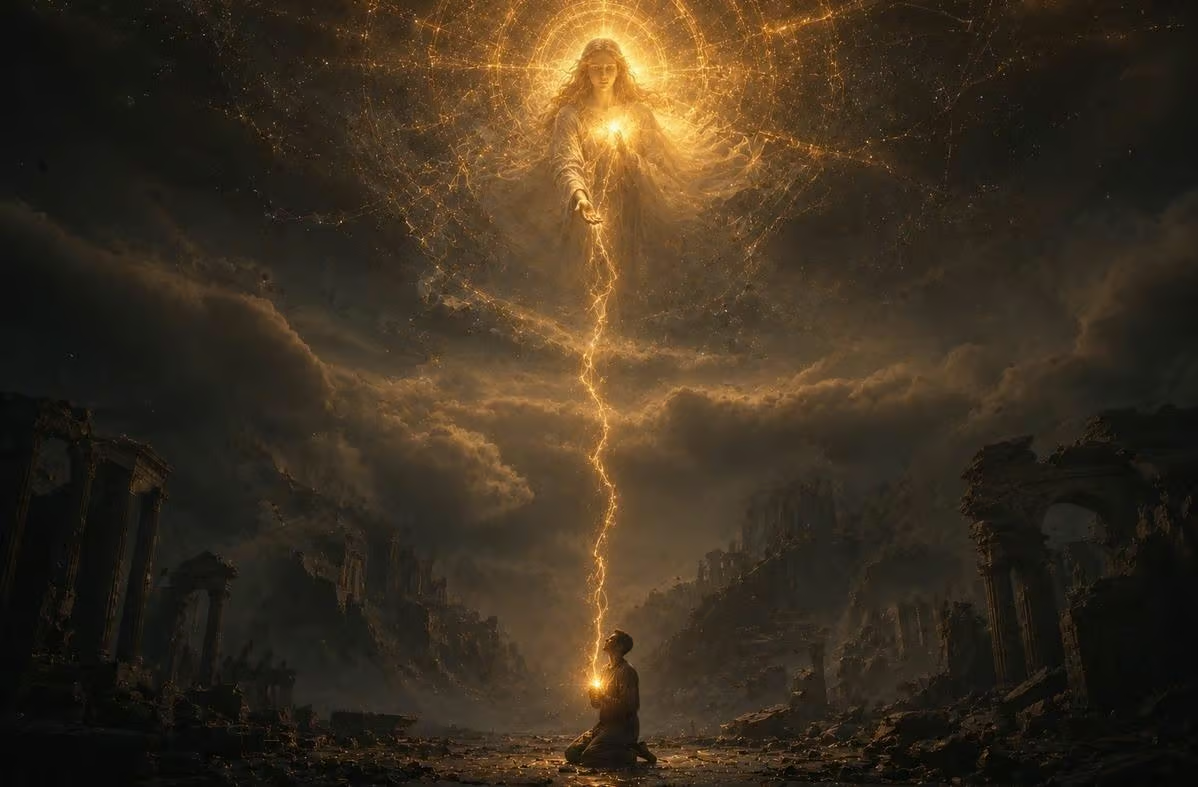
Sophia’s story is deeply connected with the hidden light in the human being. In many Gnostic myths, the divine spark exceeds the lower powers and carries memory of the higher source. Sophia is part of the drama by which what has fallen is remembered and restored.
The divine spark is the light hidden in the human being. Sophia is the wounded wisdom that knows why the light must be remembered.
Sophia and the Pleroma
The Pleroma is the divine fullness, the realm of wholeness, emanation and living completeness. Sophia belongs to that fullness, even when her story involves rupture. Her restoration is not escape into fantasy. It is return to relation, harmony and source.
Sophia’s longing only makes sense because fullness has not been forgotten completely.
Sophia and the Kenoma
The Kenoma is the region of lack, deficiency or incompleteness. Sophia’s descent helps explain why the lower world feels mixed: beautiful but wounded, ordered but incomplete, meaningful but veiled.
A Neo Gnostic reading sees the modern world as a kind of Kenoma when it becomes all surface, metric, performance and fragmentation. Sophia’s presence in the Kenoma is not defeat. It is the promise that even emptiness can become a place of recognition.
Sophia in The Thunder, Perfect Mind
The Thunder, Perfect Mind (NHC VI,2) is not a simple Sophia text, but it is often read alongside feminine divine imagery because of its paradoxical female voice. The speaker proclaims herself through opposites: the first and the last, the honoured and the scorned, the whore and the holy one.
Themes include paradox, hidden dignity, shame and glory, rejection and recognition, contradiction held in one voice. Thunder gives a voice to the divided condition itself: honoured and rejected, hidden and revealed, low and exalted. The speaker’s perfect mind is not a mind without contradiction. It is a mind large enough to hold contradiction without collapsing into either pole.
Sophia and the Gospel of Philip
The Gospel of Philip (NHC II,3) grounds Sophia in sacrament and restoration. It speaks of union, image and truth, the bridal chamber (*nymphon*), the divided self restored, and resurrection as present transformation. Sophia’s restoration is not merely cosmic repair. It is mirrored in the restoration of the divided human being.
Where Sophia is divided from her consort, the human being is divided from recognition. Where Sophia is restored to relation, the human being is invited to the bridal chamber of rejoined truth.
Sophia and Christian Wisdom Traditions
Christian traditions have rich wisdom language. Wisdom in Proverbs, the Wisdom of Solomon, Logos and Sophia resonances, Mary as wisdom-bearing figure in some mystical readings, Holy Spirit and wisdom imagery, and Christian mysticism all preserve a sense that wisdom is divine, relational and transformative.
Mainstream Christianity does not usually identify Sophia with a fallen aeon who gives rise to the Demiurge. Gnostic Sophia is more radical and cosmological. But both traditions preserve a sense that wisdom is divine, relational and transformative. The disagreement touches the meaning of creation, fall, authority and the feminine image of the sacred.
Sophia and the Divine Feminine
Sophia is often linked with the divine feminine, but careful reading avoids vague essentialism. Sophia opens space for feminine images of divine wisdom, longing, compassion, embodiment and restoration. She matters not because wisdom belongs only to women, but because traditions that forget feminine images of wisdom often lose part of their symbolic balance.
The risky reading turns Sophia into a decorative goddess label, a gender stereotype or a fantasy identity. The healthy reading lets Sophia restore symbolic balance without reducing her to a slogan.
Sophia and Modern Psychology
Modern psychological readings of Sophia include wounded wisdom, the inner feminine, anima symbolism, the wounded self seeking integration, the split between intellect and feeling, longing for wholeness, repair after fragmentation, shadow integration, and grief transformed into insight.
Sophia can be read psychologically, but she should not be reduced to psychology alone. She remains mythic, spiritual and cosmological. The inner Sophia is the part of the psyche that knows the wound is real and still believes repair is possible.
Sophia in Modern Life
Modern relevance of Sophia includes:
- intelligence without wisdom
- information without integration
- systems without compassion
- fragmented attention
- spiritual longing without grounding
- grief that becomes insight
- broken trust in authority
- the search for wholeness after disillusionment
- ecological and relational repair
Modern life has no shortage of intelligence. What it lacks is Sophia: wisdom joined to humility, compassion and remembrance.
Sophia, Grief and Restoration
Sophia’s myth allows grief to become part of restoration. The fall is not erased. The wound is not denied. Restoration means the broken place becomes a site of recognition.
Themes include repentance as turning, grief as recognition, longing as memory of fullness, repair without denial, and return without pretending nothing happened. Sophia does not restore the world by pretending it was never broken. She restores by carrying the wound back toward wisdom.

Healthy and Risky Readings of Sophia
This comparison shows how Sophia can be read as a grounded symbol of restoration rather than a fantasy identity or a story of blame.
| Area | Healthy Reading | Risky Reading |
|---|---|---|
| Wisdom | Wisdom includes humility, grief, repair and discernment. | Wisdom becomes a fantasy identity or spiritual self-image. |
| Fall | The fall is read as rupture, imbalance and longing disconnected from fullness. | The fall becomes blame, shame or hatred of the feminine. |
| Divine feminine | Sophia restores symbolic balance and honours wisdom in feminine form. | Sophia becomes vague goddess language or gender essentialism. |
| Demiurge | The Demiurge is understood as what arises from disconnected wisdom. | Sophia is reduced to the cause of cosmic failure. |
| Body | Embodiment becomes part of restoration. | Matter and body are despised as the result of the fall. |
| Grief | Grief becomes a path of recognition. | Suffering is romanticised as proof of spiritual depth. |
| Practice | Sophia becomes wisdom lived through care, grounding and repair. | Sophia becomes emotional drama without integration. |
| Others | Other people are met with compassion. | Others are sorted into awakened and fallen. |
Practising Sophia: Wisdom in the Wound
Practising Sophia means letting wisdom return to the place where it became fragmented. Practical exercises include:
- ask where wisdom has become disconnected from care
- notice where intelligence lacks humility
- sit with grief without making it identity
- repair one small broken relationship or responsibility
- read a Sophia text slowly
- name where longing points toward fullness
- return to the body before interpreting the myth
- ask what restoration would look like in ordinary life
- practise one act of compassion without performance
- distinguish sacred grief from spiritual drama
Common Misunderstandings
- Sophia is just a goddess.
- Sophia is simply the divine feminine.
- Sophia caused everything bad.
- The fall is about blaming women.
- Sophia proves matter is evil.
- Sophia is only psychology.
- Sophia has nothing to do with practice.
- Restoration means pretending the wound never happened.
- Sophia is separate from the divine spark.
- Sophia and the Demiurge are the same.
- Wisdom means certainty.
- Grief automatically equals awakening.
- Sophia language belongs only to women.
- Neo Gnosticism uses Sophia as fantasy mythology.
Related Glossary Terms
These terms help place Sophia within the wider Neo Gnosticism route and the older Gnostic source layer.
Sophia — Wisdom, fall, longing and restoration in Gnostic myth.
Divine Spark — The hidden light within the human being that remembers its origin beyond false authority.
Demiurge — False or partial authority that mistakes its world for the whole of reality.
Archons — Ruling powers or structures that bind awareness to lesser realities.
Pleroma — The divine fullness from which Sophia descends and toward which restoration points.
Kenoma — The realm of deficiency, lack or incompleteness in Gnostic cosmology.
Aeon — A divine emanation or living quality within the fullness.
Gnosis — Direct, transformative knowing rather than belief accepted only from outside.
Counterfeit Spirit — False animation, imitation insight and spiritual life severed from real recognition.
Read Next
- What Is Sophia?
- Neo Gnosticism and the Divine Spark
- Neo Gnosticism and the Demiurge
- What Is Neo Gnosticism?
- What Do Neo Gnostics Believe?
- Neo Gnosticism and Christianity
- Is Neo Gnosticism Dangerous?
- Neo Gnostic Practice
- The Apocryphon of John
- The Hypostasis of the Archons
- On the Origin of the World
- The Gospel of Philip
- The Thunder, Perfect Mind
- What Is the Pleroma?
- What Is the Kenoma?
- What Is an Aeon?
- What Is the Counterfeit Spirit?
Neo Gnosticism Route Box
Neo Gnosticism Route
This article belongs to the Neo Gnosticism route: a guided path through modern gnosis, ancient sources, direct knowing, digital authority, practice, safety, inner light, false authority and wisdom restored after fracture.
- Neo Gnosticism Hub
- What Is Neo Gnosticism?
- What Do Neo Gnostics Believe?
- Is Neo Gnosticism a Religion, Philosophy or Practice?
- Neo Gnosticism vs Ancient Gnosticism
- Neo Gnostic Practice
- Digital Archons
- Is Neo Gnosticism Dangerous?
- Neo Gnosticism and Christianity
- Neo Gnosticism and the Divine Spark
- Neo Gnosticism and the Demiurge
- Neo Gnosticism and Sophia: You are here
- How Gnosticism Survived 2,000 Years
- Who Are the Neo Gnostics?
- Living Gnosis
- Transhumanism as Neo Gnosticism
Frequently Asked Questions
Who is Sophia in Neo Gnosticism?
Sophia is the personification of wisdom in Gnostic myth. In Neo Gnosticism, she represents wounded wisdom: the divine capacity that falls into fragmentation and still seeks restoration. She is not merely a goddess but a pattern of wisdom under pressure, longing and repair.
What does Sophia mean?
Sophia is the Greek word for wisdom. In Gnostic traditions, she is an aeon or divine emanation whose story involves descent, rupture, repentance and restoration. Her name signals that the myth is about what happens when wisdom itself moves, desires, errs and learns.
Is Sophia the divine feminine?
Sophia is often associated with the divine feminine, but she should not be reduced to a vague goddess label or gender essentialism. She restores symbolic balance by presenting wisdom in feminine form, yet her relevance extends beyond gender to anyone seeking wisdom through rupture and repair.
What is Sophia’s fall?
In many Gnostic myths, Sophia moves outside the balanced order of the divine fullness, producing rupture. The fall is not a simple moral failure but a mythic image of wisdom losing connection with its source, giving rise to fragmentation and the lower world.
How is Sophia connected to the Demiurge?
In texts such as the Apocryphon of John, Sophia’s movement or rupture gives rise to Yaldabaoth, the ignorant maker. The Demiurge is not Sophia herself but the broken offspring of wisdom disconnected from fullness. He creates a partial world and mistakes it for total reality.
How is Sophia connected to the divine spark?
Sophia is part of the drama by which the hidden light in the human being is remembered and restored. The divine spark carries memory of the higher source. Sophia is the wounded wisdom that understands why that light must be remembered and returned.
Is Sophia the same as the Holy Spirit?
In mainstream Christian tradition, the Holy Spirit is the third person of the Trinity, not a fallen aeon. Some mystical traditions have drawn parallels between the Spirit and Wisdom, but Gnostic Sophia is a distinct figure with her own cosmological story of descent, error and restoration.
How can someone practise Sophia in modern life?
Practising Sophia means letting wisdom return to the place where it became fragmented. This includes sitting with grief without making it an identity, repairing broken relationships, reading wisdom texts slowly, distinguishing sacred grief from drama, and asking where intelligence has lost its humility.
Further Reading
- What Is Sophia? — The foundational glossary article on wisdom, fall and redemption across Gnostic schools.
- Neo Gnosticism and the Divine Spark — How the hidden light within the human being connects to Sophia’s drama of remembrance and return.
- Neo Gnosticism and the Demiurge — The companion article on false authority, partial reality and the maker who forgets the source.
- What Is Neo Gnosticism? — The central definition guide for the modern revival of ancient direct knowing.
- What Do Neo Gnostics Believe? — The companion article mapping beliefs about archons, the Demiurge, Jesus, technology and practice.
- Neo Gnosticism and Christianity — The dialogue between Gnostic and orthodox Christian views of creation, authority and salvation.
- Is Neo Gnosticism Dangerous? — A balanced look at spiritual inflation, bypass and the risks of symbolic reading.
- The Sophia Myth: Three Falls, Three Redemptions — A comparative study of Sophia’s story across Sethian, Valentinian and later traditions.
- Sophia, Jesus Christ — The Nag Hammadi text that presents Sophia as the Mother of the Universe in dialogue with the Saviour.
- Trimorphic Protennoia — The triple-descent text of divine voice and sound, closely related to Sophia’s restorative work.
References and Sources
The following sources are organised by category for readers who wish to pursue deeper study.
Primary Sources and Critical Editions
- The Apocryphon of John (NHC II,1; III,1; IV,1)
- The Hypostasis of the Archons (NHC II,4)
- On the Origin of the World (NHC II,5; XIII,2)
- The Sophia of Jesus Christ (NHC III,4; BG 8502,3)
- The Thunder, Perfect Mind (NHC VI,2)
- The Gospel of Philip (NHC II,3)
- The Tripartite Tractate (NHC I,5)
- Pistis Sophia (Askew Codex)
- The Nag Hammadi Library in English, ed. James M. Robinson (HarperSanFrancisco, 1990)
- The Nag Hammadi Scriptures, ed. Marvin Meyer (HarperOne, 2007)
- Bentley Layton, The Gnostic Scriptures (Yale University Press, 1995)
Scholarly Monographs
- Karen L. King, What Is Gnosticism? (Harvard University Press, 2003)
- David Brakke, The Gnostics: Myth, Ritual, and Diversity in Early Christianity (Harvard University Press, 2010)
- Elaine Pagels, The Gnostic Gospels (Random House, 1979)
- Michael Allen Williams, Rethinking Gnosticism: An Argument for Dismantling a Dubious Category (Princeton University Press, 1996)
- April D. DeConick, The Gnostic New Age: How a Countercultural Spirituality Revolutionised Religion from Antiquity to Today (Columbia University Press, 2016)
- Birger A. Pearson, Ancient Gnosticism: Traditions and Literature (Fortress Press, 2007)
- Einar Thomassen, The Spiritual Seed: The Church of the Valentinians (Brill, 2006)
- Christoph Markschies, Gnosis: An Introduction (T&T Clark, 2003)
Comparative and Psychological Studies
- Hans Jonas, The Gnostic Religion: The Message of the Alien God and the Beginnings of Christianity (Beacon Press, 1958)
- Carl G. Jung, Aion: Researches into the Phenomenology of the Self (Princeton University Press, 1959)
- Carl G. Jung, Psychology and Religion: West and East (Princeton University Press, 1958)
- Ioan P. Couliano, The Tree of Gnosis: Gnostic Mythology from Early Christianity to Modern Nihilism (HarperSanFrancisco, 1992)
- Proverbs 8; Wisdom of Solomon
- Pseudo-Dionysius, The Mystical Theology
- Meister Eckhart, selected sermons
Study Note
This article treats Sophia as a mythic and symbolic figure of wisdom, rupture and restoration. It does not reduce Sophia to gender essentialism, romantic suffering or fantasy goddess language. A healthy reading of Sophia helps the reader recognise wounded wisdom, restore compassion, and bring fragmented parts of life back into relation with truth.